
The New York Mets (26-33) travel across North America to play the Seattle Mariners (31-29) in a three-game series at T-Mobile Park. The series sees both teams arrive with winning streaks of four and six games, respectively, and it kicks off the Mets’ final West Coast swing of the year.
The last few weeks have been very strange for the Mets, who swept the Tigers, took two of three from the Yankees, split four with the Nationals, got swept by the Marlins, lost two of three to the Reds, and then swept the same
Marlins that swept them a week earlier. There isn’t a ton to read into these patterns either, aside from a very simple note that seems too simplistic to even commit to print: when the Mets score runs, they win ballgames.
In their last 19 games, if the Mets scored four or more runs, they are 9-2. When they score three or fewer, they are 2-6. In the series where the Marlins swept them last weekend, they scored two runs in three games; in the series where they swept the Marlins, they scored 25 runs in three games.
If I had answers about specifically why the Mets could or could not score runs, I’d be calling Citi Field on the reg trying to get hired in the Mets’ front office. But there are a few good signs that, maybe, some of the offensive fluctuations may be evening out a bit, starting with the Mets’ two young outfielders, A.J. Ewing and Carson Benge.
I know that batting average is not the best indicator of offensive success, but it gives us a good baseline of just how Benge has improved over the past month. On May 1, Benge was batting .181. Heading into play on June 1, he’s batting .253. Over that same time, his on-base percentage went from .238 to .318 and his slugging from .266 to .359. These are not All-Star numbers just yet, but they’re showing marked improvement and consistency, the two things that are most important when measuring rookie performance.
Ewing has about a third of the games under his belt that Benge does, and his offensive talents are revealing themselves in different ways than Benge’s are. Ewing is drawing walks, hitting singles up the middle, and running the bases extraordinarily well. He’s probably not going to have the power that Benge has shown, but he doesn’t need to in order to be an exciting and productive player.
Both players’ defense in the outfield has shone, and Gary Cohen said on the broadcast on Sunday how it seems like the pair are preventing extra-base hits multiple times a game by running down fly balls and playing smart when the balls do drop in. With Juan Soto in left, you’re still going to have some interesting moments in the outfield, but they’ve more or less stabilized center and right field for the foreseeable future.
Speaking of Soto, he has been on a tear as of late that is making even the Soto haters out there take notice. While he is still clearly banged up, he is compensating in other ways. He didn’t hit a single double in May (though he did hit a triple in Colorado), but he’s hit ten home runs and has collected a hit in all but six games in the month. His walk and strikeout numbers are nearly identical, and he’s begun to pick his spots to steal bases again, though another 30+ steals season seems unlikely this year.
But it goes beyond just the Mets’ outfield, in terms of offensive leveling up as of late. Bit players like Eric Wagaman and Hayden Senger have contributed in wins, Jared Young has returned with his stroke intact, and Luis Torrens keeps hitting the ball the other way with men on base.
However, the Mets’ infield is still somewhat in disarray, offensively. Of the four regular position players, only Brett Baty has a positive bWAR on the club. Mark Vientos has been better at first than many suspected, but still isn’t producing nearly enough. Marcus Semien has leveled out a little, but is still looking more like his miserable 2025 at the plate than his earlier success, confirming many fans’ fears about his acquisition.
That leaves Bo Bichette, who just cannot get his season going. In the first two games against the Nationals last week, Bichette went five-for-ten with three home runs, seven RBIs, and a walk. After those two games, it seemed like he was ready to break out a bit. Unfortunately, he’s only collected eight hits in the 11 games since, none for extra bases, and drove in just three runs. Driving in runs is what Bichette’s entire career has been based on, and so to see him not do that is very, very strange.
The good news for the club is that help is theoretically on the way. While Mike Tauchman seems to be rehabbing in the Bermuda Triangle, the rest of the Mets’ offensive injured players all seem to be on their way back. Jorge Polanco has been playing in Binghamton, hitting .400/.571/.1.000 in 7 plate appearances with one dinger. Whether or not he can play first base is still an open question, but getting another competent major league caliber bat in the lineup is huge. While he theoretically could play another dozen and a half games in the minors, it seems likely that Polanco will be back on the club sometime in the next week to ten days.
Both Franciscos, Lindor and Alvarez, have begun baseball activities and both hope to be back in June, though neither is exactly a lock to do so at this point. But just knowing that there is a limit to the amount of balls that Bichette will muff at short before Lindor returns is a blessing.
As for the pitching side of things, the bullpen has continued to be strong, even with the poor performance and demotion of Tobias Myers factored in. When David Peterson comes out of the ‘pen, as he did on Sunday, he’s looked like a totally different pitcher than the starter we’ve seen this season. Devin Williams gave up a game-losing grand slam in Miami, but otherwise, he and Luke Weaver have locked down the back-end of the bullpen nicely. The lefties have been good, Huascar Brazobán continues to be impressive, and Austin Warren is establishing himself as an important piece.
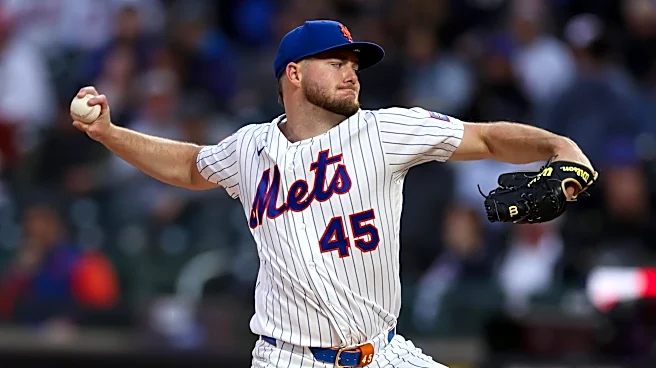
Nolan McLean has struggled for his last three starts, but made it work yesterday despite walking the farm. Christian Scott and Jonah Tong are both showing what made them so highly regarded as prospects as they get themselves into form. Freddy Peralta is exactly as advertised: a good, not great, five inning starter. We will see how Sean Manaea does when given the ball for a start sometime soon. And with Kodai Senga making rehab starts, there will be that adventure beginning again shortly.
All of this is to say that the Mets of June 1st are not markedly different than the Mets of April 30, arguably at the lowest point of the season thus far, but the roster is starting to come into shape a little better right now. With help on the horizon, young talent pulling their weight, and Soto being the superstar he is, the club still has a chance, albeit an outside one, of returning to relevancy at some point this month. With summer not officially starting for another few weeks, Spring hope still springs eternal.
On the Mariners side, the season started out fairly rough for them, as they didn’t get above .500 until this weekend against the Diamondbacks. But because the American League West is a bad division this year, the Mariners find themselves in first place, two and a half up on both the Rangers and Athletics. A big part of that early season dry spell was Cal Raleigh, after a career year last season, turning into a pumpkin in 2026 before landing on the Injured List. Josh Naylor is pulling a similar act so far, and the M’s offense misses those two big pieces.
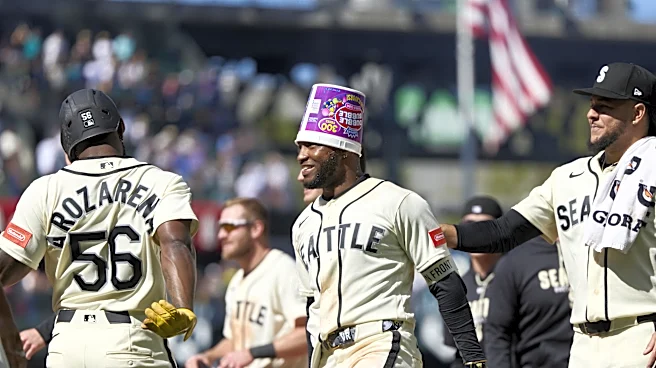
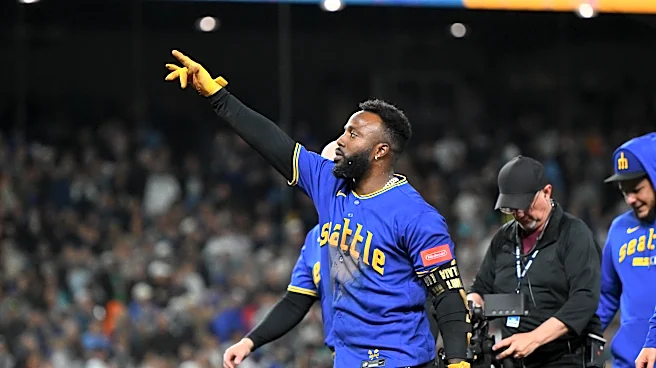
That said, the Mariners’ offense isn’t struggling too mightily. They’re the ninth best offense in baseball as of press time, and they’ve been getting good production up and down their lineup from folks like Randy Arozarena, Julio Rodríguez, and Cole Young. Luke Raley has hit 13 home runs already, with J Rod right behind him with 12.
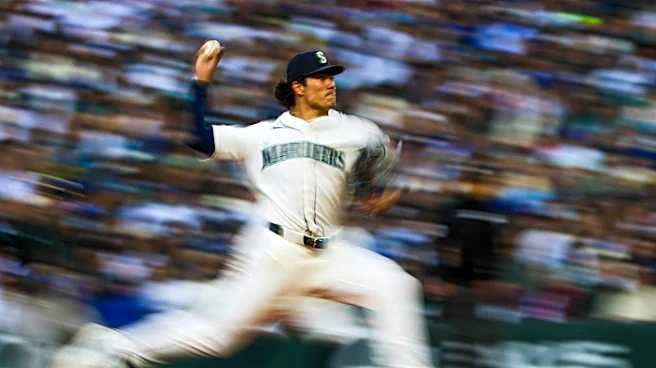
Seattle is also seventh in pitching, with a rotation that looks solid, if unspectacular thus far. Emerson Hancock is having he best season of the bunch, putting up a 2.78 ERA over 11 starts, but aside from Luis Castillo, the entire rotation is looking solid. Unfortunately, the Mets are missing Castillo this series.
Monday, June 1: Austin Warren (but really Sean Manaea) vs Emerson Hancock, 9:40pm EDT on SNY
Warren (2026): 19.1 IP, 22 K, 9 BB, 1 HR, 1.40 ERA, 2.87 FIP, 36 ERA-
Manaea (2026): 34.0 IP, 38 K, 15 BB, 3 HR, 5.56 ERA, 3.66 FIP, 142 ERA-
The Mets are going with an opener ahead of Sean Manaea, who has been better in May as the mop-up guy out of the bullpen. His fastball velocity has been ticking up, as have his strikeouts, while limiting big innings against him. In his last three appearances, he’s thrown a collective ten and two-thirds innings, giving up four earned runs while striking out 12 and walking four. That’s not going to blow anyone away, but if he can give the team four or five innings of competitive ball behind an opener, that’s not nothing.
Hancock (2026): 64.2 IP, 63 K, 15 BB, 8 HR, 2.78 ERA, 3.57 FIP, 72 ERA-
Aside from a rough start against the White Sox on the 8th, Hancock has had a great May. In his last start against the Athletics, he one-hit them over six innings. He had a huge game against the Royals on the 2nd where he struck out 14, walking none, and allowing just one run. But aside from that gaudy strikeout game, he’s been a steady, if not dazzling, starter for Seattle. He’s pitched at least five innings in every start, and only has one game where he’s surrendered more than three earned runs.
Tuesday, June 2: TBD (but probably Jonah Tong) vs Logan Gilbert, 9:40pm EDT on SNY
Tong (2026): 6.2 IP, 3 K, 5 BB, 0 HR, 0.00 ERA, 4.43 FIP, 0 ERA-
It is unclear if Tong is going behind an opener like Manaea, but Tong is also working to prove his readiness for a rotation spot. He wasn’t fantastic in Triple-A where he reportedly was working on secondary stuff, and has walked too many folks in his limited MLB time this season thus far. But in terms of stuff, he’s right up there with McLean, and the Mets are limited in their starting pitching options right now. In his second appearance, he gave up an unearned run on an error by [checks notes] himself, one of the quirks of baseball scoring, but otherwise has avoided any runs scoring on his watch thus far. That’s tough when you’re walking almost a batter an inning.
Gilbert (2026): 68.1 IP, 69 K, 16 BB, 11 HR, 3.69 ERA, 3.98 FIP, 92 ERA-
You’re going to notice a trend with M’s starters: they’re all throwing quality starts without jaw-dropping numbers. Kirby is coming off of two scoreless outings where he’s struck out six apiece. He’s been very good in nine of his 12 starts, and in two of those bad starts, it was the long ball that did him in. Of his 11 home runs given up this season, seven of them came in two games.
Tuesday, June 3: Freddy Peralta vs George Kirby, 3:40pm EDT on SNY
Peralta (2026): 66.0 IP, 68 K, 28 BB, 8 HR, 2.97 ERA, 3.08 FIP, 76 ERA-
When the Mets brought over Peralta, the knock on him was that he was usually nothing more than a five-inning pitcher. As a Met, that has more or less been true as well, though he’s made a few appearances later in games, but it rarely goes very well. But in those first five innings, he’s usually good. He’s in a little bit of a rough stretch right now, even though the team has won three of his last four starts. His strikeouts are still there, but he’s giving up runs in bunches.
Kirby (2026): 74.0 IP, 59 K, 17 BB, 7 HR, 3.77 ERA, 3.48 FIP, 98 ERA-
Of all three Mariners’ starter this series, Kirby is in the middle of the worst stretch.He’s given up 13 earned runs over his last three starts, only striking out 13 in that same stretch. Not that Kirby is a huge strikeout pitcher, but you never want your strikeouts and earned runs to match over a stretch of more than a game. He’s currently leading the league in hits, but most of those have been singles.