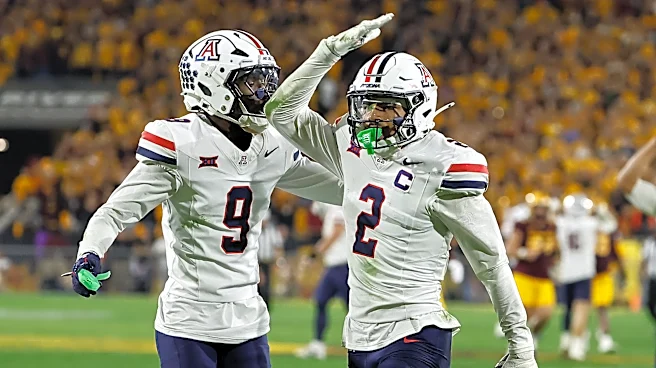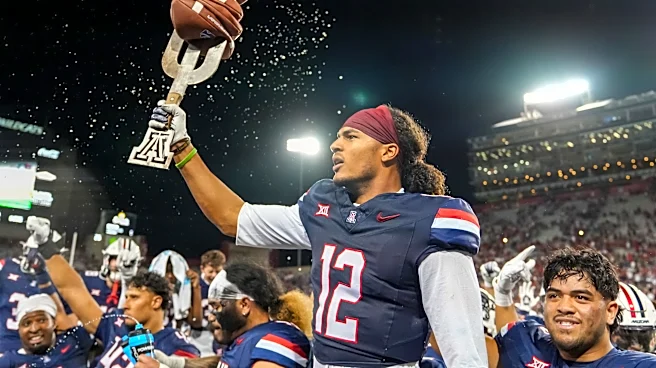


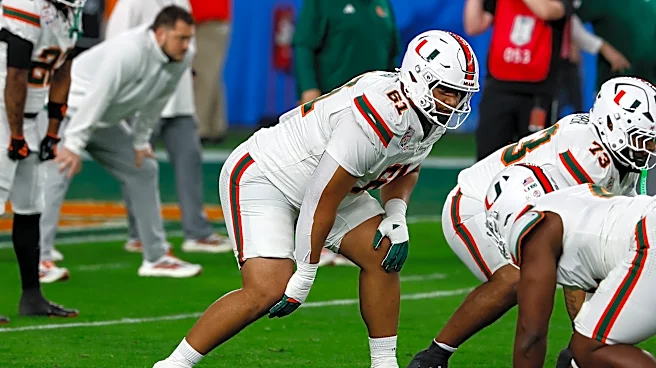
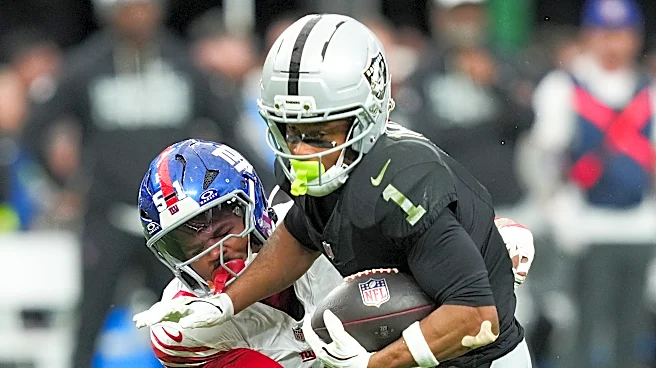
Free safety is one of the biggest needs on the Las Vegas Raiders’ roster heading into the 2026 NFL draft. Thus, Silver and Black Pride has been diving into this year’s safety class, paying extra attention to defensive backs that have impressive ball skills. Next up is Arizona’s Genesis Smith, who ranks 97th on NFL Mock Draft Database’s consensus big board as of April 9, making him an option for the Raiders in the fourth round of the draft.
While Smith only had one interception this past season, he
tied for second among Big 12 safeties with six PBUs and recorded a 26 percent forced incompletion rate that was third-best, according to Pro Football Focus. Also, he infamously led all FBS safeties with three dropped interceptions. That has to get cleaned up to turn breakups into turnovers, but the former Wildcat is clearly effective at making plays on the ball in the air, and it’s encouraging that he had three picks in 2024.
On top of that, the tape shows a prospect whose athleticism and football IQ can help him develop into a ballhawk at the next level.
We’ll start with what might be the most impressive dropped interception you’ll ever see, and it highlights how Smith can play chess while the quarterback plays checkers.
Arizona is in Cover 1 with a simulated pressure up front, where Smith is the deep or post safety. Meanwhile, Kansas State comes out in 11 personnel and a two-by-two formation with the twin receivers on the wide side of the field, and the outside receiver runs a post.
With the passing strength to the defense’s left, the safety should either stay square and get depth or open his hips to the passing strength to take away the post. However, Smith opens his hips to the short side of the field to bait the quarterback into the deep shot. Notice how he speed turns toward the wide side of the field before the quarterback starts to throw. That shows the move was intentional and not a mistake.
The QB takes the bait, and Smith has the speed to recover by getting on top of the receiver and tracking the ball in the air. He does a good job of high-pointing the ball to get two hands on it, showcasing his 42.5-inch vertical; he just needs to do a better job of finishing to come up with the turnover. This is a pretty impressive way to play the game within the game, though.
The former Wildcat is also good at reading the quarterback’s eyes to either help his teammates in coverage or make plays on the ball, as seen in the clip above.
With Arizona playing Cover 7, Smith is initially reading the inside slot receiver. When the receiver pulls up on the route and is no longer a vertical threat, he gets eyes back on the quarterback and recognizes that the quarterback is looking to throw the crossing route from the other side of the field. So, the safety comes off his man and steps into the passing lane to break up the pass, nearly getting a pick, again.
What’s even more impressive about this rep is that it came in a clutch situation. Arizona was up six points with a minute left, and this was fourth down, sealing the win for an early-season upset.
Part of what makes Smith’s ball skills stand out despite the low interception total in 2025 is that he can break up passes in a variety of ways. We’ve already seen a couple of examples of him making good reads or smart plays as a deep safety against wide receivers, and this time, he has an excellent rep in man coverage versus a tight end.
The breakdown is a lot simpler on this one. Arizona is just in Cover 1, where Smith is man-to-man with the most inside receiver post-snap against the trips look (you might have heard that referred to as “final number three”), which happens to be a tight end lined up in the slot in this instance. The only wrinkle is that the offense motions a receiver across the formation to get to the three-by-one set and execute a switch release, muddying up the look for the defensive backs a bit.
From there, the safety just does a great job of recognizing and driving on the short route to make a play on the ball through the tight end’s back, coming up with a PBU on third down. Even better, the tight end is Tanner Koziol, who stands at 6-foot-7, 250 pounds and will likely be a Day 3 pick at the end of the month.
This next rep is more of a one-off than a staple of the third-team All-Big 12 performer’s game, as he only rushed the passer 16 times in 12 games this past season and 23 times in 37 career games, per PFF. But somehow, he still managed to make a play on the ball.
Blitzing from depth, about eight yards past the line of scrimmage, Smith recognizes that the chances of him getting a sack are slim, especially with the two cornerbacks playing off coverage and the other safety disguising the blitz pre-snap by lining up on the hash mark instead of closer to the trips receivers.
So, Smith knows that the quarterback will have a hot route open and is measured instead of running like a bat out of hell toward the line of scrimmage. That allows him to be in a position to read the throw, jump and get his hands up to bat the pass away. That’s another example of his football IQ and, to me, shows how natural his ball skills are by finding a way to break up a pass, even when blitzing.
Previously, we dove into an example of Smith coming off his man to come up with a PBU. This time, we’ll see a similar rep, just with a coverage stop instead of making a play on the ball.
Arizona is in Cover 0, where two of the line of scrimmage defenders drop into coverage to take away a slant or hot route over the middle, while Kansas State has all three receivers on the wide side of the field run slants. That means the inside slot receiver is taken away by one of the defenders dropping into coverage, but the quarterback still has an easy completion to the outside slot receiver with the defensive backs in off-coverage.
Meanwhile, Smith starts to drive on his man once he sees the short route. But simultaneously, he keeps his eyes on the quarterback and reads the throw, adjusting his path without a hitch to come up with the tackle against a receiver that he wasn’t responsible for and set up a third-and-long situation.
Granted, while the result is there, this is not a good open-field tackle and something that the former Wildcat needs to improve on in the NFL. He has to be more consistent with his angles and breaking down in space, especially after missing seven tackles at a 19.4 percent rate in coverage last season, per PFF.
This next clip is almost identical to the last one, only it’s a screen and better open-field tackling form. Again, Smith makes a quick read and has the speed to converge on the pass-catcher and come up with a tackle for a short gain. The latter is even more impressive considering he lines up about 10 yards past the line of scrimmage and forces a fourth down.
What’s encouraging about this rep, too, is that he breaks down and comes to balance a few yards before making contact with the ball carrier, leading to a much cleaner tackle. So he can do it, but as mentioned above, it’s just a matter of being more consistent with his technique.
The two biggest areas of concern for the Arizona product are with his run defense and tackling. He isn’t very physical and isn’t someone who will provide much run support from depth. Also, 11 of his 18 total missed tackles from last season came as a run defender, and that’s been an issue throughout his career, recording 39 misses at a 20.1 percent clip over three seasons (via PFF).
But if the Raiders feel that they can work with him in those areas or use him as a pure center fielder to patrol the back end of the defense, then Smith is a great option as an early Day 3 pick.