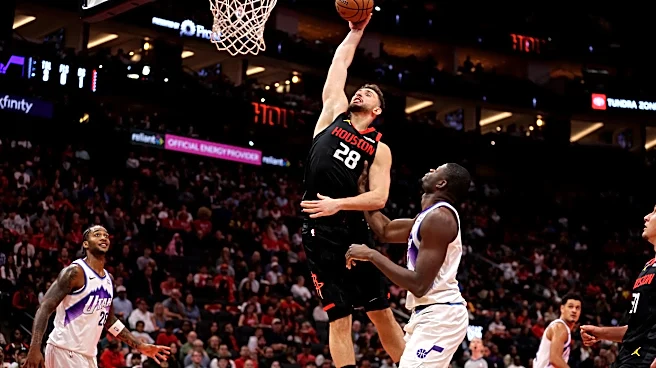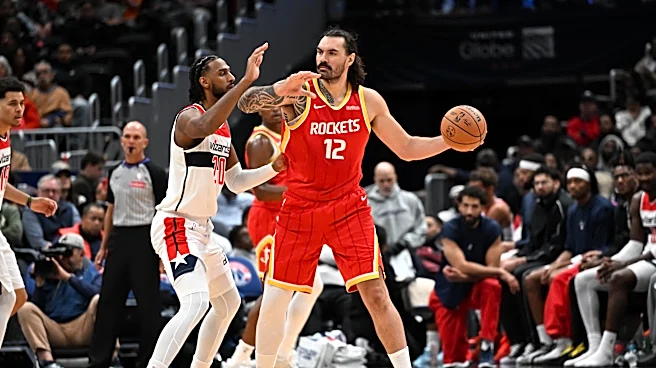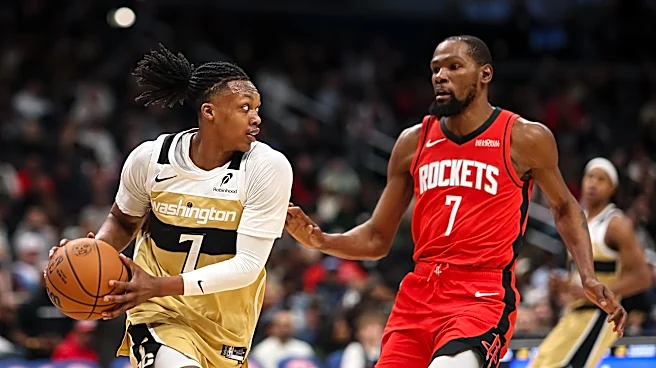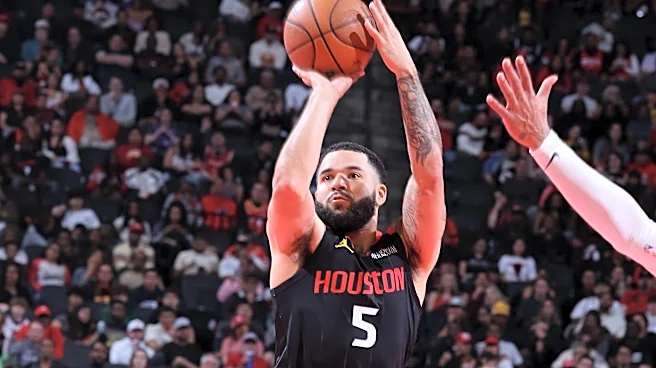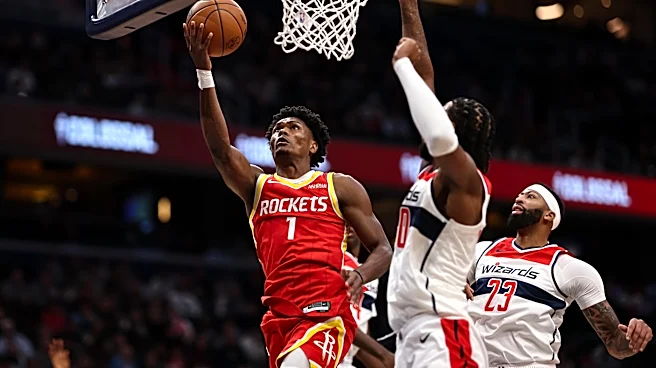




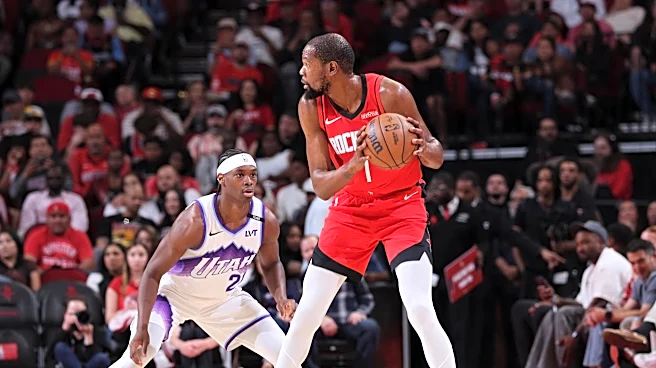
I would love to be able to share things I saw from last night’s game between the Wizards and Rockets. Unfortunately, the NBA’s local blackout rules prevented me from watching despite me having active subscriptions for NBA League Pass, Amazon Prime, Peacock, and ESPN.
Four streaming services, and I would have needed to shell out another $21.64 to watch this game. This is dumb. I’ve been a die-hard fan for multiple decades. I live 1,200 miles from the team I follow, and I pay for four streaming services that
carry NBA games (including League Pass!). And I still couldn’t watch last night’s game.

My experience fits neatly into Adam Silver’s aggressively dumb comments last year, part of which included the gem that the league he leads is a “highlight” sport. Hey fans, says the NBA Commissioner, you don’t need to watch the games. Just catch what other people thought was good on ESPN or YouTube.
At last for me, that doesn’t work. Nor does waiting 72 hours to watch a game. I watch large chunks of more than 200 games a year during the regular season, and then dozens more in the postseason. Even when I’m not watching to write about the Wizards, I enjoy the actual games. That’s because basketball is way more interesting than the highlights. I mean, I love the highlights too, but I appreciate the tactical battle that develops over the course of the full game.
I’m talking the individual matchups, as well as the game plans, sets and systems, counters, adjustments, counter-adjustments. Sure, the finishing dunk at a key moment is awesome. What’s really cool is seeing how it builds from a superbly designed play the team’s been setting up for weeks by doing the same thing in the same situation for two weeks — to put the action on film, to get the opponent to think one thing is coming, and then to hit them with something different.
It’s great to see the offensive system work…and then not work and see a couple smart teammates improvise something that gets a decent look with the shot clock running down. It’s even fun to see clever play work perfectly and have the shooter miss.
Heck, I love the weird and quirky stuff that comes from League Pass Premium — when the national anthem just lands, when that halftime entertainment that sounds impossibly stupid turns out to be impossibly entertaining, when the hype crew looks like they dressed in the dark from a grab bag of team fan gear, and leftover costumes from Wicked.
But, not last night. Because with revenues north of $14 billion, and profits literally guaranteed because of how the collective bargaining agreement and TV deal is constructed, the NBA’s gotta wring just a little more money out of fans.
Sure, they want to protect local broadcasting and streaming. Thing is, that can be done easily — it would just take a little thought and some programming. With AI, the programming would probably take a few minutes. And fans would never feel it. Because the NBA and their broadcast partners know when someone like me watches a Rockets game on League Pass. It’s all streamed, and they can track on an incredibly granular level. It would be trivial to develop an algorithm to shift the dollar or two or three generated by me watching a game on League Pass to the local broadcaster. Especially since I’d be WATCHING THE LOCAL BROADCAST.
This may be a strange concept for the billionaires running the NBA, but it’s good to think of your fans and their experience now and then. Especially a fan die hard enough to watch virtually every game played over the past 40 years by the Washington F. Wizards — a practice that continued even when I moved 1,200 miles away.
The Actual Game
I wrote the preceding during the first quarter. Naturally, this being the Wizards, they went full #SoWizards and thoroughly undermined my point. I’m expecting a call from Adam Silver any minute saying the league actually did me a favor. Because, ugh.
What a debacle this season is becoming. The Wizards lost their seventh straight game and dropped to 4-10. The final score was 147-119 — a 28-point drubbing. The game was out of reach by halftime. Sure, the Rockets are among the league’s better teams, but the Wizards were supposed to be competing this season. And the indicators 14 games into the season say they’re still among the NBA’s worst teams.
The Wizards had some achievements. Like, Trae Young went scoreless in a game for the first time in his NBA career. He did have three turnovers, though. Washington let the Rockets post a 66.1% effective field goal percentage, and rebound 42.5% of their misses. They also gave Houston 34 free throws. All that tallied to a staggering 147 offensive rating for the Rockets. League average so far this season is about 114.
Yikes.
Four Factors
Below are the four factors that decide wins and losses in basketball — shooting (efg), rebounding (offensive rebounds), ball handling (turnovers), fouling (free throws made).
The four factors are measured by:
- eFG% (effective field goal percentage, which accounts for the three-point shot)
- OREB% (offensive rebound percentage)
- TOV% (turnover percentage — turnovers divided by possessions)
- FTM/FGA (free throws made divided by field goal attempts)
Stats & Metrics
PPA is my overall production metric, which credits players for things they do that help a team win (scoring, rebounding, playmaking, defending) and dings them for things that hurt (missed shots, turnovers, bad defense, fouls).
PPA is a per possession metric designed for larger data sets. In small sample sizes, the numbers can get weird. In PPA, 100 is average, higher is better and replacement level is 45. For a single game, replacement level isn’t much use, and I reiterate the caution about small samples sometimes producing weird results.
POSS is the number of possessions each player was on the floor in this game.
ORTG = offensive rating, which is points produced per individual possessions x 100. League average so far this season is listed in the Four Factors table above. Points produced is not the same as points scored. It includes the value of assists and offensive rebounds, as well as sharing credit when receiving an assist.
USG = offensive usage rate. Average is 20%. Median last season was 17.7%.
ORTG and USG are versions of stats created by former Wizards assistant coach Dean Oliver and modified by me. ORTG is an efficiency measure that accounts for the value of shooting, offensive rebounds, assists and turnovers. USG includes shooting from the floor and free throw line, offensive rebounds, assists and turnovers.
+PTS = “Plus Points” is a measure of the points gained or lost by each player based on their efficiency in this game compared to league average efficiency on the same number of possessions. A player with an offensive rating (points produced per possession x 100) of 100 who uses 20 possessions would produce 20 points. If the league average efficiency is 115, the league — on average — would produced 23.0 points in the same 20 possessions. So, the player in this hypothetical would have a +PTS score of -3.0.
Players are sorted by total production in the game.