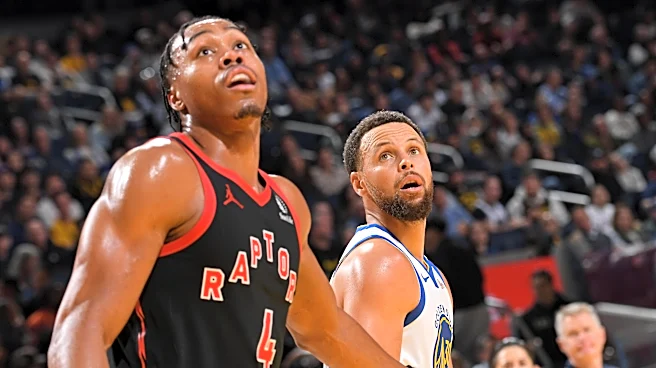


With Stephen Curry reportedly taking a ’don’t-get-too-excited-so-you-don’t-get-hurt’ approach to the final chapters of his Golden State Warriors’ tenure, it makes sense to think about alternative options that are on the table for the 12-time All-Star.
One destination that has surprisingly circulated in online discussions is the Toronto Raptors.
But is it a good fit for both parties? We think so and here are three reasons why:
The Raptors have the assets
Even with the reported Kawhi Leonard trade package – which includes a 2031
and 2033 first-rounder – Toronto still owns a first-round pick for the next four years. Other popular options, like the Miami Heat, Boston Celtics, and Denver Nuggets, can’t say the same thing. The San Antonio Spurs do own a first-rounder through the next four seasons, but they can’t offer a better package without sacrificing their young (and special) talent on controllable contracts.
Is that something the Spurs want to do for a 38-year-old on an expiring contract?
At the moment, a realistic offer could include De’Aaron Fox, another piece to bring the salaries within reach, and draft picks. The issue with Fox’s contract is that he has four years remaining on his deal, with the last year paying the guard over $61 million.
Meanwhile, the most popular Raptors offer (at least through online discourse), consists of Immanuel Quickley, RJ Barrett, and draft picks. Quickley is owed $32.5 million each season for the next three years, while Barrett’s value is attached to a nearly $30 million expiring contract.
The Raptors are the best fit
There isn’t another team that is best suited to absorb a version of Curry that is in the back end of his career. Last year, Toronto ranked fifth in defensive rating (112.1) and has seemingly added Leonard to its defensive attack. Surrounded by Scottie Barnes, Collin Murray-Boyles, Ja’Kobe Walter, Jamal Shead and Allen Graves, Curry can focus on doing what he does best, and that’s being an otherworldly shooting threat. On defence, expect an endless amount of pre-switching from multiple positions, forcing opposing ball-handlers to have to deal with what they can get, while on a short clock.
Other than Leonard, there isn’t another player on the roster who truly demands the ball in their hands. While Barnes graduated to superstar status in the playoffs against the Cleveland Cavaliers, he’s always been at his best as a jumbo-wing-bully-hub.
Raptors Head Coach Darko Rajakovic’s offensive system is predicated on ball-movement and quick processing. Even with the offensive build-up that Brandon Ingram required to deploy his mid-range brilliance, Toronto still ranked third in assists (29.5) and potential assists (52.6) last season. A potential assist is defined by the NBA as ‘any pass to a teammate who shoots within one dribble of receiving the ball’. For comparison, the Warriors ranked sixth in assists (28.9) and first in potential assists (56.5). Theoretically, Curry would be walking into a system that emphasizes his elite skillset.
The Raptors offer the best narrative
While donning a Charlotte Hornets or Cavaliers jersey would most accurately tell a homecoming story, Curry ending up in Toronto would also lean into a ‘prodigal son’ narrative. The greatest-shooter-of-all-time spent several of his formative years in Canada, where his father Dell Curry, played for the Raptors.
In addition to experiencing the NBA world against the backdrop of the formerly known Air Canada Centre, Curry also played school ball in the Greater Toronto Area. His wife, Ayesha Curry, is famously noted for being born and growing up in a suburb of Toronto.