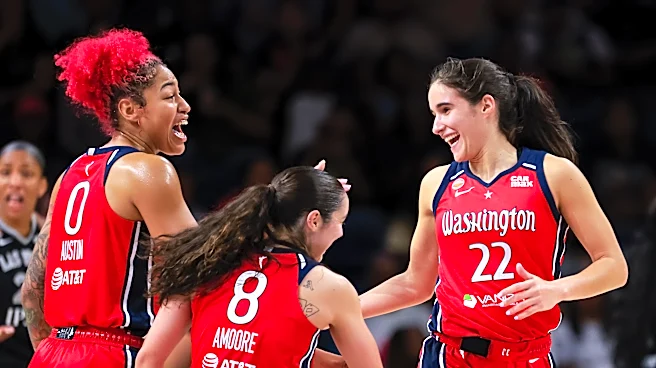






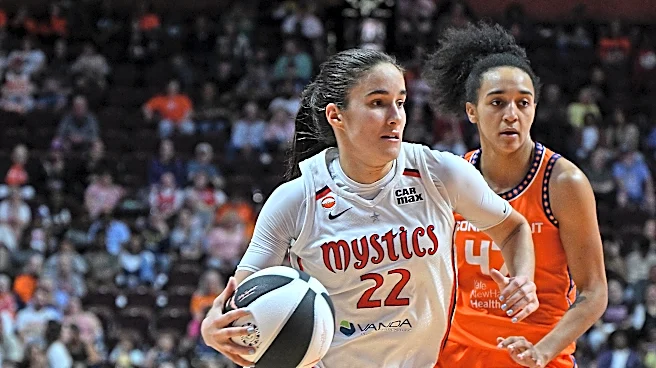
The Washington Mystics, thought of by many to still be a lottery-bound project even after consecutive years of three first-round picks, are approaching August with a record of 15-12.
The mark is enough to position them in the postseason picture, with a 4.5-game advantage over the ninth-place Portland Fire.
With just two months and 17 games left to play, lets evaluate the three things Washington needs to do in the last stretch of the regular season to secure their return to the postseason.
1. The Mystics must keep up the defensive dominance

Easily, the
highlight of this Mystics season has been the defensive side of the floor.
Behind Kiki Iriafen and Shakira Austin, Washington is the best rebounding team in the league (top two in rebounds on both sides of the ball) and they are ranked second in scoring defense. They have the second-best 2-point defense and fourth-best 3-point defense as well.
The physical construction of Sydney Johnson’s roster has aided their defensive abilities, even moreso than it’s hindered their offense.
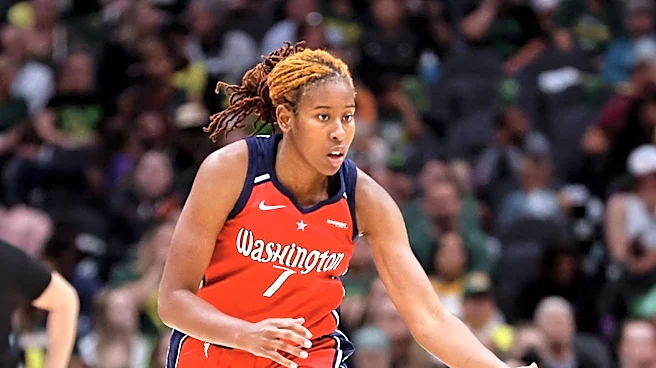
They have a saturation of powerful bigs with Iriafen, Austin and Lauren Betts, and also a handful of equally-built wings. Michaela Onyenwere, Cotie McMahon, and Cassandre Prosper are all physically dominant and rarely give up size to their matchups. Onyenwere and McMahon both sport muscular frames which hold up well on that side of the ball, while Prosper’s slimmer 6-foot-3 frame gives her length to recover from bumps and quick stops.
Washington isn’t a high pressure defense that plays aggressively in gaps or forces a ton of turnovers, but they have great physical personnel and they play well as a unit. That needs to continue to be their calling card to make up for one of the league’s worst offenses if they want to have a chance at winning a playoff game.
2. The Mystics must value the basketball

Washington’s transparent flaw is their overall offense, and it’s clear where their attack falls short.
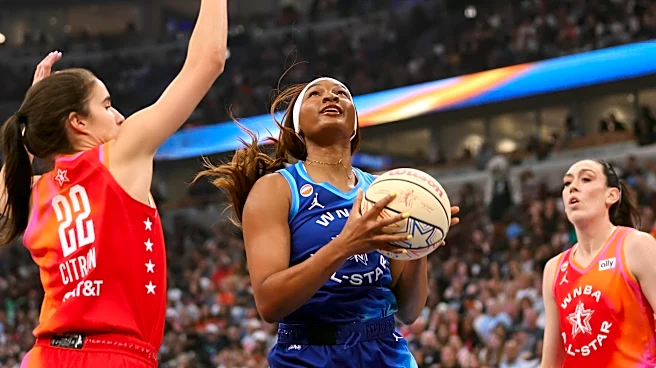
They are a horrific shooting team, they lack true isolation advantage creators outside of Sonia Citron and they turn the ball over at the worst rate in the WNBA. Unfortunately for Johnson, only one of those issues projects to be fixable throughout the course of two months.
Shooting the second-fewest 3 and making them at the second-lowest percentage is not a vice that can be cured with a couple hours on the shooting machine after the occasional practice. That’s a roster construction issue that has plagued this team for two years—and they’ve done virtually nothing to fix it. Washington will not magically become a better shooting team at any point this season. They may have games where they get hot and shoot 40 to 50 percent from deep, but shooting will continue to be a sore spot for the Mystics.
The same goes for isolation abilities. You don’t need to have a plethora of offensive engines to be a passable WNBA offense, but it allows you to diversify your offense and move away from having to get into ball screens or dribble handoffs in every possession. Having isolation scoring threats allows for quicker advantages down the court, which ends up creating high quality looks for everyone on the team. While others besides Citron have flashes of advantage creation, Washington will still have to rely heavily on set triggers to get them advantages, forcing them to play slower.
Conversely, the Mystics can hope to resolve some of their turnover issues in August and September.
They give away possession more than 15 times per game, and as Josh Felton just pointed out, that allows opponents to get five to 10 more shot attempts per game, which cancels out some of the Mystics’ defensive prowess.
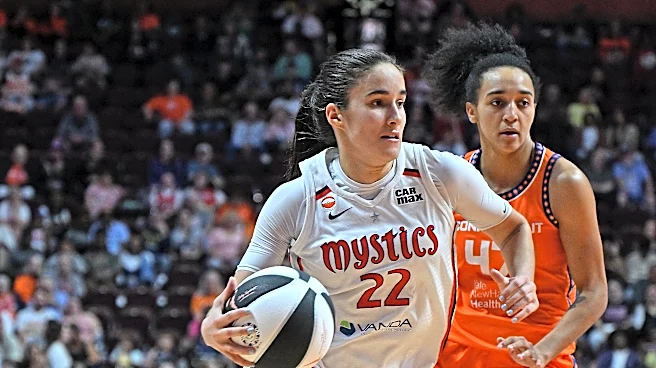
There is no one culprit for Washington’s turnovers, but I would point to Austin, Iriafen and Onyenwere as having the less acceptable turnovers. Those three have a low playmaking burden for Johnson’s squad, so they don’t have the excuses of primary on-ball playmakers Georgia Amoore and Alicia Flórez. The Austin-Iriafen-Oyenwere trio commit almost seven turnovers per game, and it would be huge to get that number down closer to five or four.
Valuing possessions will be consequential for the Mystics in their attempts to make up for their lackluster offense.
3. The Mystics must continue to thrive in clutch moments

A harsh question that we have to ask of the Mystics season is whether or not their record accurately reflects how good or bad this team is.
On one hand, almost every stat— point differential, net rating, expected win-loss—points to the fact that this Mystics team should probably be sitting significantly below .500 right now. Their “expected” record based on those stats is 12-15, and they give up more points on average than they score.
However, the Mystics have been titans in close games. They’re 9-5 in games decided by two possessions or less, which is why they have a positive record despite a negative point differential. They have games where they get blown out of the water, but when they’re in a dog fight, they tend to come out on top. In many ways, that’s more indicative of a talented team than a slightly positive point differential is. The ability to win games is far more important than the ability to have a good point differential, and scrappy teams are the ones that are able to pull wins out in games that they had no business being in.
Luck will always play some role in close wins, as it will in the five close games they lost.
But “lucky” wouldn’t be the right word to describe this Mystics team. More like “perseverant” or “adaptable.” They’ve proven that on good nights, they can keep up with anyone in the WNBA, and that’s a promising sign for the postseason future of the Mystics.