


Over the weekend, the Mets signed Jorge Polanco to a two-year, $40 million deal. The move was the club’s first noteworthy move on the offensive side after trading Brandon Nimmo and letting Pete Alonso sign with the Orioles.
While the move doesn’t perfectly replace the production lost from either player or neatly fill the vacated positions, it does offer a glimpse into David Stearns’ strategy and how he will tackle the remainder of the offseason. Stearns, above all else, values positional and lineup
flexibility, and that’s something that Polanco offers and neither Nimmo nor Alonso could. Stearns is also somebody who is not afraid to get creative and think outside the box when filling in the roster, and that is on display with this signing.
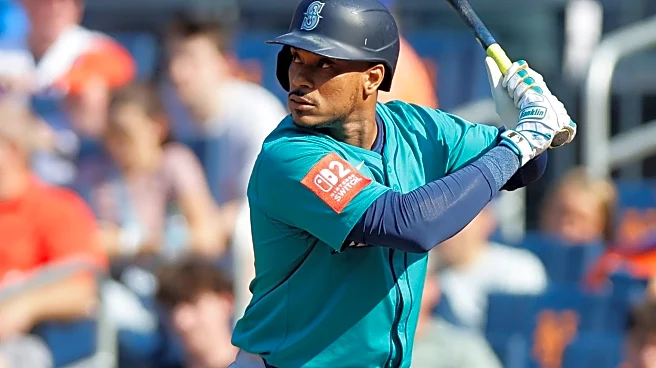
The move raised some eyebrows given Polanco’s career track record. The 32-year-old has spent the majority of his career at second base and shortstop, logging 430 and 501 games at those positions, respectively. He spent most of 2025 as a DH but also logged 38 games at second base, more than any other position. The Mets, meanwhile, are well covered at those positions with the recently-acquired Marcus Semien and Francisco Lindor. And for the record, Polanco hasn’t appeared at short since 2022. It is also worth noting that Polanco is far from a plus defender, posting a -4 OAA in 2025, including a -1 OAA at second. That comes on the heels of Polanco posting a -10 OAA at second during the 2024 campaign with Seattle.
Will Sammon was the first to suggest the idea that the Mets could be looking to sign Polanco as a first baseman—he did this one night before the signing happened. Polanco has appeared in exactly one inning of his major league career at first base—for one batter, to be exact—and was not tested at the position. This happened in April 2025, due to necessity rather than strategy on the part of the Mariners. However, Stearns clearly feels that Polanco can handle the position and trusts him to make a smooth transition to it. There is a slim possibility that Polanco can play third after logging five games at the position in 2025 and 29 games there in his career. This appears to be the least likely option, but just something to consider as a distant possibility.
For now, it appears that Polanco will get a majority of the reps at first, making him the de facto replacement for Alonso. However, Stearns is hardly one to show his entire hand, and it would be foolish to assume the Mets aren’t looking at other first base options. The club could still look to acquire someone with a little more experience at the position, but they clearly remain interested in someone who can cover multiple positions and not exclusively someone who will take up a roster spot while playing just one role.
Polanco also figures to get a lot of time at DH with Starling Marte’s departure (for now). Polanco posted the second-best season of his career in 2025 by wRC+ (132) and the third-best season of his career by fWAR (2.6). He experienced a power resurgence with 26 home runs, his most in a season since his 33 homers in 2021. It was also his healthiest campaign, as he appeared in 138 games, the most since logging 152 in 2021 and the third-most of his career. He’s a switch hitter who hits left-handed pitchers better than right-handers, and with the club in need of a right-handed bat with Alonso’s departure, he fits that mold well. Polanco hit .308/.348/.548 with a 153 wRC+ against lefties and .254/.321/.481 with a 127 wRC+ against righties in 2025.
Polanco will seemingly spend the majority of his time as a Met at first base and DH. That likely means that Mark Vientos could occupy whichever position Polanco isn’t, playing first when Polanco is the Mets’ DH and serving as the DH himself when Polanco is at first. Semien and Lindor will occupy the middle of the infield, and Baty will take the majority of reps at third. There’s still the question of where Jeff McNeil fits in, but the club is still likely to explore trading him. McNeil’s name has been floated both as a potential left field replacement for Nimmo, a first base replacement for Alonso, and everything in between. McNeil’s greatest strength is his flexibility (something we’ve already established that Stearns values), but his prior clubhouse drama, his association with the old core that Stearns is trying to dismantle, and his advancing age make him a likely candidate to be moved before Opening Day.
There’s still an entire offseason to go, and Polanco’s role with the Mets and the outlook of the team’s outfield and lineup will probably change a dozen more times before the team plays its first game. Stearns has shown to not be someone to play by traditional baseball rules of configuring a roster and lineup, and he will look to explore all potential options to replace the production lost with the departure of the team’s core stars. Polanco was a good start, as he fits a few needs, but the team will need more in order to build a lineup that’s ready to compete for a postseason spot and the World Series in a tough National League.