




During the lead up to NHL Free Agency, Elliotte Friedman made a prediction on what a potential Quinn Hughes contract extension with the Minnesota Wild would look like. Three years, $18M AAV, and the key words here…..sometime in July.
July has come and gone with no Quinn Hughes extension in Minnesota. We’re almost halfway through August now with no Quinn Hughes extension. And a quick reading of the tea leaves from halfway across the country would suggest that a deal, while still certainly possible
and perhaps even probable, isn’t necessarily imminent.
I’m not saying that Friedman was throwing those numbers haphazardly out there. He has his sources, as do the Michael Russo’s of the world who cover the Wild. I’m sure their sources (likely Bill Guerin or someone else high up in the Wild organization) threw that particular number and term out there, which just so happens to align Quinn’s deal with Jack Hughes’s deal with the Devils, for a reason. Yes, it’s an educated guess on what a Quinn contract extension might look like. It also sets up the possibility of the brothers teaming up come 2030, when both Quinn and Jack could hit the open market together.
I’m sure Wild fans think that Hughes triforce will eventually be completed in Minnesota, as Devils fans likely think it’ll be completed in New Jersey. Not to mention the other 30 teams that would line up to make their case if and when they ever hit the open market. I get all that. I also get that everything I’m about to write is coming from the perspective of a Devils fan writing on a Devils blog. Anyone on the outside of our Devils-centric bubble will likely take what I’m about to write with a grain of salt, which is fine.
I’m simply stating that it goes noted that for something that supposedly was merely a formality to the point where specific numbers for term and an AAV were thrown out there publicly by perhaps THE preeminent NHL insider who covers the sport, it hasn’t actually happened yet. That’s not to say it won’t. But it hasn’t happened yet.
Friedman is certainly sticking to his guns when he updated this situation last week, which is to be expected. Minnesota didn’t give up what they gave up to bring Quinn in in the first place to go down without a fight and be forced to pivot. They’re going to exhaust their options to get his name on the dotted line on a new contract. But even Friedman acknowledges that he’d start to get worried if its not done by the start of the season, and we are inching closer to Opening Night with each day that passes.
The NHL has a long offseason. The Minnesota Wild played their final game on May 13th, a 4-3 OT loss to a Colorado Avalanche team that dominated that series. Quinn Hughes certainly said all the right things if you’re a Wild fan about how he was open to the idea of extending in Minnesota when the team conducted exit interviews (although to be fair, what else is he going to say? That Minnesota sucks and he doesn’t want to play somewhere where it’s -5 degrees in January? But I digress).
A lot of time has passed since then though. The emotional highs and lows of last season have come and gone and he has had time to reflect on everything and think about what he wants long-term. And it shouldn’t be surprising to anyone that Quinn, who is obviously very close to his brothers (who both are under contract with the Devils), has spent a lot of time this offseason with them in New Jersey. They’ve spent a lot of time in Michigan, where their family has deep roots. Just because he’s spending a lot of his summer with his brothers in New Jersey doesn’t mean he’s planning on signing there in 2027….but it certainly doesn’t hurt either.
It would be incredibly naive to think that the brothers, who all share the same agent, along with their parents haven’t had some discussions about the future with Quinn being the next in line to sign an NHL contract. But the biggest question that they’re likely wrestling with as a family is this….what does Quinn want out of this?
I think we all probably know the answer to that question already, as the worst kept secret in the sport is that the Hughes brothers want to team up together. Jim Rutherford said the quiet part out loud last year regarding what Quinn wants, and we certainly know Jack and Luke want the same. But there are other factors as well, and I think when one considers all of those factors, its easy to see why Quinn might be having second thoughts about signing in Minnesota.
Frankly, it doesn’t make a ton of sense for him to sign there in the first place. It never did.
The Opportunity To Play With His Brothers
Let’s address the elephant in the room.
There are a lot of machinations as to how other teams like Minnesota could eventually convince the Hughes brothers to team up for their NHL club. And if teams want to operate with the summer of 2030 in mind, that is their prerogative.
If the endgame is that they all team up together somewhere, and this is something that has been predetermined by them since the Devils drafted Luke 4th overall in 2021, there will NEVER be an opportunity for a cleaner unification of the Hughes brothers than there would be in the summer of 2027 if Quinn simply opts not to sign a contract with anybody other than New Jersey where his brothers already are. The Devils have the cap space and the roster flexibility to sign Quinn and continue to build out the roster.
Sure, Quinn could sign a three year extension with Minnesota now, with the idea being that he and Jack team up somewhere in 2030. Never mind the fact that that particular scenario leaves Luke out on an island by himself if that somewhere is anywhere but New Jersey, which nobody who brings up the three year deal ever seems to acknowledge being a thing.
Let’s talk about the hypothetical scenario that Quinn and Jack team up somewhere else in 2030, whether that’s Minnesota, Detroit, or any of the other 29 teams. And let’s say that particular team decides to call up the Devils to inquire about Luke at that time.
If I’m Sunny Mehta (or whoever the Devils GM is at that time), I say that’s nice, but if I’m trading Luke Hughes, I’m making the best deal possible with the asset that I have. Which at the end of the day, isn’t all that much different than what Vancouver did when they dealt Quinn to Minnesota in the first place. Minnesota got Quinn in large part because their offer was better than the Devils offer, and they had the cap space to make said deal without shuffling a bunch of other pieces around. Vancouver did what was best for them, as they should.
Shouldn’t the Devils do the same if things get to that point?
In that case, we’re talking about 2032 at the earliest for the three to unite? That’s six years from now.
OR
If the brothers ultimately want to play together and that is their endgame, and we think that it is, they can make it happen 11 months from now by simply having Quinn doing nothing but playing out the year.
Sometimes, the simplest solution is the one that fits best. Occam’s razor, if you will. Why make things more complicated with hypotheticals years from now if you know what you want and you know what your family wants?
Six years is an eternity and a LOT can change between now and then. By then, both Quinn and Jack will be in their 30s. Jack and Luke have both already suffered pretty significant injuries requiring surgery. Players have short careers. Hockey is a physical game. We have no way of knowing what the future holds, but the idea that a potential career-shortening injury has to at least be on the table when talking about players with injury histories like the Hughes’s have. How could it not be?
I get athletes, and people in general, are wired to think that those types of things happen to other people, but not to them. But if playing with your brothers is that important a motivating factor to your decision for a variety of reasons (having all the brothers together instead of having one of them consistently flying halfway across the country, making it easier for their parents to see them play, etc), then why punt that decision a half decade plus from now when you have the power to make it a reality next July? In a league where players are wielding their power of choice of next destination more than ever? Wouldn’t it make more sense for the brothers to team up as soon as possible, while all the brothers are still in or about to enter their physical prime?
If you don’t think Bill Guerin knows how important a pull family is here, why else do you think he supposedly called the Devils on Jack’s availability? Why do you think Bill Guerin made calls on Luke Hughes in the past? If Quinn to Minnesota was as “done deal” as the insiders would leave you to believe, why are you going for the cherry on top of the proverbial sundae when you know what the answer is going to be on the other end of the line?
Bill Guerin isn’t stupid. If Quinn ultimately doesn’t re-sign in Minnesota, he knows the reason why.
Anyone Can Pay Quinn a Ton of Money
Money is an incredible motivating factor. The salary cap is exploding and will only continue to do so in future years, and that $18M AAV is probably what a player who is on the shortlist for best defenseman in the NHL should be commanding in this market. And even with some big commitments in place already, Minnesota is well positioned to offer Quinn Hughes $18M annually. It’s a strong argument, and Bill Guerin has already shown with Kirill Kaprizov a willingness to continue throwing money at the player until he eventually says yes. It’s hard to say no to the kind of money we’re talking about where the next several generations of Hugheses never have to worry about money.
But you know who else can pay Quinn Hughes $18M a year beginning in 2027-28?
Of course, the list of teams that Quinn is likely willing to sign with is far shorter than that. He’s not going to go back to Vancouver despite them having $50M in cap space.
The point is that a lot of teams have money to spend, and even in the case of Toronto or Florida who don’t currently have $18M in cap space for 2027-28, you can bet that John Chayka and Bill Zito would find a way to clear cap space in a hurry if Quinn Hughes did decide he wanted to play for their organization.
Yes, your dollar goes farther in some markets than others. The tax advantages that teams like Vegas, Nashville, and the Florida teams isn’t going away. And yes, we are talking about a player who already has an estimated $40M in career earnings. Quinn Hughes, and the Hughes family in general, isn’t hurting for money.
The money will be there regardless of what team he picks. Quinn Hughes could suffer a season-ending injury tomorrow and he’ll still be able to command that type of salary on his next contract because of who he is as a player. He would still have teams lining up for the chance to make their pitch. He’s not your run of the mill journeyman defenseman who might be incentivized to take the money now. The money will be there tomorrow and there will be no shortage of suitors.
Cale Makar is Due a Payday, and That Matters
Quinn Hughes isn’t the only defenseman in the running for Best Defenseman in the NHL up for a new contract this summer.
Cale Makar, arguably THE best defenseman in the NHL today, is also entering the final year of his deal. And while he doesn’t have to consider the possibility of teaming up with his brothers at his next destination, when you are arguably the best player in the league at your position, the expectation is that you sign a contract reflective of that.
I get that hockey culture has shamed the Connor McDavids and Sidney Crosbys of the world into taking team-friendly deals throughout their careers for the “betterment of the team”. But Makar is the total package as a player. Former Calder Trophy winner. Two-time Norris Trophy winner (and perennial finalist). Conn Smythe Winner. Stanley Cup champion. He’s the best player in the league at his position, and as a bonus, he’s right-handed. He plays a premium position.
I haven’t followed Makar’s situation that closely, and I don’t know if he’s open to leaving a little bit on the table so Colorado still has room to build around him and Nathan Mackinnon. But he would certainly be within his right if he opted for a max-term deal that made him the highest paid defenseman in the league, blowing Bowen Byram’s deal with the Blackhawks out of the water. If Quinn Hughes can get $18M, why shouldn’t Makar get $19M? If Makar chooses to take a little less to help out the Avalanche, that’s his choice to make. But this should be a deal that resets the market, and the only reason it wouldn’t be is if the player decided to help management out.
There’s little reason for both Makar and Hughes to sign on the dotted line until they know what the other one is getting first. And while I expect Makar to get a deal done with the Avalanche eventually, it gives Quinn more leverage to ultimately turn back to a desperate Guerin and say that “yesterday’s price is not today’s price”.
How Does Dylan Larkin Fit In All of This?
I’m going to throw out a potential controversial opinion that Devils fans might not like.
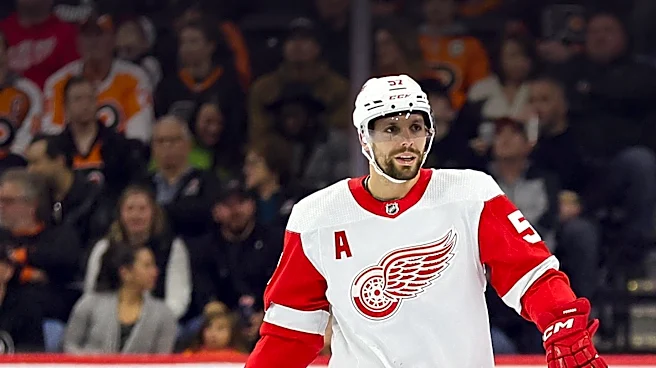
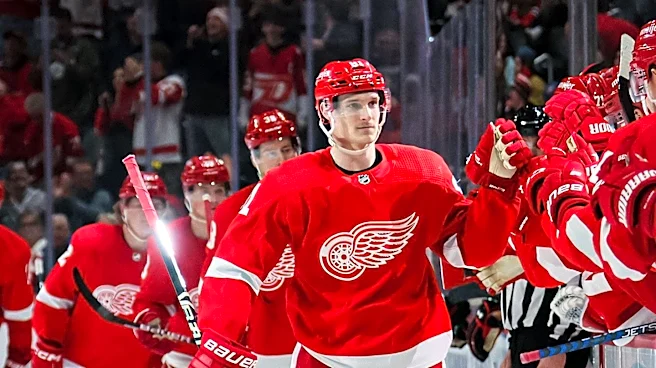
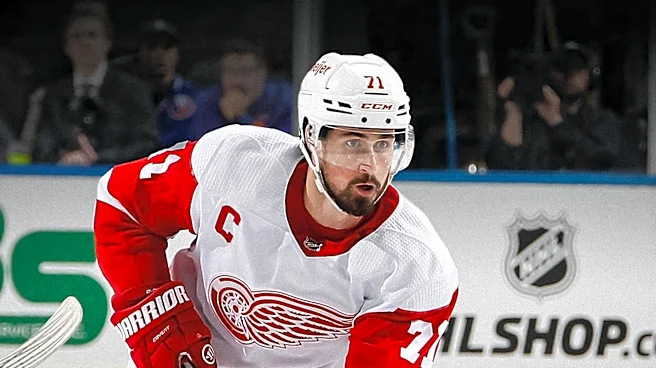
I think if the Wild were to somehow get Dylan Larkin, that would clinch things in their favor when it comes to re-signing Quinn. At least for the three year deal that has been predicted. Larkin is reportedly close friends with the Hughes brothers, and he too was a part of the Olympic Gold-Medal winning team.
Minnesota has a hole at Top Six center that is not an easy one to fill. Joel Eriksson Ek is a good player, but he’s probably a tier below Nico Hischier in terms of top-line caliber centers. What I mean by that is that he does a lot of things well, but not quite as well as Hischier. Ryan Hartman has been playing there out of necessity but he’s closer to being a really good third line center than a 1C. The Wild traded Marco Rossi in the Quinn deal, Michael McCarron is a 4C, and Danila Yurov is an upside player that reportedly has been part of the package Minnesota is willing to part with to get Larkin in the first place. It’s a big hole that Larkin would go a long way towards addressing.
I’m sure the Wild would love to part with Yurov, Charlie Stramel, and whatever picks they want to get Larkin. But if that package was good enough to get Larkin, who has 5 years remaining on a contract paying him $8.7M AAV, Detroit likely would’ve accepted it already.
It wasn’t a good enough package for Steve Yzerman to accept, and now he’s no longer the Red Wings general manager. Detroit is just now going through the process of hiring a new general manager, having just hired a search firm last week. I don’t know how the Larkin situation ultimately plays out, but I don’t think they’re going to trade him until there’s a new GM in place, at the earliest. AGM Shawn Horcoff reportedly isn’t allowed to make any trades, and there’s no bigger trade Detroit can make than trading their captain and arguably best player. It’s a trade they have to get right.
Whenever a new GM does come in though, I don’t think its probable that that guy calls the Wild back and takes their magic beans offer for Larkin. Incoming executives don’t typically rush into trading away their franchise player, and with 5 years left on his deal, there’s no rush to move Larkin regardless of how much noise he makes. If Larkin is serious about wanting a trade, he can either expand his list or pipe down. That’s how I’d be looking at this as an incoming GM.
All of this takes time, and it’s time Minnesota doesn’t have if their hope is to get a deal with Quinn done before the season. Detroit is under zero obligation to placate Larkin by sending him to a preferred destination, and there’s nothing Minnesota can do unless they upped their offer to include someone like Matt Boldy or Brock Faber, which would be counterproductive.
Where Can You Win?
Minnesota’s strongest pitch to Quinn, and one that Guerin has likely been harping on during negotiations, is that Minnesota is better positioned to win a Stanley Cup than New Jersey.
Admittedly, it is a compelling argument.
Players do want to win. Nobody wants to be on a losing franchise. And if I just want to look at last season, Minnesota had 104 points and made it to the second round of the playoffs. Even if I wanted to nitpick and point out that they beat a Dallas team playing without their top line center, them’s the breaks. You play who you play on the schedule when you play them and don’t have to apologize for that.
Meanwhile, the Devils had 87 points and finished 7th in the Metropolitan Division. Minnesota has been the more consistent franchise on a yearly basis since they convinced Ryan Suter and Zach Parise to team up together back in the summer of 2012. Minnesota has yet to reach a Conference Final, let alone compete for and win a Stanley Cup, but they’ve clearly been the more successful modern NHL franchise for the past decade and a half.
Acknowledging all of that, who is better positioned moving forward between Minnesota and New Jersey?
It’s probably closer than you think.
There’s no doubt that the Wild have excellent high-end players between Kaprizov, Matt Boldy, Joel Eriksson Ek, and Brock Faber. But as I already mentioned, it is a roster with holes that have yet to be addressed this summer and a lack of cap space and assets with which to do it.
Minnesota emptied their chest of assets when they landed Quinn Hughes in the first place, and rightfully so. But they still have a glaring hole when it comes to adding a Top Six center, and despite Dylan Larkin practically begging to join his Olympian teammates in Minnesota, that deal hasn’t happened. And if you don’t have the assets to get Dylan Larkin, I’m going to go ahead and suggest that you don’t have the assets to get a Jack Hughes either.
The Wild did bring in Blake Coleman this offseason, and we all know what Coleman brings to the table. But we are talking about Coleman replacing Mats Zuccarello (who Guerin didn’t show a ton of urgency to bring back), Vladimir Tarasenko (still a UFA as of this writing) and Marcus Johansson (who signed with Farjestad of the Swedish League prior to the market opening). I get why Minnesota moved on as these are older, aging wingers, but they didn’t do enough to replace them. Bobby Brink will be counted on to pick up some of the slack, but that’s a lot of question marks currently in Minnesota’s middle six.
I’m not saying that Minnesota is a bad team or that they’re incapable of figuring it out and making it all work. I’m simply pointing out that as of this writing, a top six center and at least one more middle six winger are fairly significant holes at this stage of the offseason. Particularly for a team that hopes to be a Stanley Cup contender.
The Devils don’t have those same question marks down the middle as the Wild, as Jeff Marek pointed out last week on The Sheet. Their question marks are elsewhere on the roster. Goaltending is an obvious one. The Devils don’t have a top line winger as good as Boldy, let alone Kaprizov. And aside from a potential breakout season by Luke Hughes, they lack defensemen who can move the puck.
And if he is having second thoughts about whether he can win in Minnesota, but doesn’t want to go to New Jersey, there’s plenty of other teams that have cap space that would be happy to have him. Teams like Vegas, or Tampa Bay, or Carolina, or whoever.
Teams with a recent history of winning a championship. Something that Minnesota has yet to accomplish.
Minnesota does have recent history on their side, although it doesn’t really matter what you already did when you’re comparing and projecting against what you could do going forward. Quinn is exactly the type of difference maker who can almost single-handedly change a team’s trajectory, much like he did with Minnesota turning them from a good team to a Cup contender. Plucking Quinn off of the Minnesota roster and dropping him onto New Jersey’s roster would be a significant move for both franchises.
Final Thoughts
I do run the risk of, after writing nearly 4000 words on the matter, looking ridiculous if and when Quinn Hughes does put pen to paper on a contract extension in Minnesota. This article will probably be sent to Old Takes Exposed, I’ll get dunked on from all corners of the internet, and we would then get to deal with the anxiety of wondering whether or not Jack and/or Luke are indeed planning on leaving once their contracts are up.
If that happens, I’ll be fine. I’ll be able to sleep at night.
I’m just saying that from a purely logical standpoint, it makes little sense for Quinn to sign in Minnesota right now.
If the idea is that he wants to play with his brothers, and that is that important to him, the easiest way to do so is to simply wait. Remember, the Devils have zero obligation to trade Jack and Luke elsewhere to make Quinn happy if he extends in Minnesota. If and when the time comes for the Devils to have those trade discussions with Jack and Luke, it would make the most sense for them to maximize a return for both of them, which likely means separating them anyways since they’ll both likely command a huge return. There’s little reason for the brothers to play the “lets see what the landscape looks like three years from now” game when you can make it happen in a year.
If money is the motivating factor, anybody can pay Quinn a ton of money. The US dollars that Bill Guerin and Craig Leopold can offer aren’t any more or less special than the dollars that Sunny Mehta and David Blitzer can offer, nor is it any more or less special than any other GM and owner combination you want to conjure up. There might be NHL cities and states where you get more bang for your buck because of the tax situation. Does that outweigh the countless endorsement opportunities the brothers would potentially have together playing in the shadow of the media capital of the country, especially if they were all on the same NHL team? Who’s to say?
If winning trumps all, Minnesota has a stronger argument than the Devils just from their recent history. But Minnesota does not have a much stronger argument than the Devils when it comes to farm systems moving forward, nor do they have a stronger argument than other teams that would like to get in the mix. And with the Devils under new management and with two legitimate NHL centers, there’s a case that could be made that they’d be the better landing spot over the next few years anyways. It remains to be seen what Sunny Mehta is as a GM but the early returns are promising and he’s already got a major endorsement in the form of a long-term deal for captain Nico Hischier. If Hischier had doubts, he could’ve easily gone to market a year from now.
At the end of the day, Quinn Hughes has no ties to Minnesota outside of the 48 regular season games and 11 playoff games he’s played there. He did not ask to get traded there, and he probably would’ve preferred Tom Fitzgerald not fumbling the bag and finding a way to pairing him up with his brothers last December. He doesn’t owe Bill Guerin or Craig Leopold anything regardless of the assets they gave up to get him. He’s a year away from unrestricted free agency and they call it unrestricted for a reason.
Quinn does have ties with Bill Guerin through USA Hockey, as well as his Olympic teammates on the Wild, and those are certainly compelling reasons to want to stay there. But does anyone seriously think those connections outweigh the ones he has with his brothers. His brothers that he spends a lot of his free time with?
Quinn can sign a contract at any point in the next calendar year. He still might, rendering this entire article moot and pointless. But he hasn’t done it yet, and people should be asking why the closer we get to the season. And the longer this goes on and the closer he gets to unrestricted free agency, it makes more sense for Quinn to simply do nothing, play the year out, and take control of his immediate hockey future.