
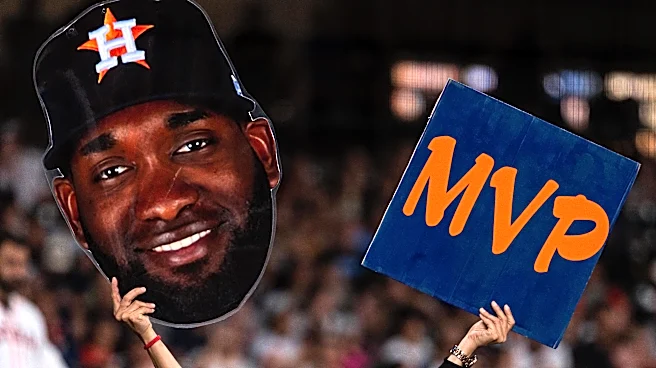
Bold Predictions
Paul Dietrich: The Brewers have a pair of 30/30 players
Well, I took this assignment pretty seriously. I predicted before the season that Jackson Chourio and Brice Turang would each finish with 30 homers and 30 stolen bases. Chourio did go 20/20 for the third time in his three seasons, but his early-season injury prevented him from reaching the 30/30 mark; with 25 homers and 23 stolen bases in 127 games, he very well may have made it if he’d made his season debut before May 4. Turang, though, didn’t
get particularly close. While he had an excellent season (more on that below), he hit 21 homers and stole 19 bases, not even close to the 30/30 threshold.
Harrison Freuck: Jacob Misiorowski reaches the 200-strikeout threshold
This doesn’t really seem all that bold in retrospect. In my defense, though, Miz entered the season with just 66 major league innings under his belt, and he was coming off a career-high 129 1/3 innings, which would mean he’d need an incredible 13.9 K/9 to reach 200. Well, he didn’t quite get that K/9 rate, but he did throw 174 2/3 innings, and with 13 K/9 over that stretch, he ended up leading the majors with 252 strikeouts. Not too bad for a 24-year-old who entered the season with command issues.
Jackson Heiden: Jake Bauers is the true team MVP
Well, I kinda cheated, considering I didn’t join the writing staff until May, so I’ll be going off who I felt was the midseason MVP for the Brewers. All I can say is boy, did that age well. Bauers will never have to pay for a drink in the state of Wisconsin after his performance in the postseason. He drew 10 walks, collected nine hits, and had arguably the biggest home run of the postseason to give the Brewers a lead over the Dodgers. Outside of that, he turned in career highs in every statistical category, proving to be one of the best and consistent players all season long.
Jason Paczkowski: Brice Turang finishes in the top five for NL MVP
Definitely got this one right. Even before the MVP vote is revealed on Thursday, we already know that Turang is in the top three for NL MVP. While he’s unlikely to win it over Pete Crow-Armstrong, he has a chance at finishing second over Shohei Ohtani (which none of us would have thought possible at the start of the season). He finished third among position players in the NL with 5.9 fWAR and 7.3 bWAR.
Adam Zimmer: Jacob Misiorowski is a top-five NL Cy Young finisher
Nailed this one. I’ve been super high on Misiorowski since he was a minor leaguer, but even I didn’t expect his first full season in the big leagues to be one of the most dominant seasons ever, putting his name in conversations with legends like Randy Johnson and Pedro Martinez. My bold prediction may not have even been bold enough; Miz hasn’t officially been named the National League Cy Young winner yet, but he’s the odds-on favorite.
Storylines to Watch
Paul Dietrich: Who is the first blue-chip prospect to break through?
In my blurb before the season, I wondered if, by Opening Day in 2027, Jesús Made, Cooper Pratt, and Jett Williams would be in the lineup. Made is still a teenager until a month into the (hypothetical) 2027 season, and Williams had an injury-plagued, disappointing season that threatened his status as a real prospect. I wasn’t wrong about Pratt, though: he was in the Brewer lineup by mid-June, performing better than anyone expected, and he went up a level in the playoffs, where he very easily could’ve been the World Series MVP.
The other prospect who made it to the bigs this year was not someone anyone really expected before the season. Luis Lara wasn’t a non-prospect by any means, but it was his incredibly hot start with the bat at Triple-A Nashville that earned him a long-term extension and a call-up to the big leagues in early July. Lara ultimately made less of an impact than Pratt, but he was a positive presence and if he can fine-tune his offensive game a bit, then he’ll have a major role in the future.
Harrison Freuck: Can Milwaukee’s 2025 breakout stars repeat in 2026?
When I wrote this storyline, I specifically referenced Brice Turang, Quinn Priester, Chad Patrick, and Andrew Vaughn.
The bad? Priester didn’t throw a single pitch as he ultimately underwent season-ending surgery in the summer. Patrick pitched to a similar stat line compared to his 2025 campaign, making 57 appearances (six starts) with a 9-4 record, 3.40 ERA, 4.17 FIP, and 93 strikeouts over 106 innings, but he made no playoff appearances before being left off the World Series roster as he struggled down the stretch.
The good? Turang improved on his 5.5 bWAR season to turn in a 7.3 bWAR season, and he’s now one of three MVP finalists. He came a stolen base away from a 20-20 season, with 21 homers, 100 RBIs, 102 runs scored, and a .268/.366/.450 line. He also took home a Gold Glove for the second time in his young career. Vaughn, who was a valuable bat for Milwaukee down the stretch last season, was relegated to a backup/platoon role thanks to Jake Bauers’ breakout (more on him later), but he was still solid even in limited opportunities — over 104 games, he hit .306/.390/.444 with six homers, 18 doubles, 43 RBIs, and 33 runs scored.
Jackson Heiden: Can Joey Ortiz turn into a reliable every day third baseman?
As I mentioned above, I wasn’t here for this, so I’m going off of what I thought as a spectator. To be completely transparent, I was ready to move on from Joey Ortiz back in 2025, and for the first month of the season, that was still the case, until it wasn’t. It’s hard to imagine what the 2026 season would’ve looked like had the Brewers not gotten the second half from Ortiz that they did. During the first two months of the season, Ortiz batted .234, barely getting on base. In the second half of the season, he became a key piece, completely changing the dynamic of the left side of the infield, batting .323 over the final three months while continuing to play lockdown defense at the hot corner.
Jason Paczkowski: Can Andrew Vaughn maintain his 2025 performance?
While Andrew Vaughn did maintain his 2025 performance in 2026, it wasn’t a massive success. He ended up with about the same numbers over the course of the season. His OBP rose slightly from .375 with the Brewers in 2025 to .390 in 2026, but his slugging percentage dropped from .493 to .444. He ended up mostly as a bench bat after Jake Bauers had a dominant season and barely played in the playoffs. Vaughn could still be needed in 2027 depending on what Bauers does with the qualifying offer.
Adam Zimmer: Who’s going to play third base?
The Brewers entered the year with a Luis Rengifo-David Hamilton platoon at third base, which I (correctly) assumed wouldn’t be the plan all season. Although he got hot in October, Hamilton produced just 0.4 WAR over the regular season, and Rengifo was designated for assignment by June. Instead, the Brewers called up top prospect Cooper Pratt to play shortstop and moved Joey Ortiz back to third. Pratt hit .281 with a .718 OPS in his rookie season, while the move to third base seemingly revived Ortiz’s bat: he posted a .911 OPS and 25 RBIs after the All-Star break.
Team MVP
Paul Dietrich: Brice Turang
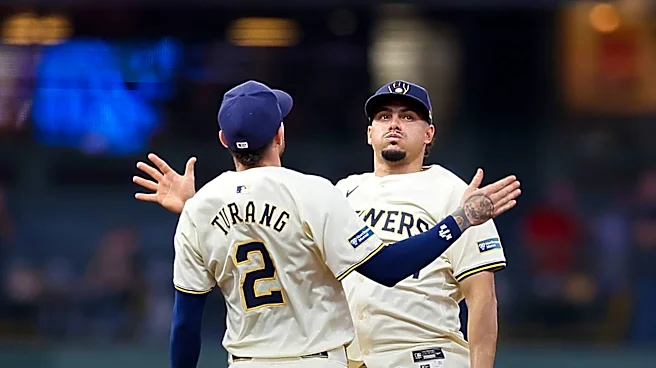
Amusingly, all five of us chose Turang as the team MVP before the season. And while I would listen to arguments about, certainly, Jacob Misiorowski, and maybe some would argue for Chourio or William Contreras, Turang was the correct answer. By Baseball Reference WAR, he was the team’s best player, and by FanGraphs’ version, he was the most valuable position player. Turang’s evolution from light-hitting defensive whiz to one of the best all-around players in the league has been a joy to watch, and it earned him not just team MVP honors but a top-three finish in the National League, making him the first Brewer to do so since Christian Yelich in 2019.
Harrison Freuck: Brice Turang
As I said above, Turang had another great season that culminated in a top-three MVP finish. While our community gave the edge in the MVBrewers rankings to William Contreras, I’d argue that’s primarily due to Contreras’ management of the pitching staff and his performance in the postseason. It may be overshadowed by some of the other performances, but Turang still batted .261/.404/.413 with a homer, four doubles, four RBIs, nine runs, two steals, and a team-high 11 walks in 13 postseason games. I’d say that’s a perfectly good line for a guy who put up 7.3 bWAR in the regular season, warranting him the team MVP distinction.
Jackson Heiden: Christian Yelich
Yeah, I know, maybe I’m living in 2018, but I have felt that for the Brewers to make a deep run, they would need their soon-to-be captain to be somewhat of himself of old. My thought process behind this pick was that everyone else would continue to produce at the level they have been, and that the missing link in Yelich would be the man that they needed. While his regular season was less than optimal, taking a step back from the season prior, his postseason performance was more what I was looking for. He collected 11 hits, a double, a triple, and drove in five, while walking six times.
Jason Paczkowski: Brice Turang
There’s not much more to say here. Turang was one of the best players in the National League by fWAR and bWAR, as mentioned before. His defense recovered and he won his second Gold Glove, and his bat has been just as strong. He hit 21 home runs and had his first 100-RBI season, and barely missed joining the 20-20 club with 19 steals. The only question remaining for Turang in 2026 is where he finished exactly among the top three for NL MVP.
Adam Zimmer: Brice Turang
I, like the rest of the staff, picked Turang, so I won’t spend too much time on this one. While you could make a case for Misiorowski, Turang followed up his second-half breakout in 2025 with the best all-around season of his career. He posted 7.3 bWAR to Misiorowski’s 6.4 and was named an NL MVP finalist alongside Pete Crow-Armstrong of the Cubs and Shohei Ohtani of the Dodgers.
Most Improved Player
Paul Dietrich: Jacob Misiorowski
I wondered if this was cheating when I made this prediction, as Miz had only thrown 66 regular-season innings and had looked like a star in the 2025 postseason. But I was right: his 2025 regular season was a roller coaster, and I was certainly right about his improvement in 2026, as he was undeniably the best pitcher in baseball.
Harrison Freuck: Jake Bauers
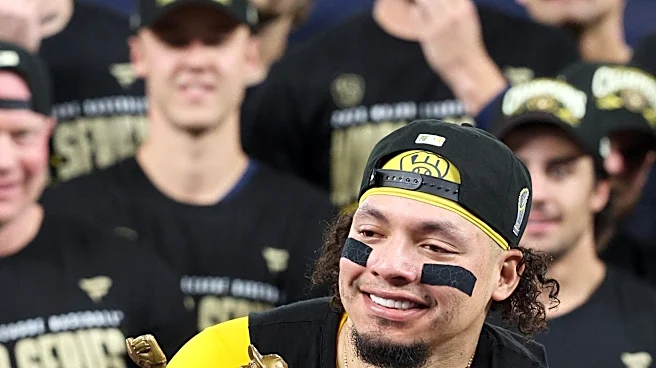
Bullseye. I used Bauers’ strong final month of the 2025 season paired with a solid spring training to predict he’d have a breakout regular season, and breakout he did. By now, we’ve all heard the storyline about how he was ready to retire before coming back to the Brewers, and he proved that was the right decision — after putting up a career-high 0.6 bWAR in 2025, he slugged his way to 3.3 bWAR in 2026, slashing .266/.389/.484 with a team-high 26 homers, 22 doubles, 86 RBIs, 93 runs, and 11 steals across 144 games, taking over what was initially intended to be a platoon with Vaughn at first base. Despite a rough World Series, he still turned in a fairly solid postseason, winning NLCS MVP with a pair of long at-bats (one culminating in a walk, the other a homer) against the Dodgers, and drawing 10 walks for a .345 OBP.
Jackson Heiden: Jacob Misiorowski
It feels almost cliché to pick the ace of the staff, but at the beginning of the season, we didn’t know if we were going to see the ace that we saw all season. In 2025, Miz had the stuff, but he didn’t throw it as effectively as he did in 2026. A ton of walks and inconsistent command didn’t instill a ton of confidence in me. But knowing our pitching staff and what they’re capable of, it’s unsurprising, given how well he pitched this season.
Jason Paczkowski: Robert Gasser
While Gasser wasn’t the most improved player on the team, he definitely took a big step forward this season. For most of the season after being brought back up in mid-May, he was up and down in his starts. The turnaround for him started on August 26. Six days earlier, Gasser was pulled mid at-bat against the Mariners after a particularly bad inning. Then, against the Mets, Dustin May was hit by a comeback line drive in the first at-bat of the game, and Gasser was called on to soak some innings. He was brilliant in that appearance and saved the Brewers’ bullpen. In his last nine appearances (eight starts and a long-relief appearance), he allowed one run or fewer in eight of them. That includes three scoreless starts in the postseason. He’s established his spot in the rotation for 2027.
Adam Zimmer: Joey Ortiz
The correct answer is probably Bauers, although the gap between his improvement and Ortiz’s is smaller than some might think. Ortiz went from being basically the worst hitter in the league to finishing the year hitting .270 with a .730 OPS, and his bWAR jumped from 0.2 last year to 2.6 this year. Bauers went from 0.6 to 3.3. Still, Ortiz struggled in the playoffs and didn’t play every day, while Bauers was a much bigger part of the Brewers’ World Series run, earning NLCS MVP honors along the way.
Newcomer of the Year
Paul Dietrich: Angel Zerpa
Well, we can’t win them all. Zerpa, who I’m still somewhat intrigued by, made 12 appearances for the Brewers, pitched to a 6.39 ERA, was shut down with arm trouble, and had Tommy John surgery in early May. We’ll see if he can get back in the picture by the second half of next season.
Harrison Freuck: Luis Rengifo
Oops. Luis Rengifo was arguably the worst newcomer of the year. Across 57 games, he batted a dismal .205/.280/.254 with no homers, nine doubles, 19 RBIs, and 19 runs scored before he was designated for assignment in mid-June as Cooper Pratt was called up to take over at shortstop. To add insult to injury, Rengifo caught on with the Padres and played great for them — .291/.375/.409 with four homers, 17 RBIs, and 19 runs scored over 38 games — before a season-ending injury. That stretch also included a grand slam against Milwaukee. Ouch.
Jackson Heiden: Kyle Harrison
At the midseason awards, this was looking good. At the revisit, not so much. Harrison had quite the decline in the second half of the season, so much so that he never appeared in a postseason game. If you told a Brewers fan in May that he wouldn’t be a factor in the World Series run, I think they would’ve called you crazy. He had a 2.44 ERA through June, and then from July on, he had an 8.87 ERA. A left forearm/elbow issue in July forced an injured list stint, and then a couple of noticeable mechanical issues led to his second-half slump. While the forearm issue is concerning, he didn’t pitch in October, and has a full offseason to heal, which convinces me that he’ll be back to where he was next year.
Jason Paczkowski: Kyle Harrison
For the first two months of the season, Harrison was looking like a brilliant offseason acquisition. He had a 1.57 ERA and 2.45 FIP with 73 strikeouts through his first 11 starts, and was a legitimate All-Star candidate. That started to come apart against the Athletics on June 8 in what was a forgettable series for most of the pitching staff. While he had a few more strong starts after that, he ended up on the IL for a month with a forearm/elbow injury, and then just seemed to run out of gas after his return. Hopefully an offseason with some extra rest and conditioning work will help him recover and be ready for 2027.
Adam Zimmer: Kyle Harrison
This looked like the right pick for most of the season, and even though the wheels came off down the stretch, Harrison (1.7 fWAR, 0.5 bWAR) is still in the conversation. Honestly, I don’t think there’s a clear winner for this one. Cooper Pratt is probably the right choice: he matched Harrison’s 1.7 fWAR despite not being called up until June, and he played well in the World Series. You could also make a case for David Hamilton (0.4 fWAR, 1.9 bWAR) or JoJo Romero based on their postseason performances.