



Past summaries:
- So far, so good through mid-April
- Even better in late April
- May-be they’re just really good
- Late May just good, rather than absurdly awesome
- A June swoon so far
- Awful
- Fake it and maybe make it
- With some luck, back on the horse
- Dwelling in the dog days of August
- All we do is accumulate wins
There were a few overarching themes in play in the first half of September for the Braves:
- They are still great at accumulating more wins than warranted by their production
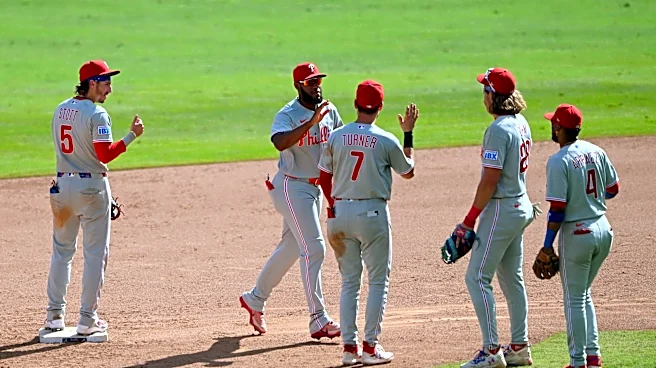
- They are also great at beating the Phillies
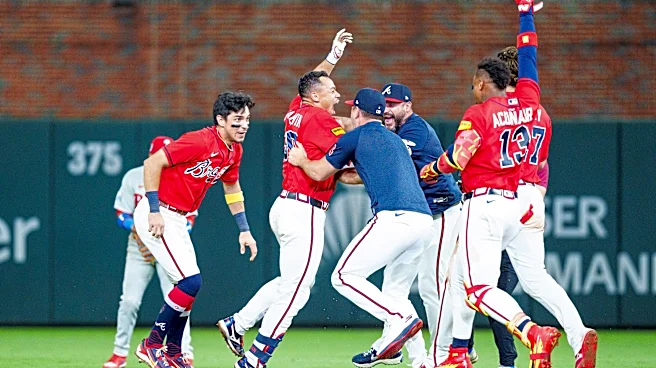
- The two things above have made them overwhelmingly likely to win the division for the first time since 2023
- The schedule was very tough, and they did okay-ish
- But, this team still isn’t playing well by an objective measure
Put the above together, and the Braves went 7-7 in September’s first half. That 7-7, though, was well-scattered, as they went 4-3 against the Phillies, capturing the tiebreaker and more or less cementing their spot atop the division unless they suffer a late September collapse and the Phillies actually get it together enough to win a bunch of their remaining games. Still, as I describe below,
this hasn’t exactly been a triumphant ride to the division title. Yeah, the schedule has been a gauntlet, but the Braves are once again winning games moreso than doing a bunch of stuff that leads to winning games.
How did the Braves do recently?
As noted, they went 7-7. 12 of those 14 games were against contenders, but they went 6-6 in those games while also going 1-1 against the Nationals. In terms of game-by-game odds, yeah, they should’ve gone 7-7. One thing this stretch featured was their two lowest-win odds games of the years, both in Philadelphia. They did indeed lose both of those games. To date, the Braves have lost all four of their games where their pre-game odds were below 40 percent, and have gone 11-5 in games where their pre-game odds were above 60 percent. In some ways, this feels intuitively “right” to me, even if there’s no real reason why that shuld be the case.
Production-wise, it’s more or less the same story. The Braves finished 23rd in position player fWAR in the first half of September, including 22nd in offensive inputs and 21st in offensive inputs. They finished 17th in pitching fWAR, with relative ranks of 11th, 21st, and 21s in ERA-, FIP-, and xFIP-, respectively. Both the rotation and the bullpen were basically in that same place. With their total of 1.0 fWAR each in the position player and pitching buckets over these 14 games, the Braves “should have” gone 6-8. They went 7-7. Surprise, surprise, they did it again.
Ranks aside, the September numbers are underwhelming so far: a 91 wRC+ with a marginal xwOBA overperformance, and a 93/106/107 (again, ERA-/FIP-/xFIP-) pitching line. That doesn’t feel like a team that has largely survived a September gauntlet to nearly sew up a division crown, but here we are, as we have been.
How are the Braves doing on the season?
Well, again, they have MLB’s fourth-best record. It looks like they’ll finish with 94-95 wins, unless something strange happens. They are almost certain to win the division, but very unlikely to catch the Dodgers or Brewers. Right now, though, they’re 20th in position player fWAR, though they’re at least 13th in xwOBA and seventh in team defense (park effects ding their offense, while xwOBA isn’t park-adjusted). It’ll feel strange if/when they win the division with a sub-100 wRC+, but again, here’s where we are.
Amusingly, for all the droning and hand-wringing about the pitching both in the offseason and at the Trade Deadline, it’s actually been pretty good. The Braves are up to tenth in pitching fWAR, with an average rotation and top-ten bullpen. The rotation’s line is 89/102/98; the bullpen’s line is 81/93/97. Perhaps one reason the Braves win a lot of games relative to production is that bullpen ERA-x/FIP gap: it’s easier to win when you allow relatively few runs, and fewer runs than you “should,” late in the game.
The Braves do have the league’s fifth-best run differential, but are only ninth in BaseRuns. Only three teams have outperformed their BaseRuns more than the Braves, but one of those is the Phillies, so ha ha ha, I guess. The disparity with WAR-wins is a currently-insane 12. There’s more to say about the wins versus WAR-wins and BaseRuns versus WAR-wins differentials, but not here.
How are the hitters doing?
At this point, I don’t really even know how to say anything new.

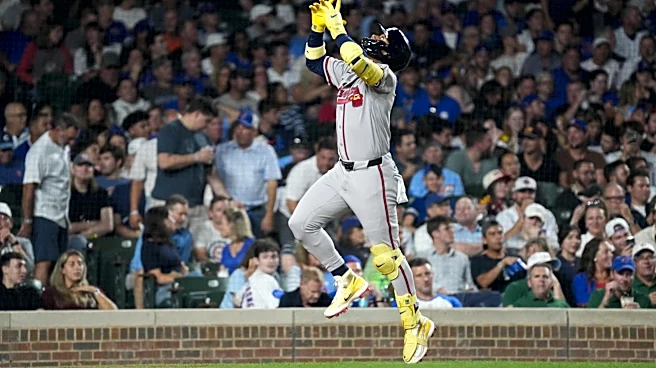
These last 14 games were a stars-and-scrubs effort. Mike Yastrzemski and Ronald Acuña Jr. did some great stuff and got fortunate. Drake Baldwin was solid. Mauricio Dubon and Ha-Seong Kim were also there. Matt Olson and Ozzie Albies basically went full-on tire fire. Michael Harris II and Sean Murphy didn’t help. That’s the team, and that’s not great.
For the season as a whole, you basically have the team’s front four doing stuff, and everyone else…not doing doing stuff. Dubon has at least provided value via defense and versatility, but the back half of the starting crew has been pretty damaging to the team’s production. It’s still kind of amazing the Braves are where they are given the table above.
The wOBAs and xwOBAs have largely normalized for everyone. There’s a bit of “Albies has stolen the mojos of Baldwin and Acuña” but not much.

That said, and totally in keeping with this season as whole, guess who led the team in WPA for these 14 games among position players? First, Murphy, and then Kim just 0.01 WPA behind. Both guys had two huge games as part-time players. The Braves will take it.
How are the pitchers doing?

It was a good two weeks for HR/FB for the starters. Grant Holmes and Martin Perez were big beneficiaries despite problematic peripherals. Chris Sale and Tyler Mahle were worse than they have been peripherals-wise, but the lack of homers helped. The less said about AJ Smith-Shawver and Reynaldo Lopez at this point, the better.
The season-long stats are largely familiar to y’all at this point. Sale and Mahle rule, Perez has been decent, Holmes still doesn’t really have the juice to be an average-y starter, and so on and so forth.
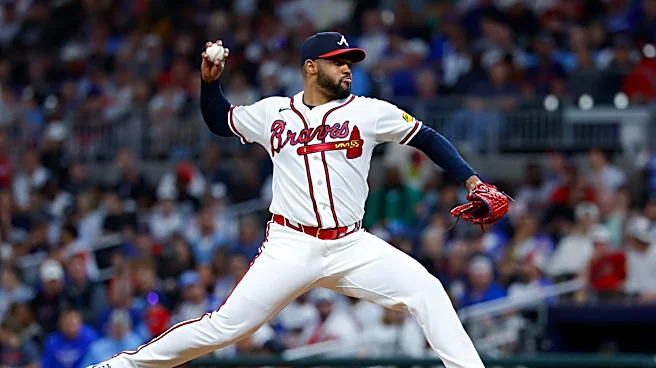
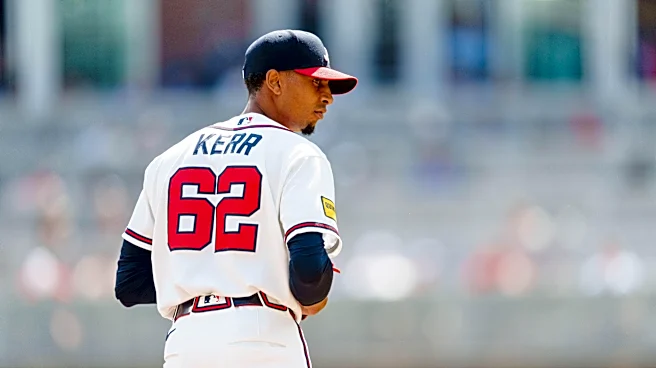
Reliever-wise, Didier Fuentes was a beast these two weeks, but when is he not? Ray Kerr also reappeared and was surprisingly really good in a longer relief role. Kerr, in particular, managed three multi-inning outings, and earned shutdowns in two of them despite them being medium-leverage appearances. Between Kerr and Suter, the Braves seem very wealthy in “lefties who can avoid having to use multiple relievers to mop the game up,” which is not a super-useful thing to be wealthy in, but will probably help give guys rest that they may or may not desperately need down the stretch.
See you at the end of the season. Hopefully there’s no reason to skip one of these, though the short turnaround to the Wild Card round is awkward.
If you have any thoughts on how to amend these for next year, or do something different as a check-in, I’m all ears. These were in some ways easier to do than my old monthly recaps, but somewhat less fun though maybe more informative. That said, I don’t know if I have the time to do the old monthly recaps anymore, but maybe next year will be a lot easier than this year.