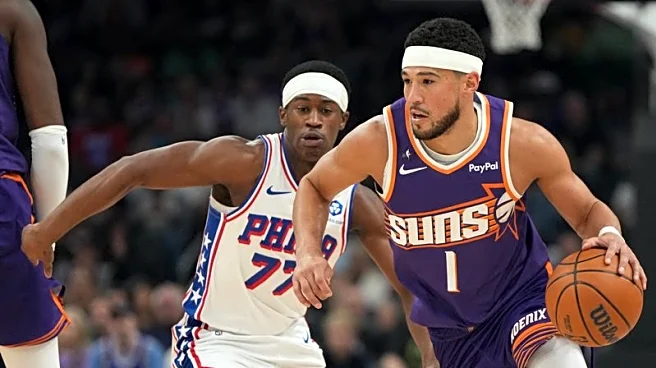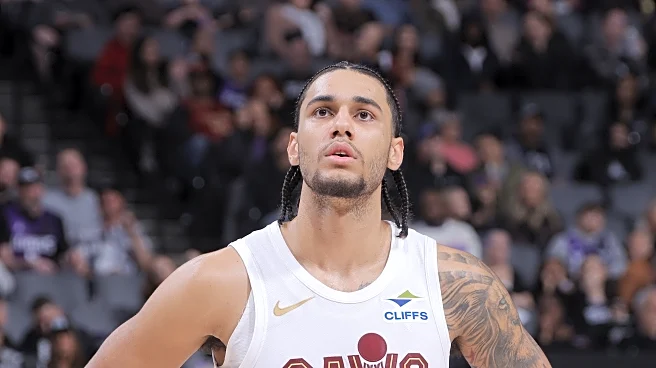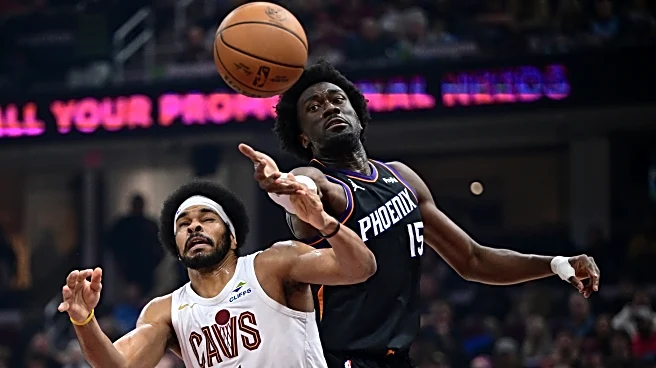


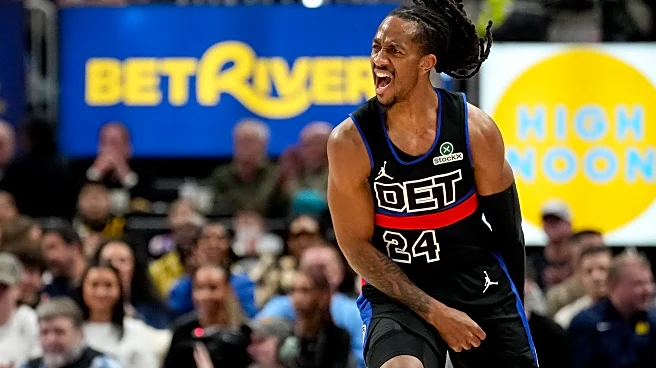
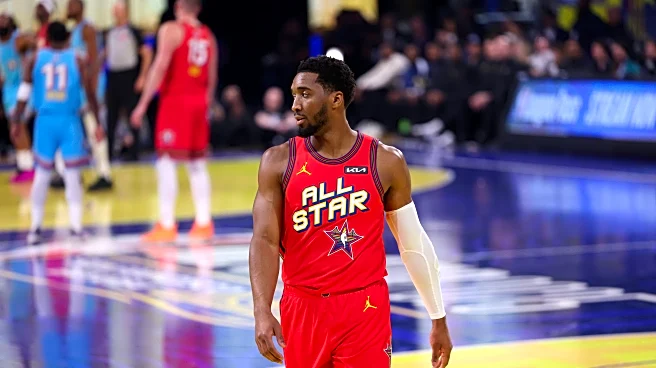
The Phoenix Suns needed a win on Tuesday night. Badly. Two straight losses had already piled up, and the schedule ahead offers no mercy. Detroit is looming. Cleveland too. Then the Clippers. Lose this one, and a six-game skid was no longer theoretical, it was staring them down. So this game mattered. Not as a statement, but as a tourniquet. Stop the bleeding first, worry about momentum later.
What they can actually build on came from the middle of the floor. Mark Williams delivered his best night
since arriving in Phoenix. 27 points on 13-of-16 from the field. Perfect in the second half. Calm, physical, dependable. He gave them interior stability and something this offense rarely has, a release valve that does not live beyond the arc.
And here is the contrast. The Suns are not an interior team by design. They do not hunt shots at the rim. They are 29th in the NBA in attempts inside five feet, taking 23.8 per game. That is who they are. On Tuesday, that script bent. 28 of their 77 shots, 36.3%, came from inside five feet. Not because the philosophy changed, but because Williams forced it to.
So to see them bend their identity and adjust how they operate, all in response to a specific opponent, speaks to the intellect and schematic feel that Jordan Ott brings to the bench. There is flexibility here. There is awareness.
But now comes the real question. Is it replicable?
Because the stretch ahead demands it. The Suns are entering a run where every ounce of offensive potency matters, no matter the matchup, no matter the look they are given. Can they keep feeding Mark Williams with enough consistency and with enough purpose to actually win games?
That is where this gets tricky.
On Tuesday night, when the Suns beat the Nets 106-102, the math worked in their favor. It was a plus matchup for Williams. Nic Claxton is a solid center and a legitimate defender. He grades out in the 80th percentile as a rim protector. But the Suns leaned into his lack of size, used switching to their advantage, and consistently put Williams in spots where he could thrive. They maximized the skill set.
And Williams has a very specific one. He finishes around the rim. Not through bodies, but around them. Fluid, patient, controlled. He grades out in the 92nd percentile in finishing talent.
The numbers back it up. Across two matchups this season, Williams guarded Claxton for 15:40. In that span, 72 points were scored on 70.9 possessions, and Claxton accounted for 11 of them, going 4-of-10 from the field. Flip it around. When Claxton guarded Williams, 13:49 of game time, the Suns scored 71 points on 58.8 possessions. Williams went 7-of-9 for 15 points.
Keep those numbers tucked away. They are going to matter later.
The hope is that nights like this become the norm for Mark Williams. The reality is they probably will not. Because for all the value he has brought this season, the size, the stability, the calming presence at center, there is a tradeoff on the other end of the floor. Williams can be hunted defensively. That is not a secret. It is also why we have seen so much Oso Ighodaro.
Credit to Oso for fully embracing that role and being effective in it. His value lives on the defensive end. He can switch. He can move. He can survive in space. That is what makes him playable. Opponents know the counter with Williams. They spread the floor, pull him out of the paint, run high screen actions, and force a decision. When Williams does not sit in drop coverage, the geometry breaks. The paint opens. Driving lanes appear. The offense gets comfortable. When he drops, pull the trigger from deep.
Oso does not bring the same offensive ceiling. That is clear. What he does bring is defensive versatility, and that matters in this league. It matters every night.
So the Suns have work to do here. They need to get more creative defensively when Williams is on the floor. They need to protect him in specific situations, anticipate when teams are clearly trying to target him, and manage those minutes with intent. Because his offense is worth it. It has real value.
But it is matchup-driven. When the opposing center is someone Williams can neutralize, or someone who cannot impose their will, he lasts longer. He becomes more effective. He tilts the math. When that is not the case, the margin shrinks fast.
And that, more than anything, is the challenge. And the next three games? That challenge will be tested.
Detroit first. Jalen Duren. That matchup already gave us a preview, and it was not encouraging. Williams logged 6:24 against him, covering 31.5 possessions. In that window, the Suns gave up 46 points. Duren went 5-of-9 for 10 points. On the other end, Duren guarded Williams for 5:45 across those same 31.5 possessions. The Suns scored 22 points in that span, and Williams finished with zero points on 0-of-2 shooting.
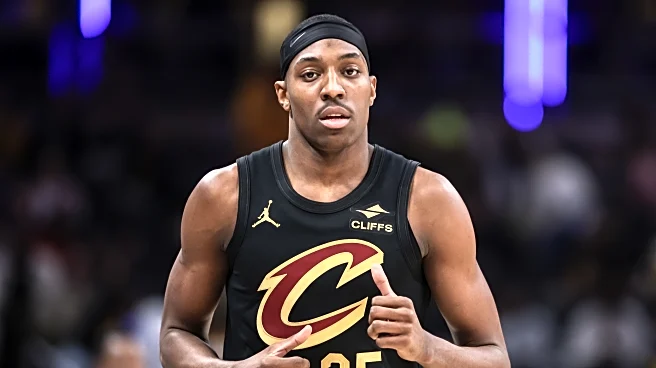
Then comes Cleveland the following night. Jarrett Allen, with Evan Mobley sidelined. Williams versus Allen has also happened once this season. The results were similar. Williams defended Allen for 6:51, covering 39.8 possessions. Cleveland scored 61 points in that stretch, and Allen put up 12 points on 5-of-9 shooting. Flip the matchup. Allen guarded Williams for 6:18 and 31.2 possessions. The Suns scored 31 points, and Williams again finished scoreless, 0-of-2 from the field.
And then the homestand closes on Sunday with the Clippers. Ivica Zubac is the assignment. A load. A true center. One the Suns can work if their high actions are sharp and if they can consistently pull him away from the paint. That said, the Clippers have been locked in defensively as a group lately, so that muddies the waters.
Across three matchups this season, Williams defended Zubac for 19:12, covering 86.3 possessions. In that time, Zubac scored 29 points on 12-of-17 shooting, and the Clippers scored 87 points overall. Offensively, Williams was more productive here. He scored 19 points in 16:12 and 84.9 possessions, going 7-of-12 from the field. The Suns scored 109 points.
That is the spectrum. The good, the bad, and the uncomfortable middle. And it brings us right back to the same place. Matchups decide everything.
I love what Mark Williams brings to this team. He gives them the rim running element they have been craving for a long time. He is long defensively, and while no one is confusing him for a perimeter stopper, he does a solid job as a deterrent when he is stationed in the paint. He is a capable rebounder too, even if it does not always feel dominant for a center. He grades out in the 81st percentile in defensive rebounding and the 93rd percentile in offensive rebounding.
All of that said, there is an important reminder here. He is making $6.3 million. You are getting exactly what you paid for, and probably a little more. Price for value paid? Check.
But over these next few games, as the Suns search for answers within the flow of a night, as they try to manufacture points without Devin Booker and Jalen Green, the focus has to sharpen. When Mark Williams is on the floor, he has to be involved. Intentionally. Deliberately.
Because he is not going to play with total regularity. Defensive limitations and matchup realities see to that, and there are other options on the bench who make sense in certain stretches. Still, there are moments in almost every game where you find yourself yelling it. “Give the ball to Williams!!!”
During this upcoming stretch, that instinct needs to become policy. At least in the moments that he is out there.