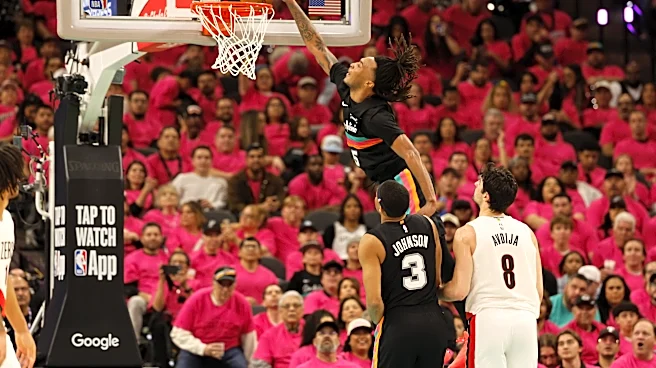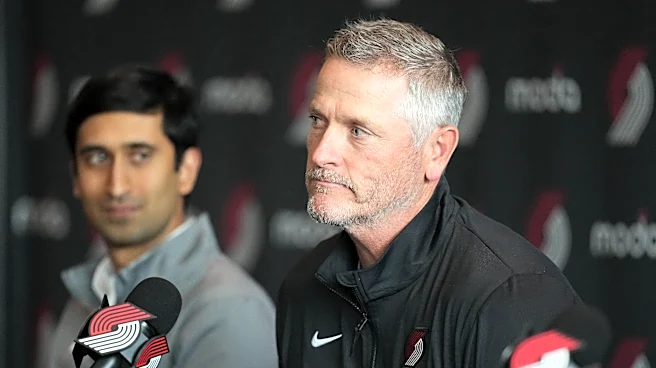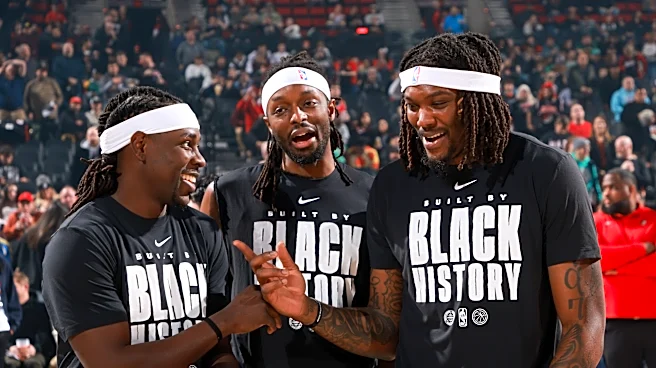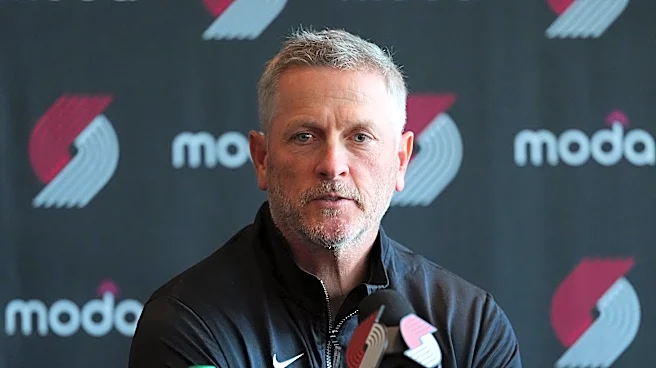



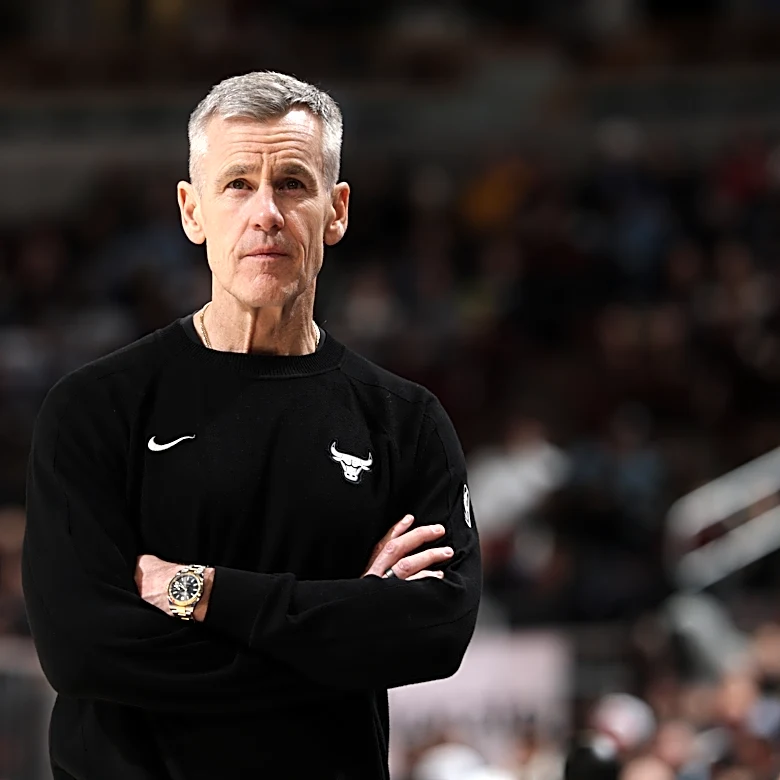

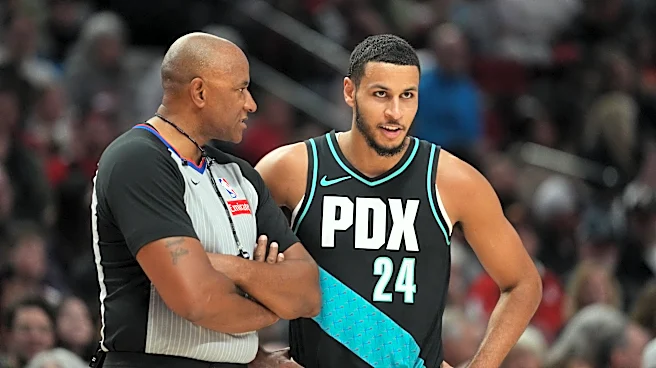
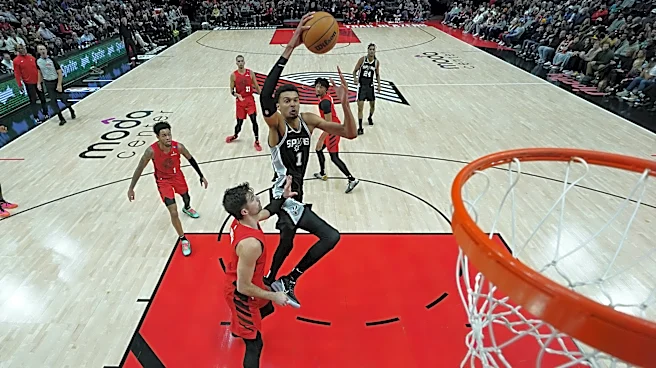
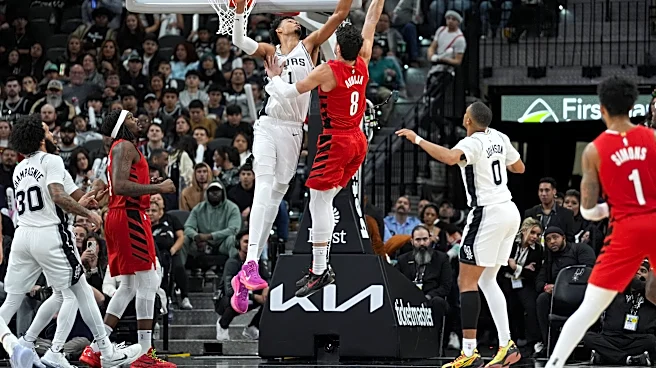
As we speak, the Portland Trail Blazers are engaged in a first-round NBA Playoffs series with the San Antonio Spurs. Portland’s first return to the postseason in five years is not bringing them national headlines, however. A combination of natural obscurity and severe underdog status to the favored Spurs is keeping Blazers playoffs chances on the down-low.
The Blazers ARE making headlines this week, though. This is mostly thanks to new owner Tom Dundon, who is being alternately fileted and lambasted
in local and national media for a new, frugal approach to team management. Never has the word “cheap” been applied to the Trail Blazers so often by so many. Not since the Jail Blazers era have the words “optics” and “Portland” intersected so heavily.
In the interest of putting the matter into perspective—perhaps putting it to bed in time for Game 2 of the playoffs series this evening—let’s talk about this for a second. Things have changed in Portland for sure. It may not be as dramatic as news reports suggest. In the end, it may not turn out to be that unusual either.
Let’s take a look.
Corporate Meets Luxury
There is no doubt that Tom Dundon is looking to cut costs for the Blazers. This is unsurprising for a few reasons:
- Most reports tab reorganization as part of his management style and a lack of concern for public perception as part of his personality.
- After decades of being run by the same ownership group—between Paul Allen and his sister Jody—certain patterns and/or inefficiencies will have cemented themselves in place. This is true of every institution. It’s almost like housecleaning when you move into a new place. No matter what the previous owners did, you spot ways it could be better.
- Cost-cutting is practically a corporate religion nowadays. Any leader emerging from corporate America will cite lowering costs as one of their main pillars of profitability. It’s far easier—especially as a first step—than growing, innovating, and all the other components of success. It can be likened to taking medicine and curing your illness before you try to run a marathon. In the leader’s point of view, unneeded expenses will hobble the organization in the long run.
This is not intended to justify the process, rather to say that it’s wholly unsurprising as an initial move.
The only eyebrow raise comes with the publicity surrounding the process. Most executives are a bit more circumspect than Dundon has been. But the NBA is in the public eye. It also carries an insular, justifiable-elite reputation. Any implication that the league isn’t a first-class, prime-time endeavor is going to be met with cries and resistance. When cost-cutting corporatism meets the Rolls Royce of professional basketball, there will be waves.
In this situation, the corporate leader is not likely to receive a ton of sympathy. There’s the natural reality that (s)he has billions of dollars while everyone receiving the news has far less. There’s also the tendency of the leader to explain things from their own point of view: “This makes perfect corporate sense!” That may be true, but nobody is rooting for a corporation. Nobody wakes up and checks the organizational numbers on the Efficiency and Savings Programming Network (ESPN). They want shooting efficiency and winning efficiency. People want to feel that they ARE following the Rolls Royce of athletic endeavors and, among all the teams on the lot, theirs is the most enviable. In that environment, “We saved money on this vehicle,” just does not resonate.
Going Cheaper
Parsing through everything that’s been said over the last couple weeks, three items have received the lion’s share of the attention.
Lack of Playoffs T-Shirts
NBA franchises customarily distribute free t-shirts for the first home game of the playoffs. I wasn’t aware this was a thing, but San Antonio did a great job of color coordination on the first night of the current series, so let’s go with it.
Frankly, this is the item that baffles me most. I get the lack of symbolic regard that comes with the absence of shirts, but it’s just that: symbolic. Does anyone really need a t-shirt? Was anyone coming to the arena topless, hoping to get rescued by a paper-thin, slogan-adorned bit of cotton over the back of their seat? Do the damn things even fit??? And most of all, if I recall Blazers history correctly, do we not remember that most every time the Blazers have tried to coordinate a unified color scheme for the audience, the team has lost?
Honestly, I have enough t-shirts at home. If I can afford a ticket, I can probably afford another shirt if I want it. If this is the hill people want to die on, they’re entitled. To me it’s a nothingburger of a controversy. At best, it could be stacked on top of other items as ancillary evidence. Even then, it’s not that strong. Portland needs ownership to improve True Shooting Percentage, not textiles.
Not Bringing Two-Way Players to Playoffs Games
The Blazers have been reported as the only team in the league that’s not bringing Two-Way Contract players to playoffs road games. Two-Way players are not eligible to suit up for postseason games. They’re observers.
This is a more serious matter, simply because those players are theoretically gaining experience with the franchise as potential contributors down the road. The modest cost of 2-3 extra hotel rooms for a limited number of playoffs games would seem to be offset by the increase in team unity and the deep-dive young players would get into actual playoffs basketball.
The maximum number of games the team would have to cover would be 16, and that’s if they win on the road in exactly seven games in every series through the NBA Finals. In Portland’s case, practically, it’ll probably be, like, three games.
There is something to be said for the old adage, “You don’t make a dollar, you make a nickel 20 times.” The same can be said for savings. But nine hotel rooms, even at $400 apiece, would be $3600. That’s a blip on the operating budget. It won’t even cover the plane fuel, which you’re already spending anyway to fly the rest of the team.
In this case, discretion might have been the better part of valor, especially when at least one of those Two-Way guys—guard Caleb Love—contributed to some of the wins that brought the team to this spot.
Lowballing a Head Coach
There have also been conflicting reports on whether or not Dundon is trying to get Portland’s next head coach for the bargain-basement salary of $1-1.5 million, roughly 1/4 to 1/3 the going rate. If true, this would be the most damning move of the three by far.
Let’s discount the importance of public optics for a moment. (Realistically, the general public and media will come around if a team starts winning games. Internally, the corporation will be happy and sound if they turn a profit somehow. Neither of those things depends on what people think of you.) A few cultural realities are going to slap the corporate view upside the head if cost is the major factor in hiring a head coach:
- This league runs on reputation and respect. It’s not just what you know, but who you know, who you’ve helped, and what you’ve done that makes the difference.
- “Getting the bag” is part of that respect.
- This is a players’ league. Nobody intrinsically has to listen to their coach. Coaches can make all the noise they want about benching players, but this isn’t college or even the NHL. If you don’t play your best players for the most possible minutes, you will not succeed. If players aren’t playing with full energy, in a system that suits their style, with a fair amount of autonomy and trust in that scheme, your team will not succeed. Coaches have less absolute, intrinsic power in the NBA than they do in any other major American team sport.
- This phenomenon exists, at least in part, because good players are in far higher demand than any other single resource in the sport: more than coaches, more than owners, more than money. If you won’t pay and play a good player, it’s 100% certain that someone else will.
Paying a coach highly is not automatically going to generate respect and success. Lowballing them will make an already-tough job of acceptance, respect, and coordination even harder. If the owner is perceived to have pulled a coach out of the clearance pile and doesn’t think enough of them to pay even 1/40th of a star player’s salary for them, why should that player—or any player—listen to what they say?
I don’t think the world will end if the Blazers find a novice, lower-salary coach to guide them. I don’t think that’s ideal for them, but it’s not a recipe for failure in itself. Things will be much more difficult for everybody if people perceive that the coach was hired because of low salary expectations. That’s going to be seen as a referendum on the organization, the players, and their chances of winning.
Once applied, that stink will not come off. Every coach loses games. Every coach has conflicts and struggles with players, media, and the public. Once any of those entities finds a fallback position of, “You weren’t even worth a real coach’s salary and you came out of a bargain coaching search,” that’ll become their “out” in every conflict. It’s no different than getting married to someone you despise for some reason, or publicly embarrass at the wedding. No matter what that ceremony looks like otherwise, you know that ongoing arguments are going to cause deeper and deeper fractures in that relationship until it breaks.
For that reason alone, Dundon should probably get out in front of this story…if he hasn’t already through the recent reports that conflict with the earlier “lowball” accusations.
Facing Reality
Having said all that, both the league and its fans may want to buckle up. Dundon may not be an outlier in his cost-cutting approach as much as an early adopter. The NBA may be facing more conversations like this as the years pass.
Once upon a time, the book on owning an NBA franchise was simple (at least the way I understand it). You buy the team for X dollars, operate it through some combination of modest profits or tax-cushioning losses, then sell it at a huge multiplier.
The Blazers were inaugurated in 1970 with a reported cost of $3.7 million. Paul Allen bought them in 1988 for $70 million. That’s 19 times what they were originally worth in 18 years of ownership. The equivalent would be buying your house for $300,000, living in it for a couple decades, then selling it for $5,700,000. That’s quite a profit.
Dundon and his ownership group just bought the Blazers for $4 billion. A billion is a thousand million. $4 billion is 57 times what Paul Allen purchased the team for 38 years ago. You’d have to live in it twice as long. but that’s the equivalent of selling your $300,000 home for $17,100,000. Where do we sign up? You can see the enticement of franchise ownership clearly.
A new reality is taking over, however.
First, teams are enormously expensive now. Only three types of entities can reasonably afford to purchase one:
- “Angel investor” billionaires who are doing it for the prestige, for fun, or whatever billionaire reason they dream up. Think the richest of the rich, your Steve Ballmer types, whose wealth doesn’t depend on the bottom line.
- Marginal billionaire ownership groups for whom the team is a significant investment.
- Corporations
If your team has the first type of owner, the system can remain unchanged. But people with that combination of disposable income and inclination are going to be rare.
For everyone else—the marginal billionaires and corporations—two more realities will rear their heads.
First, both types of owner expect, perhaps need, immediate, short-term profit. Corporate investors will insist on it. Executives with a significant portion of income invested in the franchise will require it in order to stay solvent.
Second, owners can no longer take solace in making up operating losses in an eventual resale. These people bought at full price. They’re the ones who paid 57x the last purchase cost. Can that type of valuation inflation be expected again? If so, the Blazers would need to sell for $228 billion next time around, and that as one of the least of 30 (perhaps 32) NBA franchises in existence. Forecasting that would be optimistic.
Given that reality, profit turned from franchises day-to-day becomes much more critical. The league may remain elite, the pinnacle of basketball. But as the new breed of owners take over, they’re likely to insist it look like a Rolls Royce but run and cost like a Honda.
If you want to see a real-time example of this, look what’s happening with the WWE as we speak. A couple years ago they passed from the ownership of the infamous McMahon family to newly-formed mega-corporation TKO. Their world has changed. Demand for instant return on investment rose. They haven’t been in cost-cutting mode per se, but they immediately diversified their broadcast rights across multiple platforms to generate income despite added cost and inconvenience to viewers. Their rings, turnbuckles, facades, and even the tables the wrestlers put each other through are festooned with an array of advertisements. Each match is now “brought to you by” a corporate sponsor. And their recent Wrestlemania spectacle famously featured almost as much commercial time as actual in-ring wrestling time.
That kind of sponsorship isn’t available in NBA circles (though more is likely coming). So owners concerned with profits are likely to look at the other side of the equation: reducing expenses.
That can’t be done with the players, in part because their percentage of Basketball-Related Income is guaranteed by Collective Bargaining Agreement, in part because of the relative scarcity of good players mentioned above and the need to entice or retain them. That means everything else is going to be increasingly up for debate…and the chopping block.
If I had to guess, Tom Dundon isn’t trying to look like a penny-pincher as much as the next wave of genius in sports ownership. And I’d bet that his money isn’t just on winning titles, but on succeeding in this venture whether the Blazers finish first, last, or anywhere in between. That’s his game. Parts of it are going to be congruent with NBA Basketball and the way the Blazers have traditionally operated, other parts won’t. Right now he appears to be serving notice who’s going to win that battle, should it arise.
The key thing to remember is that by corporate, financial, and even ownership rules, this is winning. But those rules aren’t always good for other human beings who happen to fall beneath them. The big questions are: how many humans and how severely will this hit them? There’s also a larger question about whether this intersection will allow for, let alone result in, winning in a league that has quietly operated differently for decades now.
We don’t know the answer to those things now. But it’s fairly certain that as team valuations continue to appreciate and the type of owners capable of purchasing franchises narrows, we’re going to have to confront these issues far more often.