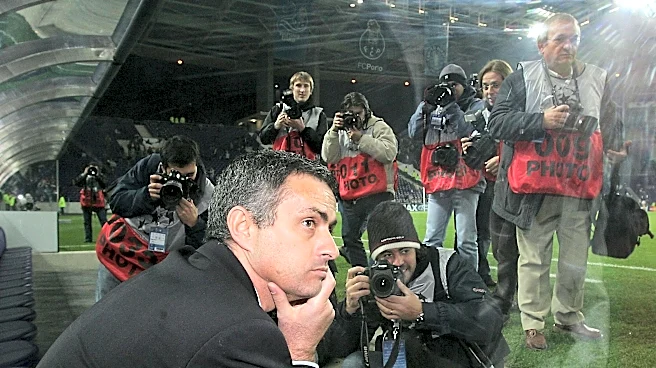





Between 2003 and 2018, in 14 completed seasons, José Mourinho finished outside the top two only twice. He won eight league titles and two Champions Leagues. He won the Champions League with Porto and Inter Milan; both teams were deemed to have no right to win it.
Mourinho’s career obviously took a steep dive after 2018. But even when he was successful, the verdict on him still hardened into something close to a moral charge – the antichrist – the enemy of the game. As if the winning had cost football
something the rest of the sport was quietly guarding.
Now he is back at Real Madrid. Which means it is only a matter of time before his methods, and Madrid’s willingness to live by them, get dragged back to the imaginary court of beautiful football for the usual sentence.
So who sits on that court, and who gave them the court? Why does the taste of a Barcelona, Manchester City, or post-Klopp Liverpool admirer (fan, journalist, or author) outrank the taste of someone watching in Casablanca, Guadalajara, Buenos Aires, Montreal, or Madrid?
By any honest measure, their taste does not outrank anyone’s. But the torchbearers of beautiful football got there first, planted in the press, then in your feed, and the idea seeped in anyway: that one way of playing is simply better than another.
Mourinho was once asked which way he preferred to win. He said he just preferred to win. That was the whole answer. Modern football runs on exactly that. Every team plays to win, the match in front of them or the table at the end of it, and how they get there is their business. It stays their business even when they lose.
Football exists to entertain the people watching it. There is no gospel that gets to tell a person what entertains them. The Getafe supporter who turns up every week to watch his team hold the ball less than anyone else in LaLiga is no less a fan than the one swooning over Lamine Yamal at Camp Nou or Vinícius Jr. at the Bernabéu. They want something different from the ninety minutes, and nobody appointed the other side to grade them on it.
At the heart of this debate is this: the endorsers of winning never questioned the other side. They said, to each their own. The self-proclaimed guardians of beautiful football said, no, it is not to each their own. Only what is ours is true. What makes you content does not exist. What entertains us is the last word on our happiness and your happiness.
In his new book The Greatest, Miguel Lourenço Pereira makes a simple point about Real Madrid – the obsession with winning that people call soulless was never soulless. It was survival. Madrid started as one of several clubs in the city, and the ones that didn’t win – didn’t last.
Winning is the reason the club exists. A hundred years on, people hold it against the club. They question a club for being good at the exact thing it was built to do, and for doing it more than anyone else in Europe. It has parallels with Mourinho’s story. Mourinho ground through the ranks of Barcelona as the translator of Sir Bobby Robson and Louis Van Gaal. To stop being the translator forever, he had to win. And he won, a lot, before he stopped winning. Maybe he starts winning again now that he is at Real Madrid.