
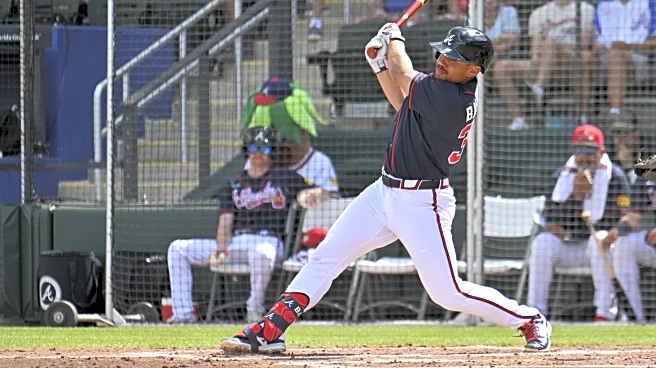
As Spring Training progresses for the 2026 Atlanta Braves, it is becoming clearer by the day that for Atlanta to once again be a true contender, their offense must be among the best in the league. And while the likely loss of Jurickson Profar for the season is a setback, nearly every other offensive regular has been highly productive over the past few weeks.
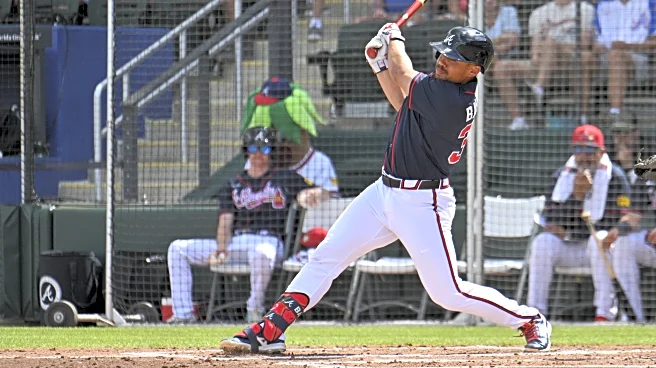
Among the top performers are Ronald Acuña Jr., Michael Harris II, and Mike Yastrzemski, i.e., the projected starting outfield. On paper, this
group has the potential to be one of the better outfields in the game, especially offensively. However, due to the loss of Profar, they are also one big injury away from having to shuffle their way through “next man up” options with the hope something works (which has been a less than ideal strategy from the past two years.) Ideally, both availability and playing to the best of their abilities will be defining characteristics of the 2026 Braves outfield.
Right Field
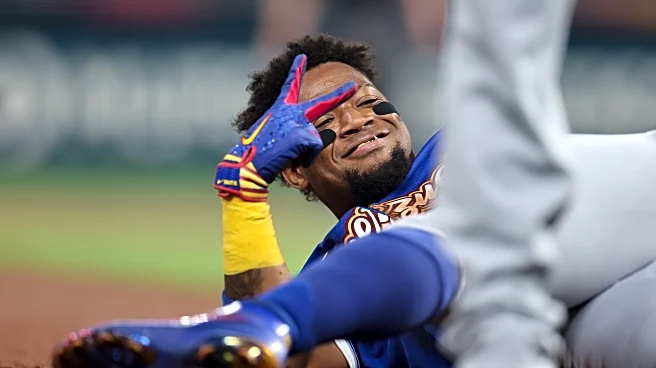
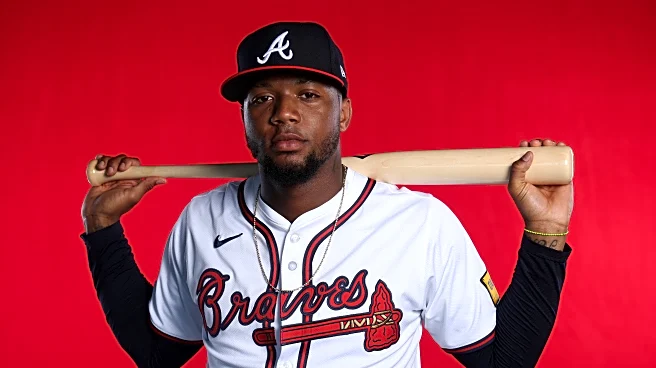
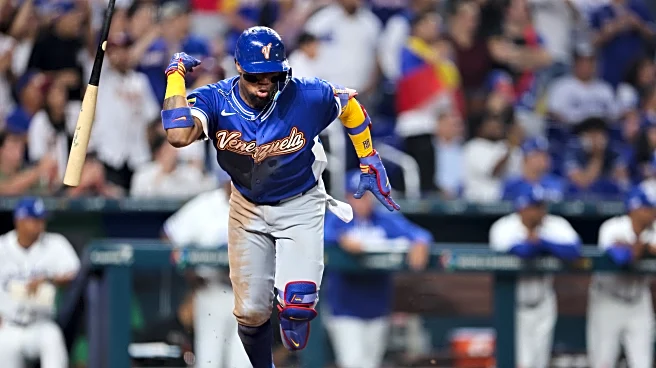
Perhaps the easiest truth about the Braves is that a healthy Ronald Acuña Jr. is the biggest singular factor in them returning to contention. If you need any proof of why that is, simply watch the highlight reel of Acuña from Monday night’s Venezuela vs Nicaragua World Baseball Classic game. You also can relive how electric Acuña was at the plate upon immediately returning from a second ACL tear.
Acuña is healthy, locked in, and having fun — that version of Acuña is one the five best singular sources of offensive production in baseball. This is likely a big reason as to why Acuña will once again be leading off for the Braves in 2026.
Most 2026 projections agree with this sentiment, as Acuña is routinely among the top five position players in baseball in terms of wRC+. The average of all the projections at Fangraphs have Acuña right at 150 wRC+. While that is certainly encouraging, nearly every projection source also points to a bit of regression in terms of Acuña’s power and speed compared to the pre-second knee surgery version of himself. Acuña posted a .228 ISO in 2025, and is projected to produce a similar power output in 2026. Furthermore, nearly every projection source has him around 25 stolen bases, clearly indicating the sense that Acuña will run significantly less than he has in the past.

ZiPS itself is right in line with these predictions, suggesting 27 home runs, 24 steals, and a 156 wRC+ for Acuña this season. Perhaps the most eye-opening prediction from ZiPS is those numbers coming in just 119 games, which suggests Acuña could be viewed as having heightened injury risk compared to his peers. Without a doubt, if Acuña is healthy for a full season, there is a very, very good chance that he exceeds these offensive numbers. However, following multiple significant leg surgeries over past few years, a few injury scares have a chance to occur this season.
In the case that Acuña were to need a day off or be sidelined for a bit of time, Yastrzemski, Eli White, and Mauricio Dubon are all options to man right field. This is notable, because to keep Acuña fresh and improve the chances he remains healthy throughout the season, days off will likely be needed. Ensuring Acuña. is available for the full season and hopefully a playoff run should be a top priority for the Braves, because any time he is on the field, he has the ability so single-handedly deliver a victory for Atlanta.
Center Field
If the availability of Ronald Acuña Jr. is the biggest factor in the Braves returning the contention, the consistent ability of Michael Harris II to play to his potential may be the biggest X-factor. In the first half of 2025, Harris had the second-worst wRC+ (47) among qualified hitters. In the first six weeks of the second half of 2025, he had the seventh-best wRC+ (164) among qualified hitters. The true version of Harris is neither of these outcomes, which makes his whole self a bit of a mystery. However, the exciting thing is that the realistic version of Harris is some sort of middle ground from 2025, which easily is a 3-4 WAR player with clear All-Star potential.
Another way of putting this: Harris has been extremely streaky throughout his career, with the variance in outcomes getting larger by the year. Perhaps the biggest reason for the streakiness is his inability to take walks, which only got worse as the team actively tried to walk last year. For Harris II to gain more consistency, he must put together longer stretches of productive at bats, with a bit of an OBP floor.

Fortunately, early indications are that Harris focused on that exact part of his game in the offseason. While three walks in 21 PAs may not seem to be that significant, it certainly is a welcome improvement. Harris is also putting the ball in play with a 92.6 average exit velocity, an improvement of over 2 MPH compared to the past three years. Harris has obviously made some adjustments to get better and more consistent results, and the projections like his chances of doing just that.
While most of the projections see Harris still walking under five percent of the time, they do feel his quality of contact will return the levels of his first two seasons in the majors. Harris produced a .249 average, .160 ISO, and 83 wRC+ last year, which resulted in 2 fWAR. ZiPS has Harris at a .275 average, .179 ISO, 109 wRC+, and 3.8 fWAR. That type of leap in production for Harris would be a welcome development for many, and would he a huge boost to the offense overall.
Of course, a big source of value for Harris is his stellar defense, which is expected to remain in place for years to come. But one area where Harris could significantly outproduce his projections is stolen bases. None of the projections see Harris stealing 20 bases, despite the fact he has produced that exact amount of steals in three of his four seasons. If he can improve his ability to get on base, he will find himself having plenty of conversations with new first base coach Antoan Richardson. With how well Richardson helped the Mets improve their running game last year, Harris being on base more often could easily lead to 25-30 steals.
One positive from Harris last year is that he played in 160 games, an increase from earlier in his career. Harris remaining healthy is also critical for the Braves outfield and defense as a whole. While White, Dubon, and Yastrzemski could man centerfield for a short time, the Braves are at their best when one of baseball’s best defenders is manning center field. And if Harris can prove the projections to be true, he and Ronald Acuña Jr. could turn into one of the best outfield duos in baseball.
Left Field
Since 2022, the Braves have the second-worst overall fWAR (1.7) and wRC+ (87) among MLB teams in terms of production from the left field position. Due to injuries and other factors, several below-replacement players have manned the position for the Braves. The hope was that this year would be different with Profar and Yastrzemski serving as the main two options for that position. But now without Profar, the Braves badly need Yastrzemski to deliver a big year.
One thing Yastrezemski has proven to be over his career is consistent. He has produced between 1.5-2.5 fWAR each year of his career, including 2.4 fWAR last year. His wRC+ marks over the past five years are 106, 99, 111, 106, and another 106 last year. He combines good power and plate discipline, though his power did regress a bit last year. However, the projections seem to suggest his power should bounce back a bit while he maintains an above-average walk rate. For instance, ZiPS has Yastrzemski at 2.0 fWAR, which comes with 16 home runs, a nearly 11 percent walk rate and a 108 wRC+. In other words, Yaz is expected to maintain his career norms when it comes to offensive production.

Along with a bit of regression in power, a few other areas of slight decline compared to 2025 may be his defense and strikeout rate (19.5 percent in 2025 was a career low). However, he could be subbed out for a better defender late in games and he will mainly be used against right-handed pitching. A big number to follow for Yastrzemski will be his wRC+ vs righties. If he can produce around or above 120 wRC+ vs right-handers, he will be doing exactly what the Braves need him to do.
The guy who could replace Yastrzemski late in games will also be his likely platoon partner vs left-handed pitching, which is Eli White, pending a late addition by the Braves. From a counting stats perspective, White had a career year with the Braves (if only every game could be in Tennessee). However, in terms of quality, White showed why he is likely most valuable as a bench player. He produced an 84 wRC+ overall, including a 100 wRC+ vs. left-handers. Most projection systems have him around a 85 wRC+ for 2026. ZiPS has him with eight homers, an 85 wRC+, and 1.1 fWAR. His above-average defense remains a good source of his value.
While the Braves should be confident Yastrzemski will be a valuable addition against right-handed pitching, they should remain focused on finding a another outfielder over the next few weeks. The new addition would essentially be replacing Profar on the roster, but the hope is also the new outfielder would have more offensive upside than White, especially against left-handed pitching. Internally, the Braves also hope to get Ha-Seong Kim back in early to mid May, which would allow Mauricio Dubón to potentially platoon with Yastrzemski. Outfield depth once again is a need for the Braves, and their best value will likely come from an external addition over the next few weeks.
Organizational Outfield Depth
A big reason why the Braves should continue looking for outfield help before season the starts is because they do not have any reliable options on the minors that could provide depth at the MLB level during the 2026 season. While some of the more intriguing positional prospects in Atlanta’s system are outfielders, they are still a few years away from making an impact. As a result, White, Dubon, Jorge Mateo, and perhaps Spring Training options such as Dominic Smith or Ben Gamel are your current outfield depth for the big league Braves. That group is not exactly inspiring, especially if another injury were to occur. As a result, outside of pitching, another outfield bat remains a clear need for the Braves.
If the Braves outfield can remain healthy and consistent, they can be one of the better offensive outfields in baseball. This especially needs to be true vs. right-handed pitching for the Braves to return to contention. However, as the past few years have shown, it is far from a guarantee that health will be in the Braves favor. As a result, Alex Anthopoulos will likely continue to search for depth over time. But once again, if health can remain in a good spot, the Braves projected starters play a big role in their offensive success overall.