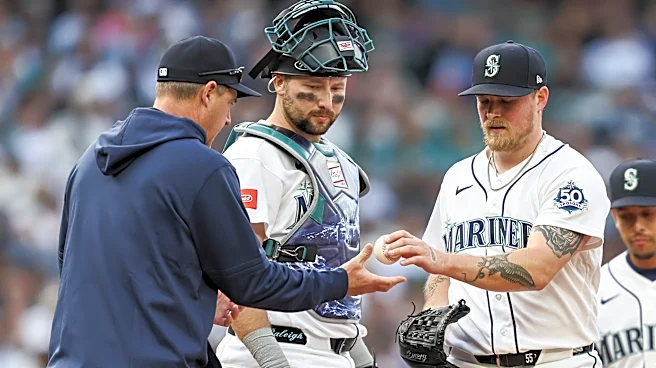





Dan Wilson managed to shut down the Rangers just long enough.
The Mariners snapped a pair of losing streaks on Saturday. They entered the day having lost four straight games. And they entered the day having lost four straight games to the Rangers, dating back to last week’s sweep in Arlington. With another strong start from George Kirby and some timely hitting to boot, the Mariners picked up a 7-3 win, beginning what they hope is an ascent out of their hole in the AL West.
But it was Wilson’s bullpen
management that caught my eye Saturday. It was pretty much flawless, despite increasingly tricky circumstances. Wilson and his coaching staff used nearly all their relievers and seemed to perfectly pair each to the situation in game.
Decision #0: Furious George Kirby
Bullpen management, of course, starts with the starter. George Kirby took the mound for the fifth time this season and was solid once again. He pounded the zone with fastballs and expanded the zone with sliders — a strategy that’s helped him dominate similar Rangers’ lineups in the past. It worked for the most part: Kirby picked up 14 whiffs on 51 swings (27%) and five strikeouts; and adding 12 more grounders to raise his ground ball rate to a league-leading 60.2% in 2026.
But Kirby struggled with efficiency at times. He allowed seven hits, two walks, and was frequently pitching with men on base.
“I kind of feel like I wasted a lot of pitches, got in some deeper counts, forced a couple of those guys on,” he said after the game.
There were a few tough-luck moments for Kirby. In the fourth inning, he gave up a hard single to put a runner on first with one out. The next batter ripped another hard grounder up the middle. This might have been a double play, but the ball instead hit Kirby in the pants and ricocheted into no man’s land for a single.
Kirby walked the next batter to load the bases with one out. He then faced Ezequiel Duran, who took a 2-2 pitch just off the edge of the strike zone. Kirby, perhaps in equal parts desperation and frustration, challenged the called ball. ABS confirmed the ump’s ruling to make it a full count.
In the past, Kirby might have unraveled after a couple unfortunate plays. Instead, he ramped up and threw a perfect, 96 mph fastball up and in and that Duran just missed for a shallow fly out. Kirby then got Kyle Higashioka, who hit a go-ahead homer off him last week, to fly out as well.
Kirby said he’s been working on his composure in these moments, where the game isn’t quite going his way. He said it’s just about trying to stay in control, not do too much, and simply attack.
“They just keep coming up, opportunities to get better and learn from it,” he said. “You just gather your breath, or just take a couple quick exhales, get yourself going to kind of get your body right for the moment you’re in.”
The only run Kirby allowed was a solo shot in the sixth inning, as his workload reached its max and his velocity started to fade. After a two-out single, Wilson turned to his bullpen.
Decision #1: Matt Brash gets an out
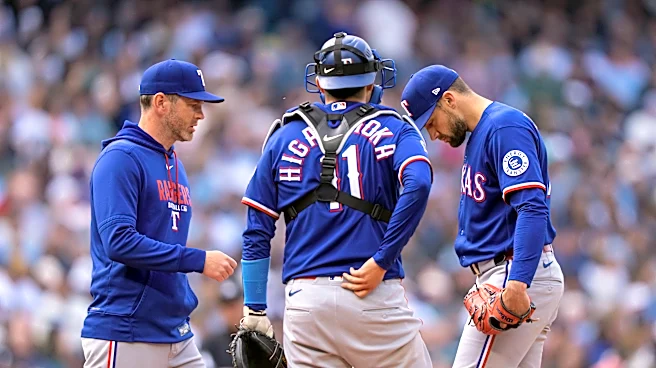
Matt Brash was the first reliever in the game on Saturday. He entered with a runner on first and two outs, with the Mariners up 3-1. The leverage index read 1.03.
The leverage index is a measure of how “on the line” a game is during an at bat, given the inning, score, outs, and men on base. Basically, it reflects the stakes of the game. Everything 0.85 and below is low leverage, and everything 2.0 and above is high leverage. The mushy middle is medium leverage.
The game was low leverage when Kirby began the sixth inning, with the Mariners holding a three-run lead and nobody on base. After the homer and single, the game progressed to medium leverage. The moment the game shifted from low to medium leverage, with Kirby at 96 pitches, Wilson turned to Brash — the Mariners’ second best righty reliever.
Now, one could argue this was maybe a better moment for Eduard Bazardo — the Mariners’ third best righty reliever — to face the Ranger’s nine-hole hitter in Higashioka. But had Higashioka reached base in any capacity, the game would have moved firmly into high leverage with the top of the order coming up. Given the minimum three-batter requirement, Bazardo would have been required to stay in the game, and the Rangers could have taken the lead before Wilson could make another change.
Instead, Wilson turned to Brash as contingency against a potential high-leverage spot. It worked. Brash threw just six pitches to dispatch Higashioka with a groundout, and the Mariners’ lead held.
Decision #2: Gabe Speier faces the leadoff lefties
The Mariners picked up another run in the bottom of the sixth, meaning they lead 4-1 in the top of the 7th. The game was back to low leverage.
Wilson turned to Gabe Speier, (arguably) his best lefty out of the pen to face the top of the Rangers’ order. One could argue maybe Wilson should have stuck with Brash after his quick work in the previous inning. But the top of the Rangers’ lineup — Brandon Nimmo and Corey Seager — are both very good lefty batters.
Wilson said that handedness matchup was the main consideration in turning to Speier. But he also noted the move keeps Brash available for Sunday’s game, which wound up looking quite prescient on a day where nearly every Mariners’ reliever pitched.
“I think we really felt with the lefties that that was Gabe’s inning, and he came out and did what he does. I think with our guys you also have to weigh rest. You have to weigh what’s tomorrow, and what’s beyond tomorrow. So all those things you have to throw in the hopper and come up with the best decision you can at that point. But yeah, we really felt like that was Gabe’s inning.”
Now, I’m not always a fan of thinking ahead in bullpen management. Wilson’s predecessor, Scott Servais, often espoused was (something to the effect of), “Win today’s game first,” when referring to bullpen decisions, and I generally agree with that. But this move was a good example of the range of considerations a manager faces when dealing with their bullpen. Wilson made the decision to sacrifice an arm in the game to get the better matchup while still saving an arm for the next game. It was a shrewd move that worked out given the context to that point.
But Wilson also got hit with a consequence of that decision: sometimes the bird in the bullpen just doesn’t have it. Speier struggled. He got Nimmo to strikeout but then walker Seager and later walked Jake Burger.
With the game back to medium leverage, Wilson opted for a fresh arm.
Decision #3: Break glass for Eduard Bazardo
Eduard Bazardo entered the game. He also wasn’t quite sharp, immediately walking Josh Smith to load the bases and progress the game to high leverage.
Maybe one could argue Wilson could have stuck with Speier and trusted him to escape, though I’m not sure I’d buy that after 24 not-great pitches. There’s also a case that Wilson could have gone with Jose Ferrer, though that would sacrifice the handedness advantage (Bazardo is a bit better against righties for his career).
I think this was probably the right move, and it wound up OK. Bazardo got Josh Jung to fly out to escape the jam he and Speier created.
Decision #4: Sticking with Bazardo
The game remained 4-1 heading into the eighth, with the game back in low leverage. Wilson stuck with Bazardo to face the 7-9 batters in the Rangers’ lineup.
Again, there’s some question about whether Bazardo, having struggled with his command in the previous inning, was the best choice. But given Kirby’s abbreviated outing, the decision to save Brash for Sunday, Speier’s struggles, and the Mariners three-run lead with the bottom of the Rangers’ order coming up — and given Ferrer threw 20 pitches Friday — Wilson was out of medium leverage options.
Bazardo wasn’t quite sharp. He walked the leadoff batter to move the game to medium leverage. Then he got a fly out and a pop out to push the game back to low leverage.
With two outs, a runner on first, and Bazardo at 21 pitches, Wilson turned to the pen.
Decision #5: Jose Ferrer to face the leadoff lefties
Wilson went with Ferrer to face the lefties at the top of the Rangers’ order.
Again, maybe one could argue Ferrer should have been the choice to begin the inning. But given his workload the night and the situation in the game, Ferrer appeared to be something of a last resort. When the situation required that last resort, Wilson was ready.
Ferrer gave up a weak bloop single to Nimmo but got Seager to groundout to end the thread.
Decision #6: Cole Wilcox to close out the blow out
The Mariners scored three times in the bottom of the eighth to extend their lead to 7-1, effectively ending the game. Wilson turned to Cole Wilcox, who’s impressed early but is firmly a “low leverage” arm. It was the ideal spot to get him some work without much on the line.
Unfortunately, Wilcox quickly raised the stakes. He gave up two singles and a walk to load the bases with one out. He got the second out with a sac fly to make the game 7-2. but gave up a double to make the game 7-3. Wilcox then walked the nine-hitter Higashioka to load the bases and bring the tying run to the plate in Nimmo.
Decision #7: Andrés Muñoz, the redeemer
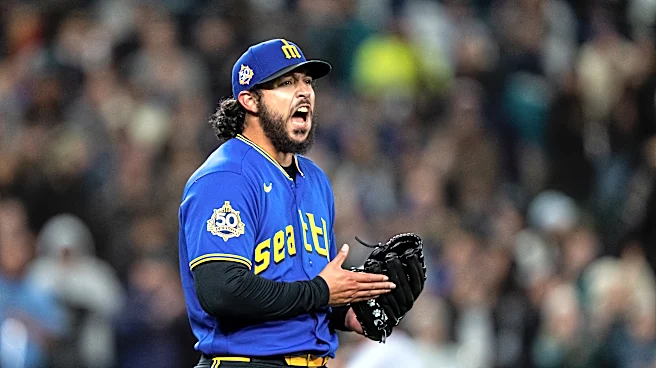
Wilson turned to Muñoz with the game back in medium leverage. Muñoz had a rare meltdown in his last outing in San Diego, giving up five runs and eventually the game. He’s looked just off early in 2026 and has struggled with command over the last week.
But he looked sharp Saturday, quickly punching out Nimmo on four pitches to end the game.
Verdict
This was essentially flawless execution from Wilson in what wound up being a tricky game to manage. The game was rarely in jeopardy for the Mariners, who finally strung together some hits on offense, but it was very often in jeopardy of being in jeopardy. Wilson had manage a comfortable lead and a starter who couldn’t get through six innings and a trio of relievers who didn’t quite have it. He made seven correct — or at least “defensible” — decisions at each inflection point, and the Mariners held on.
“Those are the things you sort of try to walk through ahead of time and try to make a plan. And sometimes it doesn’t go to plan and you end up in a weird situation,” Wilson said after the game. “Definitely it’s been a while for a couple of guys in the bullpen. (Brash) hadn’t been out there in a while and (Speier), really, too. So it was nice to get those guys in the game and I thought they threw the ball well. Good to get them rolling. But you have to weigh all those things when you’re making decisions. We try to do that as much as we can ahead of time and then follow the plan.”
There’s not a single number to say whether a manager is making the right calls to the bullpen, but Saturday’s game outlined Wilson’s general strategy. He operates with a hierarchy of relievers and turns to them based on the “leverage” in the game. Presumably, the hierarchy and the leverage are set by the front office, and it’s Wilson’s job to execute that plan within the context of the game and season.
To his credit, Wilson has been very good at this in broad strokes. His best relievers, generally in rank order, have pitched in the biggest spots — this year and last year. Muñoz, for instance, was the highest-leverage reliever in the game last year. It’s also worth noting the Mariners got significantly more WPA from their bullpen in 2025 than their context-neutral performance would indicate. Remember, the Mariners pitching was something of a mess last year, with an injured rotation often exiting early, requiring a 2 1/2-man bullpen asked to pick up four or five innings each night. Wilson was often forced to punt games early rather than using a leverage arm to protect a narrow deficit in the fifth inning. But when the Mariners did hold a late lead, Wilson was ready with Muñoz and Speier (and eventually Brash) to the shut the door.
Of course, that changed in the ALCS when Wilson made the infamous decision to go with Bazardo over Muñoz, which wound up being the final note for the 2025 Mariners. But it was a rare mistake for Wilson, who’d threaded the needle with a below average pitching staff all season.
Again, there isn’t a single number to summarize whether Wilson or any manager is good at deploying relievers. For instance, last year I was able to say pretty confidently lthat the Mariners extreme dependence on pinch hitters wasn’t working (and I’m a bit disappointed to see so many pinch hitters again to start 2026). But it’s not as easy to say whether the Mariners are getting all they could out of their bullpen. As we saw Saturday, there are plenty of variables that change in real time, and relievers can be a bit finicky. Still, Wilson does seem to know who his best arms are and when to use them. Sometimes, it even works out.