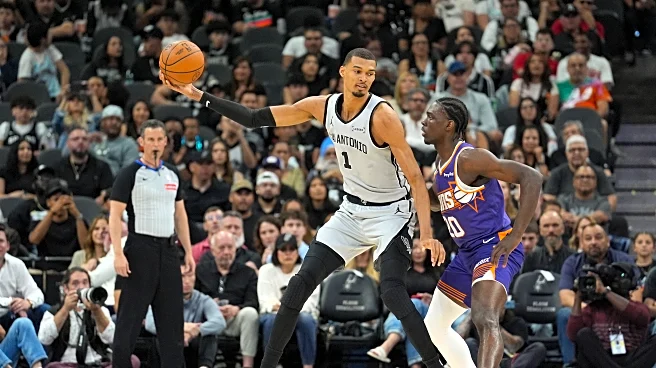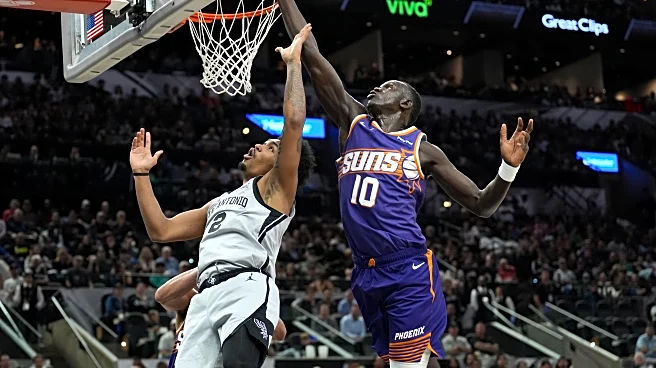

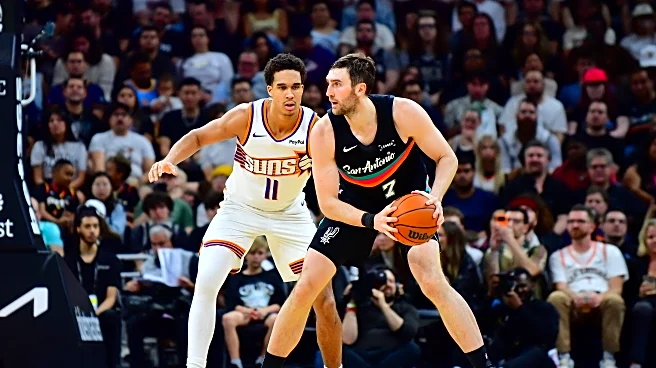
90.4 percent. Those were the odds. The Phoenix Suns had a 90.4 percent chance of winning last night’s game with 1:01 left on the game clock, as Devin Vassell clanged yet another three-pointer off of the rim.
Approximately three minutes earlier, their odds had peaked at 93.2 percent. The Suns had themselves a ten-point lead at that juncture. The Spurs were shooting less than 30% from beyond the arc, usually a grim hindrance when it comes to late game comebacks.
That’s the thing about probability, though.
Probability is, both conceptually and realistically, a silly, silly thing. This was impressed upon me by my college statistics professor in our very first class.
“I want to be clear about this; statistics are not facts. Numbers are factual. Math is factual. Statistics are an attempt to numerically describe and quantify the thing we call life. Probability is an attempt to mathematically predict it. Both are useless without context. If you ignore context, you will fail my class.”
That is, to this day, one of the two greatest openings to a class that I’ve ever experienced. I did not want to take statistics. I needed one more math credit, and I was trying desperately to avoid calculus. The professor had me hook, line, and sinker in the first five minutes, in the way that only great teachers can, and I learned more in that one class than I had in a lifetime of math courses.
Granted, I’m referencing a gentleman eccentric and particular enough to bring his own oversized eraser to class that he had nicknamed ‘Bertha’, but I am perpetually amazed by how endlessly applicable that statement continues to be.
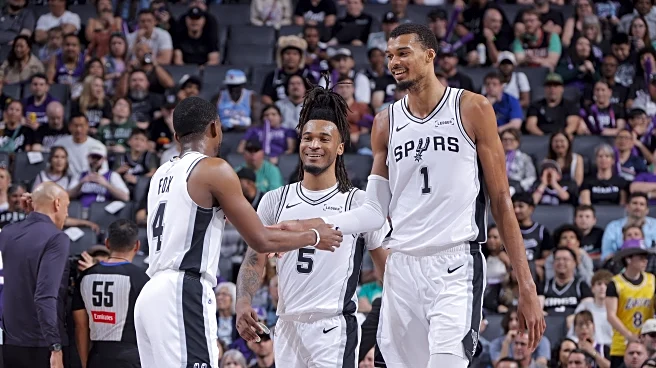
The thing is, that 90.4% chance was ignoring a lot. In those three minutes, the Spurs had ignited on both ends. It was ignoring that De’Aaron Fox had gone on an absolute tear on the offensive end, and that he and Devin Vassell were suddenly thwarting Phoenix’s guards with a ferocity that would have made suffocation maestro Stephon Castle proud.
It was ignoring that the Spurs had turned up their rebounding to such an extent that they were denying the Suns any opportunity for second-chance points (lost in the justifiable hubbub was the fact that San Antonio had 15 rebounds in the 4th quarter, over 1/3 of their total for the entire game) and were giving themselves extra possessions on the offensive boards.
It was ignoring the pull of momentum in a game where the Suns were suddenly scrambling on defense, and the Spurs were clawing for any and every advantage with the ferocity of a cornered wild animal. The visible shift in confidence. The calm that belied the situation.
The Spurs were acting like they’d been there before, because they had, all season long. And the Phoenix Suns were visibly pressing. But that doesn’t factor into probability. Only the numbers do. And the numbers, however true, can be misleading.
You think we’d have learned that by now, but human beings are addicted to probability. It makes us feel safe, as though the chaos of the universe could be contained and expressed by numerical order.
We believe that the calculated risk will protect us, like some bizarre totem of mathematical piety. We’re emboldened and cowed by the ecstasy and terror of fluctuations in a stock exchange. We assign outsized value to the fractional polling of diverse populations. We live in an era where there’s a prediction market for practically everything.
To borrow the very apt words of essayist and onetime cartoonist, Tim Kreider, we learn nothing.
And the only thing that seems to give us more pleasure, is bucking those very same odds.
We have a whole host of gambling websites and related addictions that testify to it. We simply cannot resist it. In the same way that we seem to believe that probability constitutes the laws of natural order, we seem to also believe that overcoming those odds constitutes a victory over those very same laws. I suspect we’re just lacking context.
There’s a reason that Han Solo line rings so true. The odds are next to useless. The odds are every changing. the odds are not the thing itself. It’s just not a healthy way to live.
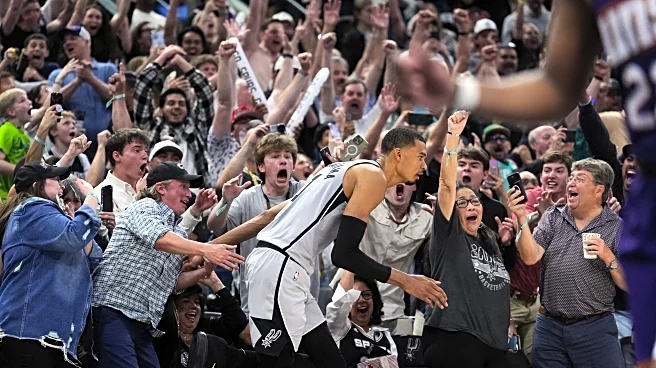
And yet, who can deny the incredible rush of an improbable comeback? I’m no more exempt from the thrill than anyone else, which is why I couldn’t bear to be seated as the final minutes of the game ticked away.
Pacing in my dining room like 1980’s stockbroker after a couple lines of the devil’s dandruff, my whole body felt like one raw nerve, and I was just watching!
I watched as Devin Booker improbably whiffed on three-pointer that would have almost certainly put the game away.
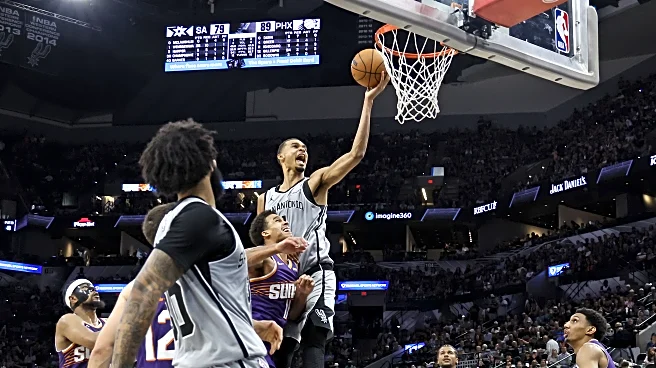
I watched as De’Aaron Fox dropped a finger roll that surely left George Gervin smiling somewhere.
I watched as Luke Kornet pulled down the single most important rebound of the game.
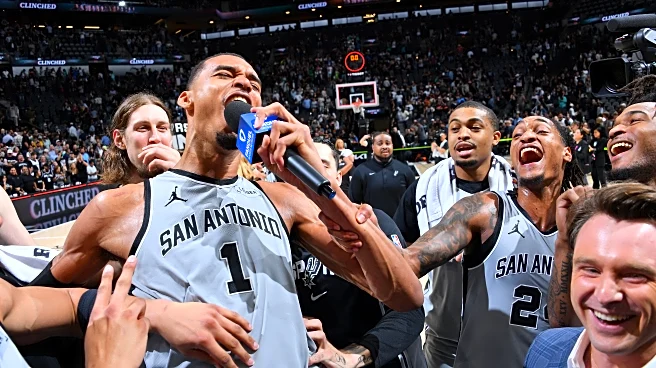
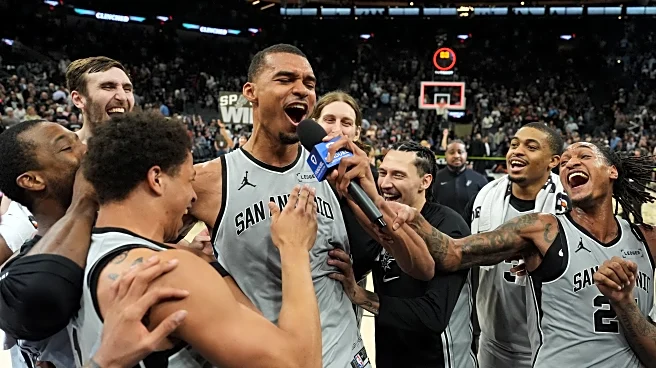
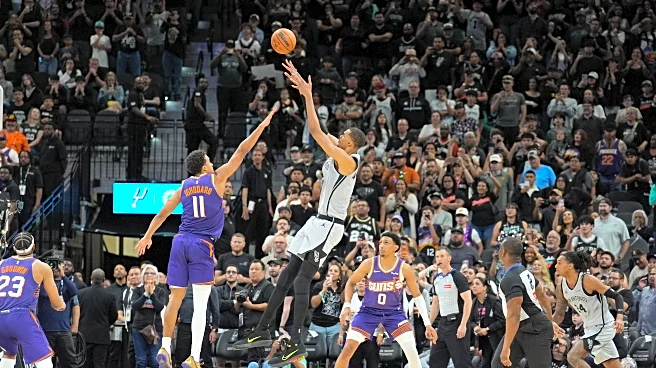
And I watched as Victor Wembanyama, ever the team player, finally called his own number and kick-started the legend of the killer instinct that’s he’s been patiently containing from the start of his career.
He makes probabilities look silly. And sometimes it’s just nice to be reminded that that’s exactly what they are.
Takeaways
- Dylan Harper led the team in offensive rebounds. I repeat, San Antonio’s rookie bench guard led the team on the offensive boards, and one of those came in clutch time! When I say that this team has the ability to win in an incredible number of ways, this is what I mean. That being said, it is a little concerning that the Spurs’ bench doubled the offensive rebounding of the offensive unit. The Suns are not the biggest team, and they were out-rebounding the Spurs so badly by the 4th quarter that I was already prepared for my entire write-up to be centered around exactly that issue. Wemby’s ability to deny access to/do damage in the post is not going to matter if the Spurs can’t get the ball back, or corral their own misses. This could be a fatal flaw in the postseason depending on the match-up. I’m hoping it won’t, but if there’s one thing outside of shooting that needs attention in the off-season, it’s rebounding. It’s the backbone of good basketball for a reason, although it certainly matter less when the Spurs shooting better than 29% from long-distance.
- Wemby made almost everything that happened in the fourth possible through defensive prowess, but without Fox’s 14 points in the fourth, none of it would have mattered. Fox had an admittedly creaky first-half, and he’s shooting just 31% from three over the last ten games, which is far from ideal, but his ability to become just about whatever the team needs when they need it most cannot be overstated. There’s not a lot of glory to be in had the kind of versatility that sometimes requires willingly taking a step back, but this is yet another act of selflessness in the manner of prominent Spurs before him. In fact, it might be the most selfless sublimation from a player who can still put up numbers since The Admiral himself. The Spurs might win 60 games this season. No chance they do it without Fox.
- The finger roll was particularly sweet to see the day after Chicago Bears Quarterback Caleb Williams decided to submit a trademark application for the moniker of ‘The Iceman’. I understand that Gervin’s not the only player to ever go by that nickname, but I just generally do not like it when athletes try to do this sort of this thing. The nickname is a gift from the fans. Treat it accordingly. To my knowledge, George Gervin always has.
- Julian Champagnie did that thing that Tim Duncan used to do so much, where he was incredibly vital and you almost had to look at the box score to realize how impactful he was. He was quietly everywhere, leading the team in blocks, knocking down his three, and switching onto whoever the situation called for. That kind of seamlessness is always underrated, but to be getting close to the same quality of contribution as you get from Devin Vassell (who he’s actually leading in VORP, BPM, and Win Shares) for 3 million a year is unfathomable. If the Spurs don’t extend him, I’ll be shocked.
Playing You Out – The Theme Song of the Evening:
Superpostion by Young The Giant