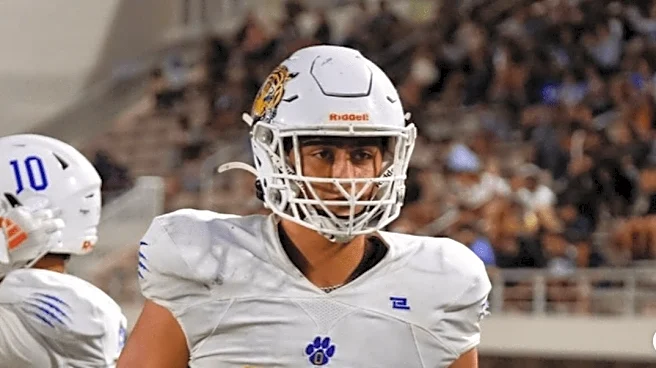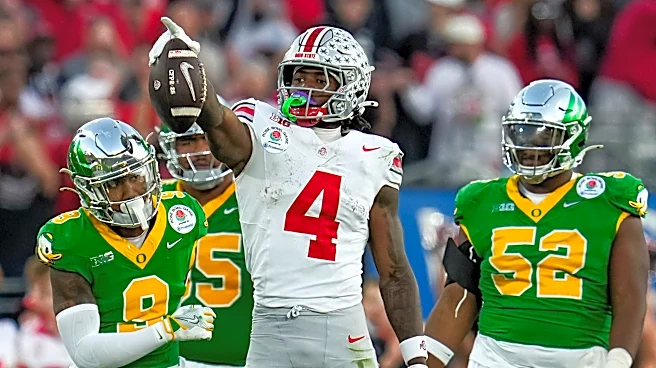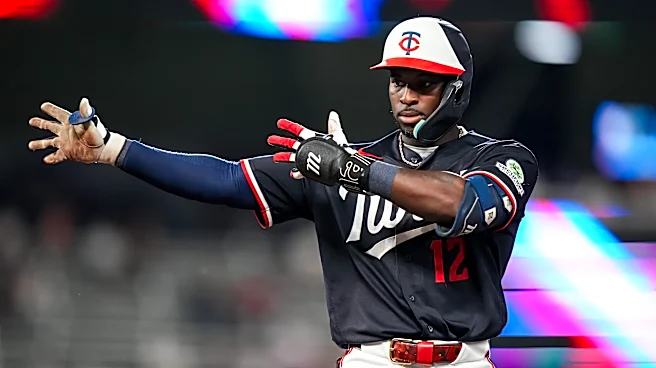



The major league debuts of Walker Jenkins and Kaelen Culpepper were the top headline in the Twins system this month, and for good reason. There was a lot less movement across the boards as the minor league seasons wind down and we have gotten a pretty good grasp on where these prospects are at. Big months from Caden Kendle and this year’s 12th round pick Colby Turner made me think about adding them to the back end of the list, but I ultimately leave them as honorable mentions just outside the top 40.
For the 2nd-to-last time this year, I present my Twins top 40 prospect list…
1. OF Walker Jenkins (MLB)
Possibly the most exciting development of the middling 2026 campaign has now become the major league debut of longtime No. 1 prospect Walker Jenkins. This comes after posting a monstrous .411/.488/.795 slash line with a 222 wRC+ at Triple-A in August. They unfortunately had to option a red-hot Alan Roden to make room, but Jenkins forced the issue and has all the tools to become a franchise cornerstone for years to come.
The bat has drawn comps to Joe Mauer for years, and for good reason. His swing has a great combination of control and bat speed. His 92.6% Z-Contact and 17.3% overall whiff rate at Triple-A are borderline elite numbers, and he has above average raw power with a good feel for lifting the ball out to all fields. Jenkins complements a talented bat with advanced swing decisions, showcasing impressive spin recognition and understanding of the strike zone.
Beyond the bat, Jenkins is a good and smart runner. He is a threat to steal a handful of bags and has been well-regarded for his intelligence as a baseball player. He has solid instincts in center field and a plus arm. He’s no Byron Buxton, but is capable of playing a good center field. He may end up settling into right field, but there is no doubt that Jenkins can be a quality defender somewhere in the outfield. With under 30 games left in the season, Walker will not graduate from prospect status this year, but he has arrived in the majors and will make the final month exciting no matter what direction the team’s playoff chances go.
2. C Vahn Lackey (A+)
With 8 extra base hits, 8 stolen bags, and more walks than strikeouts through his first 22 games, the No. 3 overall pick in this year’s draft is already looking the part. He slashed .397/.518/.772 at Georgia Tech this spring and now has a 155 wRC+ between Single-A and High-A.
He has average raw power with a good feel for pulling fly balls and a chance to grow into 25+ homer pop if he can add a little more juice as he matures and acclimates to the wood bat. There have been questions about his ability to adjust to secondary pitches, and those issues have continued in pro ball so far. He has been as advertised against fastballs, posting excellent contact rates with consistently high exit velocities. He has been extremely patient and has no trouble picking up spin, but the whiff rates and quality of contact against breaking and offspeed pitches have left some room for concern. Overall, looks like average or better contact with above average power in a mature approach.
Defensively, there have been some hiccups, but Lackey possesses lightning quick pop times with excellent arm accuracy. His athleticism is noticeable behind the dish and gives him a good chance to be an impactful major league catcher. His development over the past few years has been incredible and there are no signs of slowing down for Vahn Lackey. He firmly projects as a major league catcher with a valuable bat that keeps on getting better.
3. OF Emmanuel Rodriguez (AAA)
Emmanuel Rodriguez remains at the No. 3 spot as he continues to mash in Triple-A with no room for his lefty outfield profile on the major league team. He was on rehab during the first part of August but is slashing .300/.455/.633 for a 180 wRC+ in 17 games since returning to Triple-A, and he just hit for the cycle on September 1st.
While Rodriguez is lacking in the contact department and has run strikeout rates in the upper 20s throughout the minors, he is already one of the most powerful hitters in the world. His 118.3 MPH max exit velocity this season has only been bested by two major league hitters, and he has the barrel feel to crank 30+ homers on a yearly basis. E-Rod has always been known for his extreme patience and eye-popping walk rates, but he has become more aggressive in the zone this season while maintaining low chase rates. This has really allowed his power to flourish, and he’s still walking at roughly a 20% clip.
Rodriguez is a good runner who can steal a handful of bags. He has a plus arm and good range, putting him in the mix to be the Twins’ long-term center fielder, but he would fit nicely in a corner as well. The injuries remain the biggest concern with E-Rod, who is in his last option year and cannot be sent to the minors in 2027. It’s a unique situation derived from a constant heap of injuries and a loaded outfield group at the top of the Twins system. He will have to hit the ground running next year with no option for a “minor league reset,” but this guy is supremely talented with superstar potential.
4. SS Kaelen Culpepper (MLB)
Kaelen Culpepper’s first taste of Major League Baseball has been a joy to watch. His .300/.352/.463 slash line with a 129 wRC+ has given the Twins a big jolt, and he has settled in nicely at shortstop. There are some areas of concern, but Culpepper is looking like a good big league hitter already.
Swing decisions have always been an issue for Kaelen Culpepper, and that has continued to be his biggest trouble so far in the majors. With a 63% Z-Swing and 42% O-Swing, his chase rates have flown high against all pitch types. Despite this, Culpepper succeeds at the plate with impressive bat talent. He has one of the most visually appealing swings on the team, combining high bat speed with great contact skills. It’s a borderline plus hit tool that has flashed elite contact rates. With plus bat speed and a great feel for pulling fly balls, he also possesses significant power potential. There is all star talent here, but he will need to work on the approach as he settles in.
Culpepper has taken over the starting shortstop spot for the Twins and is settling in nicely on defense. He has a plus arm with solid range and a reliable glove. He likely isn’t a gold glove type shortstop but projects to be a quality defender there. He is an above-average runner and can steal 10-20 bags annually. Marek Houston may push Kaelen Culpepper to a different position. Either way, The Twins look like they have a really fun infielder on their hands who can impact the game in multiple ways.
5. SS Marek Houston (AA)
The Twins’ 2025 1st round pick has had an incredible season, impressing scouts with his offensive development and creeping his way onto top 100 lists. He cooled down quite a bit in August, slashing .214/.283/.298 for a 50 wRC+. He slumped for the first time this year, but the contact rates and swing decisions suggest that he will be perfectly fine.
Houston was seen as a fringy bat on draft day, but his 2026 emergence has suggested that there may be some legitimate impact on the offensive end. With a borderline plus hit tool and a patient approach, it is a high-OBP profile. His zone contact rate sits around 84% and he does a great job getting to pitches outside the zone even though he doesn’t chase often. Houston has shown off some playable power this year, making solid air contact and using his quick feet to take some extra bases.
He has excellent range on the defensive side with a good arm and silky smooth actions. Houston projects to stick at short and has gold glove potential there. Also been an aggressive baserunner, he is competing for the organizational lead in stolen bases with 49 so far. Houston is a high-probability big leaguer with the defensive value at a premium position while some added offensive potential has shown through this season. A 2027 debut looks probable as Marek’s time in Double-A seems to be nearing an end.
6. LHP Kendry Rojas (MLB)
An oblique injury on August 21st put Kendry Rojas on the shelf and puts the rest of his season in jeopardy, but it has been a successful one for the young southpaw. After being optioned to Triple-A at the beginning of August, Rojas made 4 starts for the Saints, allowing just 1 run in 12 innings while striking out 12 and walking 3. It is unclear whether Kendry will stick as a starter or move to the bullpen, but either way, he is looking like a good big leaguer.
His fastball lacks carry but is still a solid pitch at 95-97 with good extension. The slider is his best offering, generating good bite in the upper 80s. The changeup has also added some depth this year and works off the fastball extremely well in the upper 80s. We are still looking for him to add a third velocity to really round out the starter arsenal. The command feel is there, but Rojas has nibbled too much in the majors this year. If he can consistently throw strikes and be more efficient, Kendry has the talent to be a mid rotation starter for the Twins next year.
7. RHP Riley Quick (AA)
Walks and homers continue to give Riley Quick some fits at Double-A as the success has come and gone. He has posted a 5.79 ERA and 6.15 FIP over his first 7 starts in Wichita but is pitching better as of late, and the electric stuff continues to show through in a big way, totaling 103 strikeouts in 72.2 innings this season.
Quick has a wide and whippy release, almost sidearm, with elite extension. The delivery likely contributes to command inconsistencies but also makes it difficult for hitters to pick up the spin on his pitches. He leads with a heavy fastball in the mid 90s. The 4-seamer is a deadzone pitch and he leans more on the sinker, which gets more than 13 inches of horizontal run and contributes to excellent ground ball rates. His slider is the best pitch, generating whiff rates around 2,800 in the mid 80s. It’s a plus pitch with sharp two-plane break that has been difficult for minor league hitters to touch no matter where its thrown. Quick has struggled to command his upper 80s changeup, but it gets elite depth and has been a devastating pitch to lefties. His low 90s cutter is a solid 4th pitch.
Strike-throwing and efficiency will need to improve if Riley Quick is going to be a big league starter, but his stuff will give him a home in the majors one way or another. There is still plenty of development ahead. After getting Tommy John in 2024, he only got one year as a starter at Alabama and still has a ways to go to build up his workload. The Twins have aggressively pushed Quick through the system this year, and he has validated their belief in him at every level. There is a good chance that he will enter the big league mix at some point in 2027, and he has the talent to be a headliner of the Twins rotation.
8. RHP Charlee Soto (A+)
Charlee Soto briefly returned from injury in June but was sent back to the IL after forearm soreness continued to be an issue. He has been on a throwing program, but it’s looking like his 2026 season is over.
The injuries are starting to pile up, but at 6’3” with a linebacker build, there is no doubt that he has the frame to handle high velocity. The fastball has pushed into the upper 90s and averaged 98.1 MPH in his two short starts this year. It’s a sinker-type that fills up the zone and generates ground balls. The secondaries are what makes Charlee Soto so intriguing. He speeds you up with the high velocity and then picks you apart with three plus secondaries. He has always had a natural changeup feel, generating 17 inches of horizontal movement in the upper 80s with excellent command. He has a cutter in the upper 80s and a slider in the mid 80s, both generating plus depth with spin rates around 2,400.
He is developing solid command and has filled up the strike zone in his first few years in the pros. It is firmly frontline starter profile if he can build up a workload while staying healthy. Soto is still just 20 years old with arguably the most talented arm in the system.
9. C Eduardo Tait (A+)
Eduardo Tait just turned 20 and remains young for his level, but he slashed just .176/.247/.282 in August. Now surpassing 150 games at High-A, he is yet to show any real signs of dominance at the level. He has racked up 22 homers in 113 games, but the 75 wRC+ leaves much to be desired.
Tait is one of the most powerful bats in the Twins system, boasting a max exit velocity around 114 MPH with a great feel for elevating the ball. He has fringy contact skills, running zone contact rates just over 80%. The aggressive approach and lack of spin recognition is the biggest issue for Tait, who is chasing at nearly a 40% clip this season. The excessive chase has led to increased whiff rates and lowered quality of contact.
He is splitting time pretty evenly between catcher and DH, not playing anywhere else this year. Tait has shown signs of development behind the dish. Not the most athletic backstop, but his receiving and blocking projects to be passable, and he employs a plus arm that can gun down runners at a high rate. Eduardo Tait remains an incredibly high-upside prospect at a very young age, but the lack of success in well over a full season of High-A baseball is starting to become a concern. The glimpses of strong contact skills are giving Tait the edge over Tinney right now, but the two are very close.
10. C/1B Carson Tinney (A)
Twins 2nd round draft pick Carson Tinney has wowed with his bat over the first month of his pro career. Slashing .227/.420/.576 for a 158 wRC+ and 7 homers in 20 games, Tinney is showing everyone exactly why Minnesota drafted him so high.
His contact and strikeout numbers are settling in at respectable rates as he gets more comfortable in the pros while the power is absolutely flourishing. A 114.9 max exit velocity and 107.4 90th are borderline elite numbers, and his feel for pulling fly balls gives Tinney potential for 70 grade power. He has an extremely passive approach, running an overall swing rate below 32%. It’s a volatile true outcome approach, but there is easily 30+ homer upside.
Tinney was drafted as a catcher, but the Twins have already began getting him a little experience at first base. He’s bigger and a more lumbery athlete that doesn’t move well behind the dish. He has a solid arm and developing receiving and blocking. There is hope that he can develop into a major league catcher, but a move to first base or a mix of the two may be in store. With light tower power, Carson Tinney has a chance to be a big-time slugger for the Twins for a long time.
11. RHP Adrian Bohorquez (AA)
After forearm issues plagued the first half of the season for Adrian Bohorquez, the righty flamethrower has hit his stride and is starting to drift towards top 100 territory. At 6’1” with a filled-in frame, Bohorquez sits 96-98 with good carry on his fastball, a plus offering that misses a lot of bats at the top of the zone. He has an excellent feel for spin and tosses a pair of plus breaking balls in an upper 80s slider and low 80s curveball. Both pitches have sharp bite and generate excellent whiff rates. Lack of a quality changeup has given Bohorquez some fits against righties as his low 90s power change has middling traits and struggles to find much success as he moves up the system. His absolute dominance against righties with three plus offerings gives him a good baseline as an electric bullpen arm, but there is mid-rotation starter potential here if Bohorquez can find a way to get lefties out.
12. 3B/OF Brandon Winokur (AA)
We have gotten middling production this year from 21-year-old Brandon Winokur as he pushes through Double-A. His athletic profile remains highly intriguing as a guy who can hit 30 homers and steal some bags while playing high-level defense at third base or the outfield. There are significant hit tool concerns for Winokur, who has batted around .250 this season with strikeout rates in the upper 20s. He has also been more aggressive and struggled with spin recognition as pitch execution gets more advanced in the upper levels. His plus arm and good range are developing nicely at both third base and center field, where I think Winokur can be an impactful defender at either position. With potential for plus power and valuable defense, the ceiling is high for the developing slugger.
13. C/OF Khadim Diaw (AA)
23-year-old Khadim Diaw has received constant praise for his coachability, work ethic, and attention to detail as a pro, and with some of the strongest production in the Twins system since the beginning of 2025, injuries have been the only thing holding Diaw back. He has limited power but a short and controlled swing that generates excellent contact rates and consistent quality contact. He pairs it with a mature approach and strong swing decisions, leading to a 23 to 18 walk to strikeout ratio through 42 games at Double-A. He is a good athlete who can steal a handful of bags and moves well behind the dish and in center field. While there are questions about how his average arm will play at catcher, his receiving and blocking have given the Twins hope that he can be a part-time catcher at the major league level while spending some time in the outfield. It’s a fun utility profile that can fill multiple roles in one roster spot while adding speed on the bases and providing some quality offense from the right side of the plate. At the rate he’s going at, Khadim Diaw will likely start the 2027 season in Triple-A with a good chance to debut next year.
14. OF Hendry Mendez (AAA)
Hendry Mendez is a big lefty bat with a well-rounded offensive profile. He lacks athleticism and struggles defensively, looking like a fringy left fielder at best. As a hitter, Mendez has a borderline plus hit tool, running strong contact rates with an 86% Z-Con and low fly ball rates that will maximize batting average. He has violent bat speed with a max exit velocity of 112.o MPH and consistent hard contact, but his high rate of ground and line drive contact severely limits power production. With excellent swing decisions, it is a well-rounded offensive profile that is almost guarenteed to produce a productive major league hitter, especially if Mendez can elevate the ball more often. As one of the highest floor bats in the system and already on the 40-man, Hendry Mendez seems ready to debut whenever the Twins decide to call on him.
15. RHP Ethan Wachsmann (DRAFT)
The Twins paid $2.25M (slot value $1.05M) to pry 18-year-old Ethan Wachsmann away from Wake Forest in the 3rd round. The 6’5” righty is raw but oozing with arm talent. He has a fairly easy delivery from a 3/4 arm slot. The ball pops out of his hand, sitting upper 90s and running up to 100 with a lot of spin. Likely looking at more of a sinker type similar to Charlee Soto unless there are some mechanical changes. He has a trio of secondaries that have flashed some fun potential, but are very raw at the moment. The most enticing is the curveball around 80, which is highly inconsistent but has flashed spin rates as high as 2,900 with sharp two-plane break. He has a harder cutterish slider in the mid 80s and an upper 80s changeup that kills spin and has flashed some quality fade. There is a long way to go, as we have seen with Dasan Hill and Charlee Soto, but the velocity and spin with his big frame make Ethan Wachsmann an incredibly exciting pitching prospect.
16. RHP Ryan Gallagher (AAA)
Ryan Gallagher was looking great in July and early August, pitching efficiently and looking like a real major league starter. After close to 100 grueling innings of Triple-A baseball this year, it seems like he is running out of gas. His fastball has dropped a tick and he has struggled in his last couple outings, but he remains a promising back-end starter option going forward. His fastball sits 91-94 with good spin and a little bit of carry at the top of the zone. Gallagher’s mid 80s cutter and changeup around 80 continue to be effective secondaries, generating excellent whiff rates and lots of weak contact. He has ditched the slider but continues to mix in a slower curveball about 10% of the time. Strike-throwing has come and gone, but at his peak, Gallagher has shown he can be an efficient and effective starter, combining quality strike-throwing with solid stuff and a nice array of shapes and velocities. He’s 23 years old and one step away from the majors after just two full years in the pros. If he can add a tick to the fastball and add a little bit of whiff to the pitch, then I like his chances of filling a back-end rotation spot with 150+ quality innings.
17. RHP Brett Renfrow (DRAFT)
6’3” right-hander Brett Renfrow made 15 starts with 70+ innings in each of his three season at Virginia Tech. He will be ready to hit the ground running next year, where his smooth mechanics, quality strike-throwing, and 4 pitch arsenal should allow him to eat innings as a high-probability starter. He gets good extension down the mound on his fastball that sits low 90s and tops out around 97 with good carry and spin. Renfrow has a good feel for spin on the breaking balls, featuring a mid 80s slider with some good bite and a little late sweep. The curveball can be a nice 4th offering in the low 80s. The changeup has shown good iVB separation from the fastball, but is still developing a feel. There is a baseline as a quality reliever here with the carry fastball and good slider. If that fastball can creep up into the mid 90s more consistently and we get some changeup development, I see mid rotation upside here.
18. RHP Marco Raya (MLB)
It has been an up and down season for Marco Raya, who had a two month stretch as one of the best pitchers in Triple-A, but hit the IL shortly after his MLB debut and wound up struggling in the minor leagues again. But Raya found something with his fastball in mid-August that has turned him into a completely different pitcher. In the middle of the season, he made some adjustments to his fastball that added over 200 RPMs and about 3 inches of vert. A heater that struggled to find success for most of the year has now been generating elite whiff rates for the past couple weeks. His sweeper, curveball, and changeup all continue to be excellent whiff pitches, rounding out an arsenal that now looks like it has major league closer potential. We will have to wait and see if Raya can maintain these fastball specs through September and going into next season, but I am already buying in.
19. RHP James Ellwanger (A)
The 2025 3rd round pick underwent Tommy John in June and will now spend the entire offseason and potentially a portion of next year rehabbing. He turns 23 next season and has just 11 professional innings under his belt, but it’s 11 scoreless innings at that, and Ellwanger has very intriguing stuff. The fastball is mid 90s but lacks quality shape, which is limiting its swing-and-miss potential. His low 80s curveball is the best pitch with some sharp two-plane break. A cutter in the low 90s has potential and his changeup flashes plus with elite depth. Ellwanger threw an adequate amount of strikes in April, but it was a lot of spray-and-pray with poor precision. The velocity and feel for spin makes for exciting potential, but command concerns and now a torn UCL make him more likely than not a reliever.
20. OF Yasser Mercedes (A+)
Yasser Mercedes has struggled to catch on in High-A, posting an 87 wRC+ with a near 30% strikeout rate over 84 games at the level, but he is still just 21 years old with some of the most tantalizing physical tools in the system. It’s easy plus power for the 6’1” righty, running a max exit velocity near 114 MPH with a strong barrel feel. Mercedes has smacked 18 homers this season while competing for the organizational steals lead with 52 and counting. He is a plus runner, and while he may not have the instincts to stick in center field, his plus arm with that athleticism will play in right field. His swing is a bit jerky with some loud pre-swing hand movement. Quite a bit of whiff with questionable spin recognition and poor swing decisions. This is year 5 as a pro now for Yasser Mercedes, and while he has huge potential, the hit tool concerns and middling production are causing some doubt.
21. OF Eduardo Beltre (A)
Eduardo Beltre hasn’t played since April due to a knee injury and is out for the season. There are some concerns with swing decisions, but he has shown off plus power potential since his debut season in the DSL where he jacked 11 homers in 43 games at age 17. He already has a strong build and is running exit velocities up to 110 MPH. It’s a small sample size, but his 83% zone contact rate this season gives me hope that there is a playable hit tool, and his strikeout rates were manageable during his time in rookie ball. Beltre is a good athlete who can steal some bags. He has split time across all three outfield spots, and his plus arm and quality range project to fit nicely into a corner spot with some playable center field defense. Losing nearly a full season this early in his career is a tough break, but Eduardo Beltre is a toolsy right-handed hitter with some real slugger potential.
22. OF Luis Fragoza (A+)
Maybe the most surprising breakout prospect in the Twins system this season, 19-year-old Luis Fragoza has gone from rookie ball to High-A, producing at an elite level while showing off loud tools. His 110 MPH max exit velocity is advanced for his age and creates hope for plus power as he continues to mature. His swing is a little long, but its sound and smooth. The hit tool looks fringy at the moment, but improved swing decisions could push his contact numbers closer to average territory. Fragoza projects to be an average runner who can steal some bags. He has also shown some utility, playing a mix of corner outfield and corner infield and looking solid all over the place. It is very early for Luis Fragoza, but the mix of raw talent and advanced skills at his age are exciting.
23. SS/3B Quentin Young (A)
Quentin Young found some success in August as he continues to post elite barrel rates and some of the most absurd exit velocities we have ever seen from a teenager, but his 45% strikeout rate hasn’t budged one bit. While Young possesses 70 grade power with an excellent barrel feel to all fields, his hit tool won’t get him to Double-A in its current state. He has a rocket arm and projects to fit nicely at third base. He has all of the raw talent in the world, but some significant swing improvements are needed in order to push Quentin Young’s career in the right direction.
24. UTIL Ben Ross (MLB)
As a September call-up, Ben Ross fills out a valuable utility bench role for the Twins. Ross has limited raw power and fringy contact skills, but excellent spin recognition and a good feel for pulling fly balls give his bat a real chance to be passable in the majors. With just a 22% chase rate against breaking pitches and some real success against fastballs, it won’t be all that easy for pitchers to get him out. Ross is an above-average runner who can do some damage on the bases. He’s also a borderline plus defender who can play sound defense anywhere in the infield or outfield. It’s not an exciting profile, but one that you find on the bench of almost every good MLB team.
25. C/1B Enrique Jimenez (A+)
Enrique Jimenez had his season end on July 24th with a hamstring strain, but he is close to a return and will be able to have a normal offseason. He played just 40 games and saw some elevated whiff rates when me moved up to High-A, but I’m very intrigued by the switch-hitting bat. He gets a lot of elevation in his swing, which contributes to the fringy hit tool. He has a good chance for at least average power production, running exit velocities up to 107 MPH with a great feel for pulling fly balls. He also has a very patient and mature approach, maintaining low chase rates while being fairly aggressive in the strike zone. He has limited movement skills behind the dish and an average arm, but is showing good development and projects to at least be passable there. It’s early for Jimenez and injuries really slowed him down this year, but I like his potential as a quality backup catcher.
26. OF Kala’i Rosario (AAA)
There are whiff concerns and limited defensive impact with Kala’i Rosario, but he slashed .254/.329/.619 for a 132 wRC+ in 18 games Triple-A games in August. There is plus raw power with a max exit velocity north of 112 MPH and a strong feel for pulling fly balls. Rosario is showcasing excellent spin recognition, maintaining low chase rates while attacking fastballs in the zone. There are significant hit tool concerns, especially with offspeed pitches. Still, the power and advanced approach leave enough hope for major league production. He is a solid athlete with fringy corner outfield defense, but a big arm that will play in right field. Kala’i Rosario has hovered around this fringe big league prospect territory for a few years now, but the career of Brent Rooker shows us that you can’t ever write off a guy with with kind of explosive profile.
27. 2B/SS Kyle DeBarge (AA)
The offensive production for Kyle DeBarge is still lacking at Double-A, but he has settled in a little bit, maintaining a patient approach with high walk rates while running into more contact. Defensively, he is an above average middle infield defender, splitting time between second and short. He runs well and has been an aggressive baserunner, stealing 34 bags this season and 66 in 2025. DeBarge looks like a fringy hitter that can impact the game in a big way with his feet and glove.
28. OF Yovanny Duran (A)
18-year-old Yovanny Duran is finishing the season in Single-A Fort Myers after dominating the FCL this summer to the tune of a 146 wRC+. While the Single-A slash line doesn’t look pretty, the underlying numbers are solid and he is showcasing some advanced tools for his age. He has a short line drive swing with a quick bat from both sides of the plate. His swing decisions are very advanced, showing off good spin recognition and an excellent understanding of the strike zone. The raw bat talent looks questionable at the moment as Duran has lacked raw power and his contact numbers are around average. Duran is an aggressive baserunner who has stolen 40+ bags this season but at a below average success rate. He projects to be an average runner and will play some center field throughout the minors, but likely ends up in a corner, where he can be an impactful defender with a good arm. The development of Yovanny’s bat will be fun to watch as he plays his first full minor league season next year at age 19.
29. 1B/OF Gabriel Gonzalez (MLB)
It was a good month of August for Gabby Gonzalez, who rode elite contact rates to a .290 average and 123 wRC+ at Triple-A before being called up to the majors at the end of the month. Poor quality of contact and a chase-heavy approach continue to limit the righty, however. He has performed well against lefties and could find some success in a short-side platoon role. Gonzalez has limited athleticism and struggles in the outfield. He has a plus arm but has looked more comfortable at first base. It’s not a high-upside profile, but Gabby is a MLB-ready bat that can provide some offense in a bench role.
30. RHP Eli Jones (AA)
Despite not pitching since May due to injury and not having particularly eye-popping numbers, I see Eli Jones as one of the Twins’ top true starting pitching prospects. He is a 6’1” righty with a deep repertoire and heavy strike-throwing. He posted a 4.39 ERA and 3.50 FIP on good volume this spring before the injury. He leads with a sinker, which has pushed more consistently into the mid 90s and generates a ton of ground contact. The 4-seamer is mixed in as well and can generate some whiff at the top of the zone. Jones has a trio of average breaking balls with distinct shapes and velocities, also having a lot of success against lefties with his mid 80s changeup. Not a flashy prospect, but a pitchability arm with decent stuff and excellent strike-throwing. Eli Jones is destined for the back end of a major league rotation if he can continue on this upward trajectory.
31. RHP Reed Moring (A+)
We have gotten mixed results from Reed Moring since his promotion to High-A at the end of July, but after only throwing 48 innings combined in his last two years at USCB and now creeping up towards 100 innings this year, it is reasonable to assume that Moring is running out of gas. His fastball sits low 90s with good ride, a pitch that could really do some damage if he can work it into the mid 90s. He has a big league slider, getting some good bite in the mid 80s but has caught far too much of the strike zone with it this year, leading to some hard contact. The changeup kills spin and generates great vertical separation from the fastball. It will be a huge pitch for him against lefties as he gets more comfortable using it. A slower 12-6 curve is mixed in as well and has been effective. Command is a work-in-progress, but Reed Moring is tracking towards mid-rotation stuff. He has come on very strong for a late round pick in year one.
32. RHP Tommy LaPour (DRAFT)
The Twins 4th round draft pick is 6’4” with a strong build and a heavy fastball. The heater sits 92-96 with good carry and has flashed up to 100. His best secondary is the changeup, which gets excellent vertical separation in the upper 80s. The slider is fringy and is a questionable third pitch. LaPour commanded the arsenal well in 2025, but lost it a bit this year after an elbow injury cost him most of the spring. There is some starter potential here, but we are more likely looking at a reliever who’s plus potential fastball gives him a high floor. Development of a reliable breaking ball will be key.
33. RHP Alejandro Hidalgo (AAA)
Right-handed reliever Alejandro Hidalgo has struggled in Triple-A this year with a 7.43 ERA and 7.72 FIP, but the Statcast data is solid, and he has all the tools necessary to be an electric major league reliever at just 23 years old. His secondaries have been dominant this year. The upper 80s cutter is an above average pitch that has generated a 42% whiff rate and .263 xwOBA on about 30% usage. His mid 80s changeup has been even better, generating a whiff rate north of 50% with a .123 xwOBA on similar usage. It has average shape, but excellent velo separation mixed with great arm action working off the fastball has a devastating effect on hitters. The fastball itself has been a problem. It sits 95-97 with good specs but is being barreled at a monstrous rate and has had very little success all season. Given its quality shape and the success of his secondaries, Hidalgo finding success with his fastball and becoming a lights-out reliever with a great 3-pitch mix seems reasonable. At just 23 years old with a unique road through the minors over the past few years, there is plenty of hope for continued development. However, he is Rule 5 eligible this offseason and may not be giving the Twins enough reason to add him to the 40-man.
34. RHP Matt Barr (A)
Matt Barr’s first pro season hasn’t come without adversity as he spent the first couple months recovering from a broken arm. After struggling to find the strike zone in his rookie ball stint, Barr has honed in the strike-throwing since being promoted to Single-A, but it remains a lot of spray-and-pray with a very raw feel for command. He has a low effort delivery with poor extension and a wide release point. His fastball sits low 90s with elite spin rates around 2,500 but deadzone shape. The spin rates and release characteristics give me hope that Barr can make the fastball work, but it isn’t generating any whiff and its current state will not work in the upper minors. The plus slider is his best pitch, possessing spin rates near 3,000 in the 82-85 MPH range with excellent two-plane break. He tends to lollipop the spinner into the zone, which is limiting its whiff rates, but it has wipeout potential if Barr can consistently locate it in the chase zone. There is no changeup, but he diversifies his arsenal by mixing in a curveball and cutter, both having average characteristics. Despite being a breaking ball specialist from the right side, Barr has been better against lefties than righties this year. The chances of him sticking as a starter are low and fastball improvements are crucial, but the plus slider is a nice start for a 20-year-old who looks like he can find a home in a major league bullpen.
35. RHP Steele Murdock (DRAFT)
The Twins drafted Steele Murdock at the top of the 5th round in July, and there is some intriguing talent in this right-handed arm. He struggled with walks at UCSD but posted 12.7 K/9 this year, backed by a plus slider in the low 80s. Spin rates sit in the 2,500 range with sharp bite, generating excellent whiff rates. He leads with a unique cut fastball that gets good carry in the low-to-mid 90s and has flashed up to 99 MPH. Occasionally throws a mid 70s curveball, but it’s mainly a two-pitch mix. He will need to broaden the repertoire and throw more strikes if he wants to stick as a starter, but the reliever profile is already looking very strong. For what it’s worth, he dominated the Cape last summer as a closer, posting a 2.16 ERA with 24 strikeouts in 16.2 innings.
36. OF Teilon Serrano (FCL)
Big raw tools from lefty outfielder Teilon Serrano at just 18 years old, and they have been accompanied by real production in two years of rookie ball. Extremely patient hitter with hit tool concerns, finishing with a 27.3% walk rate and 30.4% strikeout rate in the FCL this season. He has plus power potential, already registering exit velocities north of 109 MPH. He’s a good athlete who has split time between all three outfield spots. A long way out, but there is value in an athletic outfielder with a high-upside bat.
37. RHP Santiago Castellanos (FCL)
Patience is a virtue with Santiago Castellanos, who dominated the DSL at 16 years old and is one of the more well-rounded international pitchers we have seen come through the Twins system in recent years. His 3 pitch mix is led by a 92-95 MPH fastball with some lively riding action at the top of the zone. It has plus potential as a heater that has ran up to 97 in his teenage years. The slider flashes good bite in the mid 80s while the changeup already has great feel with wicked fade. Its an above-average arsenal across the board that Castellanos throws for a lot of strikes. He didn’t pitch much in the FCL this season and has dealt with an injury for part of the summer, but should have a normal offseason and be ready for 2027. He is freshly 18 and looks like a really intriguing arm that will hopefully infiltrate full-season ball at some point next season.
38. RHP Thomas Burns (DRAFT)
Thomas Burns is a really fun pick by the Twins in the 8th round. Burns worked strictly as a reliever at Texas this past spring and tallied a ridiculous 43 strikeouts in 22.1 innings. He is 6’3” with a very high-effort delivery that produced some nasty stuff. The fastball is 70 grade, sitting upper 90s with elite carry, overpowering hitters and generating a 40% whiff rate. He tosses a cutter in the upper 80s with above-average traits but a lack of command. The changeup has flashed good specs, but has no feel. Burns already has big league stuff and could make his major league debut as early as next year. His lack of command gives some reason for concern, but the upside out of the bullpen is awesome.
39. LHP Garrett Horn (A+)
Garrett Horn was drafted in the 6th round by the Rangers in 2024 and came over in exchange for Danny Coulombe at last year’s trade deadline. The 6’2” lefty only threw 16 innings this year due to some shoulder issues, but he is one of the most intriguing lefty arms in the system. The fastball is borderline plus, sitting 92-95 with good extension and elite carry in 3-4 innings starts. Horn pairs it with a good slider in the low 80s that has been a devastating pitch against lefties, and he can morph it into a cutter in the upper 80s. He has struggled with walks since joining the Twins’ org. It is firmly a reliever profile, but one that has a chance to be highly productive in that role. After an injury-riddled season, it may be time to move Garrett Horn to a bullpen role, where he could climb through the minors and debut as soon as 2027.
40. OF Merphy Hernandez (A)
19-year-old lefty outfielder Merphy Hernandez leads the Twins system with 54 stolen bags this season and looks to finish top 5 in all of Single-A despite not reaching the level until late May. Hernandez is a plus runner and surefire center fielder with elite range and a good arm, but there are certainly questions about his bat being major league caliber. The hit tool looks fringy right now, but there is plenty of hope that improvements can be made. He has a very jerky and violent swing with a big leg kick and a lot of pre-swing hand movement. The raw power is below average but developing, and Merphy is showing a solid barrel feel at 19 years old. His chase rates are high against fastballs this year, but he is showing advanced spin recognition and I don’t mind him being a little too aggressive against the heater. There is a lot of development left with the bat, but the potential is there and he has a high floor as a plus runner with potential for gold glove caliber defense in center field.