

The top of the 2026 NBA Draft class is dominated by three names
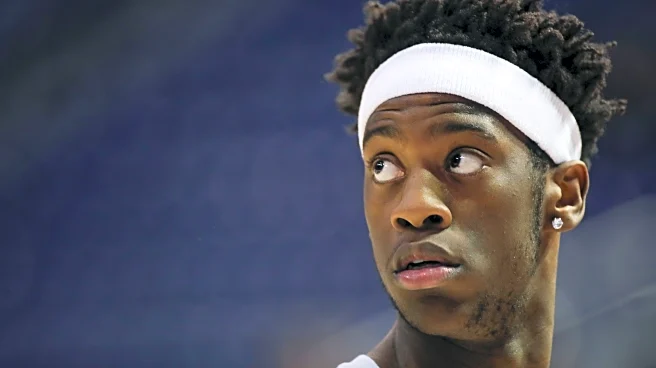
: AJ Dybantsa, Darryn Peterson, and Cameron Boozer. Three players, each appealing for their own reasons.We have Dybantsa, a dynamic, flexible scorer with a refined taste for shot selection, draws fouls like an NBA superstar, and has an unmatched competitive drive despite a disappointing season at BYU.
Then there’s Darryn Peterson, perhaps the best guard prospect the game has seen since Kyrie Irving, complete with demi-god scoring talent
and an Irving-esque dramatic magnetism.
And last but not least is Cameron Boozer, the best player on the best team in the nation at Duke, and as reliable as a grandfather clock. Steady, rhythmic, reliable. He does a bit of everything, and he does it all very well despite limited athleticism.
It’s all very reminiscent of the 2022 class, which was likewise triple-spearheaded by prongs Paolo Banchero, Chet Holmgren, and Jabari Smith Jr. Now, nearly four years later, these players have revealed their true identities to the NBA world to varying degrees of favor.
The eventual first-overall selection, Paolo Banchero, whose putrid advanced stats and teeth-grinding inefficiency have basketball nerds everywhere burning Banchero’s number in effigies and smearing his reputation with the nickname “PB no J”, which is sincerely the funniest diss I have ever heard in my entire life. An undeniably talented player who has become known as one of basketball’s most inefficient scoring options has dragged both himself and the Orlando Magic well behind schedule.
Chet Holmgren, who went second to OKC, was touted as a do-it-all big with guard skills maliable and flexible to knock down a three-pointer at one end, and turn around to swat a layup into the stands at the other (if he can put some meat on his spindly frame, that is). Don’t let the fact that the upgraded model of Holmgren, known as Victor Wembanyama (apologies to Shaq and the Bol Bol fan club), buried Holmgren’s popularity a year later —Holmgren was a vital contributor for OKC’s Finals run and continues to produce at an impressive rate.
Be honest, you had almost completely forgotten about Jabari Smith Jr until reading this article. It’s not your fault — 3-and-D guys don’t collect headlines. He’s scoring over 15 points per night this season on a solid 36.5% clip from distance.
And here we are again. With no Wembanyama or Flagg standing alone as the obvious number-one pick on every draft board, it’s time to start considering what flavors of a prospect’s petri dish the teams at the top of the draft order should prioritize.
My message to the eventual owner of the number-one pick this summer is simple. Don’t overthink it: pick AJ Dybantsa.

NBA Draft Profile: AJ Dybantsa
Bio: 6 ft, 9 in | 201 lbs | 19 yrs old | Brigham Young University
2025-26 regular season stats: 24.7 PPG (leads NCAA), 6.7 RPG, 3.8 APG, 51.2% FG, 33.9% 3PT
Accolades: Big 12 Freshman of the Year, All-Big 12 First Team, Projected First-Team All-American
NBA Comparison: Cross-section of Tracy McGrady and Paul George, plus a drop of Shai Gilgeous-Alexander
Praise
Do you remember playing with a sticky hand as a kid? That rubber string with a grippy hand at the end, you know? AJ Dybantsa moves as if he were a sticky hand, but with a skeleton, muscles, and typical human stuff to hold him together. Recall, if you’re able, the helpless feeling of dodging your friend’s sticky hand-enhanced attacks during adolescence. The dust-riddled, grime-collecting, yet equally elastic limb flies toward your face in an unpredictable — and therefore unstoppable — pursuit. You will get slapped in the face when you stand opposed to this force. It’s a matter of when, not if.
AJ is bendy, stretchy, and equally impossible to reliably predict. Even if you could, his length, deliberate nature, and shooting touch deliver an agonizingly robust sample size of viewers unifying to say “good defense, better offense” from their seats. AJ lives in the midrange (that’s right, it’s coming back) and is at home while backing down a defender from the high post before wiggling and releasing with a turnaround jumper.
He’s equally deadly turning over either shoulder and elevating above all distractions for a clean look at the basket from nearly anywhere on the floor. For a player whose diet consists of many, many jump shots, his 51.2% FG rate is remarkable.
That’s not to suggest that Dybantsa settles for jump shots, however, as he displayed an incredible ability to get paint touches and finishes better than nearly any wing in modern collegiate history. A post in February showed that AJ converts on roughly 76% of his attempts at the rim (whoa), and is assisted on only 23.4% of those looks. He can do it himself, even against the gauntlet that is the Big 12 Conference.
He posted a program-record 43 points in an eruption against rival Utah, and led the entire nation in points per game essentially from the first game of the year until the final buzzer of the regular season.
Call it flopping, call it selling, call it a superstar whistle, but AJ Dybantsa drew more fouls in his freshman season at BYU than any other player in the nation. Getting fouled is an NBA skill, and one that competing franchises will want in their superstar. Getting fouled not only presents an opportunity for free points (Dybantsa converted 75.3% of his free throws as a freshman), but also slows the game down and gives your team a moment to regroup. Breathe easy, boys, AJ is at the line.
And AJ was at the line for a significant amount of his floor time. He attempted 8.4 free throws per night during 40-minute college basketball games. Adjusted for a 48-minute NBA game, AJ’s number would be pushed to around 10.1 attempts per night. To put that number in perspective, Luka Doncic leads the NBA in free-throw attempts with 10.4 on average. AJ Dybantsa would be in second place with 10.1, above notorious foul-drawers like SGA, Nikola Jokic, and James Harden.
In addition to all of this, Dybantsa describes himself as a playmaker first and a scorer second. With a more competent supporting cast and the increased spacing of an NBA floor, Dybantsa will have plenty of opportunity to use his on-ball gravity to create open looks for his teammates, and more breathing room to find his own shot in the midrange.
He’s fast, he’s athletic, and he scores the basketball like a 29-year-old veteran. Dybantsa’s potential is All-NBA. He could be an MVP candidate and a top-five player in the world before his career is over. He has the competitive drive and coachability of a player well beyond his years, and that’s the demeanor of a player capable of leading a team deep into the postseason.
At BYU, he’s been forced to assume greater responsibility with several key teammates and offensive load-bearers going down with injury, including two-time All-Big 12 teamer Richie Saunders, who tore his ACL with several weeks still to go in the regular season. Rallying his teammates and choosing to compete rather than quit, Dybantsa led the Cougars to wins over two top-10 programs (Iowa State and Texas Tech) without Saunders. AJ proved to be a beloved locker room presence with infectious positive energy and an incredible work ethic.
Pause
But let’s not get too far ahead of ourselves. Though the good is, indeed, very good with AJ, it hasn’t been all sunshine and rainbows in his freshman season under head coach Kevin Young. He’s not perfect as a prospect, nor are his shortcomings negligible when weighing his value as the potential number-one selection.
His biggest issue is turnovers. They’re a natural part of the growth process for a young superstar like AJ, but that doesn’t mean that ball security should be ignored. Whether he’s trying too hard to fit a pass into a tight window or is simply sloppy with his dribble, there were many frustrating instances where the swarming, disciplined defenses of teams like Iowa State, Houston, and Arizona confused and compelled AJ to make a bad decision.
I attribute this to his frame in large part, but AJ’s handle isn’t always air-tight. Far from bad, but not quite excellent, Dybantsa’s dribble is often a little loose when operating outside the three-point arc, and that’s gotten him into trouble when facing aggressive, pesky defenders who like to swipe as the ball leaves his fingertips. 2.9 turnovers per game isn’t abhorrent, but ball security should be a major point of emphasis as he advances to the NBA level.
Though AJ is a gifted scorer, his three-point shot has been less-than steady throughout the 2025-26 campaign. He’s hitting above an acceptable 33%, but the flight of his ball has me very concerned about his efficiency as he steps back to the deeper NBA arc. He shoots a fairly flat ball; there is very little arch when he elevates from distance, leaving him less room for error than a player whose shot spends more time in the air.
There is precedent for great offensive threats to shoot with a shallow arch — Kawhi Leonard comes to mind — and heaven knows that his jumper regularly found its target from two-point land.
AJ has been a serviceable defender at BYU. Not a brick wall by any means, but he has been known to suffer the occasional lapse in focus when defending off-ball. Blame TikTok and his generation’s fried dopamine receptors, I guess. This is his most easily-corrected weakness, though one that he shares with some of the NBA’s very best. Take it for what it’s worth.
Verdict
If you want to hit a home run with the first overall pick in this draft, you don’t think twice about selecting AJ Dybantsa. With a mature, poised offensive skill set and a track record of endless competitive drive, this freshman from Brigham Young University led the nation in scoring and already plays basketball like an NBA veteran.
His ceiling is higher than that of Peterson or Boozer, and his game projects favorably to the rhythm and increased spacing of the NBA style. Put in the right situation, Dybantsa could blossom into a dominant superstar, collecting accolades like they’re Halloween candy. It’s hard to imagine a future where Dybantsa doesn’t develop into an All-Star-level talent as a pro.
It’s no secret that Dybantsa is at the top of Utah’s draft board. Owner Ryan Smith has been indirectly funding his collegiate development, and the Ainge family’s frequent appearances dressed in royal blue at the Marriott Center have given the Jazz all the scouting intel they need to make a decision. If the Jazz luck into the number one pick in the upcoming lottery, don’t be surprised if their representative shakes Adam Silver’s hand with a custom Dybantsa jersey a la Cleveland in 2003.
Calvin Barrett is a writer, editor, and prolific Mario Kart racer located in Tokyo, Japan. He has covered the NBA and College Sports since 2024.