


This is the second part of a three-article series looking at the hypothetical trade value of three of the Colts’ biggest stars. This one is about DeForest Buckner. You can click here to read the previous one on Jonathan Taylor.
As with Taylor, this is not an argument that Indianapolis should trade Buckner. The Colts probably should not be looking to move any of these players unless the season falls apart or another team comes calling with an offer that is too good to ignore. The point of the series
is simply to determine what these players would realistically be worth if serious trade interest developed around the deadline.
Buckner is an interesting case because the player is still very good, but almost everything surrounding him works against his value.
He is 32 years old. His contract voids after this season. Any team acquiring him would be doing so primarily for the stretch run and playoffs, with no guarantee he would remain there beyond February.
That makes this much more complicated than simply asking how good DeForest Buckner is.
Buckner is still really good
The easiest part of this evaluation is determining whether Buckner can still play. He definitely can.
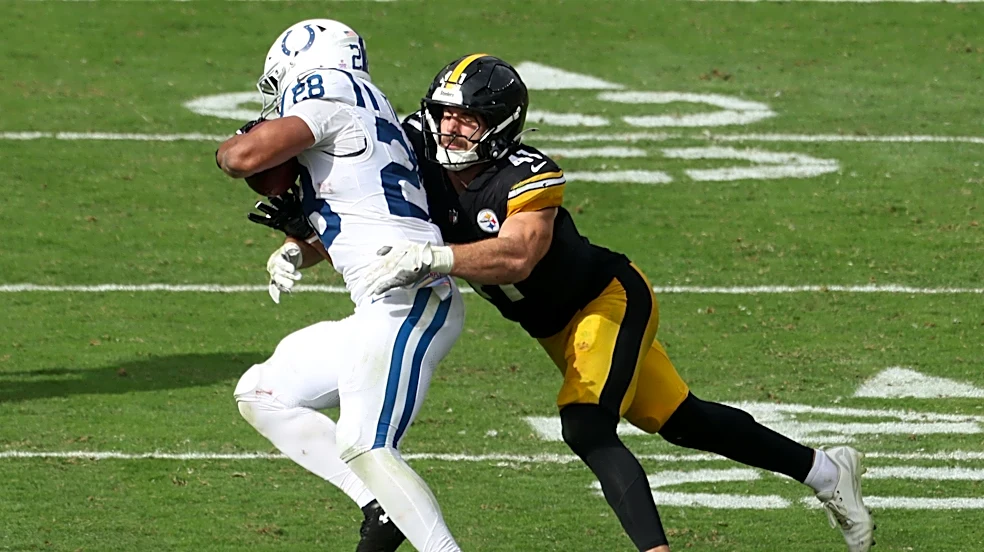
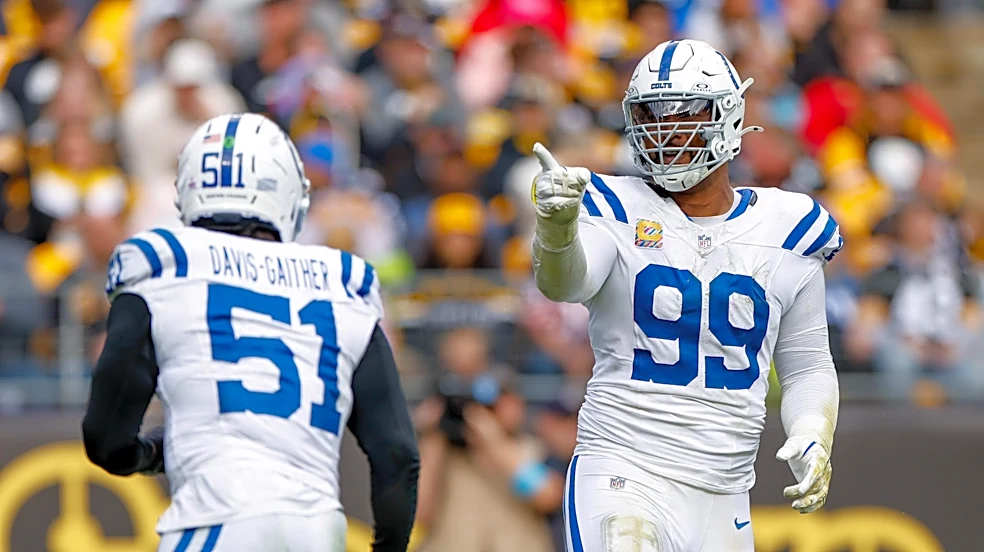
Through six games, Buckner has four sacks, eight quarterback hits and 18 pressures. He consistently ranks amongst the highest interior defensive linemen in these categories. That is especially important considering the state of the Colts’ defensive front. Indianapolis has struggled badly to consistently pressure quarterbacks this season, yet Buckner continues to create problems from the interior. At 32 years old, he is still arguably the most dependable pass rusher on the roster. There has been no dramatic falloff where we are evaluating Buckner based on what he used to be. He is still collapsing pockets, still winning inside against the top interior offensive linemen and still capable of ruining a drive.
That puts him in a different category from the typical veteran defensive lineman available at the deadline.
The two trades that make sense as comparisons
There have been plenty of defensive tackles traded over the last decade, but very few are particularly useful here.
The best comparison is Leonard Williams. Seattle acquired Williams from the Giants at the 2023 trade deadline for a second-round pick in 2024 and a fifth-round pick in 2025. Williams was 29 and in the final year of his contract. Through eight games with the Giants that season, he had only 1.5 sacks. The Seahawks were 5-2, believed they could make a run and paid a significant price for a high-end interior defender.
The other useful comparison goes back to 2017, when Seattle acquired Sheldon Richardson from the Jets. The Seahawks sent a second-round pick and Jermaine Kearse while the teams also swapped seventh-round selections. Richardson was 26 at the time and coming off a season with 1.5 sacks, although he had already made a Pro Bowl and had an eight-sack season earlier in his career.
Both trades tell us that teams will pay substantial draft capital for an impact interior defensive lineman when they believe they are close to winning. From a performance standpoint, Buckner belongs in that conversation. He has already doubled Williams’ pre-trade sack total in three fewer games this season, and Richardson was coming off one of the quieter statistical seasons of his career when Seattle acquired him.
The problem is that Williams was 29 and Richardson was 26. Buckner is 32. That is an enormous difference when assigning trade value, even if Buckner is playing just as well or better than either player was at the time.
The contract makes him a potential rental
This is probably the biggest factor dragging Buckner’s value down.
His contract voids in February, which means a team trading for him would only control him for the remainder of the 2026 season unless it negotiated another deal. That could be eight or nine regular-season games plus the playoffs. The financial cost for this season would not be particularly difficult to handle.
Buckner has a $13 million base salary in 2026. The Colts already paid his $10 million roster bonus, and the prorated signing-bonus money would remain Indianapolis’ responsibility. A team acquiring him around the halfway point of the season would therefore be taking on roughly half of that $13 million salary, somewhere around $6.5 million depending on the exact date of the trade. Most contenders can find a way to absorb that, but the larger issue is what happens afterward.
There is no cheap year of team control waiting in 2027. There is no franchise-friendly contract that makes him a multi-year asset. The team either lets him reach free agency or has to negotiate a new contract with a player who will turn 33 next season.
That has to significantly reduce the return compared with Williams and Richardson.
How much does Buckner have left?
Age is a legitimate concern, but I would not assume Buckner is approaching the end. Defensive tackle is one of the positions where elite players can remain productive well into their 30s.
Cameron Heyward might be the most obvious example. He is 37 years old and was still one of the best defensive linemen in football last season. At age 36, PFF gave him the highest grade of any interior defender in the league at 90.4, and he earned another All-Pro selection. Heyward is obviously an extreme example, not the standard everyone should be expected to follow. Calais Campbell is still playing the position at 40!
Defensive tackle is a position that relies a lot on strength, technique and instincts and those 3 things don’t age. All of this shows that 32 is hardly ancient for a great defensive tackle. Buckner’s game also lends itself to aging relatively well. He is 6-foot-7, incredibly long and wins with power, technique and an ability to use his frame inside. He does not need to rely entirely on explosive athleticism to remain effective. I would be comfortable saying Buckner has at least a few quality seasons left if he remains healthy and if he decides he wants to play that long. There have been rumours about him retiring the last couple of seasons, so that also plays a factor into things.
A contender acquiring him would be doing so for the current playoff run first, but there is a legitimate possibility that the relationship could continue beyond that. If Buckner finishes the year playing at his current level, it would not be surprising at all to see him sign another multi-year contract.
The uncertainty simply means a team cannot value those future seasons as part of the trade itself.
Who could use Buckner?
Unlike Taylor, where only certain contenders have an obvious need at running back, the market for Buckner could be fairly broad.
Almost every playoff team could use another interior defender who can rush the quarterback, but 4 stand out to me.
Detroit would probably be the most interesting fit.
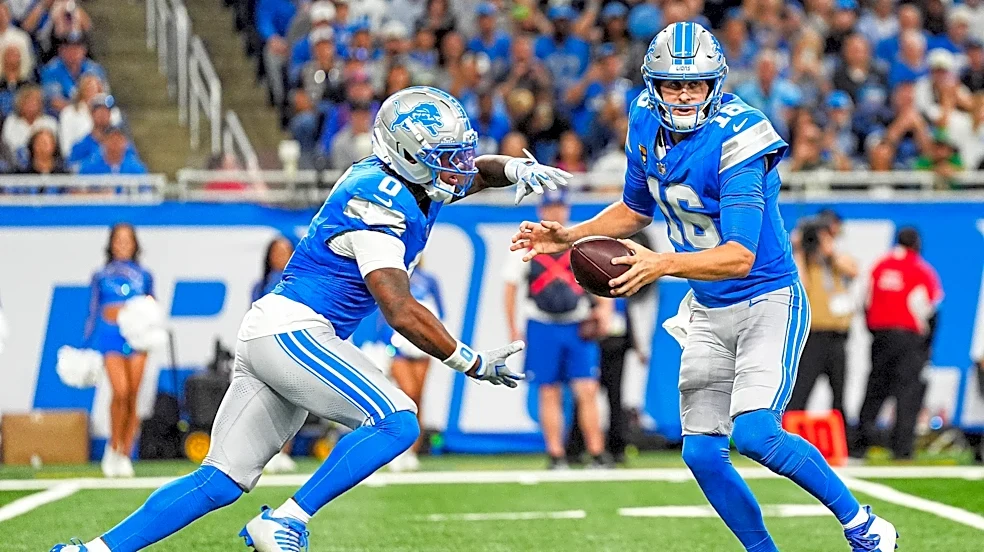
The Lions are 3-2 and clearly still view themselves as a championship contender. Aidan Hutchinson gives them a premier edge rusher, while Alim McNeill is a good interior player, but Detroit lost veteran nose tackle D.J. Reader during the offseason. Adding Buckner would give the Lions another proven interior pass rusher and allow them to build a defensive front capable of creating pressure without constantly blitzing. For a team with legitimate Super Bowl aspirations, Buckner is exactly the type of veteran addition that makes sense in October.
San Francisco would be the funniest destination for obvious reasons.
The 49ers traded Buckner to Indianapolis in 2020 because they did not want to give him the enormous contract he eventually received. Six years later, they could theoretically bring him back for a playoff push. San Francisco are amongst the NFL top teams and general manager John Lynch has already acknowledged that the 49ers are actively exploring the trade market. Their defensive line has also dealt with injuries, and the current interior group includes Osa Odighizuwa, Gracen Halton, Naquan Jones and Sebastian Valdez. Buckner already knows the organization, and Lynch has never been afraid to make an aggressive midseason move.
Chicago is another possibility.
The Bears are 4-2 and right in the middle of the NFC playoff picture. They currently rank in the top 10 in total defense, but the front could still use another legitimate interior pass-rushing threat, particularly with Montez Sweat currently unavailable. If Chicago believes it can legitimately contend this season, Buckner would give that defense another player capable of wrecking protections from the middle.
Then there is Denver.
The Broncos already have an excellent defensive front, so this is less about filling a glaring weakness. Zach Allen is one of the league’s better interior defenders and D.J. Jones gives them another veteran presence. Adding Buckner would simply make a strength borderline ridiculous. Denver is 4-2 and winning largely because of its defense. For a team built around stopping opponents and asking its offense to do enough, loading up on another high-end defensive lineman is not the craziest approach.
Those four would not be the only teams calling. That is what helps Buckner’s value. His position is valuable enough and his remaining salary is manageable enough that there should be multiple contenders capable of talking themselves into the move.
So, what is DeForest Buckner worth?
This is where the age and contract overpower the player evaluation.
If Buckner were 28 or 29, I think the Leonard Williams deal would be an excellent benchmark. A second-round pick with another late selection attached would make plenty of sense based on how Buckner is currently playing.
But he’s not 29. He is 32, the acquiring team gets no contractual control beyond this season, and it would have to decide almost immediately whether it wants to give another multi-year deal to a player entering his mid-30s. That is enough for me to knock the price down significantly.
My valuation would be:
A 2027 fourth-round pick.
That may sound low when you look strictly at the player. Buckner is considerably better than the average player traded for a fourth-round selection. If Indianapolis were simply ranking its best defensive players, he would be near the top.
Trade value is different. A team is paying for what it controls, not what Buckner has accomplished over the previous decade. In this case, it controls half a season and a playoff run, while assuming approximately $6.5 million in remaining salary and no guaranteed rights to the player afterward. Leonard Williams and Sheldon Richardson both fetched second-round picks plus additional value, but they were in their 20s and offered far more long-term upside. Buckner can still help a contender win a Super Bowl.
At 32 and months away from free agency, a fourth-round pick feels like the point where his current ability and his situation finally meet.