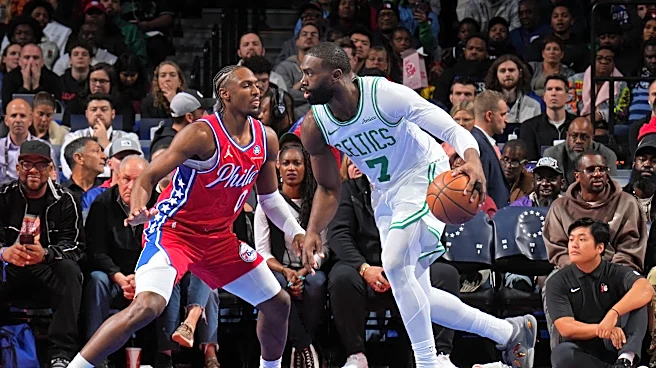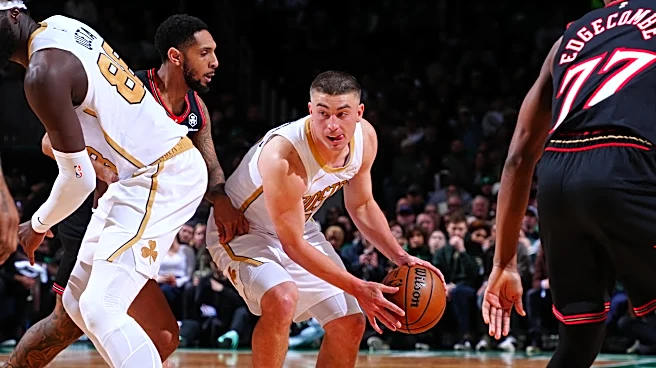




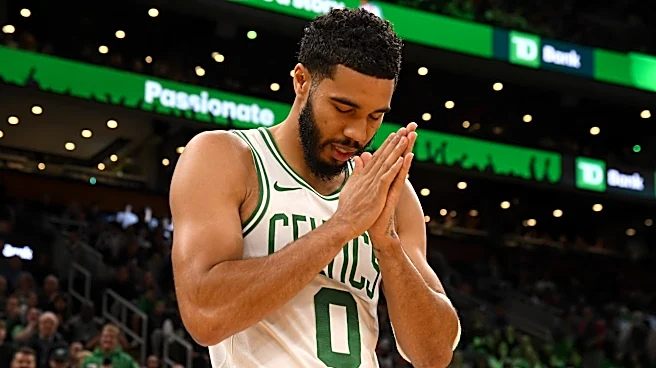
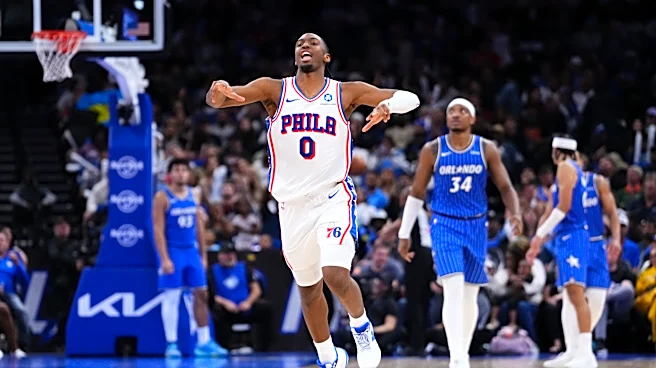
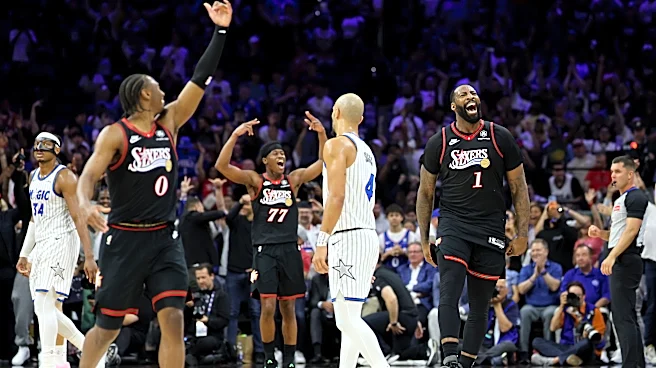
The Boston Celtics will enter the playoffs facing a highly familiar opponent.
Their upcoming series will mark the 23rd postseason meeting between the Celtics and the Philadelphia 76ers, underscoring one of the league’s most enduring rivalries. The two teams also met four times during the regular season. While Jayson Tatum did not appear in any of those matchups, three of which took place in 2025, there were nonetheless discernible trends that could resurface in the first round.
Here are three things
the Celtics did well vs Philadelphia this season that can aid an advancement to the second round.
#1 : Limiting rim attempts
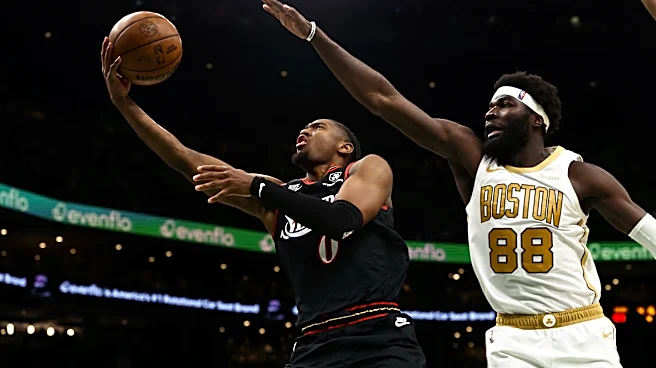
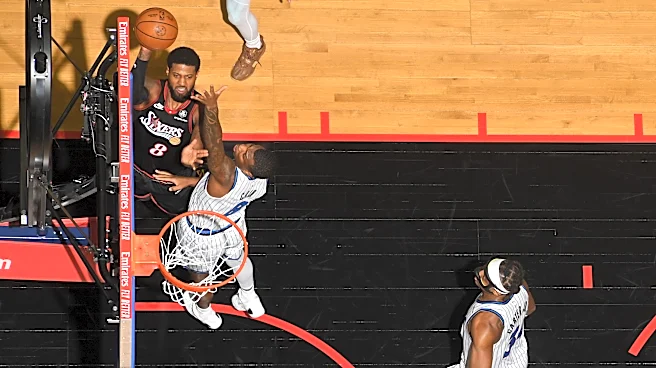
The Philadelphia 76ers finished the regular season ranked fourth in restricted area attempts per game (28.8), a figure largely driven by the dynamic play of Tyrese Maxey. His 6.1 rim attempts per game placed him in the 100th percentile for his position. Promising rookie V. J. Edgecombe further bolstered the driving force, contributing 3.7 rim attempts per game.
When juxtaposed with how the Boston Celtics defend that area, it becomes a classic case of an irresistible force meeting an immovable object; one of these strengths will have to yield. Boston finished the season, giving up the fewest restricted area attempts per game at 18.3. In those games, Boston made sure it was Philadelphia doing the adjusting.
Boston limited them to just 22.3 restricted-area attempts per game, more than six below their regular-season average, while also holding them to a 57.3% conversion rate on those looks, a 6.9% decline from their norm. One way the Celtics limit attempts at the rim is with heavy nail help or even “nexting”, so opposing handlers don’t get to the rim.
Here Hauser steps right in the driving path of the handler, giving a three-point look to a 23% shooter.
#2. Offensive rebounding + shot margin
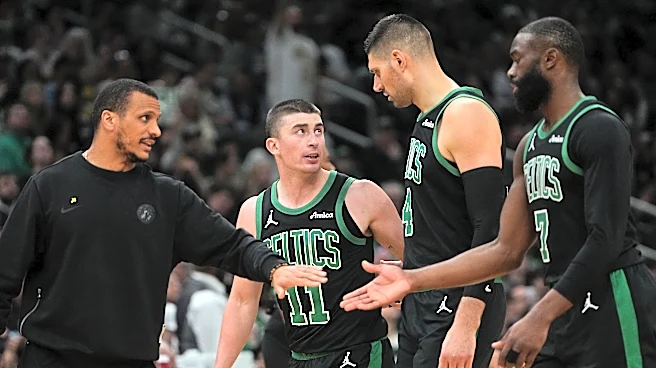
The possession battle has long been a central emphasis for head coach Joe Mazzulla, with corner crashes and offensive rebounding in general, playing a significant role in the team’s overall success.
When it comes to total field goal attempts, Boston and the 76ers were closely matched this season, averaging 90.3 and 90.2 attempts per game, with Philadelphia holding a marginal edge. However, in their head-to-head meetings, one team controlled both the shot volume and the battle on the glass.
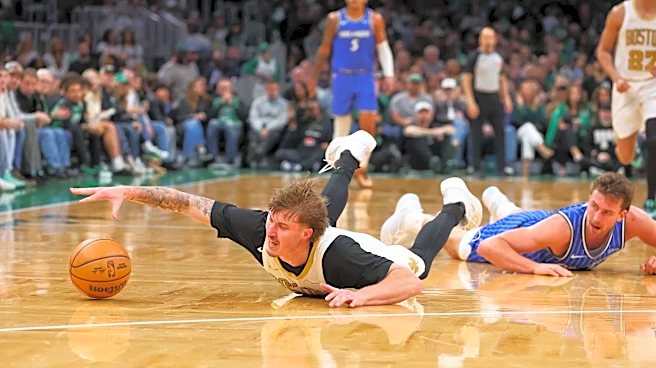
The Celtics flipped the possession battle in dominant fashion, taking ten more field goal attempts than the Philadelphia 76ers on average and crashing the glass for 14.5 offensive rebounds per game in the matchup. These efforts peaked when they overwhelmed the glass with 16 offensive rebounds, turning that extra possession volume into 23 more field goal attempts than their opponent in a road win.
Watching the offensive rebounds in this matchup, it becomes evident that the 76ers’ wings and guards are not as active on the glass as a strong defensive rebounding unit typically demands. This context helps explain why, upon reviewing their season-long defensive rebounding rate, it is unsurprising that they ranked 26th in the league in that category.
The main culprits of crashing for extra possessions on the Celtics when looking at the wing position are Baylor Scheierman, Jordan Walsh, Hugo Gonzalez, and Ron Harper Jr. But in the playoffs, as it currently projects, none of those players are expected to start, and some may not even see meaningful minutes in the rotation. So, at least in my view, within the starting five context, this sounds like a job for Sam Hauser.
I explain why Hauser specifically can be a huge help in this series if he has an impact on the glass.
#3 Containing Tyrese Maxey (kinda)
If only the first two games of this regular-season matchup were available for evaluation, there would be little basis to frame this as a positive.
Maxey torched Boston in the first two meetings averaging 33 points, five rebounds, and 10 assists on 52% shooting from the field. He got everywhere he wanted, and the Celtics just didn’t have an answer defensively that early into the season. Luckily, the Celtics figured something out and cooled Maxey all the way down in the next two meetings.
Tyrese Maxey’s production dipped to 27 points, 4 rebounds, and 7.5 assists, while he was held to a subpar 32% shooting from the field. The question naturally follows: what changed? The answer lies in the personnel.
Walsh did not appear in either of the first two meetings against Maxey, while Baylor Scheierman saw brief action in one of those contests, logging just 2:30 of playing time. However, in their third matchup on November 11, 2025, Jordan Walsh played a far more significant role, tallying 29 minutes and delivering a standout defensive performance, holding Maxey to just 1-of-9 shooting when directly matched up with him.
In the final meeting of the season, Scheierman took on a significant share of the defensive reps against Maxey, limiting him to 3-of-10 shooting from the field. Scheierman complemented his defensive effort with a strong all-around performance, finishing with 12 points, 4 rebounds, and 2 assists.
Adding two players who excel in isolation defense and overall versatility gives Boston a wide range of defensive options to deploy against Maxey, with the goal of disrupting his rhythm over the course of a series. When paired with a disciplined game plan, that personnel flexibility is a key reason Boston finished the season as the league’s No. 1 scoring defense. Below are two examples that illustrate how that approach has worked against Philadelphia.
While Philadelphia’s offensive identity is driven by rim pressure and isolation creation from Maxey, Boston’s defensive structure has consistently shown the ability to absorb that pressure, disrupt driving lanes, and tilt the possession battle in their favor. The Celtics’ emphasis on rebounding, physicality, and versatile perimeter defenders has repeatedly translated into control over both tempo and shot volume.
Playoff basketball tends to compress advantages and magnify execution. Matchups tighten, rotations shorten, and every possession carries greater weight. But the patterns established during the regular season still matter, particularly when one team has demonstrated an ability to impose its style across multiple games.
If Boston can replicate its discipline on the glass, maintain its defensive versatility on the perimeter, and continue to limit Philadelphia’s efficiency at the rim, the formula is already in place. The challenge now is not discovering what works, it is sustaining it when the stakes are highest.