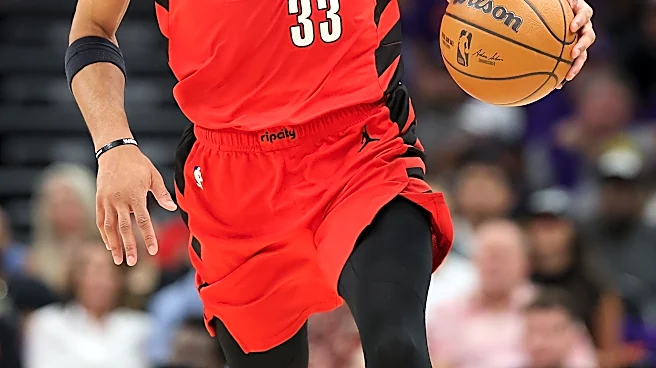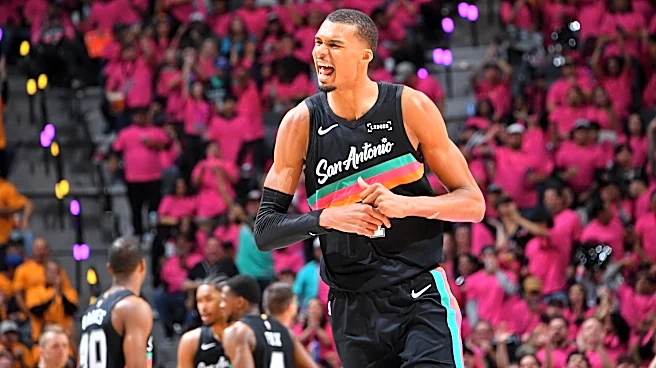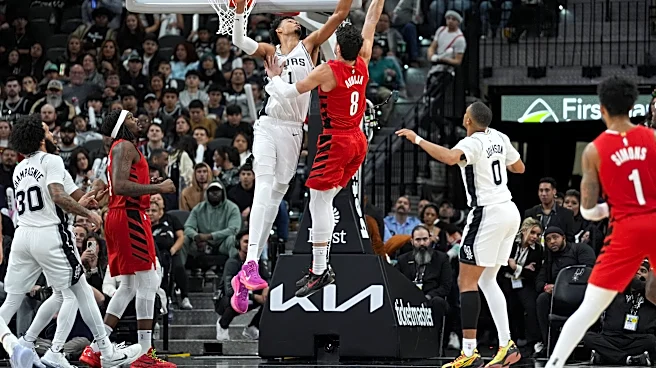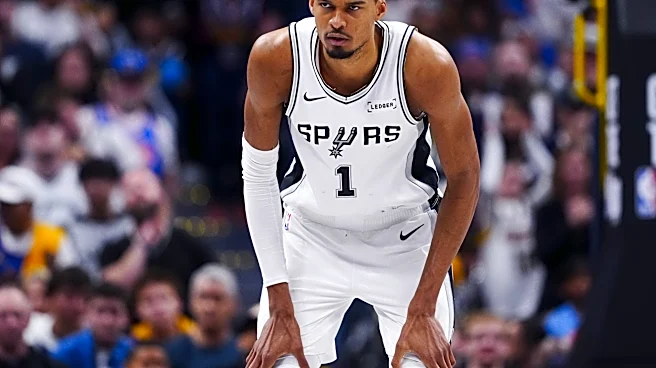






The Portland Trail Blazers can keep their heads up following a hard-fought 111-98 loss in Game 1 of their first round playoff series against the San Antonio Spurs on Sunday. But if the Blazers aspire to more than moral victories during their first playoff appearance in five years, other players not named Deni Avdija need to step up, and they need to shoot much better.
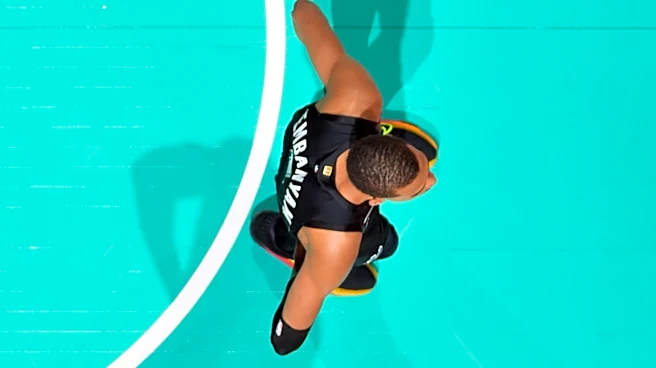
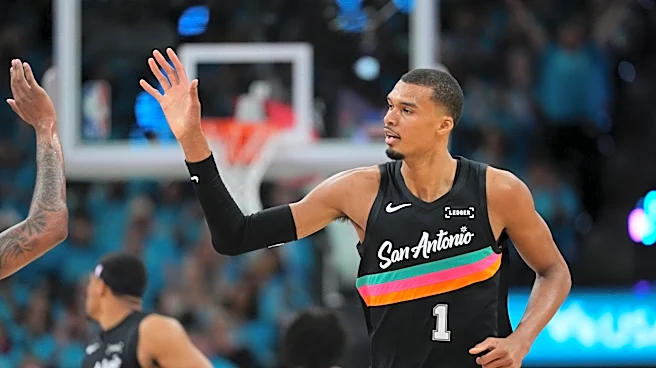
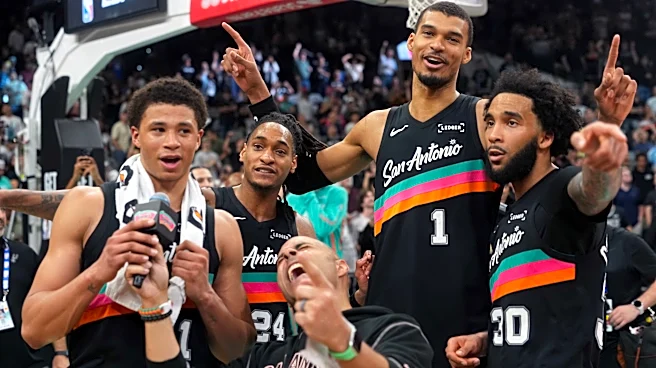
In his postseason debut, Spurs 7-foot-4 superstar Victor Wembanyama lived up to the prophecy forecasting generational greatness and
multiple championships. The 22-year-old phenom dropped a game-high 35 points and produced multiple game-breaking highlights in front of a fired-up San Antonio crowd. Avdija also showed he was ready for the big stage in his playoff debut, delivering his own superstar performance with 30 points, 10 rebounds and five assists.
With both stars playing each other close to a wash on offense, the Blazers couldn’t hang with San Antonio for other reasons: namely, a lack of contribution from the supporting cast and a deja vu tale of woeful 3-point shooting. The Blazers’ lack of offense kept them on their heels all night, trying to maintain contact with San Antonio. Portland trailed by eight points after the first quarter and by 10 at halftime. After a brief surge in the third quarter brought hope to Rip City, the Spurs built the lead back up to 15 before entering the fourth. The deficit got as large as 21 in the final quarter before Portland whittled it down to as little as 11. At that point, it was too little too late.
The Blazers didn’t get embarrassed against the Big, Bad No. 2 Seed. They were still thoroughly outdone by the favorites in the end.
Here are more insights and storylines from Game 1.
The Wemby Plan
The Blazers gave forward Toumani Camara the primary defensive assignment on Wembanyama to open the game. Meanwhile, they stuck starting center Donovan Clingan on his former UConn teammate Stephon Castle, San Antonio’s weakest starting 3-point shooter, so Clingan could sag off and lurk in the paint. That was indicative of Portland’s game plan for the night. The Blazers tried to pester Wembanyama with their bigger forwards or the more athletic reserve center Robert Williams III, while also surrendering jump shots so long as they got a hand up.
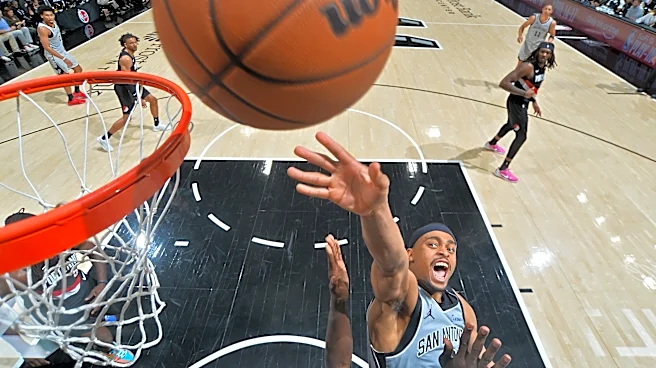
The biggest problem: Wembanyama was on fire from long range. He shot 5-6 from deep, making two in the first quarter, one in the second quarter and two more in the fourth. Four of those 3-point hits came on dribble pull-ups. On one absurd highlight, he sprinted into a pass on the left wing, then without slowing down, dribbled straight into a leaning 3-pointer from the left corner in the face of a Williams’ contest. Nothing but net. If Wembanyama continues to hit shots of that difficulty, there’s nobody on the planet who can do anything about it.
While Wembanyama did great damage from outside, there were still instances where he broke contain and wreaked havoc in the paint with his smooth handle and comically long limbs. Blazers defenders tried to body him up or contest him the best they could, but he used that long reach to find easy scoring angles. If there was a flaw in his game, he could’ve been more aggressive and San Antonio could’ve fed him more. Wembanyama attempted just two shots for zero points in the third quarter, muting his dominance some.
It should also be noted that Portland deployed a small-ball lineup with no traditional center on the floor for stretches during this game. That group was more disruptive against San Antonio ball-handlers, but they also got burned by easy Wembanyama alley oops multiple times.
The Blazers’ best bet may be to continue to turn Wembanyama into a jump shooter and hope he doesn’t shoot lights out the rest of the series. He settled for contested midrange jumpers a few times, and those possessions felt like wins for the defense.
Avdija Attacking
Blazers All-Star Deni Avdija picked up right where he left off in that big-time Play-In performance against the Phoenix Suns. He came out aggressive, scoring seven quick points from all three levels. In the first half, he almost singlehandedly kept Portland afloat with 19 points. Wembanyama’s outstretched arms in the paint made some of Avdija’s patented paint finishes too difficult to go down, and the big man’s presence completely snuffed out Portland’s pick-and-roll lob attack. But as Deni seems to always do, he found a way to deliver production.
Avdija’s final stat line: 30 points, 10 rebounds, five assists, one block, one steal and just two turnovers while shooting 12-21 from the field, 2-5 on 3s and 4-6 from the free throw line.
The Spurs’ Others
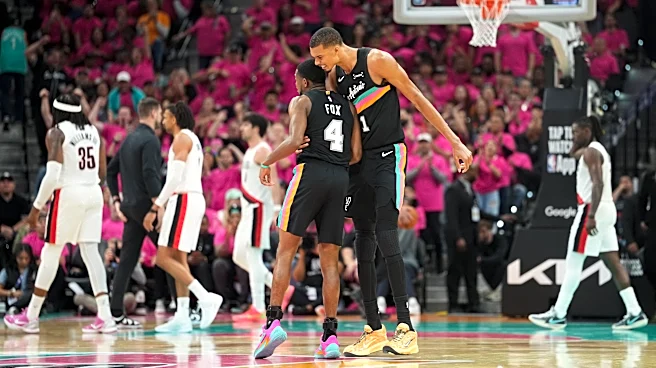
Outside of Wembanyama, nobody on San Antonio played a truly great game. But the supporting cast impacted winning in various ways. Fox was steady with 17 points on 7-15 shooting, eight assists and zero turnovers. Reserve center Luke Kornet was a thorn in Portland’s side with 10 points and six rebounds. Most notably, the Spurs’ “others” helped San Antonio shoot 15-33 from 3-point range.
Forward Devin Vassell went 4-9 from long distance on his way to 15 points. Fox shot 2-5 from deep. Forward Keldon Johnson went 1-2. Forward Julian Champagnie only scored six points but they came courtesy of a 2-3 mark on 3-pointers. During multiple stints when Wembanyama rested on the bench, the Spurs actually extended their lead. On top of Wembanyama’s big night and stout team defense, that added production from the supporting cast tilted the scales well in San Antonio’s favor.
The Blazers’ Others
On the flip side, the Blazers shot 10-38 from beyond the 3-point arc, and supporting cast struggles played a big part in that. Multiple times, a Blazers role player missed an open look. Then the Spurs rubbed salt in the wound by sticking 3 on their next possession.
Veteran Jrue Holiday, who has been so instrumental to Portland’s recent success, finished 4-15 from the field and 1-7 from deep for nine points (though he also had 11 assists). Forward Toumani Camara and center Donovan Clingan both shot 2-7 from the field for eight points and four points, respectively. Jerami Grant shot 2-6 from the field and 1-3 on 3s for just six points. Shaedon Sharpe went 4-13 from the field and 0-4 on triples for 10 points.
After halftime, Portland was gasping for another offensive source besides Avdija. Third-year guard Scoot Henderson turned out to be that offensive oasis, providing a jolt with 15 second-half points. He finished with 18 points while shooting 7-11 shooting from the field and 2-4 from 3. Williams also brought it, finishing with 11 points on 5-7 shooting. Nobody else ever found a rhythm. Portland was ice-cold, but a lot of credit goes to San Antonio’s defense for making life difficult.
Third Quarter Push
At halftime, it seemed like the Spurs were one or two pushes away from blowing the game open. Instead of San Antonio breaking the levee, the Blazers started the third quarter on an 8-0 run to cut the deficit to 57-59 and force a San Antonio timeout. The run consisted of 3s from Holiday and Henderson, plus a Henderson steal-and-dunk.
After a Castle dunk stopped the run out of the timeout, Henderson kept the pressure on San Antonio with a midrange jumper. The Blazers trailed 61-59 with 9:07 left in the quarter and had life!
Third Quarter Fumble
With the score stuck at 61-59 and momentum on their side, the Blazers had four straight possessions with the chance to tie or take the lead. During that pivotal sequence, they missed one shot and turned the ball over three times. Then Champagnie canned a 3 to spark an 11-2 Spurs run that put the deficit right back at double-digits at the 5:09 mark of the quarter. The Blazers’ golden window to strike had been slammed shut.
One of the Blazers’ major weaknesses is turnovers. In Game 1 against San Antonio, they uncharacteristically took solid care of the ball, turning it over three times in the first half and 11 times overall. But the turnover issues all struck at once in that pivotal sequence in the third quarter.
The Blazers’ Sticktuitiveness
Give the Blazers credit. They never stopped fighting against the Spurs or let the bottom fall out from underneath them. The game seemed destined for extended garbage time when the Spurs shot out to a 21-point lead early in the fourth quarter. Instead of giving in, the Blazers buckled down defensively and chipped away at the deficit again. They got the score to 100-88 with 5:58 remaining and 103-92 with 4:23 left, but that was the closest it got down the stretch. Portland’s persistence meant the benches didn’t empty until less than a minute left in the game.
The Young Guard Duo (Scoot!)
Not only do the Blazers need more players to knock down open shots, they need more players who can create their own shots. That’s especially true against the No. 3 defense in the league in a playoff setting. This writer thought that scenario might present the Bat Signal to fourth-year guard Shaedon Sharpe. He’s one of Portland’s best scorers in isolation and toughest shotmakers. He also loves the midrange — an especially valuable shot when Wembanyama is clogging the paint. This series seems like a prime opportunity for Sharpe to step up for some big games. He still could; there’s plenty of basketball left. On Sunday, at least, he didn’t.
With Holiday also struggling mightily with his shot, Henderson turned out to be the secondary shot creator Portland badly needed. He went 2-4 on 3s while also being the only Blazer to consistently connect from midrange. Four of Henderson’s seven buckets came on midrange pull-ups. The lone blemish on his night was turnovers: He coughed the ball up three times, all during that rough third-quarter stretch. But overall, it was a solid playoff debut for Scoot.
Paper Covers Rock
The Blazers are the No. 2 offensive rebounding team in the NBA. The Spurs are the No. 1 defensive rebounding team in the NBA. In this clash of contrasting strengths, the Spurs won out on Sunday. The Spurs out-rebounded the Blazers 45-38 while also beating Portland 11-8 on the offensive glass. Clingan, the league’s best offensive rebounder, managed just one in his 22 minutes of action.
Up Next
The Blazers will stay in San Antonio for Game 2 on Tuesday at 5 p.m. PDT.