

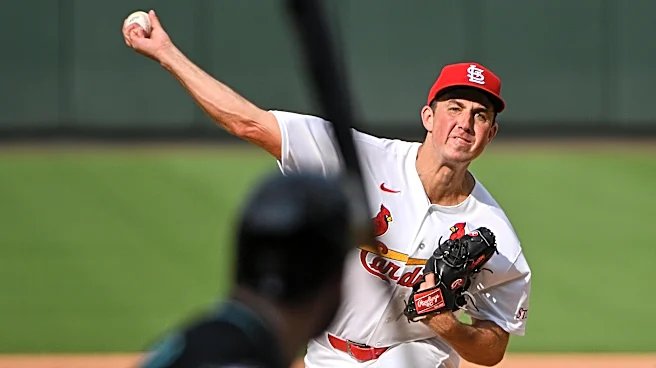
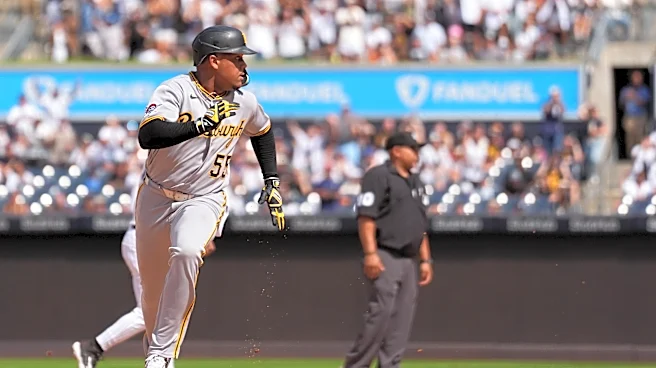
The postseason dreams may have finally slipped by after the St. Louis Cardinals wasted any and all All-Star break momentum in embarrassing fashion. Two straight series losses filled with epic collapses and a pathetic Thursday game against the Diamondbacks put the Cardinals in the seller spot most of us anticipated in the winter. In my loathing and conversations, however, I found striking similarities to another NL Central team who went through the doldrums before hoisting the piece of metal World
Series trophy.
*Yet another apology for a pre-written article. I am currently on a 10-hour train ride to Pittsburgh to experience PNC for the first time along with five Cub fan friends and wife.*
Being surrounded by Cubs fans in the Northwest suburbs of Chicago, the early part of my life was sunshine and rainbows as I got to see two Cardinals World Series winners and plenty of disappointed Chicagoans. The tide slowly started to turn in mid 2010s as I wrapped up college and my laughable Indy ball career while watching the Cubs put an end to the “curse” and raise their first trophy in 108 years.
How they got to that point, though, is what is truly interesting. As fun as it was to watch the Cubs continuously waste high expectations before undergoing a full tear town, the way that Theo Epstein and his team put together the modern day core of Cub baseball is not too different from what we are seeing Chaim Bloom begin to do. While I have hopes that a lot of what happens during this rebuild without a timeline, a couple more seasons of pain and agony are worth it if it ends with the Cardinals 12th World Series title.
The 2010s Cubs are an example of homegrown talent and smart spending
The 2013 Chicago Cubs reached a new low, even for Chicago, after they followed up a 101-loss season the year before with another last place finish in the NL Central. This was an unexpected outcome after bringing Boston wunderkind Theo Epstein to Chicago with the hopes of Epstein reversing another century of losing like he did in Beantown. The first two seasons resulted in 198 losses but allowed Cubs management to determine who was the true future of the Cubs organization, especially after a tough string of high-profile free agents did not pan out.
In 2012, the Cubs trotted out a lineup of inexperienced players and a starting rotation of lottery tickets. That young starting nine had to fight through plenty of adversity to get their footing at the major league level, but by the end of that season, Chicago liked what it saw in first baseman Anthony Rizzo, second baseman Darwin Barney, and Starlin Castro to make decisions on their futures. Eventually, Castro would be displaced by Addison Russell and Javier Baez and the starting rotation would have a couple holdovers before making well-timed splashes.
Heading into 2013, Epstein understood who his core was and built around Rizzo and brought intrigue with minor league prospects and under-the-radar deals. In that season, the Cubs brought on Rick Renteria to be the final sacrificial lamb for a rebuild that was nearing completion, so long as the prospects lived up to the billing. The fans had to suffer through yet another losing season, but more importantly the organization got a glimpse of Baez, Jorge Soler, Junior Lake, and a handful of arms to push Epstein towards the finish line of the rebuild.
In 2014, the Cubs got everything they needed out of Renteria and decided it was time to move on with a serious coaching staff after the season. While the 2014 Cubs saw a seven game jump in their win total from the year previous the main idea of the season was to get answers on that expected core. Not unlike the 2026 Cardinals, this Cubs team had a mix of stable “veterans” and exciting rookies to bring winning back to the Northside and really open the window for contention the next season under Joe Maddon.
The jump from 2013 also holds many similarities to this year’s Cardinals team as Chaim Bloom and Oli Marmol look to see who stays and who goes not just this year, but for the length of the rebuild. From 2013 to 2014, Anthony Rizzo went from hitting .233 to .286 with a career-high 32 homers as a 24-year-old. While Rizzo never hit the career-lows of Jordan Walker, a 50-point jump in batting average and the first All-Star appearance of Rizzo’s career led to a 10th place finish in MVP voting. If Walker could use his 2026 season as a launching pad similar to Rizzo’s career arc, things could certainly be worse.
After Starlin Castro failed to build off the solid start to his career, the 2014 season was a holdover season for Castro to keep the spot warm from Addison Russell and/or Javier Baez. He was not miserable, by any means, but the Cubs saw enough to give Baez a brief look in the majors like how the Cardinals did with Masyn Winn in 2023. This gave Chicago a new everyday infield option with another promising prospect knocking on the door of the majors, but needed to wait out his chance.
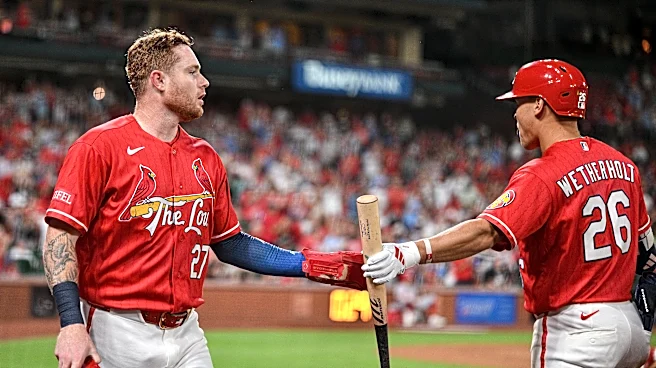
Kris Bryant was seen as sure-thing as he ranked as one of the best prospects in the sport and, despite appearing ready for the show just a year after being drafted, he needed to wait for his chance in 2015. In that year, Bryant did plenty to announce his arrival, winning the Rookie of the Year award, being named an All-Star, and received down ballot MVP votes. While JJ Wetherholt missed out on the All-Star Game, being named the leagues top rookie is a phenomenal start to a career. With Wetherholt locked in for another eight seasons, he and Jordan Walker are becoming part of the next great Cardinals core.
Surrounding those two is the savvy veteran in Alec Burleson who is putting together a couple Chris Coghlan seasons with better average and power. Coghlan and Dexter Fowler were older members of the lineup and Burleson and Lars Nootbaar have the same type of energy as those two pieces did for the Cubs at that time.
On the negative side, the Cubs wanted to give Junior Lake the opportunity to be their next young star, but he fought plenty of strikeout demons and never took off like they hoped. Nolan Gorman had a better body of work than Lake did, so combining the Gorman and Victor Scott II disappointment into my Lake comparison is where I move to the 2026 Cardinals. Finally comes Jorge Soler and Kyle Schwarber, who hit massive homers… when he hit the ball. We may have to wait a little longer but this gives me a little flash of Joshua Baez.
Moving to the pitching, the Cubs trotted out Jeff Samardzija (Dustin May), Travis Wood (Matthew Libertore), Jason Hammel (Andre Pallante), and Kyle Hendricks (Michael McGreevy). To keep the fun going, the Cubs bullpen ranked 26th in the league from 2012-2015 as the relief corps was put on the back burner while Epstein looked to find the best pieces at more important positions.
If we could guarantee the Chaim Bloom would bring the St. Louis Cardinals their 12th World Series title in the next three years, I think we would all sign up for the pain we may experience before then. As the Chicago White Sox have shown us, a rebuild does not guarantee a title and if things go wrong or the timing is not right, a five year stretch could quickly turn into a decade. The way that the Cardinals are currently attacking their rebuild seems like a safe strategy as Bloom has not handed out big contracts or dealt from the top of his prospect pool.
By the end of the 2026 season, Bloom and his staff should have a solid idea of who they want to be in St. Louis for the next handful of years. This clarity could also lead to more aggression on Bloom’s side in the offseason as he may be more willing to deal from minor league areas of depth and spend slightly more money to see a jump in their win total next season. For reference, the Cubs went from a 73-89 record in 2014 to a 97-65 record in 2015 before winning the World Series in 2016.