

It is no secret that Nebraska really struggled on defense in 2025. Yes, the statistics suggested modest improvement in certain categories, but anyone who watched the games knows the truth. The eye test told a far less comforting story.
The lack of penetration from the defensive line, paired with little to no consistent pass rush, made it feel like even the most average offenses could methodically march down the field. Under former coordinator John Butler, Nebraska leaned heavily into a conservative,
NFL-style structure designed to prevent explosive plays. The philosophy? Bend but don’t break.
The problem? They bent. A lot.
By the time the bowl game arrived, the defense looked uninspired and reactive rather than disruptive. Ultimately, that approach cost Butler his job. Now, the question becomes: will a new broom truly sweep this unit clean?
Coaching Changes: A New Voice, A New Identity
The man tasked with leading the turnaround is new defensive coordinator Rob Aurich, who arrives after a successful stint at San Diego State Aztecs in the Mountain West. Prior stops at Idaho and South Dakota helped shape his development, but this is undeniably his biggest stage.
Aurich isn’t a splash hire. And that may be precisely the point.
Head coach Matt Rhule doesn’t appear to have been searching for a headline-grabber. He wanted energy. Accountability. A coach who would demand aggression rather than caution.
Aurich’s calling card is the 4-2-5 defense — a system built for modern spread offenses. It allows flexibility in coverage while still keeping speed on the field. But make no mistake: this system still depends on a dominant interior presence. In today’s NIL-driven world, a 6-foot-3, 330-pound nose tackle who can collapse a pocket can be as valuable as an elite edge rusher.
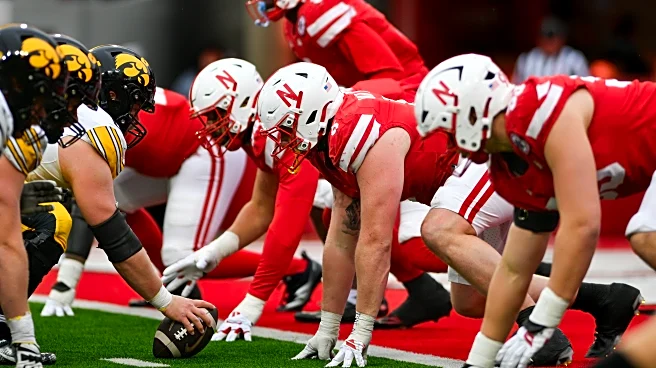
Nebraska is shifting back toward a true four-man front. Size. Skill. Power. The belief is that a physical defensive line can overwhelm offensive fronts rather than simply absorb blocks.
Aurich isn’t alone in the overhaul. The new defensive staff includes:
- Roy Manning (Edges – formerly San Diego State)
- Tyler Yelk (Safeties – previously with the Philadelphia Eagles)
- Corey Brown (Defensive Line – Miami (Ohio))
None are household names. All bring youth and energy. The pressure, however, will fall heavily on Brown. If Nebraska doesn’t improve up front, nothing else will matter.
Player Reinforcements: Help Is Here… But Is It Enough?
Interior Defensive Line
Nebraska added portal pieces in:
- Owen Stoudmire (Boston College, 6-1, 292 lbs)
- Jahsear Whittington (Pitt, 6-0, 270 lbs)
These aren’t obvious game-wreckers, but they provide depth and sturdiness. The real leap must come from players already in Lincoln:
- Riley Van Poppel
- Gabe Moore
- Sua Lefotu
If this unit cannot generate a consistent interior push, Nebraska will once again struggle to get off the field in the Big Ten.
Edge Rushers: The X-Factor
The addition of Anthony Jones (UCLA, 6-5, 265 lbs) is significant. Pair him with the supremely talented Williams Nwaneri, and you have the potential for a disruptive tandem.
There’s also valuable experience in:
- Cam Lenhardt
- Kade Pietrzak
- Jordan Ochoa
- David Hoffken
This group must be the engine of change. Third-down pass rush is not optional in the Big Ten. It is mandatory.
Linebackers: A Potential Strength
The middle of the defense may quietly become one of the team’s best units.
Portal additions:
- Owen Chambliss (San Diego State)
- Dexter Foster (Oregon State)
Both have the size and production to compete immediately. Add in Vincent Shavers, and the rotation suddenly looks far more capable than it did a year ago.
If the front four does its job, this linebacker group could feast.
Secondary: Experience Meets Star Power
At corner, Dwayne McDougle arrives from San Diego State with maturity and production. He’s a grown man stepping into a room that needed reliability.
Pair him with five-star freshman Danny Odom, and the upside becomes obvious. But as always, defensive backs are only as good as the pressure in front of them.
If the front seven generates even moderate heat on opposing quarterbacks, this secondary could look dramatically improved.
The Big Question: Development
On paper, this defense is better than it was a year ago. But the improvement is coming from a low base.
So much hinges on development up front that it’s difficult to project with confidence. The step up for Aurich into the Big Ten will not be small. Physical offensive lines and veteran quarterbacks will test this group weekly.
Still, we’ve seen surprises before. No one predicted the leap Emmett Johnson made on the offensive side of the ball. Why couldn’t a defender make a similar jump?
A new coaching staff often resonates differently with players. Sometimes a voice change is all it takes to unlock potential that has been simmering beneath the surface.
Nebraska doesn’t need to be elite in 2026. But it must be disruptive. It must be aggressive. And above all, it must get off the field.
If that leap happens, the entire trajectory of the program changes.
If it doesn’t? We may be having this same conversation a year from now.