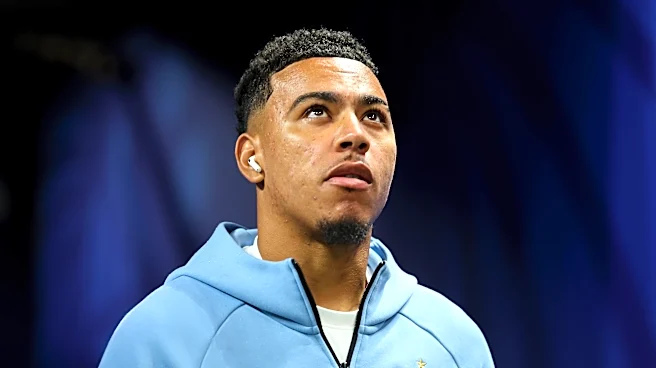








For about 24 hours, it looked as though Roma had done it. After weeks of negotiations, multiple reports indicated that the Giallorossi had finally reached an agreement in principle with West Ham for Crysencio Summerville, while the Dutch international had already agreed to personal terms on a move to the capital. It appeared Tony D’Amico had identified Gian Piero Gasperini’s dream winger (ignore Mason Greenwood) and, after steadily increasing Roma’s offer, had finally found common ground with the Hammers.
Then came the siren song of Saudi Arabia. Within hours, Al Hilal reportedly put together an €80 million package for West Ham while simultaneously offering Summerville wages that Roma simply couldn’t dream of matching (nearly quadruple the Giallorossi’s offer). Suddenly, a transfer that looked all but complete was thrown into chaos, and the Dutchman is now widely expected to choose Saudi Arabia instead.
If you feel like you’re experiencing déjà vu, you’re not wrong. We’ve all lived through this movie before. The most infamous example remains Malcom in the summer of 2018. For those of you who have tried to forget, Monchi had essentially completed the deal with Bordeaux, Roma fans were already celebrating, and even club officials believed the Brazilian winger was on his way to Trigoria. Then Barcelona swooped in at the eleventh hour. Bordeaux accepted the improved offer, Malcom boarded a different plane, and Roma were left scrambling for alternatives.
But Malcom wasn’t an isolated incident. Only a year earlier, Roma spent virtually the entire summer pursuing Riyad Mahrez, submitting several bids to Leicester City before ultimately being priced out of the move as the Foxes refused to budge. Mahrez eventually landed at Manchester City a year later, while Roma settled for Patrik Schick after one of the longest transfer sagas of the Monchi era.

Of all the almost-transfers, the Marcos Leonardo saga may have been the most frustrating. Roma spent virtually the entire summer of 2023 pursuing the Santos striker, with Tiago Pinto identifying him as José Mourinho’s priority attacking reinforcement. Leonardo wanted the move so badly that he reportedly skipped training and attempted to force Santos’ hand, but the Brazilian club refused to sell while fighting relegation. Roma waited, expecting to revive the deal in January, only for Benfica to swoop in with cash and complete the transfer instead. Eight months later, Benfica flipped Leonardo to Al Hilal for roughly €40 million. Even when Roma identifies elite talent and convinces the player quickly, financial realities often intervene before the deal reaches the finish line.
To quote a former president: “Fool me once, shame on me. Fool me — you can’t get fooled again.”
These issues with near-transfers and extended back and forths between clubs hint at a deeper, structural issue that’s plagued Roma for the better part of a decade. Even now, with Champions League football restored and Gian Piero Gasperini leading one of the most ambitious sporting projects the club has assembled in years, Roma still finds itself caught in football’s uncomfortable middle class. The Giallorossi are attractive enough to convince top players that the project is worth joining, but not quite wealthy enough to fend off the clubs that inevitably arrive once those players become truly attainable.
Sometimes, a superclub rains on Roma’s parade. If Real Madrid, Barcelona, or Bayern Munich calls, there’s little any club outside Europe’s true elite can do. Sometimes it’s the Premier League, where even mid-table sides can outspend Serie A’s biggest clubs thanks to television revenue. And more recently, it’s been the Saudi Pro League, where salary offers have become detached from anything resembling traditional market economics.
Summerville is simply the latest victim of that reality. By all accounts, this isn’t Roma’s fault. After whiffing on Mason Greenwood, Tony D’Amico identified a player who fits Gasperini’s system almost perfectly, patiently negotiated with West Ham until a compromise was reached, and convinced the Dutch winger to buy into the project. Under normal circumstances, that should have been enough. And yet, there’s no countering an offer reportedly worth nearly €15 million per season. At that point, the conversation ceases being about sporting ambition, tactical fit, or prestige for certain players. Instead, it’s about financial gravity, and Roma simply cannot compete in that arena with some clubs.
I’d also argue they shouldn’t look to compete that way. One of the more encouraging aspects of this saga is that there have been no reports suggesting Roma intends to enter a bidding war. The club appears prepared to walk away rather than abandon the financial discipline it has spent years trying to rebuild after operating under UEFA’s Financial Fair Play restrictions. That may be frustrating in the short term, but it’s also how sustainable clubs are built.
The irony, of course, is that those same financial constraints are what make these stories so familiar. Roma has spent years balancing settlement agreements, capital gains requirements, and carefully managed wage structures while many of its competitors have enjoyed either Premier League television money, sovereign wealth backing, or commercial revenues generated by stadiums and global brands.
That’s why the club’s long-term objectives matter just as much as any individual transfer. This club needs to escape the final remnants of Financial Fair Play and build the long-awaited Stadio della Roma. It’s annoying to say that so frequently, but it’s just a fact. Growing commercial revenue and establishing itself as a perennial Champions League participant won’t hurt either. While snazzy moves for World Cup stars get all the coverage, it’s the longer term moves around the financial health of the club that are the true prerequisites for long-term excellence on the pitch.
Until Roma closes that financial gap, this cycle will continue. One summer it’s Barcelona stealing Malcom. Another, it’s Leicester refusing to blink on Mahrez. Then Marcos Leonardo. Now Al Hilal changes the economics of the Summerville deal overnight. The words may be different, but the song remains the same.
You can say this for Roma: they know how to identify good talent. There’s a reason there were so many former Roma players at this summer’s World Cup, after all. The next step is becoming a club capable of ensuring those players actually arrive in Trigoria, and keeping them there. Until then, Romanisti may have to grow accustomed to these painful almost-transfers.
But hey, I hear Antonio Nusa is agreeing to terms with the club. Maybe this time, it’ll be different.