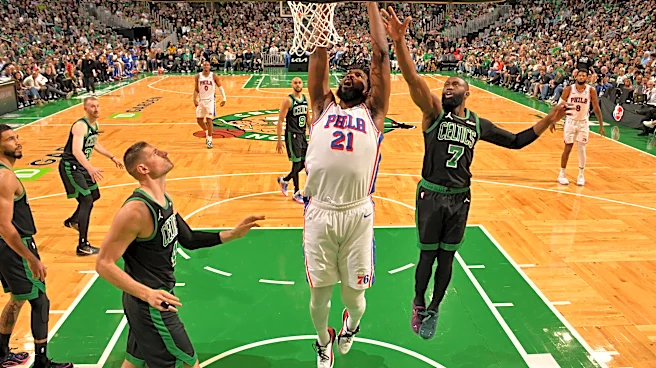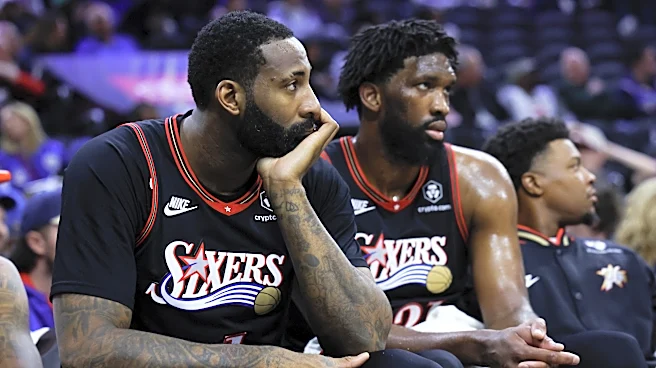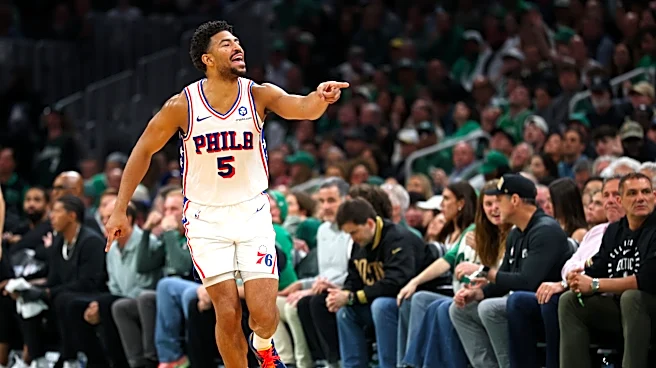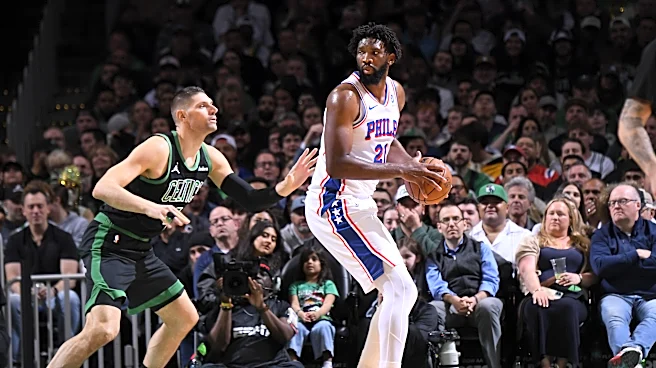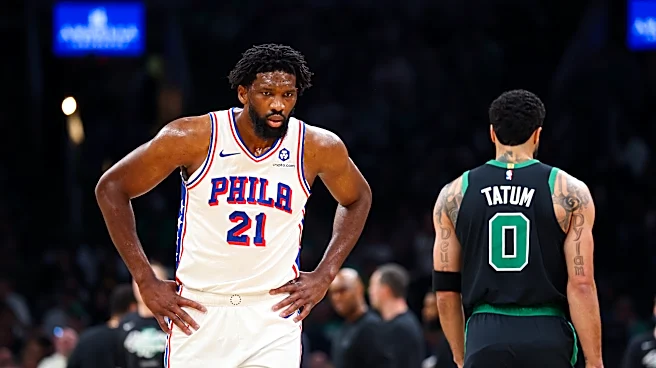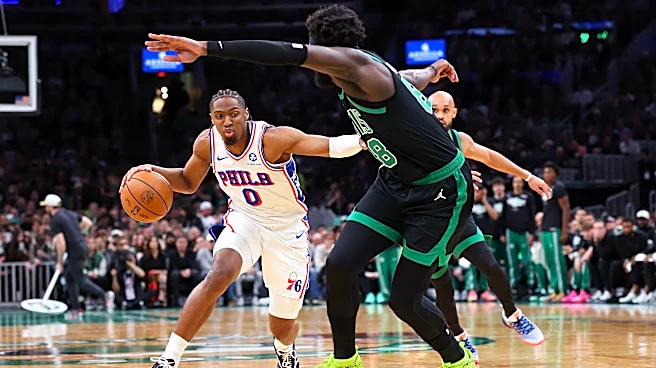



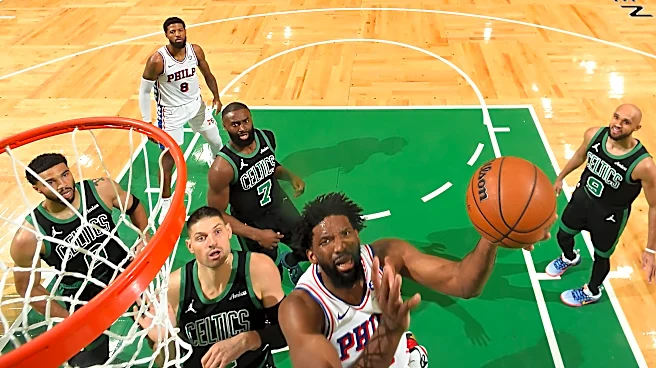
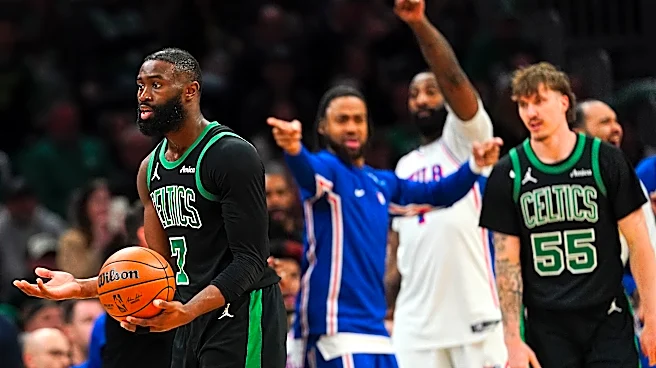
For the first time this season, the Celtics allowed their opponents an efficiency above 70% on both layups and floaters. This wasn’t caused by a high transition volume, but rather by a half-court defensive collapse. The Sixers posted a 1.19 points-per-possession efficiency in non-transition situations, their third-highest mark of the season. Only Washington and Chicago provided weaker opposition to Phily this year.
Where did that collapse come from, and why has the pick-and-roll defense been such
an issue in these latest games? Let’s go back to the film and figure it out.
On this first play, you will recognize a set that the Celtics run often, and they should be ready to defend it, as they have been practicing it for years now under Joe Mazzulla.

You can see here why Jordan Walsh has sometimes struggled in on-ball defense. His anticipation and screen navigation aren’t good enough to consistently stay connected to the ball handler. However, in drop coverage like the Celtics are playing, the on-ball defender needs to stay attached to his man to avoid a defensive breakdown.
Then comes Quentin Grimes’ back screen on Nikola Vucevic, which creates another problem. The big man can’t execute the drop because he is also caught in the screen. It then becomes Payton Pritchard’s job to slow down the drive, but he commits his steps too early, allowing Tyrese Maxey to go around him.

On this possession, Baylor Scheierman comes high enough to protect against a right-hand drive while still staying close enough to Paul George to contest a potential shot. However, the weakside help from Jaylen Brown is nowhere to be found.
But Jordan Walsh isn’t the only one who struggled with screen navigation. Derrick White also had a hard time keeping up with Tyrese Maxey, and navigating (moving?) screens from Joel Embiid is always tough.
Then comes the big-man issue: the Celtics don’t have a center who can backpedal and execute solid drop coverage, especially on high ball screens. Watch Neemias Queta’s feet and hips—it’s a mess, and Maxey can beat him in a second, while Jayson Tatum takes too long to commit as the strong-side helper.
There are several possessions where it’s hard to understand the defensive decision-making. Here, Tatum doesn’t impact either the drive or the passing lane, Brown’s body orientation opens a freeway for Paul George, and Vucevic doesn’t disrupt the two-man action at all.
The screen navigation issues are where it all starts because they give the ball handler far too much freedom. Look at the lack of intensity on this possession from JB. He jogs and doesn’t fight over the screen, which gives PG space and momentum to attack Vucevic, who is known for poor rim protection. Again, there is no commitment or help from the weakside by either White or Tatum.
Here again, the defensive shell breaks after another ball-screen action. Jayson Tatum can’t keep up with VJ Edgecombe, which triggers help from Sam Hauser, who forgets about Kelly Oubre behind him. When the Sixers wing cuts, he has enough space to finish and draws another shooting foul from Queta.
To avoid Joel Embiid’s screening action, the Celtics switch Jaylen Brown onto the big man, but the size mismatch is too significant and quickly forces Queta to help, leading to yet another shooting foul.
Nonetheless, because drop coverage against Embiid screening actions has been so problematic, the Celtics will likely need to adjust their coverage—or execute it far better than what we saw in Game 5.