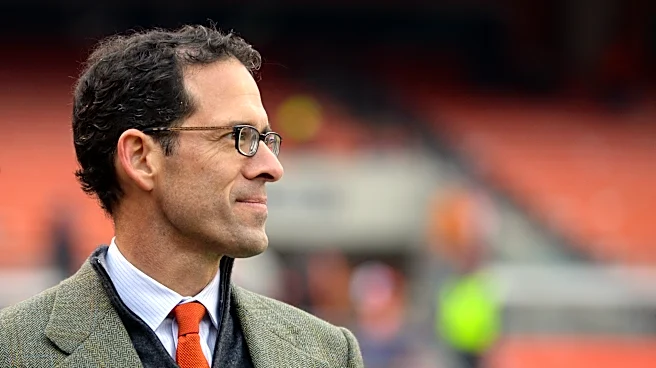





The Cleveland Browns made what turned into one of the most polarizing moves in franchise history when they hired Paul DePodesta in 2016.
A former baseball executive known for “Moneyball”-style thinking, DePodesta was brought in as chief strategy officer and paired with general manager Sashi Brown to help lead yet another rebuild.
Because DePodesta was Harvard-educated, came from baseball, and favored analytics, he became an easy target for portions of the media and fan base that still hold onto a brand
of football that was last successful in 1985.
Never mind that analytics, in one form or another, have been a part of pro football since Paul Brown was revolutionizing the sport in the 1940s and 1950s. DePodesta was a “nerd” who would never understand what it takes to build a team in a town like Cleveland.
The boogeyman finally left town and returned to his baseball roots last November after being hired as president of baseball operations for the Colorado Rockies. The Browns were now saved, or so the story goes, because the intelligentsia were out and the football guys were once again back in charge! (Don’t look too closely at general manager Andrew Berry’s LinkedIn page.)
Turns out, however, that the Browns may have found success had they followed the type of longer-term approach that DePodesta favored.
That is one of the key takeaways from an article by Brittany Ghiroli at The Athletic, who profiled DePodesta in his new role with the Rockies, while also dropping some interesting nuggets about his time with the Browns.
Despite the ongoing narrative that certain members of Cleveland’s front office are obsessed with showing that they are “the smartest guys in the room,” DePodesta admits he didn’t know what he was doing when he first took the job, as he told Ghiroli:
“… the Browns were in a place … it was going to be a struggle, and we knew that for a couple of years. I wasn’t some savior. I didn’t even know what I was doing yet. It was going to take me years to try to figure it out and make some sort of positive contribution to the whole. I just didn’t want it to ever be about me.”
Being the Browns, it did not take long for things to turn sour, as co-owners Jimmy and Dee Haslam bailed on the rebuilding plan too soon, fired Brown, and replaced him with noted “football guy” John Dorsey as general manager.
Dorsey tried to accelerate the rebuild, but after making the smart move to fire head coach Hue Jackson, Dorsey messed up by advocating for Freddie Kitchens to be the head coach. One year and six wins later, both Dorsey and Kitchens were gone.
Not sticking with the plan turned into the norm, according to a former team employee quoted anonymously in the article:
“I’m not sure the original plan ever got to see the light of day. The big question, though, is would it have mattered? If you grade all the decisions on plus-minus, I think their hit rate was better with Paul in it. The problem was you hit on a bunch of dollar bets and missed on a thousand.
“His process? No one better. It was probably the most advanced in football. I think it failed because they didn’t weigh it enough.”
Maybe the real lesson is this: successful NFL teams blend scouting, experience, and analytics. Cleveland spent years treating those ideas as if they could not co-exist.
In the end, the DePodesta era is labeled as a failure because, as always, the people calling the shots can never fully commit to a plan.
Does any of this matter now? Probably not. The Browns have a shiny new head coach in Todd Monken and a general manager in Berry who is looking to build off last year’s solid draft with multiple picks this weekend.
Of course, the one constant in all this is the ownership group, and that is not changing.
But for veterans of the great analytics wars of 2016 to 2025, this should finally close the book on that chapter in franchise history.