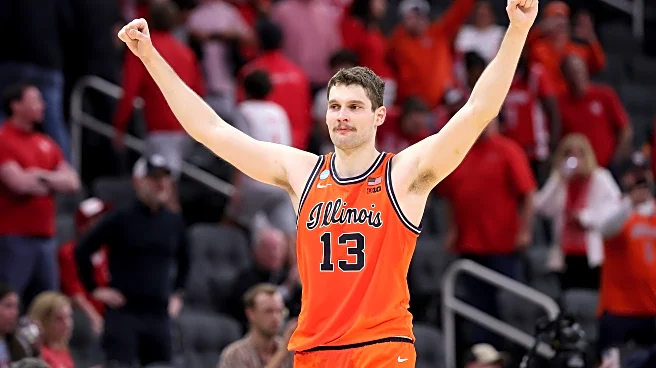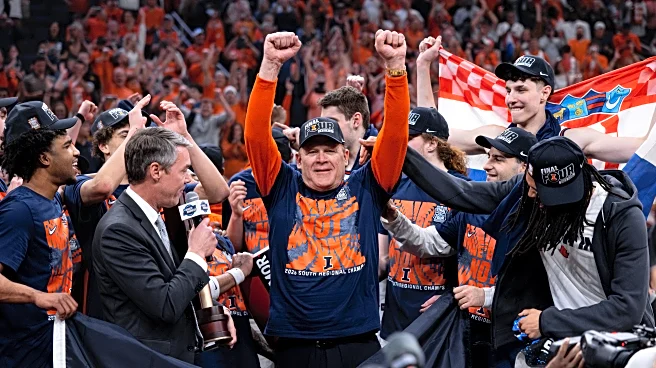


HOUSTON — Forget the narratives, forget the drought. Brad Underwood’s Fighting Illini just kicked the door down and cemented their names in Orange and Blue history.
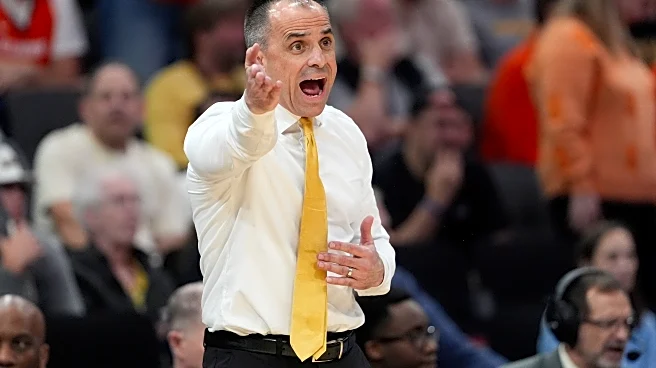
“It’s not just me,” said Illinois head coach Brad Underwood. “It’s so many people that’ve helped along the way.”
On a historic Saturday afternoon at the Toyota Center, No. 3 seed Illinois stared down a familiar foe and a 21-year drought, physically dismantling No. 9 seed Iowa 71-59 to punch their ticket to the Final Four for the first time
since the 2005 ‘Flyin Illini’ team. Underwood’s squad proved they didn’t need a hot hand to make history, instead they just needed to be the toughest team in the building.
“You believe in something so much that it drives me every single day to want to make it happen,” Underwood said.
The win acts as ultimate confirmation that the late-game demons that haunted this team in December and January have been officially exorcised. The transformation to physical and defensive determination have removed the days of living and dying by the three and proved that this is a sustainable, championship-caliber team.
“One of the most fulfilling moments personally that I just had,” Underwood said. “Was standing on the ladder with the net and then seeing our fans.”
A Shaky Start
Iowa jumped right out of the gates with nine straight points to give Illinois its largest deficit through its first three games of the tournament. The Illini’s first five minutes weren’t up to par, and it took a bit for them to knock down their first bucket of the night, at the 16-minute mark.
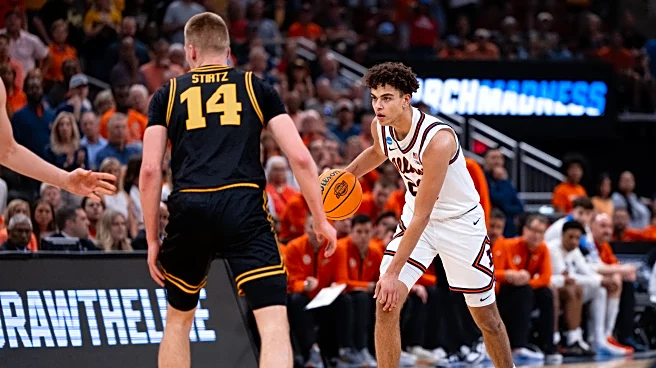
And the Hawkeyes didn’t slow down. Bennett Stirtz knocked down a mid-range fadeaway and his first triple of the night to stretch Iowa’s early lead and foreshadow how the rest of his night would go.
The Illini racked up just a single assist in the first half. Iowa had eight.
The defensive presence that Illinois showcased against Houston in Houston on Thursday was there. The offensive efficiency needed to beat a red-hot shooting Iowa team was not there to begin.
The Hawkeyes knocked down 6-of-12 three-pointers and shot 57% from the field in the first half. To win, the Illini needed more bodies crashing the glass, they needed to slow down Iowa on offense and they needed to start knocking down some shots of their own.
Illinois’ defense forced Stirtz into ideal spots, but it didn’t make all that much of a difference. The Hawkeyes’ standout guard circled the court searching for off-ball screens to get him open, something that Underwood was aware of in the pregame press conference.
“Well, I think the one thing they’re doing is playing him a little more off the ball,” Underwood said. “He’s still number one in the country in ball screen usage and scoring.”
Stirtz was up to 15 points after just 15 minutes, nailing six of his first eight shots. He finished with 24 points, playing all 40 minutes of the game. Freshman guard Tate Sage, who dropped 19 points against Nebraska, continued his stretch of efficient shooting and finished with 10 points.
But Illinois erased the threat of Iowa forward Alvaro Folgueiras, who entered Saturday’s matchup averaging over 15 points in the tourney, by protecting the perimeter and refusing to let the big man stretch the floor.
Winning on the Glass
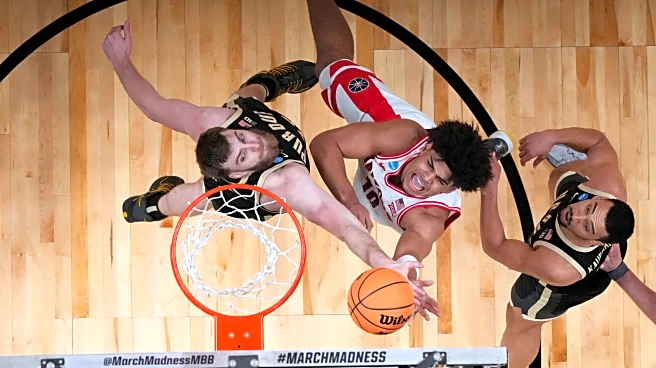
Illinois’ didn’t shoot lights-out by any means. But their rebound efforts, especially on the offensive side (16 offensive rebounds leading to 13 second-chance points), were especially crucial to keep the Illini in it early, fueling a nine-point run to cut the Hawkeye’s lead to just one following their 12-2 start.
Super-sub guard Andrej Stojakovic came off the bench and immediately made an impact on the game yet again, with two aggressive lay-ups and an and-one to give Illinois an even heavier momentum boost after its disappointing start.
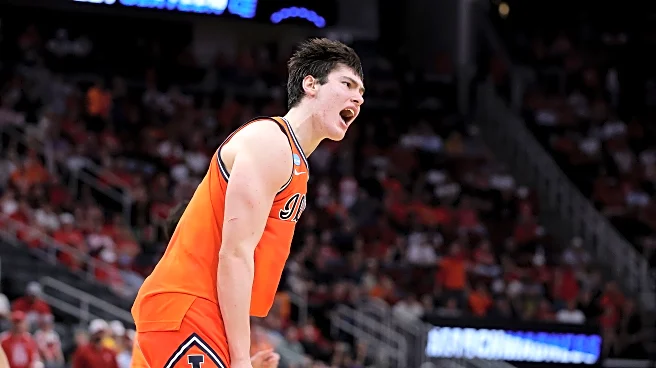
Per usual, freshman forward David Mirkovic led the charge on the glass, finishing with 12 rebounds and five offensive boards. Every Illini that checked in the game Saturday recorded at least one rebound. Stojakovic snagged five off the bench, with three offensive rebounds.
And although the stat sheet won’t show it, one of Illinois’ most vital glue guys—forward Ben Humrichous—recorded a +16 rating in just 19 minutes with four rebounds and a defensive performance for the ages. A major contrast to last year’s version of Humrichous, who mainly thrived off his three-point shot.
The Second-Half Shift
With 7:43 left on the first-half clock, Toyota Center’s buzzer horn malfunctioned and remained on for about 15 minutes. While the stadium crew looked to fix the issue, Underwood must have said something in the huddle to get his guys going. Because after that point, the Illini shifted into a different gear.
Illinois’ field-goal percentage jumped from 37% to 57% after halftime, and Iowa’s dropped from 57% to 23%.
In the pregame press conference, Keaton Wagler noted that during the 75-69 regular-season win over Iowa, Illinois “let them back in the game,” similar to the late collapses against Michigan State, UCLA and Wisconsin twice.
That hasn’t been the case in March whatsoever.
In every round of March Madness so far, Illinois’ second halves have showcased a new kind of energy and determination. And against the Hawkeyes Saturday night, a team that was riding the high of an upset win over No. 1 seed Florida and a comeback win over No. 4 seed Nebraska, the Illini floored the gas pedal out of the halftime break.
Owning the Paint
Like they did against Houston, the Illini demoralized the Hawkeyes physically and kept their defensive fire going. Illinois only allowed seven two-point buckets, with the rest of Iowa’s points coming from its 11 three-pointers.
Iowa’s game plan was built around taking away Illinois’ best weapon, its three-point shooting. Illinois, a team that has knocked down 10.7 threes per-game this season, only made 3-of-17 triples Saturday night. That’s 17.6% from range — certainly not up to par with how this squad normally shoots. But managing to win while shooting that poorly surely dismisses any worries about this Illini team living and dying by the three.
When Illinois recognized Iowa’s lack of help on defense, the focus turned to attacking mismatches in the paint with its size and off-the-dribble talent. Keaton Wagler, Andrej Stojakovic and Tomislav Ivisic helped Illinois rack up 40 points in the paint compared to Iowa’s 12.
For the majority of the game, the good looks from long-range weren’t there. And although Wagler’s known for his long-range efficiency, he found a different way to attack the game: going off the dribble to either draw a foul and knock down his free throws or find a high-percentage basket in the paint.
Wagler knocked down 7-of-7 free-throws and shot 6-of-10 from two-point range. Although he shot 2-of-7 from beyond the arc, he provided Illini fans with a jaw-dropping highlight: A Penny Hardaway-esque half-spin stepback triple that created enough space to send his Hawkeye defender to the baseline. And on top of that, the triple put Illinois up 47-43 with 12 minutes to go and provided an immense boost of momentum.
Looking Ahead
By breaking through to the final weekend, Brad Underwood has officially elevated Illinois from a consistent contender to a true national powerhouse. The 21-year monkey is finally off of the Illini’s back.
“I’ve never doubted us getting to a Final Four would happen,” Underwood said. “But I also know how doggone hard it is to do it.”
In return, the conversation in Champaign has rapidly shifted from ending the drought to chasing the ultimate pinnacle: a National Championship trophy.
Stat Stuffers
- Keaton Wagler: 25 points
- Tomislav Ivisic: 13 points, four rebounds, 6-11 FG, two blocks
- David Mirkovic: Nine points, 12 rebounds, two steals
- Andrej Stojakovic: 17 points, five rebounds, 7-9 FG
After years of living and dying by the three, the Illini just won an Elite Eight game while shooting 17% from deep. Can this physical, defensive identity take Illinois even further?