
Golf
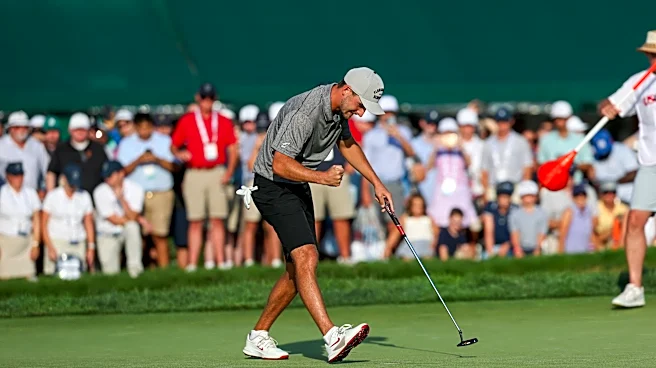
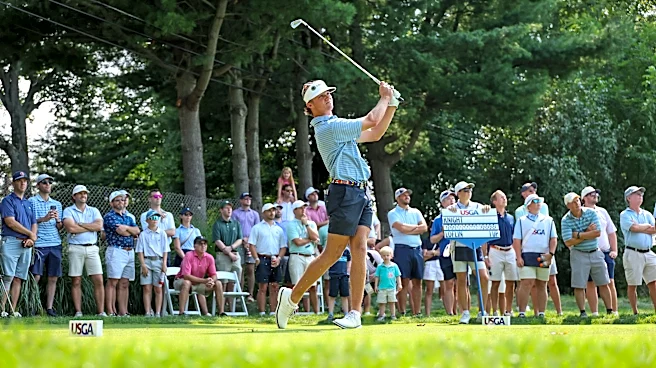
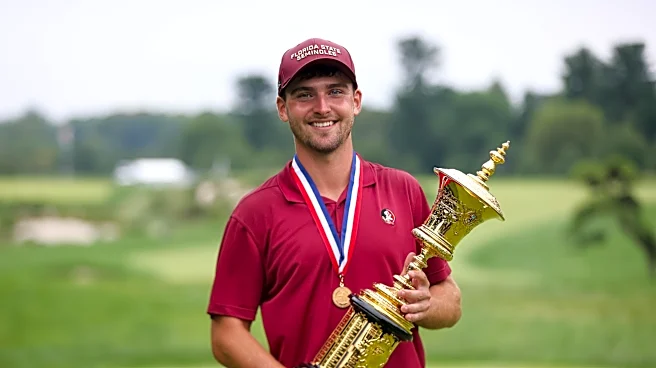
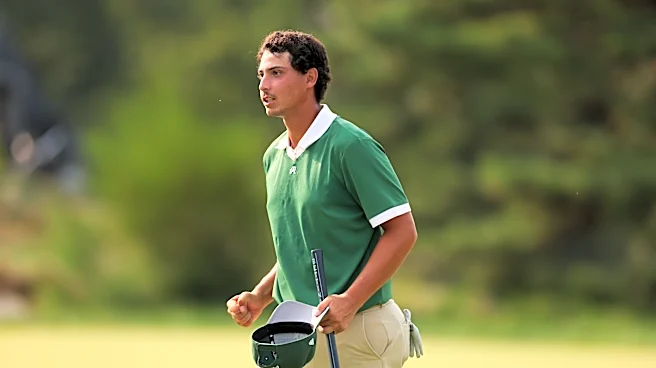
Florida State men’s golf rising senior Jack Whaley won the 126th U.S. Amateur Championship on Sunday, the first in FSU program history to do so:
With his final appearance, Whaley earned exemption into the 2027 Masters and 127th U.S. Open at Pebble Beach. Whaley becomes the first current FSU player to qualify for the Masters since Harry Ellis in 2018.
The victory earned him a spot in The 2027 Open Championships at St. Andrews and the Walker Cup in September for Great Britain.
He was also the first Seminole
to appear in the final since Drew Kittleson in 2008, when the tournament was hosted at Pinehurst.
Representing England, Whaley qualified for match play after finishing stroke play in 60th place following a playoff, where he nearly aced the 13th hole on Wednesday morning. Whaley finished two rounds of stroke play at 2-over, 142, in a 16-way tie for 54th. After a birdie on the first playoff hole, Whaley qualified for the Round of 64.
Following the playoff, Whaley faced fifth-seeded Jackson Ormond in the opening round of match play. Whaley fell behind by two early, but bounced back to tie the match on the seventh hole. After four lead changes, Ormond took the lead heading to the 18th. With the pressure on, Whaley won the 18th to force a playoff. Whaley broke the tie against the Florida Gator and took the match on the 22nd hole with a birdie on the 603-yard par 5, No. 4.
On Thursday, Whaley began the day in the Round of 32 against No. 37 Bowen Mauss. Mauss, who plays for Arizona State, took the early lead, but Whaley tied it up on the 8th. Whaley took over the lead on the 12th following a birdie and added to it on the 15th with another birdie. He finished the match with the win 2&1.
In his second match of the day, Whaley established the lead early and was dominant throughout the match. He was victorious over No. 53 Christian Cavaliere, 4&3, to move to 3-0 in match play for the tournament.
On Friday, Whaley started the day winning three of the first four holes to go 3 Up early. Whaley extended his lead to 4 Up after a birdie on No. 8 and again on No. 11 with a birdie. Without conceding a hole throughout the match, Whaley ended the match on No. 14, 5&4.
On Saturday in the semifinal, Whaley started the day winning the first two holes against No. 8 Carter Loflin behind a pair of birdies to go 2 Up. He added another point on No. 6 with a birdie, moving to 3 Up. Loflin battled back within one after the ninth, but Whaley answered with birdies at No. 10 and No. 12 to move back to 3 Up. Loflin followed with a birdie on the 13th and par on the 15th, cutting into Whaley’s lead, 1 Up. Loflin tied it after the 17th, with one hole in regulation to play.
With the pressure on, Whaley outlasted Loflin to win the 18th, finishing 1 Up.
Whaley took down Leng Jr. of Stanford in the final 36 holes of to become the first Englishman to win the tournament since Matt Fitzpatrick in 2013 and third overall since 1911.
Whaley started the day with a chip-in on the first to win the hole and added to his lead after a par on the third. Whaley held the advantage for four holes before Leng Jr. won the ninth and 10th to tie. Whaley took the 11th with a birdie, but Leng Jr. answered with back-to-back wins to take the lead at the 13th. Whaley finished the first 18 holes trailing by two.
After a break in the action, Whaley came out with four wins in-a-row to go 2 Up after 23 holes. Whaley gave one back to Leng on the 24th, but secured birdies on the 26th and 28th holes to stretch his lead to 3 Up.
Leng Jr. answered with a win on the 29th, but Whaley’s par on the 30th put him back at 3 Up. Following a pair of tied holes with pars, Whaley secured the championship by draining a birdie putt on the 33rd hole.
Since his arrival at Florida State in August of 2025, Whaley has moved up over 200 spots in the World Golf Amateur Rankings, where he currently sits 90th. This summer, Whaley competed in three tournaments, finishing 21st at the Western Amateur with a score of 10-under, 274 after carding rounds of 68, 69, 71 and 66. He also placed 33rd at the European Amateur at 1-over, 285 and competed at the British Amateur.
Football
Curt Weiler wrote a profile on punter Daniel Hughes, arguably the most interesting man in college football:
Offensive coordinator/wide receivers coach Tim Harris Jr. and defensive coordinator Tony White both spoke on Saturday:
ESPN’s Pete Thamel, during a College GameDay Podcast episode released on Friday, claimed that the SEC and Big 10 aren’t itching to add FSU whenever the next wave of realignment comes:
Dan Wetzel: Clemson and FSU — everyone at FSU says, do you think we’d be suing if we didn’t have a place to go? And then you ask around, and man, I haven’t heard anybody say, oh yeah, we’re going to take them. But hey, what do I know?
Thamel: When that question [of where FSU is going to land] comes up, people delight in how little interest they have in Florida State. It’s not even like, eh, we could see it. It’s like, pfft, those guys. We’re going to bring in somebody who’s going to march to the courthouse and sue us? Do we want to bring in another problem?
Speaking of the Worldwide Leader, David Hale ranked all 138 FBS teams by tier, placing FSU in the “It has to get better. Right? Right?!?” tier 10 category alongside Florida, Oklahoma State, South Carolina and Syracuse:
At Florida State and South Carolina, the stories are a bit more complicated.
Believe it or not, both schools were ranked in the AP top 10 for at least a week last season, but neither made a bowl game.
South Carolina went 4-8, but was close enough often enough that Shane Beamer doubled down after the season, bringing back LaNorris Sellers, Nyck Harbor and Dylan Stewart.
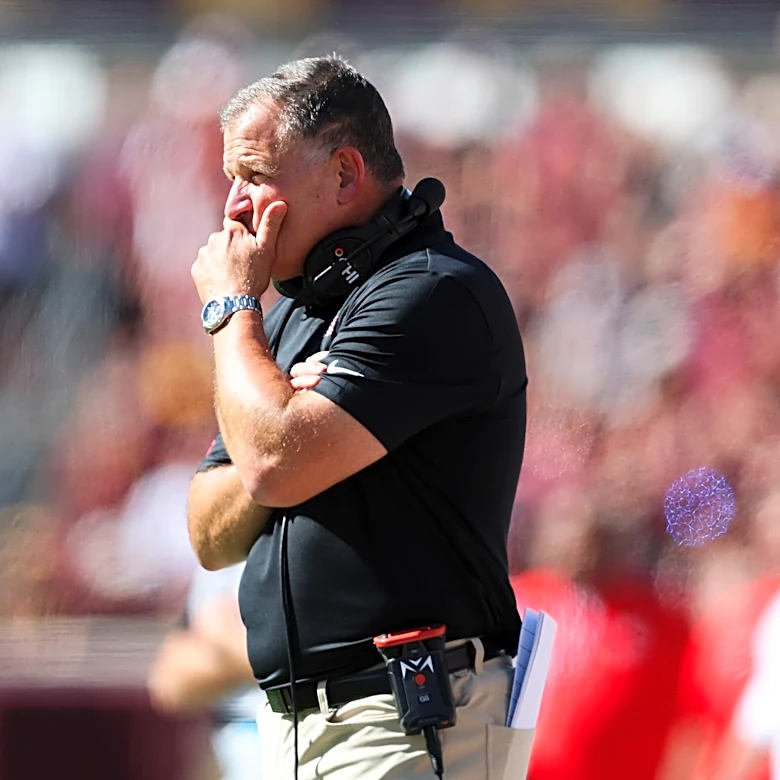
Florida State brought back Mike Norvell, too, after a second straight down year in Tallahassee. Few Seminoles fans seem to think he can right the ship, but it’s also worth noting that, despite a 5-7 record, FSU made some huge strides from a disastrous 2024 season.
Florida State improved its offensive yards per play vs. FBS opponents by 52.6% in 2025, the largest year-over-year change by a power conference team in the playoff era.
Soccer
No. 4 FSU moved to 2-0 on the year with a win over FIU on Sunday:
All Sports
FSU men’s basketball announced a sponsorship patch partnership with ReliaQuest on Friday:
Florida State University researchers studying male green sea turtles off the coast of Brazil have discovered two distinct migration strategies, with some turtles traveling up to 1,000 kilometers after breeding while others remain in the same area year-round:
The findings shed new light on the movements of male green sea turtles, which are much harder to study than females. Female turtles regularly return to nesting beaches to lay their eggs, giving researchers predictable opportunities to tag and monitor them. Males, however, rarely return to land after entering the sea as hatchlings, leaving major gaps in scientists’ understanding of where they travel and which marine areas are important to their survival.
Researchers observed two distinct strategies: After breeding, about 80 percent of tagged turtles migrated 300 to 1,000 kilometers to different foraging grounds, while 20 percent stayed in the same breeding area year-round.
Satellite tags also collected data on turtles’ vertical movement like dive frequency, depth and duration. Turtles that stayed in the breeding area made frequent, short daytime dives and long nighttime dives while migrating turtles exhibited a variety of dives, likely to minimize risk of detection by predators and to reduce wave drag and energy cost of migration.
Sea turtles are also subject to temperature-dependent sex determination. Cooler incubation temperatures produce male hatchlings while warmer temperatures produce females. As temperatures rise around the globe, more females are hatching, altering the population balance.
Male turtles play essential roles in maintaining genetic diversity, population connectivity, and reproductive success. Unlike females, they rarely return to land after hatching and making their way to the sea.
The team, which received training through FSU’s Academic Diving Program hosted through the FSU Coastal and Marine Laboratory, completed more than 230 free dives in Fernando de Noronha, an archipelago of 21 islands and islets about 350 kilometers off Brazil’s coast. Researchers located, tagged and observed male sea turtles, which are generally smaller than females but can still grow to 5 feet long and weigh more than 500 pounds.