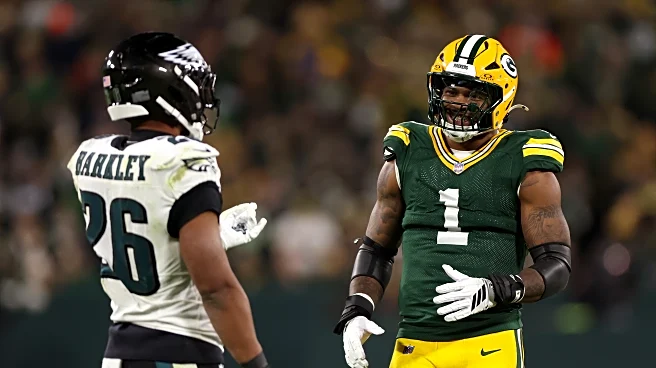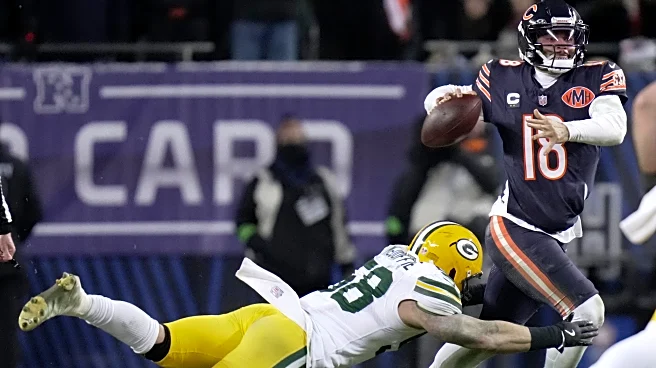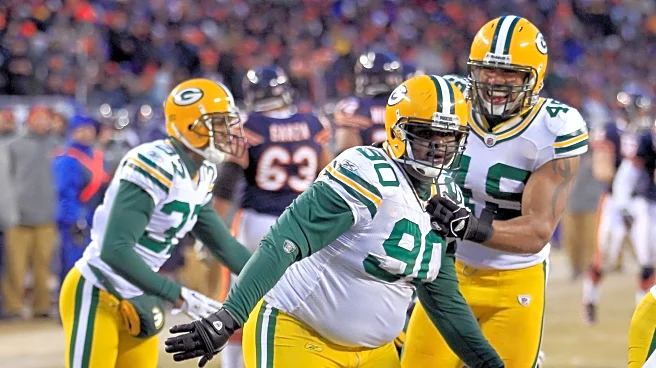

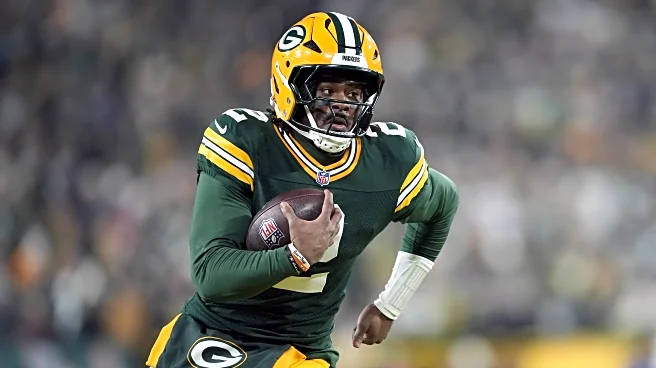
The Green Bay Packers and Chicago Bears have the most storied rivalry in the sport, even if it has been extremely lopsided since 2009, when the Packers began a run of 29 wins over the Bears in 35 games. It’s the most-played game in NFL history, with Green Bay being up 109-97-6 all-time in the series, and features the teams with the most championships and most Hall of Famers in professional football.
So, would it surprise you if you learned that this is only the third time that the two squads have
faced off in the postseason? I came across that stat this week, was surprised that it was accurate. In fact, the Packers and Bears have only even been in the playoffs together at the same time (not even as opponents) five times before 2025. A lot of that has to do with the fact that Green Bay has dominated the rivalry since the merger, which is the era when multiple teams from the same division have gotten the most opportunities to participate in the playoffs in the same season.
So with all that being laid out, I want to take a look back at the previous two Bears-Packers games in postseason history. There was a 70-year gap between the first and second games, but it’s only taken 16 years between the second and third games with win-or-go-home circumstances in this rivalry.
1941
The year was 1941, and things were very different than how you imagine the NFL right now. The Bears had just come off a 73-0 victory in the NFL Championship Game the year before, when they rode a new offensive innovation, the T formation, to success. Despite having a title-winning year, Chicago held the first overall pick of that season’s draft.
If you want an example of how odd these seasons were for the league, the Bears spent that first overall pick on Tom Harmon, who turned down the opportunity to play in the NFL to pursue a career in acting. Later in 1941, he signed a deal with the New York Americans of the American Football League, the third of four leagues that would hold that name — the final being what eventually turned into the AFC after the AFL-NFL merger.
Shortly after his professional football career started, though, Harmon was drafted to fight in World War II. When his stint in the military was over, he eventually played for the NFL’s Los Angeles Rams, six years after he was drafted by the Bears. After breaking his nose 13 times in three seasons of pro football, Harmon retired from the sport entirely.
Alright, with that picture painted, here are the circumstances that led to the first Packers-Bears playoff matchup. The NFL used to just play the regular season and then an NFL Championship Game, a matchup between the best team from the Western Division (Bears, Packers, Detroit Lions, Chicago Cardinals and Cleveland Rams) against the best team from the Eastern Division.
When both the Packers and Bears finished 10-1 with a 7-1 divisional record, as Green Bay won in City Stadium and Chicago won at Wrigley Field in the regular season, the league stepped in and forced the two sides to play a sort of play-in game to decide who got the chance to play the Eastern Division leader in the NFL Championship Game.
To decide who got to host the game, there was a coin flip, which George Halas’ Bears won. A week before the first non-championship playoff game in NFL history, Pearl Harbor was attacked, which impacted the attendance for both this playoff game and the NFL Championship Game.
To start the game, Chicago returner Hugh Callarneau fumbled the ball, which led to a Packers score. Callarneau fumbled the second kickoff, too, but the Bears didn’t lose possession on their second attempt. Later on in the first quarter, Callarneau was the first Chicago player to score a touchdown, on an 81-yard return, that cut Green Bay’s lead to 7-6. Redemption.
From there on out, the Bears went on a 33-7, won the game and then won the NFL Championship the week later. The Packers were held to just 33 yards on 36 carries while Chicago’s T formation produced 277 yards on the ground on 48 rushes. The Bears only passed for 48 yards in the game, while Green Bay collectively went 11 of 27 passing for 222 yards, a touchdown and two interceptions with Cecil Isbell, Tony Canadeo and Hal Van Every throwing the football.
2010
Fast forward 70 years later and the Packers had another rubber match with the Bears in what would ultimately be (spoiler alert) Green Bay’s lone Super Bowl-winning season since 1996.
Earlier in 2010, the Packers lost a one-score game to Chicago at Soldier Field on Monday Night Football in Week 3, when Green Bay set a franchise-record for penalties with 18. In Week 17, the regular-season finale, the Bears, who had nothing to play for seeding-wise, didn’t rest their starters against the Packers, who needed a win to advance into the postseason as the NFC’s sixth and final seed. Green Bay won that game 10-3 at Lambeau Field, despite never having a lead until the fourth quarter of the game.
After beating the Philadelphia Eagles and Atlanta Falcons, the Packers got another opportunity to play the Bears in the NFC Championship Game.
Green Bay scored on the opening drive of the game and running back James Starks punched in another early touchdown to give the Packers a 14-0 lead. Just before halftime, Bears quarterback Jay Cutler went down with an injury, which forced backup Todd Collins to come into the game.
After starting the second half with three straight three-and-out drives, Collins was pulled in favor of a third quarterback, Caleb Hanie, who actually drove Chicago 67 yards for a touchdown to cut the lead to 14-7 on his first drive under center. Two drives later, though, Hanie threw his infamous interception to Green Bay nose tackle B.J. Raji, who took it to the house to give the Packers a 21-7 lead.
The Bears didn’t just roll over and die there, though. Hanie kept fighting and actually posted a 60-yard touchdown drive that took off just 1:21 of the clock, making it a one-score game again at 21-14.
The Packers got the ball back with 4:38 left in the game, but went three-and-out on a drive that actually lost a yard. Chicago got the ball back with the opportunity to tie the game, against all odds.
The NFC Championship was ultimately decided by a fourth-and-five play with only 47 seconds left on the clock, when cornerback Sam Shields picked off Hanie for Hanie’s second interception of the game. From there, Green Bay just knelt out the game and advanced to Super Bowl XLV, where they would beat the Pittsburgh Steelers.
This was your history lesson of the day. The Bears still suck.