





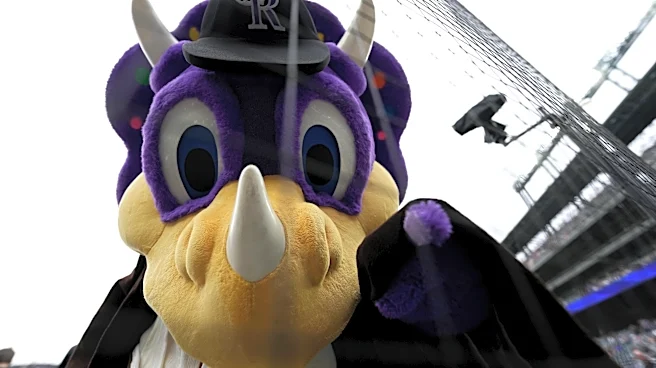
Throughout their more than 30 years of existence, the defining narrative surrounding the Colorado Rockies has been how difficult it is to win when playing at a mile above sea level. We all know the basics: At Coors Field, pitches don’t move the same as they do elsewhere, and balls fly further when hit. This leads to the most offense-heavy environment in MLB but also makes adjusting to road games difficult for hitters.
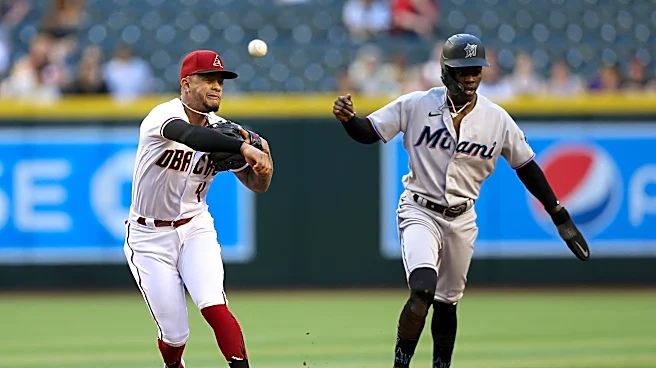
In MLB, Coors Field is singular. Chase Field in Arizona has the second-highest elevation,
which is 1,061 feet above sea level, almost five times lower than Coors Field.
In Liga Mexicana de Béisbol (LMB), however, roughly half of the stadiums are at or above Coors Field’s elevation.
Essentially, the entire league is transitioning between vastly different elevations for half of their road trips. Every team in LMB has to deal with their version of “the Coors Field hangover” effect on a constant basis.
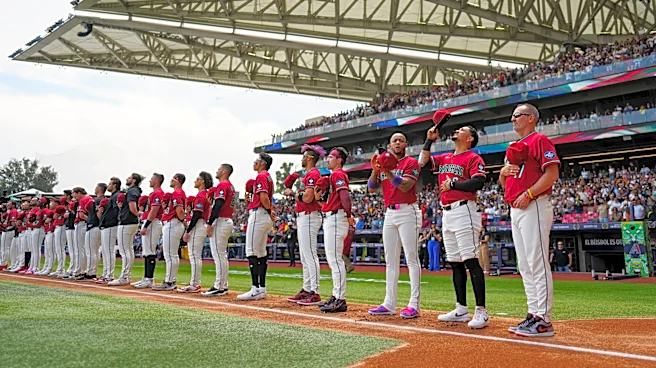
The team at the peak of LMB, both in terms of elevation and franchise success, is the Diablos Rojos del México, who have won 18 championships (including 2024 and 2025) and have not ended a season below .500 since 1978. Many factors have led to that success, with the most obvious being that the Diablos Rojos play in Mexico City, which is the by far the largest market city in Mexico.
But it’s worth digging into whether any of those factors would be transferable to the Rockies.
On episode 2472 of Effectively Wild, Octavio Hernández Pernía, the Diablos Rojos’ development director, detailed not only the challenges his team identified with playing at LMB’s highest elevation but also a list of methods the team has used to combat those challenges. This is a treasure trove of information for how the team approaches the challenges of playing at elevation with potential lessons for the Rockies just waiting to be applied.
Hitting
Rockies fans have long heard of the negative effect on hitters for the first few road games after leaving Coors Field. The Diablos Rojos, according to Hernández Pernía, have been developed a fairly simple method of combating that effect.
Hitting is fundamentally a predictive process. The hitter commits based on an internal model of ball trajectory, not continuous visual tracking through the entire flight. When that model is calibrated to altitude conditions, it needs to be retrained quickly. The most effective adjustment we’ve found is to aggressively recondition perception in the cage, specifically by facing pitches with greater induced movement and carry to accelerate recalibration. We have special balls that do that.
At times in the past, the Rockies have flirted with similar strategies. Most famously, in 2020, Charlie Blackmon led an effort to implement a longer game speed batting practice session at the start of every road trip. This practice hit at the heart of the exact problem that the Hernandez is detailing in recalibrating the hitters’ internal model for how pitches move.
The ideal version of this sort of training would be a similar session to the one Blackmon piloted to start each road trip, but using Trajekt pitching machines that mimic specific pitchers’ spin rates and release points. The complicating factor there is that Trajekt machines are both expensive and unable to travel with the team making them, currently, something that can only be leveraged at home. That being said, they could still be used to create a heavy initial batting practice before the first game of every homestand to adjust back to pitches at elevation.
For the road, outside of Blackmon method of game-speed batting practice, perhaps just fully recreating the same specialized balls that the Diablos Rojos use might be the best bet.
Pitching
While the Rockies have, at times in their history, been able to find a winning formula on the offensive side of the game, they have been consistently unable to find any long-term solutions on the mound. The problem for hitters primarily comes from adjusting to different environments when moving between ballparks, whereas for pitchers it’s more about just the direct impact on performance while at elevation.
Hernández Pernía summarizes the effects of pitching at elevation vs. sea level with the following:
Reduced air density diminishes the Magnus effect, leading to less induced vertical break and horizontal break. Pitchers with strong braking stuff lose movement, but often gain temporary precision because the ball behaves more predictably. The issue appears when they leave altitude. Movement returns, but command lags behind. You don’t always see this in aggregate numbers because stuff improves and whiff rates can increase at lower elevations, but execution consistency takes time to recalibrate.
For their part, the Diablos Rojos have chosen not to combat these effects but instead to embrace them. They have done so by identifying pitchers whose strengths are least impacted by changing between elevation levels. This allows their pitching staff to have an upper hand at home in comparison to their opponents while limiting the adjustments needed on the road to achieve similar results.
The obvious follow-up question is this: What sort of pitchers are least impacted by the effects of elevation?
According to Hernández Pernía, the answer looks like this:
- Pitchers with hybrid sliders and cutters or plus sinkers.
- Pitchers that don’t rely on induced vertical break or seam-shifted wake.
- Pitchers that have plus breaking balls but other teams avoid due to control issues.
As a one-size-fits-all template that potentially comes with its own issues if taken so strictly that the team pigeonholes all pitchers during development. The Bud Black era of Rockies pitching development was often mocked for forcing all pitchers into a particular mold, even if it didn’t fit their strengths. But as a method of identifying talent to target, this seems like a solid starting point.

From the public side, you can easily find which pitchers have the sorts of pitch arsenals described above since Baseball Savant allows sorting pitches by induced vertical break. A quick glance through current free agents through this lens indicates that perhaps Casey Mize or Robbie Ray warrant a look for the Rockies as both have sinkers and sliders as well as IVB on most of their pitches that is well below average.
The point isn’t that pitching talent in other forms should be avoided where available — just that when deciding between multiple options, the Rockies should try to pursue those with characteristics less negatively impacted by their home environment.
Conclusions
We often think of the Rockies as playing in a unique environment faced with an insurmountable challenge that no other team has had to deal. That, however, is just not the case.
The Rockies should not look to exactly mimic the Diablos Rojos — the league context that the two teams play in is quite different. But they should at least look at their methodology and consider what could work for them.
The previous front office was often characterized as insular and stuck in their own ways. The current regime should be looking outward and building on the groundwork of what has worked for the Diablos Rojos.
What it comes down to is that the Rockies do not need to fully reinvent the wheel.
Join the conversation!
Sign up for a user account and get:
- Fewer ads
- Create community posts
- Comment on articles, community posts
- Rec comments, community posts
- New, improved notifications system!
Download the SB Nation app on iOS or Android.
Please keep in mind our Purple Row Community Guidelines when you’re commenting. Thanks!