

I used to spend each July and August visiting my grandparents in Bristol, Connecticut. On many of those summer nights, my grandfather would take me to watch the New Britain Rock Cats. Being so close to the Trade Deadline, the stands were often filled with scouts. I still remember watching Joba Chamberlain pitch while Reggie Jackson sat in the suite behind us.
Those memories make me long for the days when the hot stove was actually hot. Rumors were not in our faces in March. Instead, they slowly heated
up as the dog days of summer arrived.
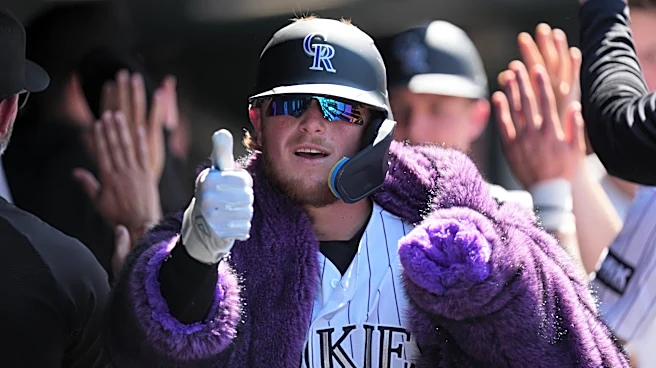
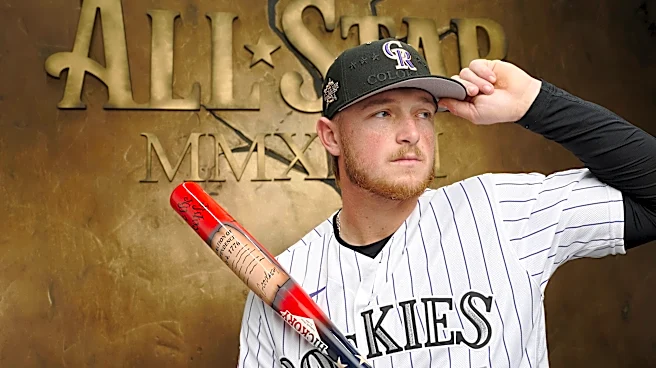
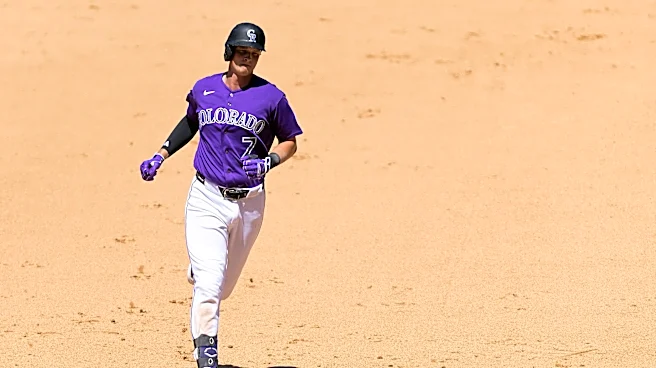
For the sake of this article, let’s pretend this is breaking news. The Yankees have reportedly been scouting and are interested in Rockies catcher Hunter Goodman.
2026 Statistics (Thus Far): 92 G, 384 PA, .257/.326/.561, 15 2B, 30 HR, 125 K, 8.3 BB%, 32.6 K%, 124 wRC+, 1.9 fWAR
2026 ZiPS Rest-of-Season Statistics: 55 G, 223 PA, .251/.309/.493, 11 2B, 12 HR, 62 K, 6.9 BB%, 28 K%, 103 wRC+ 0.7 fWAR
Many people have found their own ways to describe just how poor the Yankees’ catchers have been offensively this season. My favorite way to put it nicely is that they appear to be actively hostile to the concept of quality at-bats. As a group, Yankees catchers have been among the worst offensive units in baseball. Looking at it optimistically, though, it highlights a glaring need and sets an extremely low bar for what qualifies as a successful upgrade.
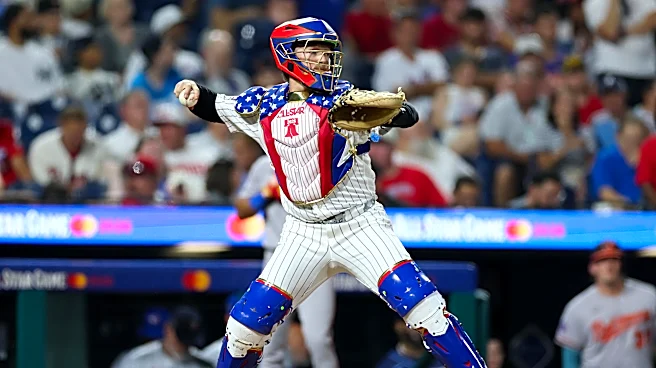
Austin Wells has established trust with both the coaching staff and pitching staff, but his offensive performance has become increasingly difficult to defend. I think most fans are past the point of asking for a right-handed platoon partner. The reality is that the Yankees need an everyday catcher, allowing Wells to slide into a backup role that would better suit both his skill set and production. The problem is that everyday catchers are rarely available in July, and it’s hard for traded backstops to learn their pitching staffs in a hurry down the stretch in a pennant race.
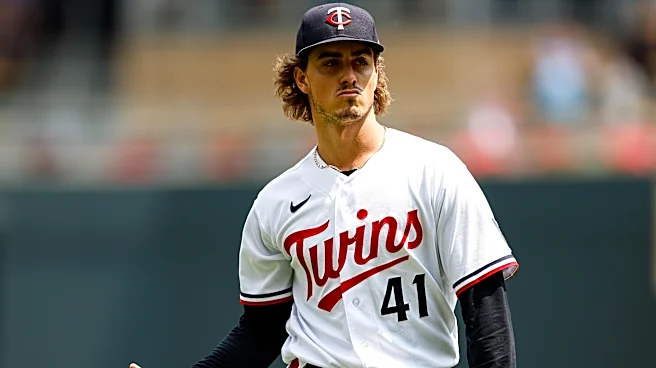
Sure, several backups and veteran journeymen are bound to change uniforms before the deadline, but true difference-makers behind the plate almost never hit the market. With the Twins still hovering around .500, the list of impact catchers available may be even shorter with Ryan Jeffers potentially remaining in Minnesota.
That brings us to Goodman. Let’s take a look at some green and red flags for the Rockies’ current backstop. On the green side, Goodman bats right-handed. This season he has posted a .919 OPS against left-handed pitching and an .836 OPS against righties, making him productive regardless of the matchup. Better yet, after this season he still has three years of team control remaining before free agency.
The red flags? The Rockies have publicly stated they do not want to trade him, and Goodman currently carries a strikeout rate north of 30 percent.
Those red flags? They really do not bother me.
The Rockies should not want to trade Goodman. That is exactly how a rebuilding club should view a young, controllable player, and he’s not even arb-eligible yet. Even with forthcoming adjustments to the CBA in negotiations, it’s hard to imagine him becoming a free agent sooner than his currently projected 2029-30 offseason.
However, every player has a value and every owner has a price. It’s not as though new team president Paul DePodesta has any lasting attachment to Goodman either, as he wasn’t involved with his drafting or development. If another organization is willing to meet that price, conversations happen. The Rockies sit at the bottom of the NL West and still have a long climb before they can realistically challenge the Dodgers. Adding multiple years of control from quality young pitchers might be enough to start that conversation.
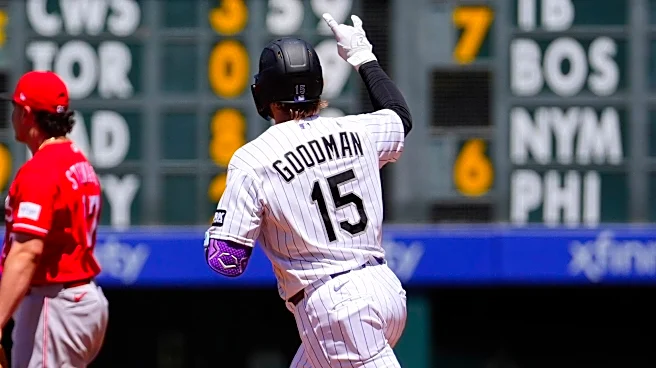
As for the strikeouts, if there is one position where you can live with a 30-percent strikeout rate, it is catcher. Especially when that catcher is slashing .257/.326/.561 with 30 home runs just after the All-Star break, following his second three-homer game of 2026 on Sunday.
I will put a beige flag out there, too, because Goodman’s defense has graded somewhere between below average and average. To me, that is neither a green nor a red flag. Goodman features a solid pop time and blocks pitches well, two traits the Yankees have traditionally valued that would fit nicely with their sinker/splitter-heavy pitching staff. The biggest area where his defense lags behind is pitch framing. While framing has become somewhat less valuable with the introduction of ABS, it remains an important part of the modern catching position.
For anyone worried Goodman’s numbers are simply a product of Coors Field, those concerns should be put to rest as well. He has actually been a better hitter on the road this season, with 18 of his 30 home runs coming away from Denver. His batting average also jumps to .282 on the road compared to .217 at Coors Field.
Ultimately, the conversation comes down to one question. How much is having an All-Star catcher under team control through the next three seasons worth to the Yankees?
The other elephant in the room is that this team was built around having two big right-handed power towers in the middle of the lineup. Even if Aaron Judge returns healthy, he still needs help because Giancarlo Stanton’s availability remains uncertain.
In this case, the bird in the hand may be worth two in the bush. A trade for Goodman would essentially restore the middle-of-the-order production the Yankees expected from Stanton, only at the weakest position in their lineup by far. Goodman is still only 26 years old and, though he does not yet have Stanton’s résumé, he has shown tremendous power and appears to be a star on the rise.
After dropping a series to the Dodgers and with the Red Sox surging, the urgency for the front office to shore up this roster feels even greater than it did before the weekend began. The Rockies might not want to trade Goodman, but the Yankees probably need to keep making offers until they cannot say no.