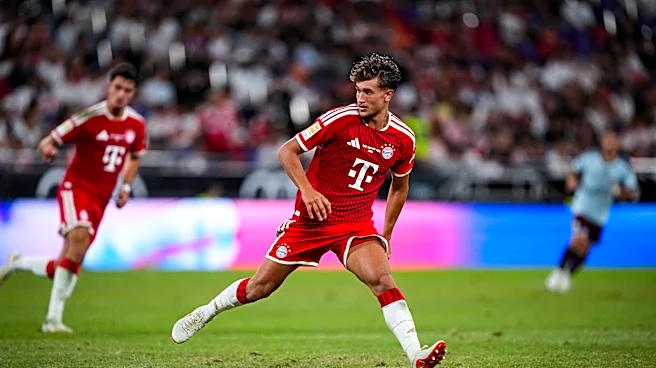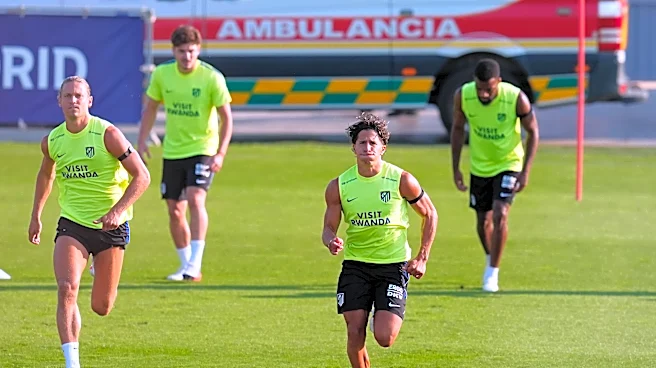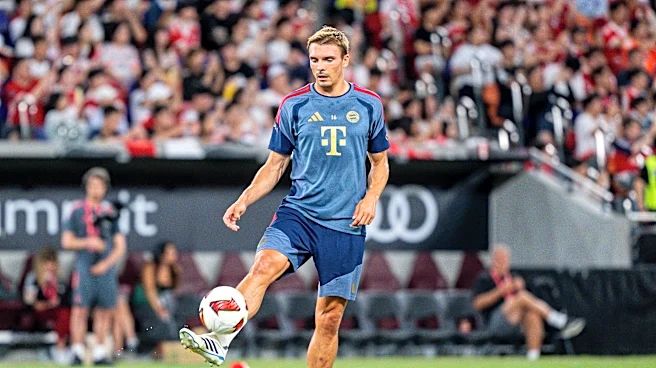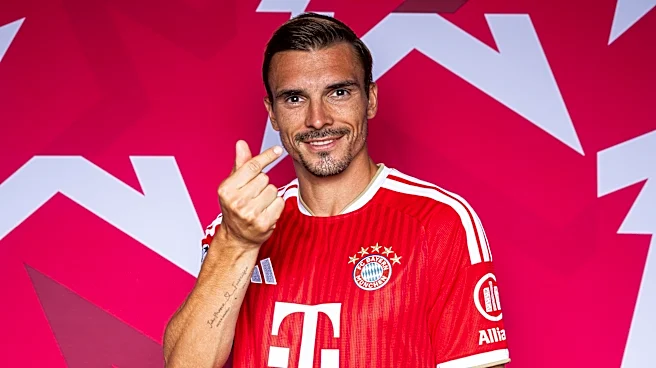

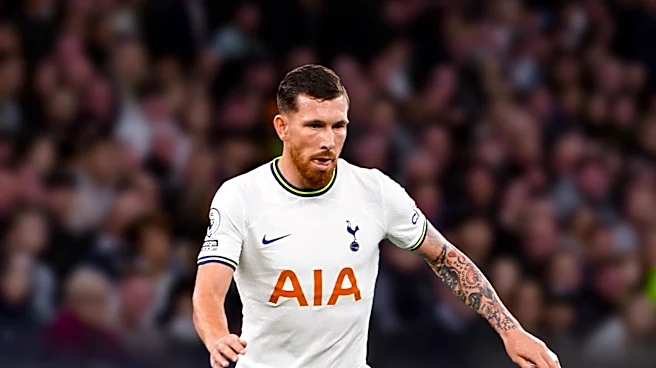
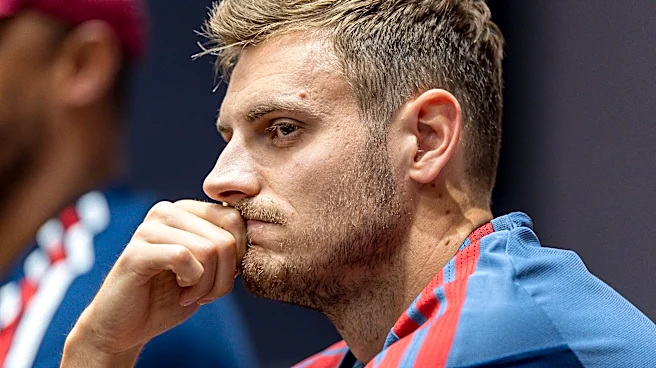
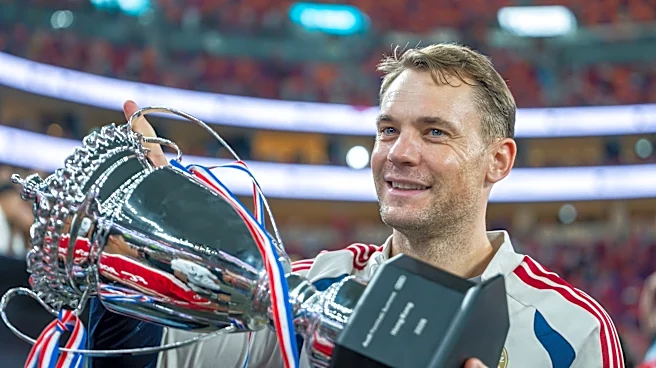
According to Sky German journalist Florian Plettenberg, Aston Villa is standing firm and is only willing to take on Bayern Munich defensive midfielder João Palhinha for a loan assignment, not a full transfer.
The Bavarians want to unload Palhinha — and his €12 million (€10 million salary, €2 million bonus) financial package — but still seem intent on a straight transfer:
🚨🆕 Aston Villa are currently offering FC Bayern a loan with an option to buy for Joao Palhinha.
Bayern are rejecting this proposal.
For now, a permanent transfer remains the priority.
Personal terms between Palhinha and Aston Villa have been fully agreed for several days. Villa boss Damian Vidagany has spoken publicly. It is now only down to the clubs. Palhinha is waiting for a decision.
@SkySportDE
Plettenberg would check back in later with a more definitive stance from Aston Villa:
🚨⤵️ Aston Villa’s position is clear: they can and want to only loan Joao Palhinha at this stage. The clubs remain in contact.
On Friday morning, Bayern Munich board member for sport indicated that a deal with Aston Villa is off.
“No chance of an agreement,” Eberl said (as captured by @iMiaSanMia).
Bayern Munich is in a conundrum.
Palhinha still might have something left in the tank and does look ready to help another club, but his financial package is a problem. Moreover, Bayern Munich has been rumored to want somewhere between €25 million to €30 million in a transfer fee for Palhinha, who is now 31-years-old.
It seems like a longshot that any team would be ignorant of the bargaining power it would wield against Bayern Munich in negotiations. While Palhinha still might be a productive player, his age and pay are both working against him.
The Bavarians seem content to wait for August to play out and teams to suffer injuries, but it might behoove Bayern Munich to just find an acceptable — and lower — number and just move on.
Song of the Week: “Cut Your Hair” by Pavement
Man…I have been on a 90s kick of late and I had totally forgotten about this gem.
Released in 1994, this was dead in the middle of the alt-rock revolution. You had grunge giving the alt-rock crowd a hard edge, but there was a blending of modern rock, post modern, and everything else that made the era so special.
While Pavement will probably not go down in the annals with some of the best bands of the era, they did have some moments and gave is this song, which I am glad I (accidentally) ran back into after about 30 years. Damn…
Enjoy:
Entertainment Rundown
House of the Dragon, Season 3 Episode 8
Well, we did it! We made it through a full season of House of the Dragon and.,..it was good! This is really the first time that a full season of the show was fulfilling and worthwhile. Season 1 was a drag and while Season 2 finished strong, the show’s meandering and lack of intrigue worked against viewers, who really want to enjoy it.
This season was far, far better and capped off the season (which is the penultimate campaign) with a phenomenal finale. Let’s dive into it:
- Aegon is officially back and has totally rattled Rhaenyra. The finale opens with the shocking revelation that Aegon II has returned to the war, and even more importantly, Sunfyre is still alive. Rhaenyra had increasingly begun to believe that victory was within reach, but Aegon’s survival forces her to confront the uncomfortable reality that the war cannot simply be ended by taking King’s Landing. Aegon’s return becomes one of the catalysts for Rhaenyra’s transformation from a queen seeking legitimacy into a ruler increasingly willing to use terror and overwhelming force. In a trend we have seen coming for weeks, Rhaenyra seems to be morphing into the Mad Queen and unable to strategize how to keep her throne without just flatly killing everyone (including the High Septon).
- One of the most important developments of the finale is Rhaenyra’s changing attitude toward power. Earlier in the series, she repeatedly tried to avoid unnecessary bloodshed, but by the finale she is much closer to Daemon’s philosophy that fear and overwhelming force are what actually win wars. Her decision to attack Tumbleton represents that change. The episode deliberately makes Rhaenyra more uncomfortable to root for because she is no longer simply fighting to reclaim what she believes is rightfully hers; she is increasingly convinced that anyone standing between her and the Iron Throne is expendable. This is arguably the biggest character development of the finale and sets up a very different version of Rhaenyra for Season 4. It has been a very gradual metamorphosis for Rhaenyra to get to this point.
- The reunion between Aegon and Aemond was one of the more interesting character moments of the episode because of everything that has happened between the brothers. Their relationship has become increasingly complicated, with ambition, resentment and betrayal sitting alongside their shared history as brothers. Seeing them together again creates a fascinating dynamic because neither brother can simply forget what the other has done, and yet the circumstances of the war continue to force them into the same orbit. The scene likely annoyed some fans as the actor portraying Aegon over-acted a bit, but the scene did provide the set-up for next season’s conflict.
- The episode’s centerpiece is the Battle of Tumbleton, as Daemon’s forces attack the city while the Greens attempt to hold their position. Add in some dragons and the battlefield was absolute chaos.
- What initially looks like a major victory for the Blacks quickly becomes something much uglier and eventually a loss. The battle demonstrates one of the central themes of House of the Dragon — dragons don’t win clean wars. It’s impossible…it really is. There is always going to be carnage. Dragins destroy armies, kill civilians, and turn victories into massacres. The destruction at Tumbleton is one of the show’s clearest examples yet of why the Targaryens’ ability to command dragons is both their greatest advantage and their greatest curse.
- Even with the dragons, Daemon could not lead his troops to a victory due to some unforeseen events, including…
- Ulf the White’s betrayal. For book readers, this was not a secret, but for viewers, it was the payoff for a season of mistreatment. Ulf the White becomes one of the most important players in the battle. During the fighting, he ultimately turns on his supposed allies, with his dragon becoming a weapon against both sides. His betrayal creates complete chaos at Tumbleton, while Lord Ormund Hightower is killed (more on him in a bit) and Roderick Dustin is taken out as well, dealing major blows to the Greens and the Blacks. This is classic House of the Dragon — the people who think they can control the dragons eventually discover that the dragons are the ones controlling the battlefield.
- Ulf’s betrayal perfectly illustrates the fundamental problem with relying on inexperienced dragonriders as well (as we saw earlier in the season with Rhaena). The Blacks may have gained additional dragons, but that does not mean they gained complete control over the people riding them. Dragons are incredibly powerful weapons, but their riders still have their own motivations, loyalties and ambitions. Tumbleton demonstrates just how dangerous that combination can become when someone like Ulf suddenly has the power to change the course of a battle.
- The writers made Gwayne Hightower a total wuss. This was one of the strangest character decisions in the finale. Gwaine was supposed to be an accomplished knight and warrior, yet the show portrays him as almost completely ineffectual when the moment arrives. It is difficult not to wonder why the writers went in this direction with a character whose reputation should have meant something. It makes his actions and eventual fate feel less satisfying because the version of Gwaine presented on screen doesn’t resemble the formidable warrior the audience was led to believe he was.
- What a way for Ormund Hightower to go out. Ormund’s final sequence was one of the more memorable deaths of the episode. He gets the better of his opponent (Roderick Dustin) for a moment, even managing to cut off an arm, only for the fight to turn against him in spectacular fashion. Taking a sword through the backside, before ultimately being burned to a crisp by dragonfire is an absolutely brutal way to end his story. Considering the role Ormund has played throughout the season, it was a hell of an arc for the character and a fitting reminder that nobody on this battlefield is guaranteed a heroic death.
- Daemon is truly a great leader, but even he could not account for how a surprise dragon attack would devastate his forces. Whatever else can be said about Daemon, the finale once again demonstrates why men continue to rally around him. There is an almost magnetic quality to his leadership, and his soldiers consistently seem willing to follow him into incredibly dangerous situations. That makes the earlier collapse of the City Watch particularly interesting in retrospect, because the problem wasn’t necessarily that Daemon couldn’t command loyalty — it was that Rhaenyra’s failure to pay the City Watch left those men in a position where self-preservation became more important than loyalty. Daemon’s ability to inspire his troops is one of the character’s most compelling qualities.
- Daemon vs. “Bold” Jon Roxton was fantastic. The fight between Roxton and Daemon was one of the most entertaining physical confrontations of the finale. It was particularly notable because Roxton is the first person since Ser Criston Cole to be shown getting the better of Daemon in a straight-up brawl. Daemon has developed a reputation as one of the most dangerous warriors in Westeros, so seeing someone actually push him back and actually get the better of him, immediately made Roxton feel like a legitimate threat rather than another disposable battlefield character.
- While the battle is raging, Rhaenyra’s political behavior becomes increasingly authoritarian. She begins rejecting institutions that previously helped provide legitimacy to her claim, and her confrontation with the High Septon is particularly significant. Rather than compromise, Rhaenyra chooses force. She increasingly presents herself as someone whose authority comes from Targaryen blood and dragons rather than from the traditional structures of Westerosi society. The finale therefore deliberately draws parallels between Rhaenyra and the future Targaryen ruler we know from Game of Thrones: Daenerys. The irony is pretty brutal — Rhaenyra spent much of the series fighting against the idea that a woman couldn’t rule because she would supposedly be too emotional or dangerous, and now she is increasingly proving her enemies’ worst fears correct.
- Alyn of Hull’s change from scorned bastard son to Rhaenyra’s lapdog, happened quick, eh?
- One of the episode’s most devastating moments involves Helaena Targaryen. She has essentially become the show’s prophetic and moral center, with her visions repeatedly suggesting that she understands more about the future than almost anyone else. Her psychological suffering finally reaches its breaking point and Helaena dies by suicide. Her death is devastating not simply because she is a major character, but because it represents another innocent person destroyed by the Targaryen civil war. Her death also has enormous implications for Aegon, Rhaenyra and the future of the conflict. The episodes ends without viewers able to see what impact this will have on the proceedings for the Greens.
- One of the finale’s most important visual moments comes toward the end when Rhaenyra encounters Helaena’s prophetic tapestry. The imagery reinforces the idea that Helaena understood where the conflict was ultimately heading, while also connecting the events of House of the Dragon to the larger mythology surrounding the Targaryens and the Song of Ice and Fire. The tapestry effectively becomes a warning about Rhaenyra’s own fate, making the ending particularly bleak because Rhaenyra appears to be moving toward a future she may already have been warned about.
- The biggest problem with House of the Dragon continues to be how quickly the show sometimes moves between enormous events. Tumbleton is a massive historical event in the book, Fire & Blood, yet the show has to cram a tremendous amount into a single episode. The result is that some moments that should feel enormous occasionally pass by faster than they should. The story itself is compelling, but there are times when it feels as though the show is racing to reach the next major event instead of allowing the current one to breathe.
- The series has introduced a huge number of players during the Dance of the Dragons, but several still haven’t received enough screen time for their deaths, betrayals or decisions to have the emotional impact they deserve. This is particularly noticeable when characters who have been important to the larger historical story suddenly become central to an event and then disappear. The sheer number of characters involved in the Dance makes this understandable, but it remains one of the show’s biggest weaknesses.
- Rhaenyra’s evolution from reluctant claimant to increasingly ruthless monarch is fascinating, but viewers who wanted to see a slower progression could reasonably feel that the show accelerated the process. The destination makes sense, especially given everything she has experienced, but some of the individual steps along the way could have used more time. Emma D’Arcy nevertheless sells the transformation, and the increasingly frightening version of Rhaenyra we see here creates plenty of intrigue for the final season.
- The finale finally makes the Dance feel like a real war — Season 3, Episode 8 succeeds because it finally feels as though the Dance of the Dragons has become an actual war rather than simply a political struggle over the Iron Throne. Tumbleton, the betrayals, the dragon battles and the mounting civilian casualties make it clear that this conflict has reached a point where nobody can simply walk away. The war is consuming everyone involved, including the people who originally believed they could control it.
- The biggest takeaway probably is not even the devastation at Tumbleton — it’s Rhaenyra. Rhaenyra begins the series believing that she can win the throne while preserving the realm, but by the end of Season 3 she is increasingly convinced that peace is impossible and power is the only language her enemies understand. That is what makes the finale so ominous. The Blacks may be winning battles, but Rhaenyra is becoming the kind of ruler who may ultimately destroy the very kingdom she is fighting to rule. Her transformation is arguably the most important development of the entire season.
- Season 4 leaves some enormous questions: Can Rhaenyra still be stopped? What happens to Aegon II and Sunfyre? How will Daemon respond to the destruction at Tumbleton? What happens to the remaining Hightowers? How significant will Daeron and Tessarion become? Will Rhaenyra’s increasingly brutal approach ultimately cost her the support of the realm? And perhaps most importantly, how much of Helaena’s prophecy will ultimately come true? With Season 4 set to be the final season and planned for eight episodes, the show now has the unenviable task of bringing the Dance of the Dragons to its conclusion while paying off all of these storylines.
- Overall, it was a great season. It really was. I never thought I would be typing those words, this — almost — made for two seasons of poor pacing and odd decisions. Now, there is a truly worthwhile show and it is barreling toward what should be a satisfying ending.
Episode rating: 9.25
Season rating: 8.50
Predictions
This weekend, the prestigious Telekom Cup will commence and Bayern Munich will continue to work off its debt for the acquisition of Julian Nagelsmann (as ill-fated as it was).
The two clubs will meet in a (literally) glorified friendly, with the sole purpose of generating revenue to help finalize that Nagelsmann deal. Okay, okay…it does serve some other purposes as well and it will also give fans some entertainment this weekend as well.
Oddly, RB Leipzig could actually be better positioned for this friendly as the Bavarians will still be missing some key players. However, Bayern Munich will still likely be playing with some motivation, as some players are fighting for roster spots and others are battling for starting roles.
RB Leipzig is also adjusting to life under a new coach, so let’s just say Bayern Munich sends its fans home happy.
Prediction: Bayern Munich 2-1 RB Leipzig
Prediction Records
- Total: 124-59
- Perfect Picks: 22
- Bundesliga Last Matchday: 0-0
- Bundesliga Overall: 0-0
- DFB-Pokal: 0-0
- World Cup: 71-28
- International Friendlies: 50-30
- Champions League: 0-0
- Club Friendlies: 3-1
- Franz Beckenbauer Supercup: 0-0