



Cleveland Browns general manager Andrew Berry has received predominantly positive remarks for the work he accomplished this offseason.
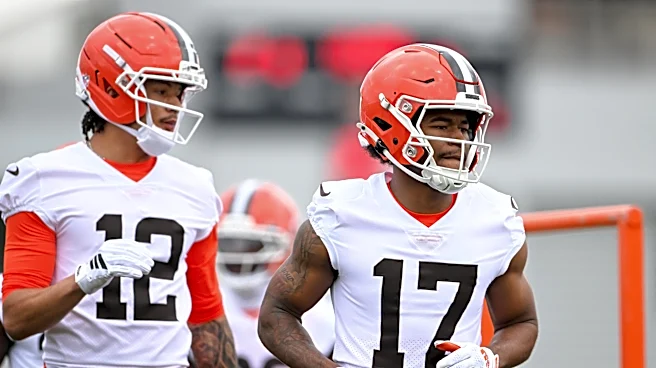
From rebuilding an aging and injured offensive line, highlighted by first-round selection Spencer Fano, to adding some much-needed help at wide receiver in KC Concepcion and Denzel Boston, the offense looks to be moving in a better direction.
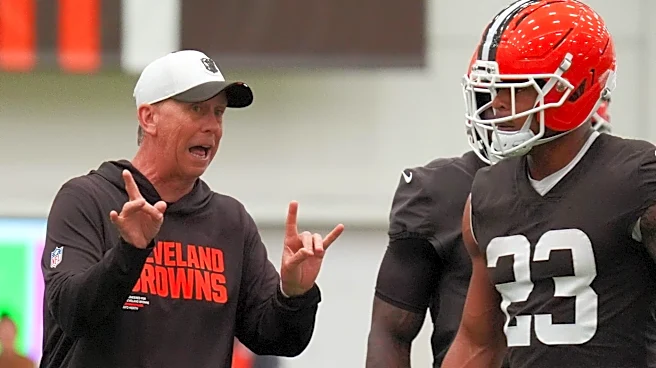
Head coach Todd Monken is enjoying the honeymoon phase with fans and the media, from pushing accountability during OTAs (always
a popular talking point with fans), while avoiding any mention of analytics (which, clearly, is nothing more than witchcraft and a lesson the head coach Kenny Atkinson of the Cleveland Cavaliers is learning).
With the good comes the bad, naturally, which is the focus of a recent column from ESPN’s Bill Barnwell, who looked at each AFC team to determine the best and worst move from each franchise.
In the case of the Browns, the best focuses on the improved infrastructure on offense:
Though the Browns rebuilt most of their offensive line during the offseason, Berry’s draft goals had to include landing a potential left tackle of the future and some help at wide receiver for whoever ends up playing quarterback in Cleveland.
Job done. The Browns were able to trade back with the Chiefs and still land their left tackle in Spencer Fano, who should be able to beat out Dawand Jones for the starting job in Year 1. Berry was able to stay put with his other first-round pick and select KC Concepcion, who gives Cleveland a multidimensional threat as a speedy receiver after the catch and potentially an elite punt returner. The Browns finished the job by taking Washington wide receiver Denzel Boston at No. 39, landing the closest thing they’ve had to an Amari Cooper replacement since the organization traded the veteran to the Bills in 2024.
If the Browns can hit on Fano and one of the two receivers, this will be a good draft for Berry. It will make evaluating Cleveland’s current quarterbacks easier, and if the Browns do take a big swing at a signal-caller in 2027 as expected, it will make the next guy’s life easier from the moment he enters the building.
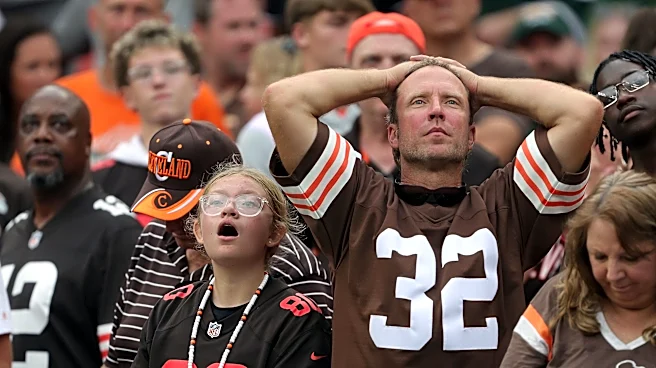
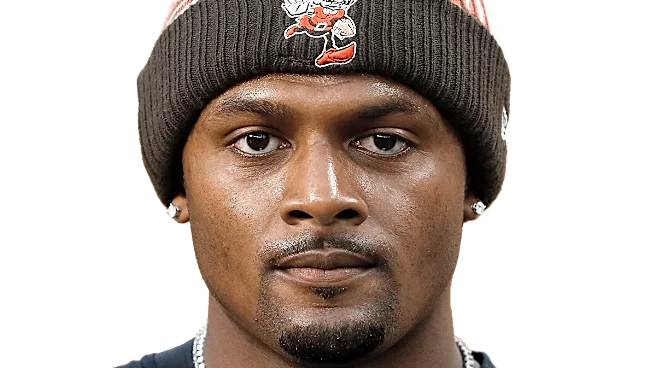
The key takeaway here is that the excuses are over for some of the worst quarterback play the league has seen in the past 25 years. If/when the QB room fails to produce again this fall, everyone will know where the problem lies.
Now that the good part is done, it’s time to focus on the bad side, which in Barnwell’s estimation lands firmly on the signing of veteran guard Zion Johnson:
During the 2025 offseason, the market for young, questionable left tackles was hot. Dan Moore Jr. signed for four years and $82 million with the Titans. Jaylon Moore signed for two years and $30 million in Kansas City. Those were exorbitant prices for players who were either unproven or underwhelming, and the league might not look back on those deals as smart decisions — and it led to Rasheed Walker ending up on a one-year, $4 million deal with the Panthers.
The same thing might have happened at guard this year, where there were only a few young options, and they probably got paid too much. I mentioned Parham’s deal with the Jets, but Johnson’s deal with the Browns is much more significant. Cleveland gave the former first-round pick $32.4 million guaranteed over the next two seasons, suggesting that it sees Johnson as a potential building block on the interior of its offensive line.
Though 2025 was Johnson’s best season as a pro, that might be damning him with faint praise. The Boston College product has struggled badly in pass protection on the interior and routinely gets outmuscled or outleveraged by bigger players. He gave up seven sacks and 19 quick pressures a year ago, both of which were the most of any Chargers lineman. And Johnson did that while blocking one-on-one at about a league-average rate in pass protection among guards.
The Browns signed Teven Jenkins to a one-year deal for modest money last offseason, and though it didn’t really pan out, a contract like that for Jenkins would have made enough sense given his ability as a run blocker and the growth he showed in 2025. Instead, the Browns are paying Johnson to be a player he hasn’t been yet at the pro level and hoping that he lives up to their expectations. That’s not typically a good strategy.
That is an interesting take, especially in contrast to our own Barry Shuck, who highlighted Johnson’s versatility, durability, and willingness to help younger offensive linemen adapt to life in the NFL.
Both made valid points, and Barnwell’s hesitation about Johnson is partly due to the prospect of the Browns overpaying for him in free agency. While there is always some validity to wasting money on free agency, sometimes a change of scenery can do wonders for a player, and in the case of Johnson, working with a talented offensive line coach in George Warhop.