
Although the “official” start to the new league year doesn’t kick off until this afternoon, all 32 teams around the NFL have been busy filling needs since the weekend. The unofficial start of free agency opened on Monday with the “legal negotiation period,” but even before that, plenty of teams finalized extensions with their top priorities on the 2025 roster.
Coming off a surprising 2025 campaign and their first playoff victory in 15 seasons, the Chicago Bears’ approach to the start of free agency
could be considered prudent, if not conservative. Despite arriving “a year too early” and having their franchise quarterback in the middle of his rookie deal, the team’s exorbitant spending from last offseason had lasting ramifications as the team geared up for another crucial offseason.
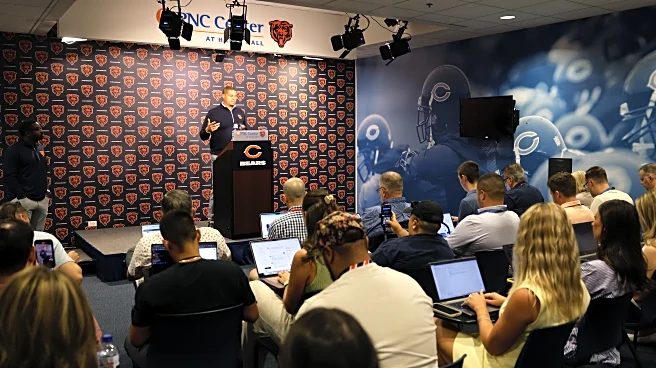
Heading into the week, the Bears ranked 26th in the league in cash spending for 2026. For a team that appears to be on the verge of Super Bowl contention, it stood to reason that with some quick salary cap manipulation, they could easily make a few splash moves without severely compromising their flexibility for 2027 and beyond. Instead, general manager Ryan Poles and his front office avoided any semblance of an eye-opening free agent contract. They chose to take a more economical approach to “improving” their roster at least, to this point in the offseason.
Free agency has often been labeled “dangerous waters” for any team looking to build a perennial contender. While that might be true to some extent, most successful teams blend key free-agent acquisitions with strong draft classes. Part of that equation involves the ability to avoid regrettable contracts handed out to outside free agents. Still, a bigger factor, especially for teams like Chicago, is ownership’s willingness (and ability) to spend cash when needed. Some might see that as an attempt to call the McCaskey family cheap, while others will understand the dynamic of how ownership works at the NFL level. Simply put, the McCaskeys are not a cash-rich family and tend to operate more like a mom-and-pop shop than they do a modern-day NFL franchise.
While every rule has its exceptions, fans must understand the financial dynamic at play. Sure, there have been times when the Bears have been in the Top 10 concerning cash spending for a period of time, but it’s easy to understand why the front office might have been given a tighter budget for this offseason, in comparison to ones before it. Not only is the franchise in a three-year battle with the state of Illinois to help fund a new stadium, but, for the first time since the days of Jay Cutler, Chicago is on the verge of paying top dollar for a quarterback. If there were ever a time for the Bears to be more frugal with finances, this would be it.
With that in mind, the timing couldn’t be much worse. Although the team outright owning an indoor stadium capable of generating year-round revenue would be the greatest value a professional sports team can have, the future on the field hasn’t been this bright since the days of the Mike Ditka-led Bears in the 1980s. Balancing the long-term outlook of a new stadium, a potential record-setting second contract for Caleb Williams, and maximizing their window to win a Super Bowl as early as next season is not an easy task. That said, if there were ever a time for ownership to sign off on extra cash for a splash move, this might be it.
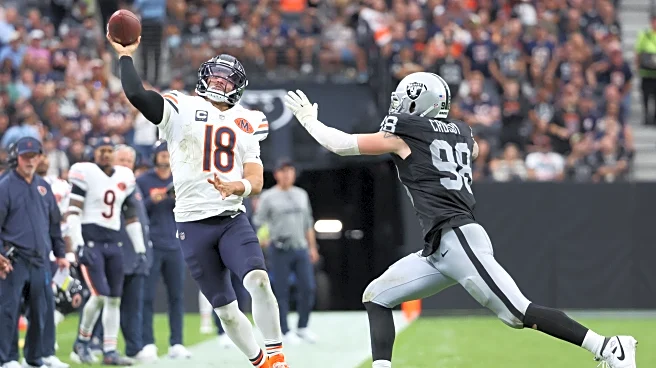
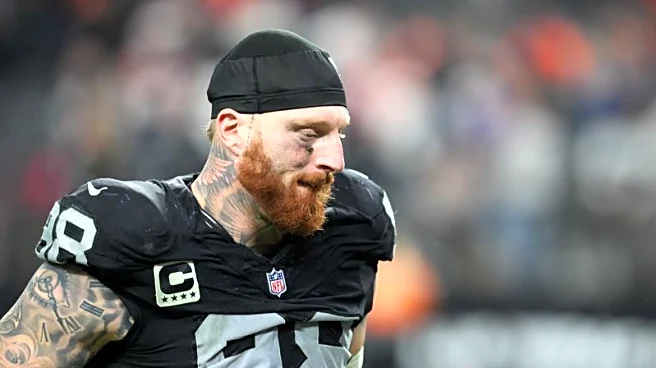
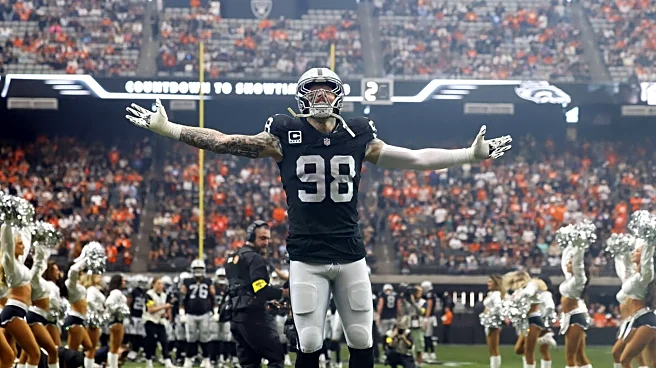
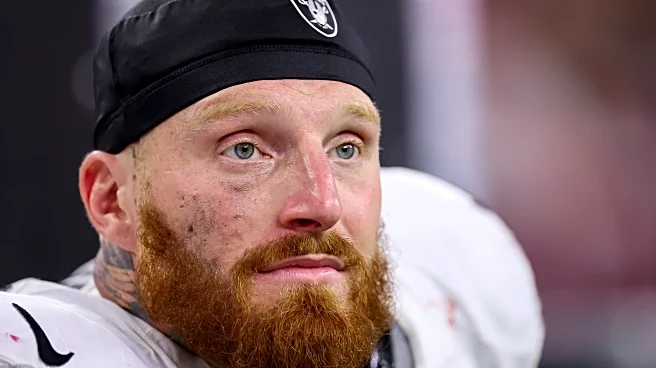
Just before the start of last weekend, news broke that the Las Vegas Raiders and Baltimore Ravens had agreed to a trade in principle that would send star edge rusher Maxx Crosby to Baltimore in exchange for the Ravens’ next two first-round picks. In some ways, the new breaking provided a sense of relief for an ongoing conversation that felt repetitive and borderline, tiring. It also allowed Bears fans to “move on” to the free agency period ahead, while speculating how they would move forward after “missing” on a big target like Crosby.
After two full days of acquisitions and movement around the league, the news of the Ravens backing out of the Crosby deal on Tuesday night sent shockwaves through the sports world. Although it would be disingenuous to say this is unprecedented, the layers of this failed deal are extremely rare. If there was going to be a team to create this type of situation, Baltimore’s history of failing players during the medical process was notable.
With the questionable ethics in their decision now in the rearview mirror, it’s worth wondering what Crosby’s market looks like moving forward. As many have stated over the last 24 hours, the pool of interested teams has shrunken drastically. After all, the original agreement in principle happened on Friday night, and with the first wave of free agency in the books, many teams have either filled their needs or don’t have the financial flexibility to make it work.
This is where the Bears come into the picture. Although things can change, teams like the Dallas Cowboys, who were rumored to be the “runner-up,” have dropped out of the conversation after landing Rashan Gary from the Green Bay Packers. Others, like the Washington Commanders, have added two higher-priced veterans, Odafe Oweh and K’Lavon Chaisson, which should take them out of the running.
It should also be noted that while certain teams might still require a pass rusher, the list of potential trade partners shrinks even further when the financial aspect is added to the equation. Looking at teams with a pressing need at defensive end, the Buffalo Bills, Philadelphia Eagles, Detroit Lions, and, of course, the Bears all come to mind. Could the Los Angeles Chargers or San Francisco 49ers enter the conversation as well?
Diving into each specific team’s current cap situation would take far too much time. Still, to summarize, the Bears are the only team mentioned above without a quarterback under a veteran contract. Sure, the Bills and Lions just cleared a large amount of space by restructuring their respective quarterback contracts, but both have trickier cap situations than what meets the eye. For instance, the Lions now have close to $30 million in available space, but have key players like Jahmyr Gibbs, Sam LaPorta, Brian Branch, and Jack Campbell all up for extensions within the next two offseasons. Considering all four players are expected to receive sizable contracts, does paying a second edge rusher north of $30 million per year make sense for them? Looking at the Bills’ situation, it’s hard to envision many scenarios where they can clear not only enough cap space in the short-term but also sustain a good roster with so many high-priced veterans already on the roster. However, I would argue that they are at least in a better position than the Lions to make a potential splash.
The Eagles are another interesting team on the list, especially after losing Josh Sweat and Jaelen Philips to free agency in back-to-back years. Even after extending nose tackle Jordan Davis on a record-setting deal, general manager Howie Roseman possesses more than enough future flexibility to make this trade and extend a guy like Jalen Carter in the coming months. Roseman is known as one of the more aggressive general managers in the league, so it’s best not to rule them out of anything.
With all of the “contenders” in front of us, where does that leave the Bears?
On the surface, Chicago is quickly approaching their “break-even” point for the year when it comes to available cap space. Once the official numbers for Devin Bush and Kentavius Street are released, some work will be needed to keep them under the cap for the remainder of the calendar year. That said, the Bears have more flexibility than almost any other team potentially interested in the league.
Through five offseasons, general manager Ryan Poles has managed the team’s salary cap with virtually zero risk. While some may point to a few bad free-agent signings, the team has executed just one simple restructure during Poles’ five-year tenure. According to Over The Cap, Chicago’s simple restructure potential is $64.5 million, which ranks well inside the Top 10 for flexibility. If Poles wanted to add the riskier element of tacking on void years to their restructures, their flexibility would expand by close to $114 million in available potential.
Now, it’s worth mentioning that there shouldn’t be an expectation for Chicago to get anywhere near either figure when creating additional cap room. This is simply an illustration to show how flexible the Bears can be.
In a hypothetical scenario where the Bears trade for Crosby, they could immediately turn around and convert the majority of his $30 million base salary into a signing bonus. In that scenario, they could save $21.525 million of the inherited $30.782 million cap charge for 2026. Of course, that would come with a $7.3 million dead charge from 2027 through 2029.
Fitting Crosby into the team’s financial plans would be far from “easy,” but isn’t that the case with almost any blockbuster trade, including one involving one of the league’s more elite players on a high-cost contract? That’s where the risk assessment must take place. Crosby will be 29 before the start of the regular season, and, given the current wear and tear on his body, it stands to reason that he could exit his prime more quickly than other players his age. Even so, if the Bears can play out the life of his contract with him at his current level, that’s worth the cost of doing business.
As always, there’s a scenario in which Poles and his front office don’t see the risk-versus-reward as “worth it”. That said, there were plenty of credible sources who confirmed that, at least to a certain extent, the Bears were “in” on Crosby the first go-around., whichshould lead anyone to believe that with a lower “price” on a trade this time around, it should only make a potential deal for a star player at their biggest position of need that much more palatable to complete.
Assuming head coach Ben Johnson and Poles are in lockstep on pursuing a potential deal with the Raiders, it will be up to George McCaskey to sign off on the financials to make a trade possible. It’s easy to remember a time when they faced a similar dilemma when they ultimately traded the world for another Raiders edge rusher in Khalil Mack. While that didn’t pan out in the long term, the argument for a better head coach and ascending quarterback capable of Patrick Mahomes-like success is a strong one to consider. It’s been a long time since the Bears have found themselves in a position where they have enough pieces on the roster to justify a move like this making sense. If ownership truly cares about winning Super Bowls, then this is a move they must consider approving.
It’s easy as an outside voice to sit here and push for this type of move, without bearing the financial responsibility for it. While most fans are aware of that, the NFL is a business of taking chances, and more importantly, it’s a business of striking while the iron is hot. Assuming the price for Crosby is no longer a pair of first-round picks, which is reasonable to expect, Chicago should absolutely re-engage with the Raiders on a potential deal to bring Crosby to the Windy City. Scared money doesn’t make money, and for the first time in a long time, the Bears are in a spot both from a roster and cap perspective to take a gamble and see if it pays off with a Super Bowl or two.
The time to win is now, and the opportunity to capitalize on the Raiders’ misfortunes may never materialize in the same way again. Assuming the head coach and general manager are ready to take a swing for the fences, the McCaskey family must be ready to grant them the financial backing to do so.