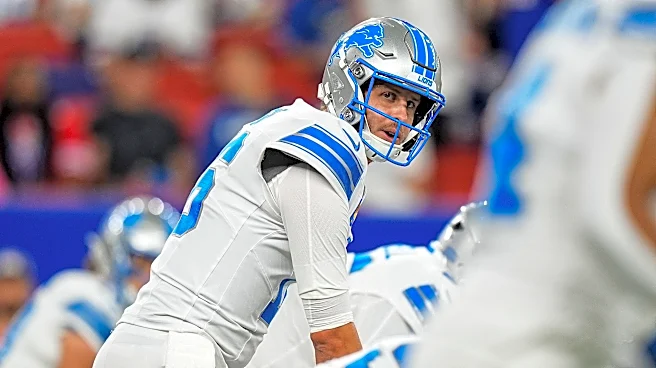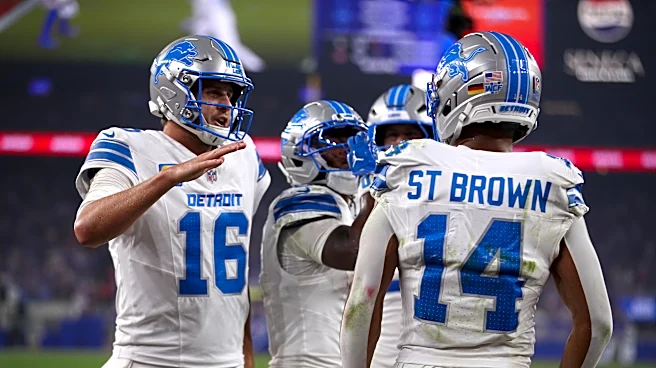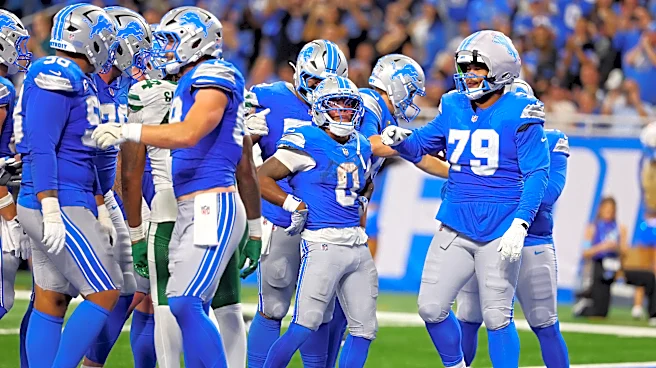


When your favorite football team takes an extended break, the wait to see them hit the field feels like forever. It feels even longer when they lose in an embarrassing fashion. After 10 long days, the Detroit Lions returned to the field, looking to get back in the win column against the New York Jets.
Here are my four takeaways from the Lions’ 31-24 against the Jets in Week 3.
Offensive line rebounds, boosts ground attack
Detroit got two offensive line starters back against the Jets, left guard Christian Mahogany and right tackle Blake Miller.
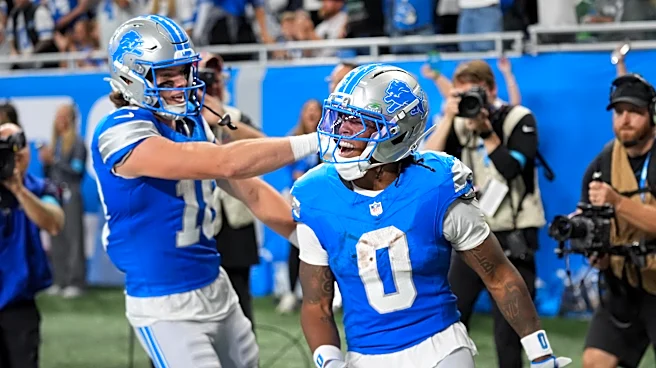
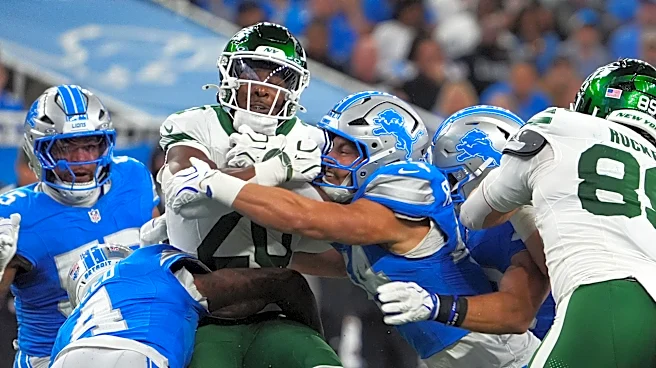
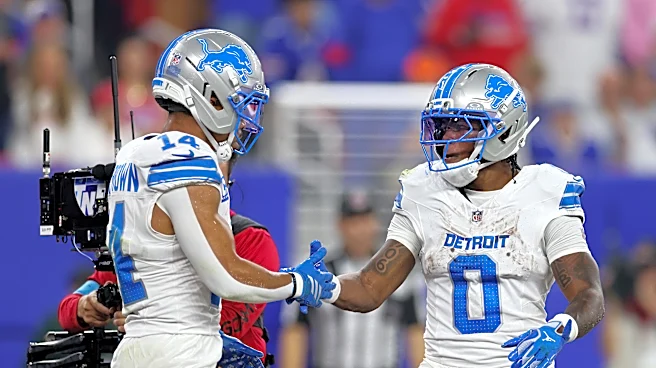
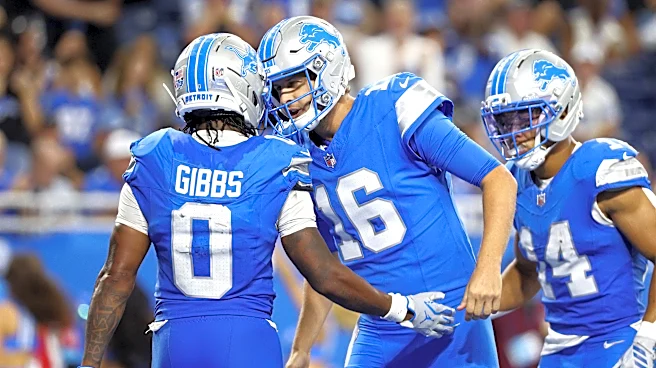
When they weren’t playing last week, the Lions’ offense struggled overall, but the run game felt the impact most. This week, the ground game proved to be the biggest difference. Running back Jahmyr Gibbs led it, channeling his inner Barry Sanders on his first of three touchdowns on the day:
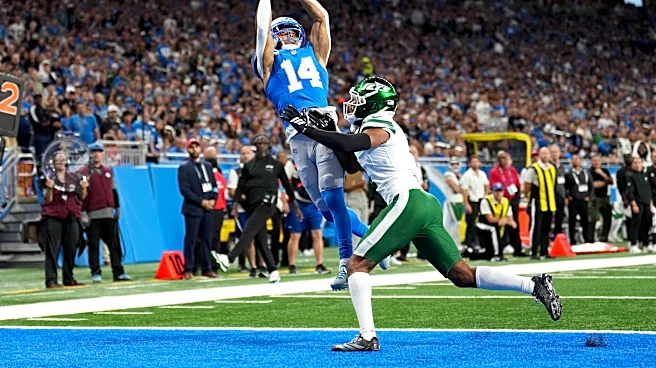
Gibbs remains the focal point of the offense, but it felt a bit more balanced and spread out than in Week 1. He had 20 carries for 99 yards and two rushing touchdowns, while backup Sione Vaki had six carries for 26 yards. Gibbs came alive through the air when the team needed him most, tallying seven catches for 65 yards and the game-winning touchdown.
Quarterback Jared Goff threw for 269 yards and two touchdowns, getting sacked twice. One of those sacks came because of Gibbs’s poor pass protection; he was bulldozed over, forcing Goff to move quickly in the pocket. The offensive line was only flagged twice, a false start and a hold, playing disciplined football. Jets EDGE David Bailey came in with a sack in each game and finished with five tackles and one tackle for loss.
Tight end coverage issues continue
A few years ago, the Lions struggled to cover any tight end they faced. Whether it was the best tight end in the NFL or a practice squad call-up, it was a weekly issue. That issue hasn’t been relevant too much in the past few seasons, but so far it seems to be a problem this season. Against the New Orleans Saints, tight ends Juwan Johnson and Noah Fant combined for seven catches, 87 yards, and two touchdowns. Facing the Bills, Dalton Kincaid and Dawson Knox had nine catches for 100 yards and two touchdowns.
The Jets entered the game limited in the passing game, without second-year tight end Mason Taylor and wide receiver Adonai Mitchell. That meant wide receiver Garrett Wilson would be the top receiving option, but rookie tight end Kenyon Sadiq would see more targets, as would third-string tight end Jeremy Ruckert. You think that’s it? Jelani Woods also got involved, and all three tight ends finished with a combined 10 catches for 137 yards and two touchdowns.
This assignment for Detroit should’ve been easier, even with a secondary that has struggled so far this season. The Jets called up multiple practice squad players to help fill out their offense, and the tight end position hurt Detroit most. They must address this issue in the bye week because they won’t have time to fix it quickly, and they have tough tight end competition approaching.
Lions can’t hold onto a lead
In Week 1, the Lions blew a 21-point lead against the Saints, and the game headed to overtime, where Detroit won on a two-point conversion stop, 31-30. This week, Detroit went up 24-10 to start the fourth quarter, and while it felt like they had momentum, the Jets stayed in the game. They moved downfield and scored in under four minutes, thanks to a defensive pass interference call on cornerback D.J. Reed, and now it’s 24-16 after a failed two-point conversion.
Detroit’s offense sputtered and failed on a fourth-down attempt near midfield, giving the Jets possession with plenty of time left. Reed was flagged again for defensive pass interference, and while it didn’t matter because Wilson still scored, it was a bad defensive call. In a situation like that, fourth-and-six with four minutes left, the defense trusted Reed with no safety help, and that was a big mistake. When a guy is dominating all game long, you need to do whatever you can to slow him down, not make it easier.
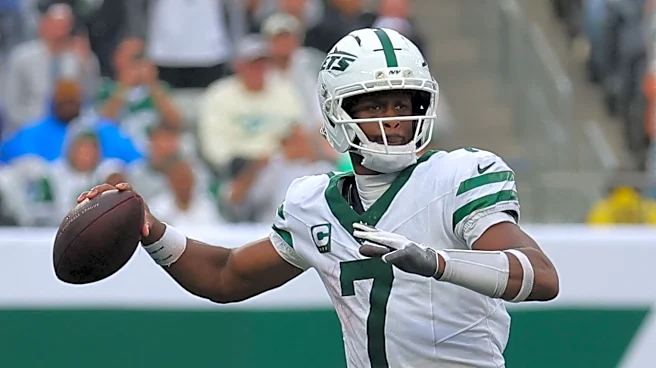
After failing to stop a two-point conversion, Detroit luckily moved down and scored a touchdown to take back the lead. The defense came up big with a forced fumble when safety Chuck Clark sacked Jets quarterback Geno Smith, and linebacker Jack Campbell scooped it up for the win. Both wins for Detroit should have been less stressful. They had double-digit leads and blew them both times, relying on a defensive stop to get back in it. You take a win in the NFL however you can get it, but, eventually, Detroit won’t be able to recover, or they need to continue to execute and make sure no team can come back.
Kick return game comes alive
With the offense moving the ball in spurts, the kick return team did all they could to give them extra juice. Running back Jacob Saylors had two impressive returns for 81 yards combined, putting Detroit at the 38 and 47-yard line, leaving them a shorter field to work with. Wide receiver Tom Kennedy returned a kick for 23 yards and another for 37 yards, but a penalty wiped it away.
With a strong offense with a lot of firepower like Detroit’s offense has, a kick return game that makes their job easier helps a lot. The offense needed anything it could get to move the ball against this Jets’ defense. They say you need to win in all three phases, and without Saylors’ solid kick returns, the margin for error on those drives for Detroit’s offense would have been that much closer.