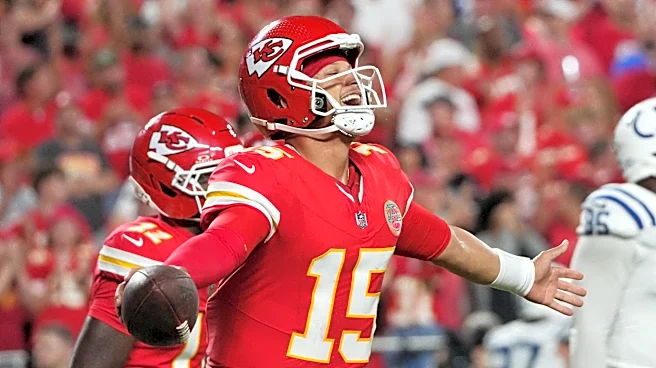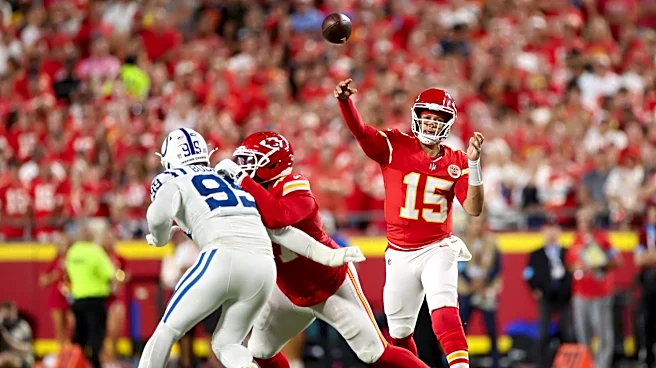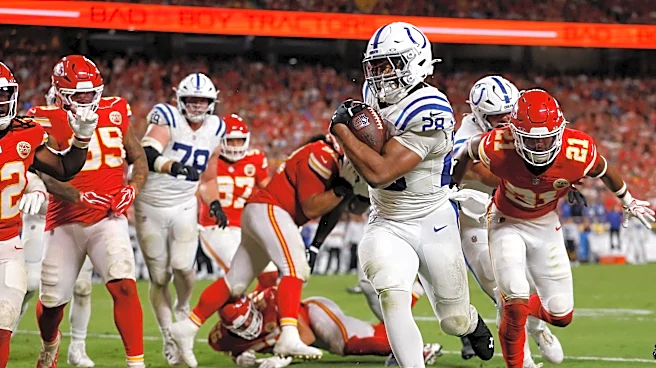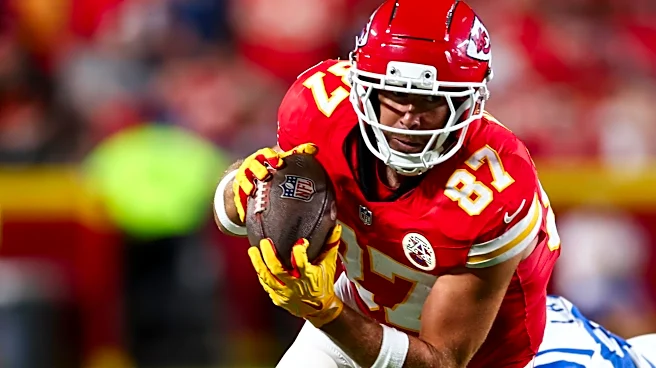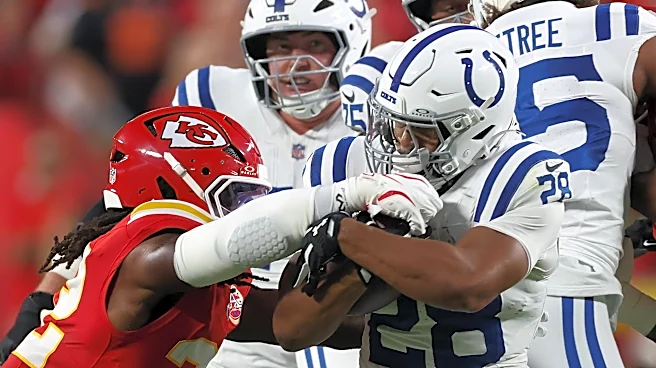


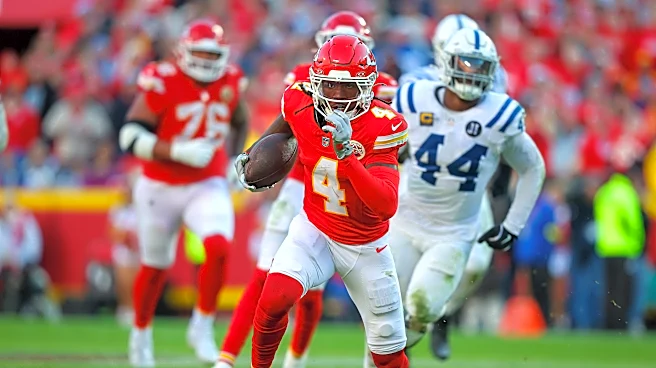
The Kansas City Chiefs won an exciting overtime game against the Indianapolis Colts, 33-30. The Chiefs’ pass offense looked crisp, the run game continued to make a difference, and Kansas City got enough stops without cornerback Mansoor Delane to win.
After every win, I like to look at two things that went well for the Chiefs and one thing that didn’t. Let’s start by talking about the impact of nose tackle Khyiris Tonga:
The Good
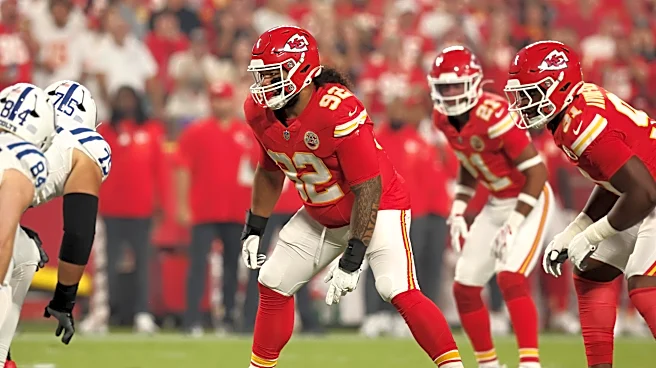
Khyiris Tonga brings a different element to the Chiefs’ defense
For years, the Chiefs scraped by at nose tackle with cheap veterans, primarily
Derrick Nnadi and Mike Pennel since 2019. Both could eat blocks and occupy space, but neither consistently impacted the run game.
This offseason, Kansas City finally upgraded, signing Tonga to a three-year, $21 million contract. After bouncing around early in his career, Tonga broke out with New England by stabilizing its run defense. The early returns have been promising.
The most underrated part of Tonga’s game is his initial burst. He fires off the ball and beats blockers to the spot, especially on zone runs. On the backside, guards have to get around his hips to seal him, which is difficult because Tonga explodes off the ball and chases plays down.
He combines that burst with the strength to control blocks and eat space. Tonga even got the better of left guard Quenton Nelson in the first clip, directing him toward the running back and closing the hole.
That combination of explosiveness and power gives the Chiefs a disruptive presence against the run. Tonga could be especially important when Kansas City faces the Bills.
The Chiefs incorporating play action into their passing game
I’ve written about this before, but I’ve believed the Chiefs needed to run more play action with the skill-position personnel they have. Kansas City’s weapons struggle to get off press coverage and create their own separation. Running play action can help mitigate this, as you can create natural rubs with the run fake and condense the formation, forcing cornerbacks to play off receivers.
The issue is that with the Chiefs’ lack of run game for years, it was hard to get any team to buy the run fake Kansas City would present. Defenders would drop into coverage, so the fake did nothing.
Now that the Chiefs have running back Kenneth Walker, teams have to respect the run threat much more, which has opened up Kansas City’s play-action passing concepts. Mahomes went 14/17 on play-action passes for 137 yards and two touchdowns against the Colts.
One of the first plays of the game showed the impact of the Chiefs’ improved run game on play action. The Colts are in Cover 2, but the WILL linebacker bites on the play fake and gets completely out of position. With the field corner occupied by Kelce in the flat, the MIKE linebacker must choose between tight end Noah Gray’s sail route and receiver Xavier Worthy’s backside dig. He covers Gray, leaving Worthy wide open.
This is a good example of how condensed formations can help wide receivers get free releases. Wideout Rashee Rice motions inside to an F position off the line of scrimmage. This makes it look like he’s going to run block. When it’s a pass, Rice gets a free release. The Colts are playing Cover 1, but the motion gives Rice a leverage advantage on cornerback Sauce Gardner, who has no chance at recovering to Rice on the over route.
The Chiefs ran this exact formation and play twice, including on a critical third down in overtime. Worthy motions across the formation, then Kansas City runs a quick boot to the flat for Walker. The first time, Indianapolis linebackers bump with the motion, giving Walker easy leverage. The second time, Gardner travels with Worthy, vacating the flat. It’s a quick-hitting concept that attacks linebackers who can’t match Walker in space.
The pass offense can’t build entirely around play action, but using it more will make the offense smoother. It creates cleaner receiver releases, slows linebackers against the run, reduces the burden on the offensive line, and simplifies Mahomes’ reads by giving him one or two primary options plus a checkdown. Overall, it’s something the coaching staff should keep refining; it gives them a new and important lever to pull in big games.
The Bad
The Chiefs setting the edge against pin-pull runs
The Chiefs defense wasn’t as dominant as Week 1, but the Colts deserve credit. They ran effectively, added bodies in protection, and consistently used hot routes to neutralize the blitz. Cornerback L’Jarius Sneed struggled in space against slot receiver Josh Downs, but cornerback Nohl Williams and safety Jaden Hicks played well. Without Delane, the Chiefs will be more vulnerable in coverage, but they did enough to win.
My biggest concern was edge-setting. On both Jonathan Taylor touchdowns, Indianapolis used pin-pull concepts to create a wide edge, and the Chiefs struggled to set it.
Downs motions across the play, and Sneed travels with him, eliminating him from the run fit. The center and right tackle pull around the edge, with the tackle easily widening Tranquill. The center doesn’t have to block anyone because Hicks takes a poor angle and gets caught inside.
But the play is really lost on tight end Tyler Warren’s block against rookie defensive end R Mason Thomas. Warren gets enough torque to seal Thomas inside and drive him three or four yards off the line. Thomas can’t lose his outside shoulder here.
On this touchdown, the Chiefs don’t travel the corner with motion, keeping Kristian Fulton in the run fit. Unfortunately, Fulton has to take on Quentin Nelson with a full head of steam and gets pancaked. Hicks can’t beat the center to the hole, Drue Tranquill gets caught in the trash, and Nick Bolton has too much ground to cover.
Defensive end George Karlaftis doesn’t get pinned like Thomas, but he still can’t shed the tight end to make the tackle. You could argue he was held, but it wasn’t called, and he needs to get off that block.
These are only two plays, but they’re on tape now. Teams will keep running at Thomas and Felix Anudike-Uzomah because they’re light, so the Chiefs need to improve their edge setting.