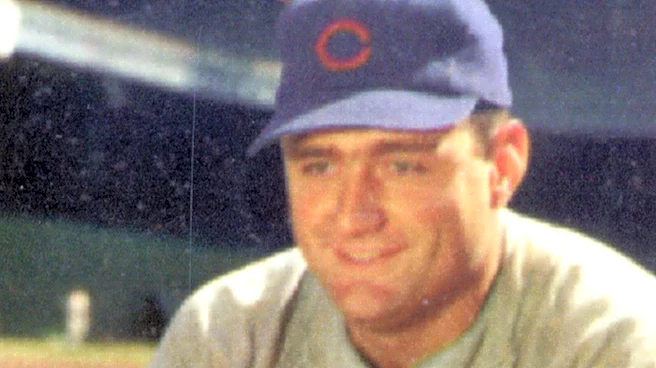


When the Cubs traded Bruce Sutter to the Cardinals in December 1980 for Leon Durham, Ken Reitz and Ty Waller, Cubs fans howled.
Sutter had been one of the most dominant relievers — arguably THE most dominant — in MLB over the previous four seasons, posting 133 saves with a 2.29 ERA and 494 strikeouts in 493 innings, this in a day when strikeouts by relievers weren’t that big a thing. Sutter was the first pitcher to master the splitter and it was devastating. But Sutter had won a $700,000 contract
in arbitration and back then, that was huge money that the Cubs, under the Wrigley ownership, were unwilling to pay.
So off to St. Louis he went, and the only “name” player in the deal was Reitz, who’d been the Cardinals’ regular third baseman for eight years. Durham, the Cardinals’ first-round pick (15th overall) in 1976 out of high school in Cincinnati, had played 96 games for St. Louis in 1980, posting 1.7 bWAR, good enough for seventh place in Rookie of the Year voting. He was mostly unknown to Cubs fans, though.
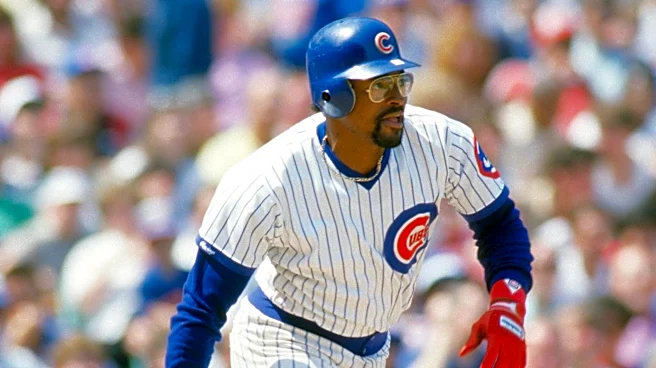
Durham played well for the Cubs in the strike-shortened 1981 season, mostly in right field, and batted .290/.344/.460 with 10 home runs, good for 1.0 bWAR. He burst on the scene the following year with a 4.7 bWAR season in which he batted .312/.388/.521 with 22 home runs. Durham was an All-Star in 1982 and won a Silver Slugger and he hit a home run in St. Louis leading off the second inning July 4, 1982. Why do I mention that? Because that was the first home run ball I ever caught. Still have the ball.
Durham played more left field than right in 1983, and in 1984 when the Cubs acquired Gary Matthews, they moved Durham to first base. This put Bill Buckner on the bench and eventually wound up in the deal that sent Buckner to Boston for Dennis Eckersley. Durham hit .279/.369/.505 in 1984 with 23 home runs, but it was his key error in the seventh inning of Game 5 of the NLCS that opened the floodgates for the Padres to win the game and the series:
Later, that was termed the “Gatorade glove”:
The Cubs had taken a 3-0 lead on homers by Durham and Jody Davis. Then, in the fifth inning, Cubs second baseman Ryne Sandberg knocked over a big cooler of Gatorade in the dugout, soaking Durham’s cap and glove.
‘My glove was sticky and wet,’ Durham told United Press International recently from his hometown of Cincinnati. ‘It wasn’t just a cup of Gatorade, it was the whole container. I felt that I was still capable of using that glove. I thought the inside would be OK. It wasn’t waterlogged.’
Durham stresses that he does not blame Sandberg for Chicago falling one rung short of a World Series trip. He didn’t even known at the time that it was Sandberg, the 1984 Most Valuable Player, who knocked over the lime-green juice.
‘I didn’t know who did it,’ he said, ‘but I know it wasn’t done intentionally. I hate to have Ryne’s name brought up.’
Durham hit well for three more years as a Cub, but after a rough start in 1988 he was traded to the Reds for reliever Pat Perry. and not long after had to enter a substance-abuse program:
Leon Durham’s substance-abuse problem is another argument for mandatory drug testing in the major leagues, Cincinnati Reds general manager Murray Cook says.
Cook announced Tuesday that Durham, who missed three games in a weekend series in Montreal, has agreed to enter a substance-abuse program. Cook declined to be more specific about Durham’s problem.”There needs to be some sort of definitive drug program brought forth between management and the players, one that would include the possibility of testing,” Cook said.
Later, he failed another drug test while trying a comeback with the Cardinals in 1989 and his playing career was over.
He played a couple years of indy ball and then began a long minor-league coaching career, first in the Angels organization and then spent 16 years (2001-16) as the hitting coach for the Triple-A Toledo Mud Hens, the Tigers affiliate. After a year with the Tigers (2017) as assistant hitting coach, he returned to the minors as the hitting coach at Triple-A Louisville in the Reds organization, a position he held for two years.
Durham provided many good memories of the Cubs team that finally broke a 39-year postseason drought in 1984. It’s really a shame that his drug use shortened his playing career, but he did get some redemption as a well-respected minor league batting coach. Durham posted 15.1 bWAR in eight years with the Cubs.