





When the Michigan Wolverines were named national champions in 1997, they shared the crown with the Nebraska Cornhuskers. As the BCS took over the following year, it was supposed to be the final time there were split national champions.
Ever since, the NCAA has continued to expand postseason play further, with the Big Ten now leading the way with wanting a 24-team College Football Playoff. Opinions are split about the necessity of such a format, but it overwhelmingly appears that in the next few years,
the playoffs will expand beyond the current 12-team format.
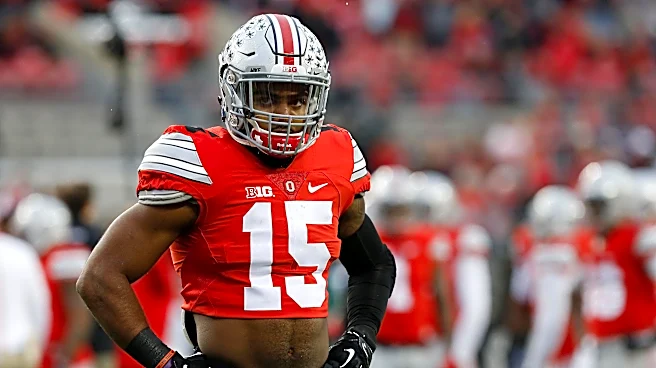
That will open the window for many teams that may drop a couple games in the regular season to still have a chance at winning a national championship. We’ve seen that already happen in this 12-team format with the Ohio State Buckeyes winning it all as a two-loss team two years ago. In the history of college football, that previously would not have flown.
So we decided to go back and take a look at some of the Michigan teams since the BCS era began that could have taken advantage of a 24-team CFP and made a run at a national championship despite suffering a few blunders on the way. In chronological order, here are seven teams that would have benefited from the proposed format.
1999 Michigan Wolverines – Record: 10-2
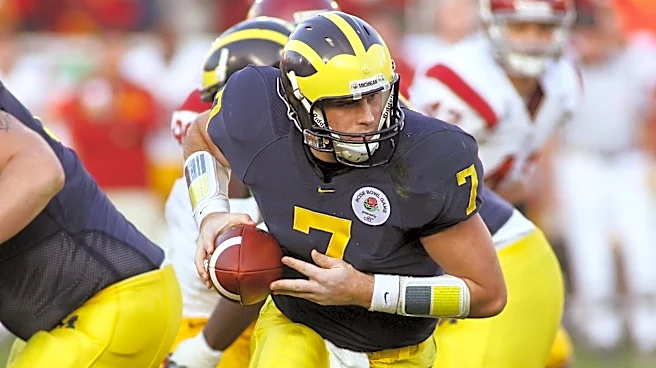
A man who won seven Super Bowl rings might have had a shot at a national title — the GOAT, Tom Brady. In the 1999 season, Brady and star running back Anthony Thomas played a top-three strength of schedule while beating five ranked opponents, including a triumphant Orange Bowl upset over Alabama and a four-point win against No. 6 Penn State in Happy Valley.
But midseason losses at No. 11 Michigan State and at home vs Illinois dismantled their shot at a championship run. The team finished No. 5 in the AP Poll and had Top-35 units in both points and points allowed per game.
2000 Michigan Wolverines – Record: 9-3
A year later, Drew Henson became the full-time starting quarterback for the Wolverines. But closing on the road cost the Wolverines three games, and all three were by a field goal or less, totaling just seven points in those losses. Two were against Top-25 opponents — UCLA in a non-conference Top-15 matchup, and in Evanston in a 54-51 shootout loss to Northwestern.
But this team was just as talented as the 1999 squad, finishing Top-20 in both offense and defense, and beating four ranked opponents, including at No. 12 Ohio State and a Citrus Bowl win vs No. 20 Auburn.
2002 Michigan Wolverines – Record: 10-3
The run of tremendous Lloyd Carr teams continues with the 2002 Wolverines, who finished the season as the No. 9 team in the AP Poll. They played a top five strength of schedule and earned wins over No. 11 Washington and No. 15 Penn State.
What held them back was an offense that struggled to move the ball, despite John Navarre leading the Big Ten in passing yards, attempts and completions. They lost at No. 20 Notre Dame and at the eventual national champion No. 2 Ohio State Buckeyes. In total, they lost those two games by seven points (and we don’t need to talk about that third loss to Iowa…)
A win over No. 22 Florida in the Outback Bowl cemented that this team could have had a much different story had the ball bounced a different way on a few occasions.
2003 Michigan Wolverines – Record: 10-3
Michigan’s offensive woes quickly disappeared in 2003, as Navarre led the Big Ten in passing touchdowns with Braylon Edwards bringing in 14 of his 24. Then, Chris Perry took the next step on the ground, leading the conference in rushing attempts and yards with more than 2,000 total scrimmage yards.
The Wolverines had the No. 12 offense in the country and the No. 11 defense. They shellacked No. 15 Notre Dame, 38-0, in their first of five Top-20 wins during a 10-2 regular season, including Ohio State, 35-21. But road losses to No. 22 Oregon and No. 23 Iowa saw the Wolverines as the No. 4 team heading into the postseason with a Rose Bowl berth.
In that game, Michigan faced the No. 1 USC Trojans, who the BCS model spurned due to both LSU and Oklahoma being undefeated and having a better strength of schedule. In a de facto home game for what many considered to be the best team in the country, USC won the 2004 Rose Bowl, 28-14.
2006 Michigan Wolverines – Record: 10-2
If I were ranking this list, the 2006 Wolverines would be the No. 1 team that could have used this format. Heck, they could have used any playoff format.
After an 11-0 start to the regular season and a dominant 47-21 showing against No. 2 Notre Dame early in the season, Michigan went to The Shoe for the first-ever No. 1 vs No. 2 game vs Ohio State. We all know the story, as Michigan lost a 42-39 thriller. The Wolverines went on to lose to USC in the Rose Bowl, and the Buckeyes were killed by Florida in the National Championship.
However, a playoff model may have given the Wolverines a shot at Urban Meyer and the Gators first. In the unlikely scenario they won, it could have been a repeat of The Game at a neutral site for a national championship. A fun what-if situation for a team led by Chad Henne and Mike Hart.
2011 Michigan Wolverines – Record: 11-2
How different could the Brady Hoke era have been? It felt like Michigan was going to return to national championship level relevancy when he took over and immediately led the Wolverines to an 11-2 season, a win against Ohio State and a Sugar Bowl victory vs Virginia Tech.
Even more exciting is that Denard Robinson, the most electric football player I have ever seen, would have had a shot to play on the national stage in the playoffs. However, two road losses to No. 23 Michigan State and Iowa kept the Wolverines pretty far out of the national title conversation.
No one would complain about an electric player like Shoelace playing in the postseason, and who knows the kind of publicity that could have caused to spark momentum in the Hoke era, instead of what it turned out to be…
2016 Michigan Wolverines – Record: 10-3
Behind the 2006 Wolverines, this team likely would be No. 2 if I ranked these teams, and it would have been by a narrow margin. The difference was that there was a playoff at this time, but only four teams.
Michigan should have been one of them because J.T. was short, and the Wolverines should have won in Columbus in the second season of the Jim Harbaugh era. Instead, Curtis Samuel scored on the next play to win in overtime and steal a spot in the CFP. That single moment with a wrong call was the difference between Michigan making or missing the playoffs, even with the loss to Iowa a couple weeks prior.
The Wolverines boasted the No. 11 offense and No. 2 defense, but missed the CFP and lost in the Orange Bowl to Florida State, another team that could have used the 24-team format back then.