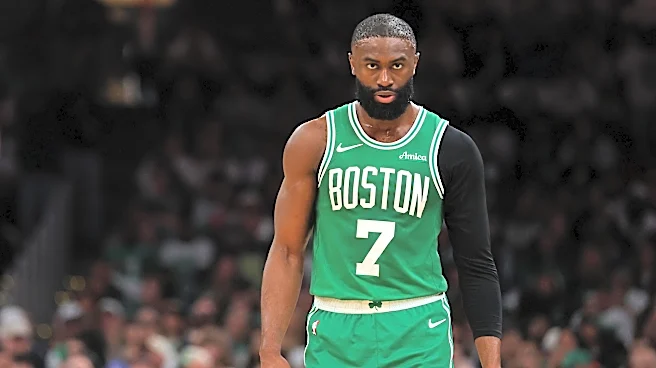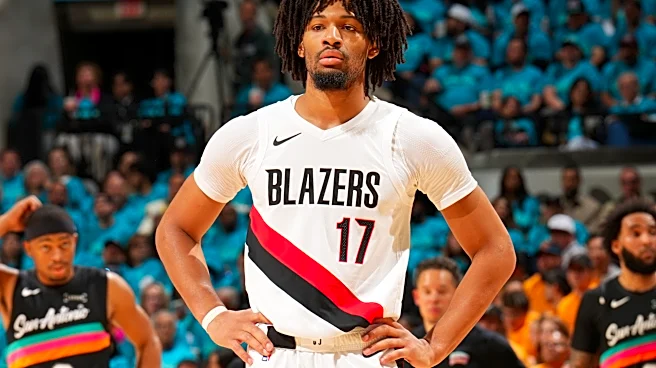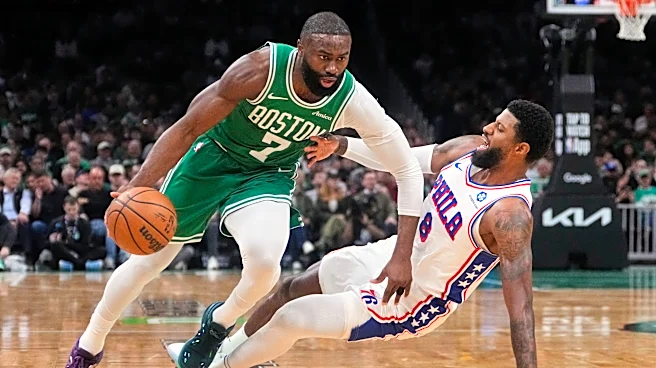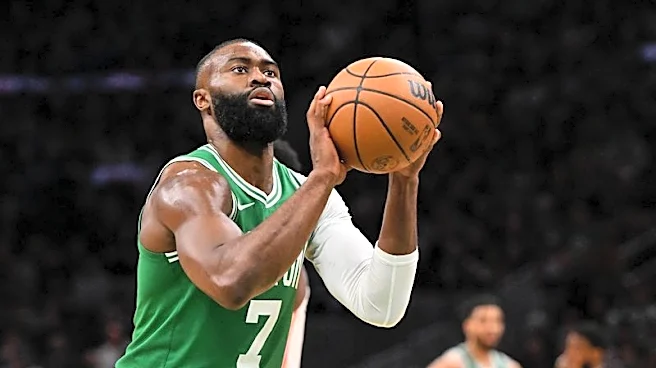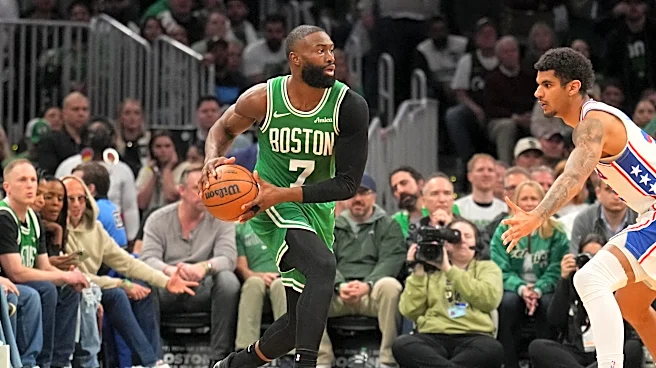






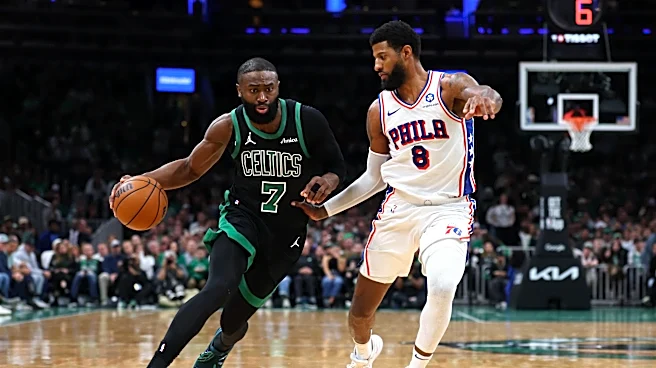
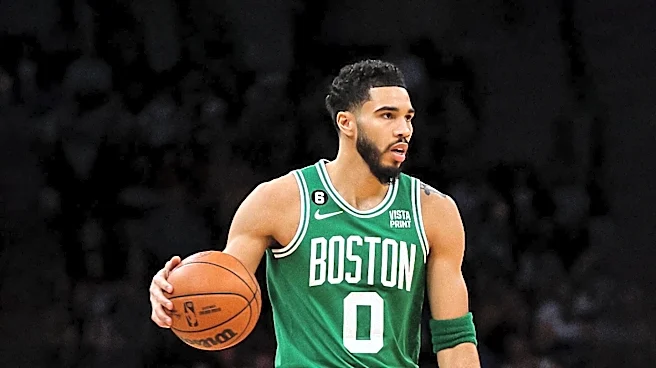


Of all the trades and signings in the NBA this summer, none has rocked the world as much as Jaylen Brown being moved to the Philadelphia 76’ers for a package centered around Paul George and two first-round picks. Media members and third-party executives alike were heard openly wondering why the price for one of the NBA’s best players ended up being so low. Portland Trail Blazers fans—whose team had been rumored in puruit of Brown, whose coffers were full of young players and future picks besides—were
as shocked as anyone. Preliminary Brown rumors generated thousands of comments at our site alone, let alone the actual trade.
Unsurprisingly, some of that chatter bled over to the Blazer’s Edge Mailbag, where a few questions about Brown have popped up. This is a fine sample. Let’s tackle it.
Dave,
Can you explain how we passed up the chance to get [Jaylen Brown]? We had more picks, better picks, better players and more salary flexibility. Why didn’t we make a better trade? Brown is one of the biggest scorers in today’s game and he’s built to play the current way the league plays. We needed another star. I won’t get into the debate about Ja [Morant] but I can’t even tell you how confused I am that we took him instead of the proven and active star that’s taken teams to the finals. Does the GM see something I don’t?
Eric
Where to start?
One of the firestorms that swept the league after the trade centered around analytics.
Brown’s basic numbers are good-to-great: 28.7 points, 6.9 rebounds, 5.1 assists in 34.4 minutes per game, shooting 47.7% from the floor and 34.7% from the three-point arc. He hits shots from all ranges. He draws a fair number of free throws.
His advanced numbers are less shiny. That three-point percentage is just ordinary, not elite, especially for a guy receiving passes at the arc instead of generating distance shots himself. He took a large number of field goal attempts last season, but they were justified given his role and position on the team. Boston’s on-off numbers somewhat paradoxically showed them as better without him on the floor. That’s been a multi-year trend. He also shows up semi-tepid on defense for a guy who supposedly excels on that end.
I’m as interested in, and highly-regarding of, analytics as most. But I also believe that outliers exist in every system. Often with the eye test—admittedly a less-solid means of judgment—players who don’t actually contribute to winning will look good. Similarly, some players you’d ignore at a glance end up being valuable pieces. This happens less frequently with analytics and stats, but it can happen. Personally I look at a player like Brown and say, “Those numbers aren’t lying, but they’re not telling the whole story either. This guy absolutely contributes to scoring and winning. He’s not a bad defender either. Whatever his shortcomings are, they’re probably the kind you happily make up for with the rest of the roster, just like you do with Giannis or any other star.” If this were just about advanced numbers, I’d acknowledge them but say, “Get him anyway.”
Here’s what I know of Brown: he likes to run, he scores big, he’s invested in defense, he can share the ball and play off-ball when necessary, he’s at the top of the opponent’s scouting list, he’s an iconoclast and intellectual, and he’s won big. I don’t see anything in that list that would scare me away from acquiring him for the Blazers. He has far fewer question marks—and far more of a proven track record—than Morant or most anyone Portland has traded for over the last decade.
In particular, I see a potential Brown-Deni Avdija pairing as exciting. Both go fast. Both defend. Both play smart and unselfishly. I can imagine those two looking across the court at each other, nodding, and then deciding that they’re getting that ball away from the opponent, running as hard as they can, and finishing before anybody can blink. Rinse, lather, repeat…ballgame.
But therein lie possible cracks as well.
The first question is one we brought up yesterday: are the Blazers really trying to go fast and young like they did last season? It feels like, between the return of Damian Lillard and the advent of Morant, Portland’s going to return to a more measured, halfcourt-style offense. Would Brown have fit with Lillard? Would Brown have even fit with Avdija, or would this just be another Jayson Tatum-like pairing where everyone—including the players—was asking who’s in charge? If Brown and Avdija didn’t mesh, that would seriously hobble Deni’s ascent. Maybe the Blazers didn’t want to risk that. Or maybe he just doesn’t fit their new direction.
Speaking of risk, salary and asset depletion would be far greater in a Brown deal than the Blazers have shown a willingness to commit to.
Brown is making $60+ million a year for the next three years. That’s a ton of cash (and cap room) tied up in one player. His deal runs through 2029, a full year after almost all of Portland’s other contracts expire.
Why does that matter? If they want to keep this team together in any reasonable form, they’re going to start paying a comparative fortune in 2028 to do it. It starts with Avdija’s contract negotiations. He’s the most underpaid player in the league right now. He’s going to want a mint for his next contract. Portand will need to give it to him. Then you have Scoot Henderson and Donovan Clingan on potential extensions. Right now Clingan is the favorite to extend richly and stay, but the Blazers will lose all their veteran point guards in ‘28, so we can’t dismiss Scoot entirely. Speaking of, do they trade Jrue Holiday before his contract expires? If so, the players coming back in are going to make $35 million or so too. With Brown on board, the Blazers would be looking at the luxury tax without one single shred of proof that this lineup would actually contend.
Trading the picks necessary to beat Philly’s price for Brown, Portland would also cut away flexibility to pivot in the future. One nice thing about today’s roster from an organizational point of view is that they’ll be free in two years to cherry-pick a couple of players, bid adieu to the rest, and essentially start anew with a number of potential lottery selections. It’s an opportune reset if things go wrong. It’s also a super-cheap contingency plan.
Brown would impede that with his star status, gravity on the court, and huge salary. He’s a better player than anyone the Blazers have. He also introduces a level of financial, team chemistry, and future-planning risk that’s greater than anyone on the current roster.
It’s possible that management and/or ownership looked at Brown, appreciated him as a player, but decided he wasn’t worth that level of commitment…not just individually, but committing the team to the course necessary to take advantage of the superstar during his tenure. For all his potential flaws, Morant will end up as an “easy come, easy go” acquistion if things don’t work out. Brown changes the team’s trajectory without absolutely guaranteeing it’ll improve dramatically (at least if you believe the analytics). That, plus the extra money, may have sealed his fate in Portland.
Less mentioned, but still worth noting: it’s possible that Brown didn’t want to play on the West Coast for a relatively obscure team with no recent track record of success. If that’s true, his lack of contentment would certainly show up more in the Portland fishbowl than most places. Personally, I suspect everyone involved could have overcome it. A warm welcome and tens of millions of dollars in real paychecks tend to do that. But it’s a possible factor. In Philadelphia he’s not far from where he’s lived his whole NBA career, he’s on a team that seems ready-made to contend for the NBA Finals, if not a title, and he doesn’t have to deal with travel, lack of publicity, and the Oklahoma City Thunder and San Antonio Spurs hovering over the top of the conference. There are simply fewer questions.
I’m not sure we’ll ever know fully what made things go the way they did. Justification will have to come via results. If Brown and the Sixers go on to fight for NBA titles while the Blazers remain mediocre, this is going to hurt. If Portland prospers on their chose course, that’ll be good enough. If Brown flames out in Philly, at least the Blazers won’t have taken on his huge contract for lesser results.
We won’t find out any of these things right now, though. The best we can say so far is that they didn’t appear to want Brown badly enough to go get him,. Let’s see what management wanted instead and hope it’s good.
Thanks for the question! You can always send yours to blazersub@gmail.com and we’ll try to answer as many as possible!