



The Detroit Tigers offseason really holds only one major question left, and that question is what to do with Tarik Skubal. Whether the front office is waiting to see if a big spender who missed out in free agency coomes calling with a monstrous trade offer, or they’ve decided to run it back in 2026 and take their chances, it’s likely that nothing is happening until the arbitration case is completed in early February.
In the meantime, the 2026 free agent class thinned out quite a bit over the last
few days as Kyle Tucker and Bo Bichette signed with the Dodgers and Mets, respectively. Cody Bellinger, Framber Valdez, and Eugenio Suarez are now the biggest names left on the board.
Let’s do a quick roundup of the biggest stories after busy news days on Thursday and Friday.
The Dodgers feeding frenzy continues with Kyle Tucker
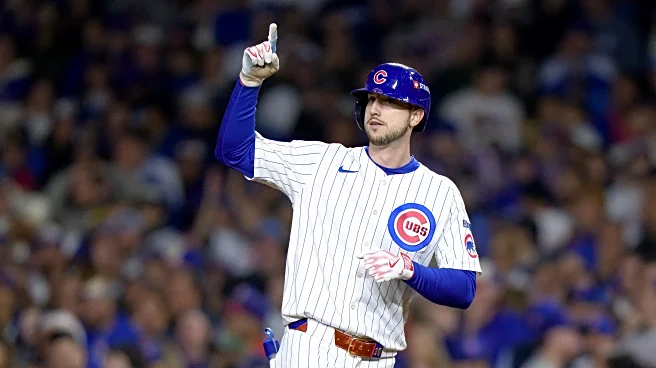
On Thursday, the biggest free agent contract of the offseason hit the news wire as the Los Angeles Dodgers inked outfielder Kyle Tucker to a four year deal worth $240 million. Per Jeff Passan, the deal comes with an $64 million signing bonus, with $30 million deferred. Reportedly there are opt-outs for Tucker after the second and third seasons. So the Dodgers will be paying the soon to be 29-year-old hitter the largest average annual value in major league baseball history, surpassing the Mets $51 million yearly to Juan Soto. This is the kind of contract only a few teams in the game are capable of handing out, once again highlighting the growing divide between a handful of major market teams and the rest of the league.
The excellent R.J. Anderson at CBS Sports breaks down the winners and losers.
Jay Jaffe unpacks the Tucker deal and its meaning for FanGraphs.
The angles on this story are many. Are the Dodgers anticipating a salary cap in the next CBA and trying to stockpile all the elite talent possible before that happens? Does this make them invincible in their quest to three-peat? Why aren’t other top contenders using deferrals in similar ways? Is this good or bad for baseball?
I wrote about that last item after the World Series. Baseball has a long history of evil empires, and often the game was more popular, at least in the ratings department, when there was a team to hate. The star-studded Dodgers project really well to the growing international market for the game. Still, that probably means little to the majority of teams who are pretty much priced out of winning a title without a miracle. From the competitive balance perspective, this has gotten ridiculous.
And yet, no the Dodgers aren’t invincible. The 2025 Dodgers only won 93 games, and the Toronto Blue Jays were one play going their way from defeating them in the World Series. Of course, the Blue Jays spent $258 million too, but at least among the big spending teams, adding Tucker assures nothing. That contract is just very wild on the surface for a player who hasn’t topped 23 home runs in either of the last two seasons and is basically a 4-5 WAR OBP machine without any other standout traits in his game. Somewhere, Joey Votto weeps. Nah, Joey Votto probably cares less than anyone.
The Atlanta Braves finances, revealed!
As the only publicly held franchise in the game, the yearly unpacking of the Braves financial report is one of the few open looks inside the game’s finances. As a result, there’s always a ton of interest when their yearly numbers come out.
This excellent thread from Daniel Meyer on X unpacks the Braves financial picture for us pretty well.
The main points to a Tigers fan are that the Braves took in $600 million in revenue, with only a quarter of that coming from revenues inside the ballpark itself in the form of ticket sales, merch, concessions, etc. They turned a profit of $46 million on all that revenue.
Forbes put the Tigers revenue for 2025 at $300 million, with a franchise value of $1.55 billion as they turned a $30 million profit. Unfortunately, those numbers don’t come with a cost breakdown, but if the Tigers made $30 million with a 2025 payroll of $155 million, that perhaps validates the $185-190 million zone as the break even range for the Tigers in 2026.
Currently the Tigers 2026 payroll is set to be either $164.5 million or $177.5 million, depending on Tarik Skubal’s arbitration outcome.
While the Braves finances are public, those of the trust the Detroit Tigers franchise is held under by various members of the Ilitch family are not. It’s hard to know how the terms might influence their flexibilty.This is all even more complicated by the abject chaos in the regional sports network realm. Depending in part on Skubal’s final number, it seems reasonable to think they at least have room to manuever, but that final number will impact how much, and there aren’t that many obvious upgrades available now anyway.
Bo Bichette heads to Queens
One of the benficiaries of the Tucker deal was long-time Blue Jays shortstop Bo Bichette. The Blue Jays were apparently still talking to Bichette this offseason, but they were reportedly heavily engaged on Kyle Tucker, as were the New York Mets. Once the Mets lost out on the Tucker sweepstakes, they quickly pivoted to Bichette and got the next best player on the market. In the process they boxed out the Philadelphia Phillies, who were offering Bichette a more traditional long-term contract. Beating out a division rival always feels good, and the Phillies quickly turned to more modest business, retaining catcher J.T. Realmuto on a three-year, $45 million contract.
Bichette’s deal was a clear move to the Alex Bregman protocol, taking a short deal with huge annual value and opt-outs after each of the first two seasons of the three-year, $126 million deal. Reportedly Bichette was looking for a deal worth well over $200 million and wasn’t quite getting those offers. Now he’ll make $42 million each of the next three years, or can opt-out along the way to try to put together his originally desired price, in the aggregate (hat tip to Moneyball).
Michael Baumann at FanGraphs does a fine job unpacking the Bichette drama.
What’s clear is that the Blue Jays have come out of this looking overall worse. Bichette was thought to have some concerns about the Rogers Centre’s playing surface and its long-term impact on his legs. That’s an ominous bit of rumor for the Blue Jays and their ability to attract free agents, but hey they’ll be fine in 2025. After adding right-hander Dylan Cease and NPB third baseman Kazuma Okamoto, it’s not like they sat on their hands this offseason either.
Somewhere, Framber Valdez and Cody Bellinger are probably feeling pretty good about things as the top two players on the free agent board. It wouldn’t be a surprise to see Eugenio Suarez get a massive one-year offer the way things are going either.
The spector of the next CBA negotation continues to loom over every aspect of this offseason. It will be interesting to see if Bichette can pull off something like Scott Boras handling of Alex Bregman, or whether the new CBA makes it harder for Bichette to opt-out and sign the mega deal. More likely he’s better off sticking with the Mets, at least through 2027. Even then he’ll reach free agency again heading into his age 31 season and is he performs he’ll land another big contract.