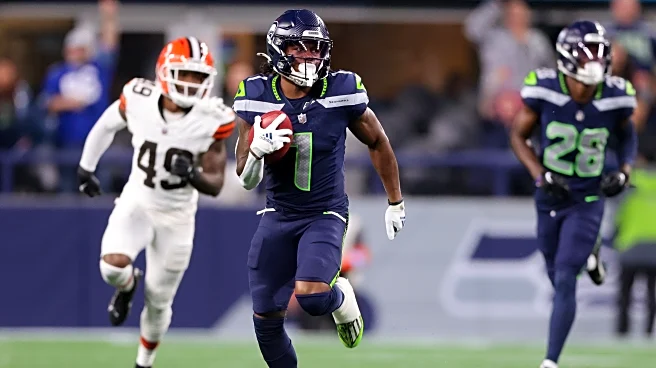

The Seattle Seahawks’ rookies logged a combined 151 snaps in Week 17 against the Carolina Panthers. That total is down slightly from last week, but still in the same range, especially when factoring in the overtime game against the Rams the week prior. For the second consecutive week, Seattle opted to dress Connor O’Toole over nose tackle Brandon Pili, a decision that appears to be driven primarily by special teams usage. O’Toole saw just four snaps in garbage time.
As always, the focus here is on
process and technique rather than box score results.
Grey Zabel — Offensive Guard (66 snaps)
Zabel’s performance against Carolina was cleaner on the surface than the Rams game. He did not allow a pressure, and PFF credited him with his fourth-best pass-blocking grade and third-best run-blocking grade of the season.
That said, the tape tells a more nuanced story. While the end results were mostly positive, Zabel showed a number of technical regressions, particularly in his pad level and balance, that did not consistently show up earlier in the year.
One recurring issue was his tendency to over-lean at the snap, something that also showed up in the Rams game and directly contributed to sacks in that matchup. When Zabel tips forward, he becomes vulnerable to swim moves. On the clip above, he initially generates good leverage out of his stance, but loses control of the rep and gets beaten cleanly once the defender clears his hands.
On another snap, he loses even faster, forcing the running back to cut prematurely, disrupting the timing of the run. This is correctable, but it needs to be cleaned up, particularly against interior defenders who rely on quick counters rather than pure power.
Zabel’s transition from tackle at NDSU to guard in the NFL was always going to come with some limitations. His shorter arm length means he must consistently win with hand placement and inside leverage. On this rep, Derrick Brown denies him the inside hand, collapses the pocket, and finishes by putting Zabel on the ground.
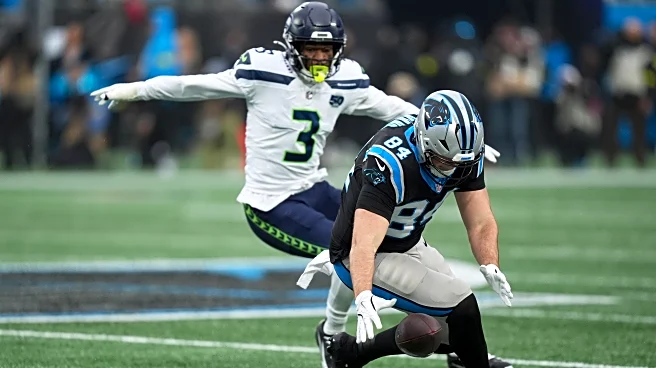
He also struggled repeatedly against #94, who relied almost exclusively on a push-pull counter. In Zabel’s mic’d-up segment from the Cardinals game, he mentions preferring to control defenders with his inside hand. When that punch lacks timing or force, counters like this become a problem. On this rep, he narrowly avoids a holding call after being beaten.
This next snap is one of the more puzzling plays on tape. Zabel correctly identifies the linebacker, has the angle and athleticism to reach the second level, but fails to land his hands. The result is a tackle for loss, and arguably one of his poorest run-blocking snaps of the season.
Where Zabel was most effective came on double-teams in the run game. When his hand placement is correct and his base stays wide, he can displace defensive linemen and generate movement. Those snaps remain his best work and show why the coaching staff continues to trust him in a high-snap role.
This rep stands out positively as well. Zabel processes a stutter step that threatens inside, quickly re-anchors, keeps his eyes active, and ultimately passes off the defensive lineman to pick up the blitzer, protecting the most immediate inside pressure. This is the kind of mental processing that keeps him on the field.
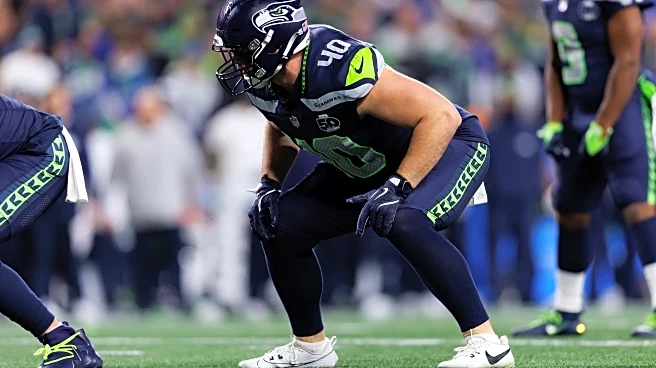
Nick Emmanwori — Defensive Back (48 snaps)
Emmanwori’s night was quiet, largely because Carolina’s passing offense was non-functional. The Panthers failed to reach 60 passing yards, and Emmanwori was targeted just twice, allowing two completions for nine yards.
Where he made his impact was against the run. He finished with three tackles, and the tape continues to show why Seattle has been able to hold up against the run out of nickel personnel. Early in the game, Emmanwori is met by the center climbing to the second level, but the blocker cannot sustain contact due to Emmanwori’s length, strength, and physical play style.
His best rep came on a short-yardage second down. The blocking angle from #18, a capable run-blocking wide receiver, was sound, and the play was initially well-designed. Emmanwori fights through the block, slows the runner, and allows Julian Love to arrive and finish the tackle. It’s not a flashy play, but it’s a winning rep.
Elijah Arroyo — Tight End (0 snaps)
Injury Reserve
Jalen Milroe — Quarterback (0 snaps)
Inactive
Rylie Mills — Defensive Lineman (12 snaps)
Mills continues to see limited work, but the snaps he’s getting remain encouraging. In recent weeks, his biggest issue has been holding up against double-teams, to the point where added functional mass felt like a future necessity.
On this rep, he does a better job anchoring, staying square, and using his quickness and hand usage to disengage, forcing the right guard to redirect. That’s meaningful progress, even if it doesn’t show up on the stat sheet.
It’s also notable how consistently Mills plays through the whistle, something the coaching staff clearly values in rotational defensive linemen.
Tory Horton — Wide Receiver (0 snaps)
Injury Reserve
Robbie Ouzts — Fullback (14 snaps)
Ouzts was used primarily as an edge blocker, and this was one of his cleaner outings. He was especially effective when working double-teams with tight ends, helping seal the edge and maintain leverage.
Earlier in the season, Ouzts struggled in similar situations, either missing the assignment or drawing a penalty. On this tape, his technique is noticeably improved, particularly on his cut blocks, where he stays low and finishes properly.
Bryce Cabeldue — Offensive Lineman (0 snaps)
Inactive
Mason Richman — Offensive Lineman (0 snaps)
Inactive
Nick Kallerup — Tight End (7 snaps)
Kallerup saw minimal involvement. For context, TE2 Eric Saubert logged 34 snaps, which limited Kallerup’s opportunities to impact the game.
Final Thoughts
The rookie class had a quieter night than in recent weeks. Even in a game where the run game produced a 100-yard rusher, Zabel was solid but not dominant, and the technical inconsistencies remain something to monitor.
Emmanwori delivered a steady, assignment-sound performance, but the Panthers’ offensive struggles limited his opportunities to make splash plays.
Mills continues to earn trust and incremental playing time. A major impact this season still feels unlikely, but his development trajectory remains one of the more encouraging stories among Seattle’s late-round rookies