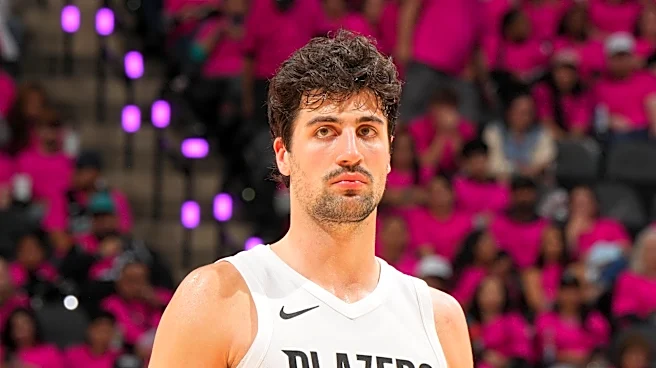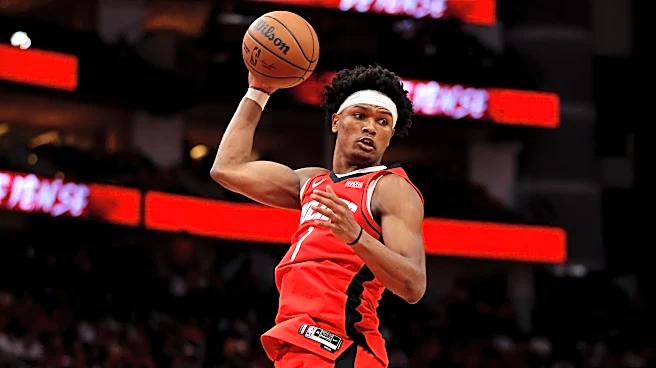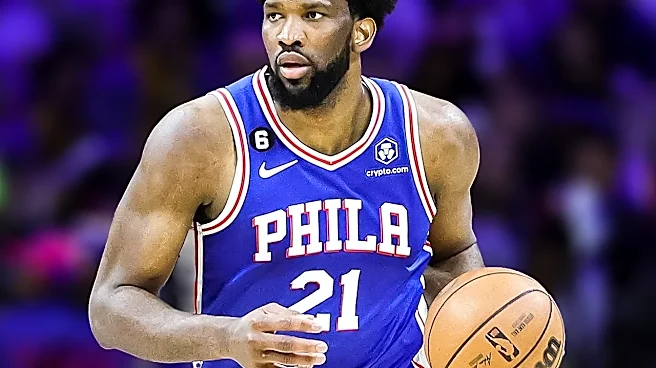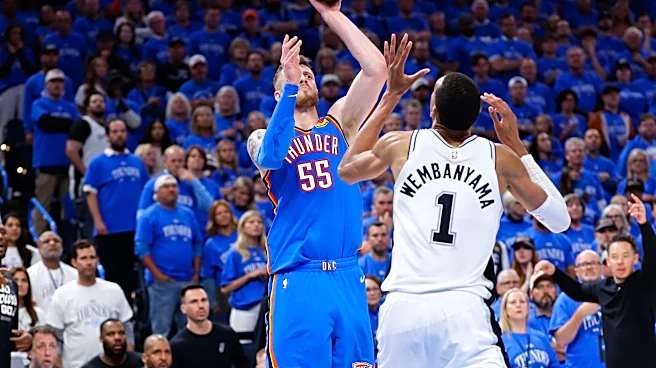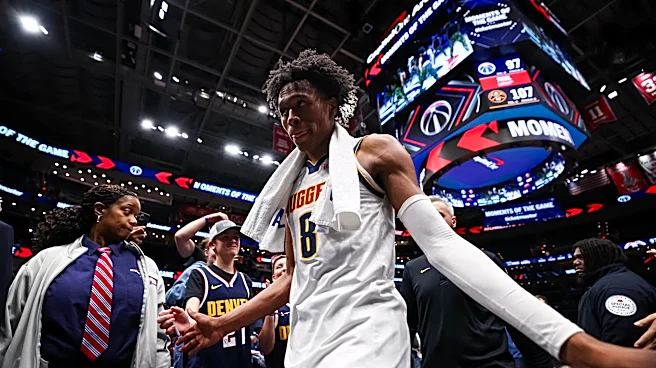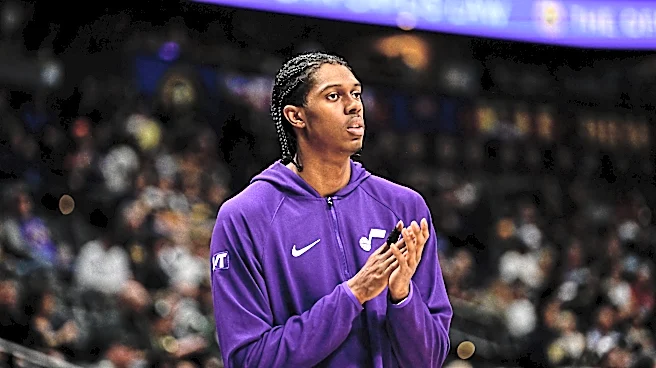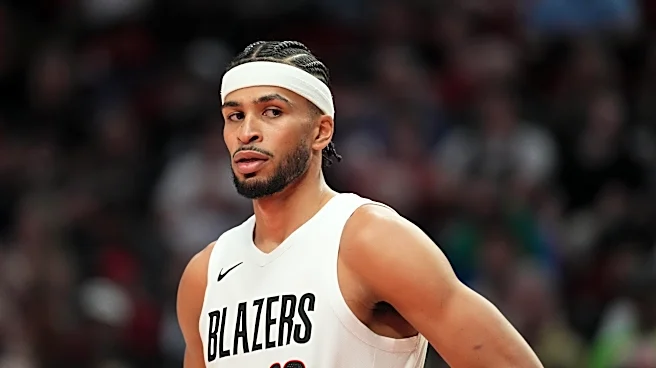


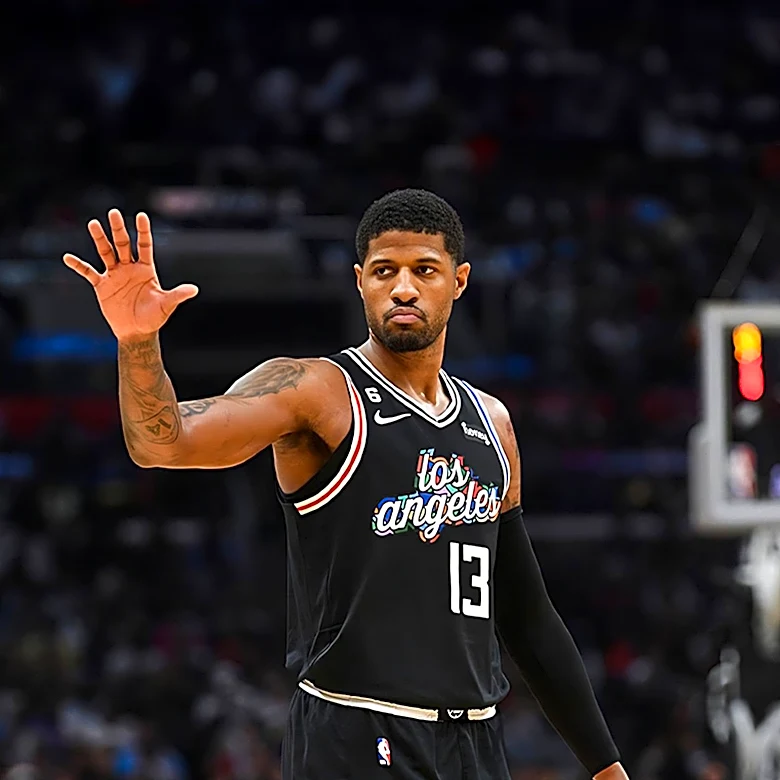


The Portland Trail Blazers are headed into the 2026-27 NBA season with an imbalanced roster. If the team doesn’t make any more trades in the next month, they’ll head into training camp with 4 potential starting point guards and 2.5 experienced forwards in uniform.
But the Blazers aren’t alone. Other NBA teams have also divested themselves of forwards over the summer. This growing phenomenon has earned the attention of one Blazer’s Edge Reader, who asked the following Mailbag question.
Dave,
At least
two teams that should be pushing toward contending this year — the Lakers and Timberwolves — got rid of just about all their best forwards this year, meaning the likes of Lebron James, Rui Hachimura, Naz Reid and Julius Randle. They are very sparse at forward now. Is there some new theory that if you have guards and a center, forwards don’t matter? Is it just the salary cap pushing teams toward two or three expensive stars and a lot of filler?
Denver too, kinda.
Joshua
The teams you mentioned are going light on forwards this season. But I don’t think this signals a leaguewide move away from those positions as much as a confluence of events and conditions.
We can point to the Miami Heat acquiring Giannis Antetokounmpo as the prize free agent of the summer or the New York Knicks scooping up multiple forwards in recent years as counterexamples. Plus there’s the homely logic that all of the forwards that those teams divested themselves of got picked up by somebody. They aren’t out of the league. Other teams coveted what those franchises dropped.
There is a commonality between the players you mentioned specifically. They’re all veterans and all of them except LeBron—the ultimate outlier—hold contracts in the middle ranges of the salary belt.
Hachimura is around mid-level at $14 million per year. He’s the most reasonable among them, especially considering his great three-point shooting. But he’s one of those players without a super-defined skill set, kind of a utility player who can hit from distance. That’s enough to keep him in the league for sure, but few teams would consider him indispensable.
Naz Reid is one of the best backup bigs in the NBA. He’s making approximately $25.5 million per year for the next four years. Julius Randle scores more, but he’s making $34.5 million over the next two.
The commonality there is that $14 million, $25.5 million, and $34.5 million are all tweener salaries. They’re well above minimum, but not near star-level. That’s more than fair! The players in question could be described the same way. Those contracts fit them.
With the draconian cap-and-tax system in place, however, the league has turned away from proportional salaries and towards “min-maxing” their assets. The NBA has a definite band, right near the maximum, for the top-level stars. You might also notice that in recent years they’ve come up with multiple variations on paying players the absolute least possible: The traditional minimum salary and 10-day contracts plus two-way contracts and Exhibit 10 deals. If they can find a way to install kiosks in arena seats so fans can tip lower-salary players, they’ll probably do that too.
Salaries in the middle ranges are drying up across the league. How many players got offered a full mid-level exception over the last couple summers? How are restricted free agents doing drumming up contract bids? Compared to a decade ago, those are desert grounds now.
Two positions on the court have traditionally been min-max friendly: center and point guard. If you’ve got a brilliant star at either of those positions, you’re going to pay him huge. Otherwise, they’re a dime a dozen and you’re paying a low salary. That’s because of the rarity of size and skill (at center) or skill and talent (at point guard) required in those roles.
Wings and forwards are way more in the middle. They come in various types, offering different styles of play and strong points. Do they score? Do they shoot? Do they rebound or defend? It could be all of the above, it could be none. Seldom are forwards superstars outright, but contenders don’t want a bottom of the barrel 3-and-D player either, because either the 3 or the D is going to be subpar.
In this scenario, you end up with the exact players we’ve described: veterans who make far more than the league minimum, for good reason, but far short of star-level pay.
Think of any business. When it’s time to make cost-saving cuts, who gets the axe? Is it going to be the CEO? Perish the thought! He or she makes more money than anybody else, but they’re also your leader, your superstar. How about the minimum-wage workers? Of course not. What good would that do? You’d just have to replace them at the same cost with nearly zero savings.
People getting released in a corporate purge are usually experienced workers in mid-range positions who make a bigger salary than the lowest level but don’t have enough visibility or laser-tight job description to qualify them for the highest spots in the company. You save the most money with the least amount of defined impact, or so the thinking goes. And by the way, can you train your replacement before you leave? They’re fresh out of college and saving us $22,000 per year. Thanks.
Forwards are the NBA equivalent of that middle-lever corporate employee. Enough experience, skills, and talent that you can’t pay them a minimum contract but not a clear enough position (or overwhelming talent, in most cases) to justify a max contract. If those dang point guards would just pass the ball more…but that’s another story.
As such, forwards often find themselves on the trading block when team fortunes change. Or when those same forwards have the temerity to (gasp!) outgrow their inexpensive rookie contract and actually want to get paid what they’re worth. Paying you is just not in the salary budget, my friend. And by the way, can you train your replacement before you leave? They’re fresh out of two years of college and are saving us $14 million per year. Thanks.
At this point, I truly believe that most teams—especially non-championship-contenders—would rather go with an imbalanced roster of min-maxed players than pay extra for a decent forward that they’re not sure they have use for, even if that forward is technically better than some of the players they keep.
The game justifies this somewhat too. It’s the pace-and-space era. Guards are getting bigger, almost forward-sized. As long as they can shoot and spread the floor, why not go with a point guard, two 6’5 players, a 6’7 power forward, and a center? Two stars, two rookie-contract guys, and a sneaky-good role player on the cheap: you won’t catch us bumping the second apron with that starting lineup.
If, for some reason, the league redrafted all players with a mandate that everyone be paid a completely equal salary, you’d see those veteran forwards gain favor again. If cost was equal, I’d rather have him than an offensive-minded guard just above the two-way contract level. But costs are not equal. Many of these deserving veterans make 10 times what that young guard makes, if not 20. That reality is turning their contracts into hot potatoes and making those cheap replacement players a viable option for plenty of NBA teams. I’m not sure that’s good for the game or the veterans, but it’s part of the modern reality.
Thanks for the question! You can always send yours to blazersub@gmail.com and we’ll try to answer as many as possible!