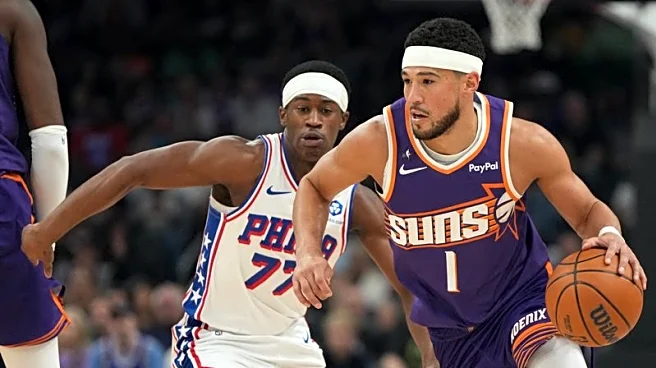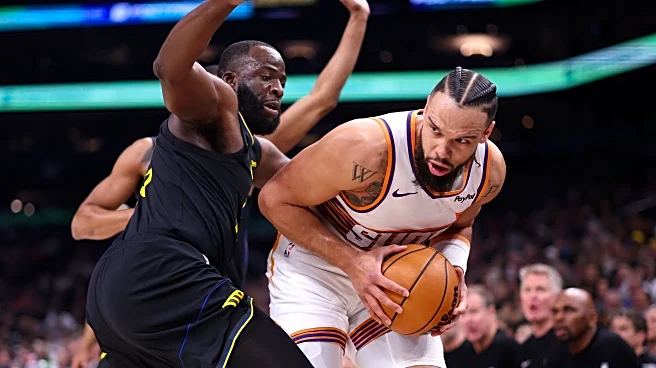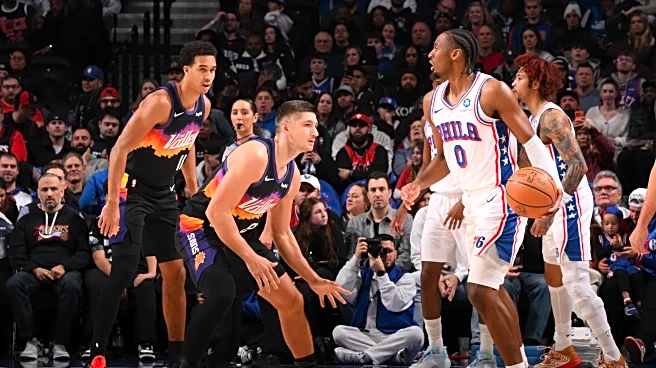

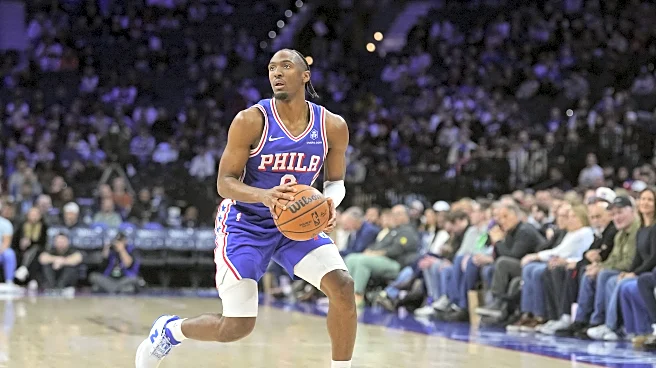
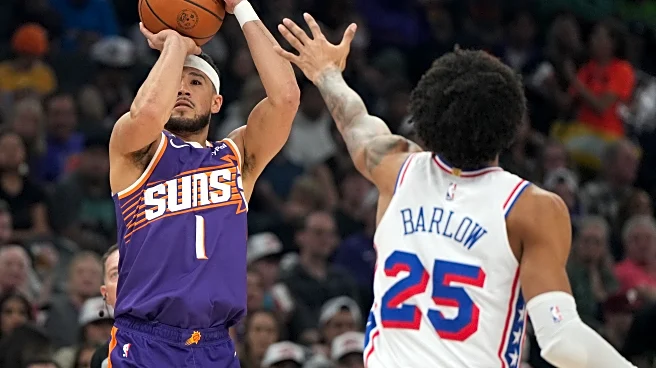
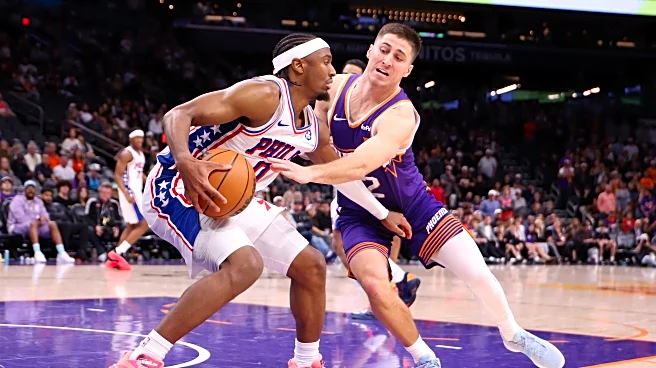
You already know it: our Suns took care of business in the last game against the 76ers. In this win, the team leaned heavily on a blazing-hot bench: 48% of the 116 points came from Oso, Jalen, Ryan, Grayson, and Jordan, who combined for 21-of-40 shooting.
Their five guys completely outclassed Philadelphia’s bench, which managed only 28 points. It wasn’t the case tonight, but you can have the best starting five in the league…if your bench and tactical decisions don’t follow, you’re not going far.
The
minutes distribution told the same story as the production. With Mark Williams clearly lacking legs on this back-to-back, Oso naturally saw his role expand, flirting with 30 minutes to stabilize the offense and maintain defensive intensity. Grayson Allen also benefited from the context, staying on the floor for long stretches and delivering a complete game: 16 points (45% from three), 5 rebounds, and 6 assists.
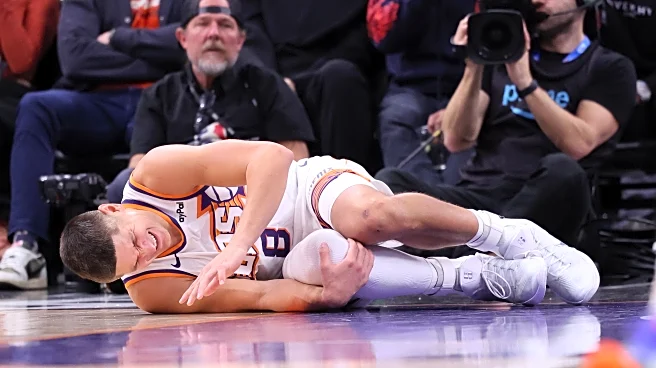
Jalen Green’s return was handled with care: around 20 minutes to get his rhythm back without pushing it, the exact same treatment given to Goodwin, used as a secondary spark plug (16 points and 2 steals). As for Dunn, his eight small minutes mostly reflect the newfound depth of the group: when the bench is rolling like this, roles naturally tighten, every minute becomes ultra-competitive, and honestly, we didn’t need to unleash the beast for this matchup.
This minute allocation illustrates a coherent rotation from Jordan Ott, tailored to the context, and above all, a team that is finally starting to rely on multiple reliable and efficient lineups. Out of the 8 lineups that have logged 100+ possessions together this season, 6 have a positive net rating, and 5 are at +8 or better. We’re the only team this season with that many dominant lineup combinations.

I was excited to see Jalen back, but also very curious about his on-court coexistence with Oso. Both prioritize attacking the paint, but their strengths are perfectly complementary: Oso with his static game, IQ, and passing; Jalen with a fast-paced style built on off-ball movement and cuts to the perimeter or the rim.
In a system where everything moves — ball movement, constant cutting, quick reads — you could already guess their connection would be beautiful to watch. So I gathered a few sequences where they’re directly involved together to illustrate this dynamic.
Like here: their first action together is a pick-and-roll. Green attacks the paint quickly off a solid Ighodaro screen. His gravity draws three Sixers defenders, opening up a clean passing lane to the roller Oso:
Second pick-and-roll situation between the two, once again exploiting the slowness of the Turkish big Adem Bona:
My favorite action comes next: the DHO. You can see all of Oso’s intelligence in his positioning and vision to avoid putting Green in a tough spot, before and after the handoff. The chemistry is already there, and I can’t wait to see what comes next:
Finally, we finish with a more collective action. It’s simple, but beautiful. I love the cleanliness and the execution speed:
This game against Philadelphia isn’t just another win in the standings. It’s a statement. The Suns’ bench sets the tempo, dictates dynamics, and gives Jordan Ott a real tactical palette. When you can win an NBA game with nearly half your points coming from the second unit, you shift strategic tiers.
If the second unit keeps developing, Phoenix won’t just be dangerous because of its starting five, but because of the continuity of its game over 48 minutes, and that’s exactly what separates a fun team from a team built to last.