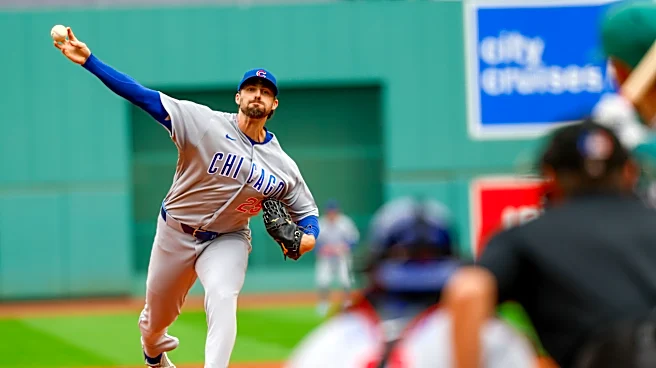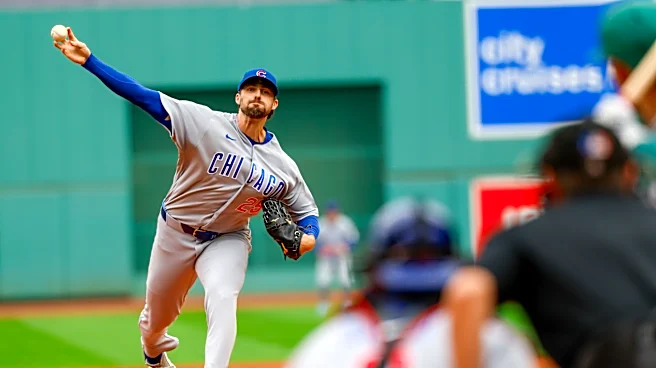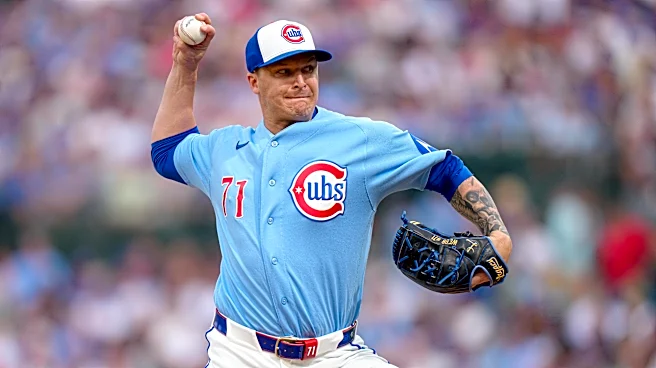




It’s early in the abbreviated Hot Stove season before team owners and Major League Baseball will likely lockout players while they try to negotiate a new Collective Bargaining Agreement. But if any teams want to sign players before the terms of the next CBA are set they’ll need to get those deals done before 11:59 PM Eastern Time on December 1. That should signal a flurry of activity in the next few weeks and the Cubs are already in on the action, signing last year’s sometimes closer Jacob Webb to a one year,
$2 million deal with a $4 million option (or a $500,000 buyout) in 2028.
I guess it’s not technically a free agent signing since Webb had a $2.5 million team option for 2027 already, but it’s still worth diving into the numbers that inspired the Cubs to keep Webb in the fold for at least one more season and potentially more.
The Stats
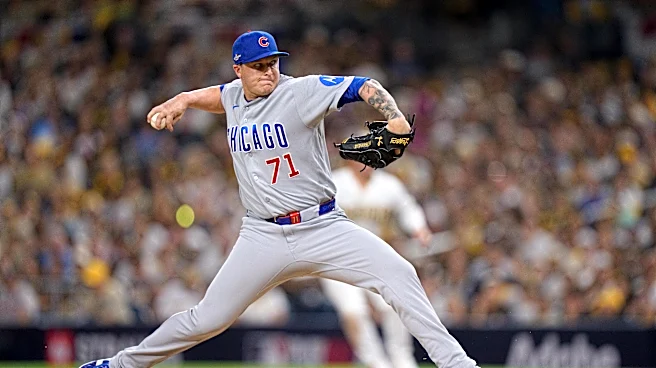
It’s not an exaggeration to say Webb helped save the Cubs season. Given the injuries to their pitchers, there were times the Cubs were basically running a continuous shuttle to Iowa in order to fill up a roster. Jacob Webb did more than fill a roster spot or throw some innings. In 67 total innings with the Cubs in 2026 he had a 3.36 ERA off a 4.03 FIP and a 3.57 xFIP. The 33-year-old righty also posted the best strikeout rate of his career with a 25.7% mark. Those aren’t traditionally closer numbers, but Webb locked down a team leading nine saves in 2026 regardless.
You can get a sense of how much value he added to the team on the below table showing all Cubs pitchers who threw at least 30 innings sorted by K-BB%:
Comparing starters and relievers is difficult because their jobs are so different. However, K-BB% provides us a pretty good proxy for effectiveness. Webb’s K-BB% of 16.9% was fifth among all Cubs pitchers last season. To be clear, that’s not a great mark relative to the rest of the league. This is certainly an area of improvement for the Cubs, whose only pitcher in the top 30 in the National League was trade deadline acquisition Kevin Gausman. But it’s a perfectly acceptable mark for a member of a competitive bullpen. That 16.9% K-BB% would have slotted Webb eighth on the Brewers staff, right between setup man Abner Uribe (18.4%) and swingman Shane Drohan (15.3%). Both Uribe and Drohan saw action during the World Series.
The arsenal
Webb also stands out among relievers for his pitch mix, which is primarily four seam fastball (42.9%) and changeup (38.8%), with hefty doses of slider (8.6%) curveball (7.4%) and a 2.3% dash of sweepers for good measure. Put it all together and it looks something like this:

The slider and curveball usage jump out as functional replacements for the sweeper Webb used to throw more frequently. For whatever reason, that sweeper was substantially less effective in 2026 for Webb as hitters hit .500 and slugged 1.000 on 26 sweepers thrown last season. As you’ve probably guessed the four seam and changeup are most effective both at suppressing power (batters slugged just .360 and .319 on those pitches respectively) and at generating whiffs (26.5% and 41.5% whiff rates respectively).
Takeaways
This is a solid initial move from Jed Hoyer and company, albeit a small move on a roster that demands so much more. Webb may have faltered down the stretch as the Cubs closer, but he never should have been the closer in 2026. He’s a perfectly acceptable middle of the bullpen option. He may even be a solid higher leverage arm if he has another season like 2026. Now it’s on the front office to add enough players around him to ensure he’s pitching more sixth innings than ninth innings for future Cubs teams.