






Surprise! It’s draft season!
It was hard to focus on the NBA Draft when the San Antonio Spurs were playing in the NBA Finals. But slowly, as the series started to slip, I found myself heading over to YouTube to check out the prospects who could be in San Antonio’s range come draft day. Now, with just mere days separating us from the NBA Draft, it’s time to do a full-blown deep dive into who the Spurs may pick on June 23rd.
In past years, there have been months without Spurs basketball where I could
watch hours of games to catch up on who San Antonio should draft. This year’s playoff run made that nearly impossible. So, like one of my favorite basketball commentators of all time, Bill Simmons, I studied the 2026 Draft prospects extensively on YouTube. With little time to do individual posts on all of the prospects, they’ll be lumped together in this article on first-round targets.
The Spurs have the 20th, 35th, 42nd, and 44th picks in the draft. It’s highly unlikely they’ll use all four of those picks, so expect some trades up or out of the draft. There is no guarantee that they’ll even make a selection in the second round, as those picks can often be traded for cash. It would make sense for them to look for someone with their first round selection. The 20th pick offers a wide range of outcomes. Past draftees in that spot include Jaylon Tyson, Jalen Johnson, Matisse Thybulle, Caris LeVert, Malaki Branham, Harry Giles III, and Bruno Caboclo.
In this particular draft, it seems unlikely that San Antonio will be able to select a player ready to start or play a significant role as a rookie with the 20th pick. Several players have the potential to develop into quality role players and fill some gaps on San Antonio’s roster, but fans should temper their expectations on the quality of prospects the Spurs can bring in with this pick (unless they trade up or someone falls).
With the scene setting out of the way, let’s take a look at the prospects San Antonio could consider.
Trade up targets:
Yaxel Lendeborg, 6’9” PF/SF, Michigan
30.2 minutes, 15.1 points, 6.8 rebounds, 1.2 blocks, 51.5% shooting, 37.2% three, 82.4% free throw
San Antonio’s number one need this summer is a big forward/wing who can play inside and out. Someone who can bang with bigs inside and rebound to help Victor Wembanyama in the paint, while being able to space the floor. Those players don’t grow on trees. In this draft, Lendeborg might be the most gettable prospect with those skills.
If the Spurs trade up for anyone in the draft, it should be Lendeborg. Yes, he’ll be 24 when he plays his first NBA game, but his skill level and development over his collegiate career give him a high floor with room to grow. Lendeborg could step in on day one and be a physical, slashing big man who could help on the boards, defend inside and out, and space the floor. He fits like a glove in San Antonio and is one of the few prospects in the draft who could step in and play a role on day one.
Morez Johnson Jr., 6’9” PF/C, Michigan
25.1 minutes, 13.1 points, 7.3 rebounds, 1.1 blocks, 62.3% shooting, 34.3% three, 78.2% free throw
This year’s Michigan roster was stacked with NBA post players. It wouldn’t be a shock if the defending National Champions saw three bigs drafted in the lottery this year. Much of that is thanks to Johnson Jr.’s ascent over the last few months.
Johnson Jr. would give San Antonio a lot of the versatility they need in the frontcourt. He’s an imposing physical and athletic presence who can gobble up boards inside and is quick enough to guard on the perimeter. He’ll be able to step into the league and compete on the offensive glass and serve as a rim-runner offensively as a rookie. He has a developing jump shot that could turn him from an undersized hustle big man to a legit floor spacing workhorse. Trading up for Johnson Jr. would signal that the Spurs believe in his jump shot and that he could play alongside Wembanyama or back him up.
Hannes Steinbach, 6’10” PF/C, Washington
34.6 minutes, 18.5 points, 11.8 rebounds, 1.2 blocks, 57.7% shooting, 34% three, 75.9% free throw
San Antonio may never lose the rebounding war ever again if they draft Steinbach to play alongside Wembanyama. The Washington freshman is a tough, big, rebounding forward/center who exploded onto the scene this year. He’s adept at scoring around the basket, converting on 67.2% of his looks at the rim in half-court settings, and will get out and finish plays in transition.
There are question marks around Steinbach’s defensive positioning. Is he quick enough to guard smaller fours? Can he protect the rim well enough to play center? With Wembanyama, those defensive questions become less important, especially if he’s able to do more of the dirty work on the glass and score around the basket. The real swing skill for Steinbach is his jump shot. He showed signs of shooting touch in his freshman season, hitting 18 threes at a 34% clip. If his jump shot continues to develop, he’d be an ideal offensive fit with Wembanyama as a big man who can score inside and out.
In range at #20:
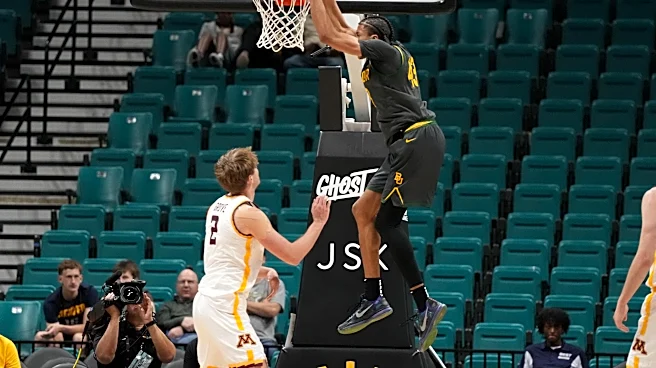
Cameron Carr, 6’5” Wing, Baylor
33.7 minutes, 18.9 points, 5.8 rebounds, 1.3 blocks, 49.4% shooting, 37.4% three, 80.1% free throw
Pretty much every player on this list fills a similar niche: a versatile big/wing who can join Wembanyama in the Spurs’ frontcourt. Carr is not that, but he could be just as valuable. The 21-year-old wing is a knockdown three-point shooter with some crazy vertical pop. Go watch the way Carr leaps for dunks and blocks and tell me you aren’t impressed.
San Antonio needs more floor spacers at all positions. They were over-reliant on Julian Champagnie and Devin Vassell to hit open threes this season. Adding Carr would give them another shooter who would thrive in San Antonio’s up-tempo system. He can score as an off-ball cutter who finishes athletically at the rim and defend off the ball as a defender who plays aggressively in the passing lanes and erases shots at the rim with his 42.5-inch vertical. Carr needs to add more strength and become a more physical player overall, but his combination of shooting touch and athleticism would make him an exciting addition to San Antonio’s growing young core.
Allen Graves, 6’8” PF/C, Santa Clara
22.6 minutes, 11.8 points, 6.5 rebounds, 1.9 steals, 51.2% shooting, 41.3% three, 75% free throw
Graves finds himself mock-drafted to the Spurs more than any other player. He fits exactly what they need as a versatile forward with good defensive instincts and a nice jump shot. Graves needs to get more physical around the rim and find a way to defend without fouling, but his combination of defensive playmaking, rebounding, floor spacing, and passing makes him an intriguing bet for San Antonio at 20.
Graves doesn’t seem like the type of player who can come in and play an immediate role on a title contender. He came off the bench for a WCC school in his sole collegiate season and played limited minutes. The Spurs could develop him into a long-term frontcourt partner with Wembanyama and use his versatility to give them another look in their big-man rotation.
Karim Lopez, 6’8” Wing, New Zealand Breakers
25.8 minutes, 11.9 points, 6.1 rebounds, 1.2 steals, 50.2% shooting, 32.6% three, 71.7% free throw
Lopez would best be described as a power player. He uses his size, frame, and physicality to score on tough drives in the half-court and transition. He does a lot of the things San Antonio needs in a wing/forward. He was fairly productive in the NBL, a professional league in Australia and New Zealand, but his question marks on defense and from three-point range have left him out of the lottery conversation.
Lopez showed flashes as a standstill shooter, but hit just 32.6% from three in his second season in the NBL. Defensively, he struggles to stay in front of athletic offensive players, and he allows players to back-cut after ball-watching off the ball. If San Antonio were to select Lopez, they would be betting on his physical tools and feel for the game, with the belief that his jump shot and defense can develop.
Jayden Quaintance, 6’9” C, Kentucky
(USING FRESHMAN YEAR STATS) 29.5 minutes, 9.4 points, 7.9 rebounds, 2.6 blocks, 52.5% shooting, 18.8% three, 47.9% free throw
The idea of Quantaince is exciting. He’s an athletic big man who is one heck of a defensive playmaker. The drop off in rim protection from Wembanyama to Quaintance would be like going from an A+ to an A. The reason he will be available where the Spurs are selecting is that it’s unclear when he will be able to play and how healthy he will be.
Quaintance tore his ACL in February of 2025 and has not recovered since. He played in just 4 games his sophomore year at Kentucky, dealing with complications from the injury. Not only are teams worried about his knee’s health, but also whether the experience has sapped some of his athleticism. It’s not just health with Quaintance; he’s also an extremely limited offensive player who will be best at rim running at the next level.
San Antonio is one of the few teams that make sense for Quaintance. There aren’t a ton of “win-now” prospects at 20 in this draft, and the Spurs’ rotation is already overflowing with logjams. San Antonio could select Quaintance, let him rehab and develop in the G League for a year, and then plan to unleash him behind Wembanyama in the years to come. Selecting Quaintance at 20 would be a long play, but one that could ultimately solve a lot of the Spurs’ backup big man problems for years to come.
Dailyn Swain, 6’7” Wing, Texas
32.8 minutes, 17.3 points, 7.5 rebounds, 1.6 steals, 54.2% shooting, 34.4% three, 81.5% free throw
Swain played a crucial role for the Longhorns this year, leading the team to the NCAA Tournament in his breakout junior season. He has good size for a wing, is an excellent ball-handler and driver for the position, and has potential as a defensive playmaker. Off the ball, he’ll be a strong cutter, but won’t be an elite floor spacer, as he has a slow, inconsistent jump shot. He’ll be at his best with the ball in his hands at the NBA level. That’s a bit of a problem for his fit in San Antonio, since they already have a lot of ball-dominant players on the roster.
To a certain extent, San Antonio should draft the best player available at 20. If Swain is available at 20, he’d certainly be among the best prospects they could select. Do the Spurs need a ball-dominant handling wing who doesn’t space the floor? Probably not. But he would give them another offensive weapon in a bench unit that struggled to score at times in the playoffs.
Reaches:
Chris Cenac Jr., 6’10” PF/C, Houston
24.8 minutes, 9.5 points, 7.9 rebounds, 0.5 blocks, 48.5% shooting, 33.3% three, 62.1% free throw
Cenac Jr., in theory, would be an awesome fit next to Wembanyama. He’s got great size and athleticism, and projects to eventually shoot the ball consistently from three. He’s already a strong rebounder, has a ton of defensive tools, and could develop into an interesting offensive player who could dribble, pass, and shoot as a stretch 4/5. The problem is that a lot of these skills are theoretical. They came out in flashes during his freshman season at Houston, but most of the time, he was a weaker forward who played more like a wing than a center.
Selecting Cenac Jr. would be a developmental pick for the Spurs. Like Carter Bryant, he’d be a toolsy prospect who could maybe get some spot minutes, but has not consistently put it all together to earn significant minutes. San Antonio could take Cenac Jr., develop him in the G League for a year or two, and slowly work him into the rotation over time.
Koa Peat, 6’7” PF, Arizona
27.8 minutes, 14.1 points, 5.6 rebounds, 2.6 assists, 52.8% shooting, 35% three, 62.3% free throw
Jeremy Sochan never found his footing with the Spurs, mostly because his offensive game couldn’t complement the rest of the roster. Peat gives me those same worries.
The Arizona freshman is a fierce competitor who has won at every single level. He’s a really strong athlete who bullied his way to the basket in college and high school. He shows intriguing upside as a playmaker, mid-range scorer, and versatile defender. The problem is that he cannot shoot. He went 7-20 from three-point range and only shot 62.3% from the free-throw line in his freshman season. What will his offensive role be for the Spurs if he’s not spacing the floor?
Peat has the pedigree and demeanor to be a winner at the NBA level. But it’s so uncertain how his skills will translate to the next level, and you have to squint to find a fit for him with the Spurs. San Antonio has done a great job drafting high-character winners in the last few seasons, like Wembanyama and Stephon Castle. If they value that above all else, Peat could be the selection at 20.
Joshua Jefferson, 6’8” PF, Iowa State
30.9 minutes, 16.4 points, 7.4 rebounds, 4.8 assists, 47.1% shooting, 34.5% three, 70% free throw
Boris Diaw and Kyle Anderson. Those are the type of players that Spurs fans most often say they want on this team. Well, there might just be one of those guys in the draft. Jefferson is a slower, athletically limited player who thinks the game incredibly well. He’s an awesome playmaker and rebounder at his position while defending and scoring well as a senior at Iowa State. His jump shot came a long way, as he showed the ability to hit standstill threes this year. There are still significant questions about his athleticism and shot-making ability at the NBA level.
Jefferson, in my eyes, is the perfect fit for the Spurs. He can dribble, pass, shoot (kind of), rebound, and defend. He’s able to push the pace in transition and move the ball well in the half-court. If the shot continues to improve, he’ll space the floor alongside Wembanyama while providing some of the toughness San Antonio needs inside. A lot of people have a second-round grade on Jefferson, but his unique set of skills makes him an intriguing reach candidate for San Antonio at 20.
Henri Veesaar, 6’11” C, North Carolina
31.4 minutes, 17 points, 8.7 rebounds, 1.2 blocks, 60.8% shooting, 42.6% three, 61.5% free throw
The Spurs need another look in their front court. Luke Kornet is a solid screener, paint protector, and rebounder. He does the dirty work you need from a backup big, but he lacks the offensive pop and shot blocking that San Antonio could use against more athletic teams. Veesaar could be a great change of pace with his size, shot blocking, and floor spacing.
Veesaar is a weaker big man who struggles with physicality. Players will try to go through him when he’s defending, and they’ll try to take advantage of his lack of strength when he’s rolling or trying to finish around the rim. Because of that, it’s not a sure thing he’ll be able to play alongside Wembanyama even with his three-point shot. The Spurs would be incredibly thin in the front court with him and Wembanyama being their two bigs. On the flip side, Veesaar and Wembanyama would be incredibly tough to score over the top of, and could cause a lot of challenges for defenses with their floor spacing ability. Veesaar is another player who could be available with San Antonio’s second-round selections.
Isaiah Evans, 6’6” Wing, Duke
28.2 minutes, 15 points, 3.2 rebounds, 0.7 steals, 43.3% shooting, 36.1% three, 86% free throw
You can always use more shooting, and Evans is one of the best movement shooters in the draft. He hit huge shots for Duke in his two seasons there. A lot of those shots were with a high degree of difficulty, which bodes well for his ability to knock down threes with more space at the next level. Every aspect of his game stems from that shooting ability. His drives usually come from attacking hard closeouts, and his gravity as a shooter can open up lanes for others. He is improving as a defender, but still leaves a lot to be desired on that end. He’s also not much of a playmaker on the wing.
If San Antonio just wants to add more shooting, they could do a lot worse than Evans. There is a chance the Duke sophomore falls to the second round. At 20, he’s a bit of a reach, but at 35, he’d be a worthwhile flyer who could develop into a solid movement shooter off the bench.