





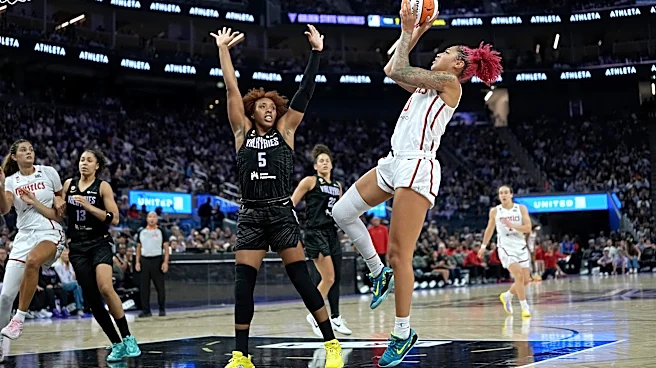
The Toronto Tempo fell to the Las Vegas Aces 109-83 on Monday night, heading into the All-Star break on a three-game losing streak and sitting 10-16 on the season. Toronto ranks last in the WNBA in defensive rating (allowing 113.9 points per 100 possessions) and has allowed its three worst defensive games of the season in the last five contests. While the incumbent champion Aces are a tall task for any defence, it’s worth exploring what happened to enable Las Vegas to post its best offensive performance
(134.6 offensive rating) of the season.
The A’ja Wilson Problem
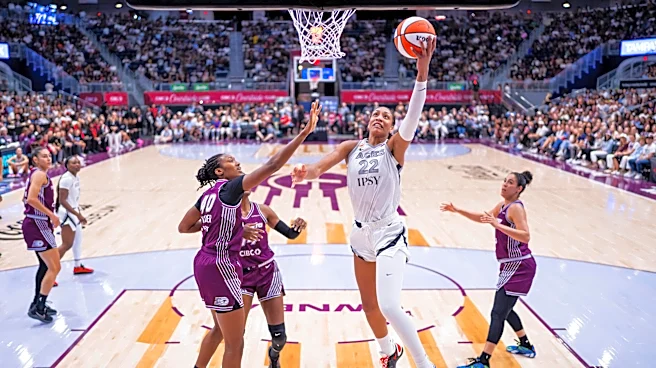
Wilson, the reigning All-WNBA, All-World MVP, is a problem for any offence because of her unique combination of size and skill as well as the completeness of her offensive game. Most teams don’t have a defender capable of guarding her one-on-one. Because of her ability to score at all three levels (paint, midrange, three), it’s impossible for defences to take away everything, and so usually, game plans will prioritize taking away something.
Toronto, dearly missing the injured Nyara Sabally (and Kiki Rice and Brittney Sykes), put Isabelle Harrison on Wilson, and prioritized not getting beat in the paint, at the expense of giving up more to Wilson beyond the arc. That gave Wilson—this year, an elite 43.4 per cent three-point shooter—space to shoot, and she capitalized, going 3/3 from deep.
Of course, once you try to take away the three, you open up the paint. Wilson can drive against closeouts or simply overpower any defender, Harrison or a smaller 4, to finish inside. On the rare occasions that they were set and able to, Toronto doubled Wilson in the post with some success, although Wilson can make the right read and will adjust to attack before the double comes.
The corresponding problem that Wilson presents is how much she opens up for the offence without touching the ball. Her gravity often leaves space for other players. Below, Temi Fágbénlé doesn’t want to leave Wilson, and thus doesn’t jam the now-open Jackie Young cut; then, Wilson’s interior mismatch on Laura Juškaitė draws the attention of Kia Nurse, who leaves the corner open enough for Jewell Loyd to hit a three.
Las Vegas also plays Wilson next to NaLyssa Smith, who will bully any smaller defender, and Toronto’s injuries and lineup/spacing trends mean they pretty much always play a 4 smaller than Smith (Juškaitė, María Conde). Smith shot 9/10 from the field.
Game of Zones
Speaking of shooting well from the field, Vegas shot 14/38 (36.8 per cent) from three, tying their season-high in three-pointers made and setting a season-high in three-pointers attempted. On the plus side, this contributed to Toronto holding the Aces to just six free-throw attempts, a Vegas season-low, but that sliver of a silver lining won’t be much comfort to the Tempo.
What the shot-making did, too, was incline Toronto away from its zone defence look, which the Tempo displayed at a fairly high rate, especially early in the game. The idea is good: if you have matchup problems, as above, you eliminate matchups, while also throwing different looks at the offence. The downside is that the zone usually opens up a lot of shooting opportunities, and if the opponent is hitting, the zone’s in trouble.
While the Tempo got a turnover on the first zone look, the Aces were ready from that point on. Las Vegas shot 12 threes in the first quarter, a season-high, and hit six, also a season-high. They were able to overload one wing of the 2-3 zone, moving the ball to get the wing defender to step up and then cycling in another player to replace that now-unattended corner for an open three.
Interestingly, the Tempo had a few possessions where the 2-3 zone morphed into more of a 3-2. We’ll keep an eye on that to see if that continues or if it was just how the defence played out. The Aces played it out with no issue, however, using on- and off-ball screens to create good looks both times.
In the first, Smith screens inside and rolls outside of the 3-2’s wing defender, which essentially eliminates any back-end defence, and the last-line help is a step slow to rotate off the big in the dunker spot. Then—I think this is just natural flow out of a 2-3—the usual weakside corner cycle creates an initial opening, a mismatch post-up creates a strong-side threat, and incredible Jackie Young manipulation plus a Wilson pin-in screen gives Dana Evans yet another corner three. Las Vegas took 14 corner threes, per pbpstats, a season high.
Difficulties in Drop
Allowing threes wasn’t just limited to zone defence. The Aces were able to create plenty of looks against individual coverage off the dribble, and, unfortunately for the Tempo (and just about every defence), the guard trio of Young, Loyd, and Chelsea Gray is lethal off the dribble.
With Harrison intent on protecting the paint, as above, Toronto started by playing a lot of drop coverage against the Aces’ ball screens. That’s tied to strong point-of-attack defence, and the Aces are experts at rendering the point of attack less effective with a barrage of lead-in actions. Las Vegas’ pre-screen actions, 77 (double drag) and Chicago, put the point-of-attack defender behind Young, who had no issue pulling up to shoot against the drop, and simple pick-and-roll (Wilson is, naturally, a threatening screener) had the same effect:
On other occasions, the point-of-attack defender went under or died on the screen, leading to more pull-up threes:
Toronto generally upped the aggressiveness of its coverage as the game progressed, adjusting to Vegas’ nine first-half three-pointers made (a season-high). They played more at the level of the screen, which stops the bleeding at the mesh point but can create issues in rotation. Blitzing Young and Gray can work, but both are passers more than capable of finding the quick pass to turn a 2-on-1 defensive advantage into a 4-on-3 offensive advantage (something we’ve seen Marina Mabrey improve on). It can also lead to more switching, which can turn into a mismatch for A’ja Wilson before you know it.
Again, this isn’t easy for a fully healthy team to deal with on the best of days, and Toronto was without key perimeter defenders to stop the Aces’ guards and without its most versatile pick-and-roll defender. The Aces are the league’s second-ranked offence for a reason.
But the Tempo have aspirations to reach the same threshold, and the more stops they get, the more they can get out and run in transition. Toronto will want to shore up supplemental mistakes not covered here (giving up a layup immediately after a made layup, not getting back in transition, etc.), but building up the defence to compete with the best of the best in the halfcourt is the ultimate goal.