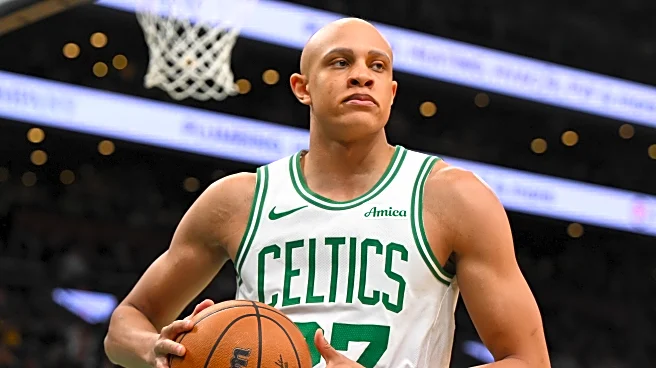

In this series, we’re looking at the biggest statistical differences between last season and the current one to understand how Celtics players have evolved while wearing the same jersey. Not every role
change is about being different. Sometimes, it’s about having the opportunity to be yourself. Jordan Walsh’s season is a clear example.
Coming into the year, Walsh wasn’t expected to play a major role in Boston’s rotation. That changed quickly as Joe Mazzulla adjusted his rotation game after game. Walsh’s non-garbage-time minutes jumped by more than 11 per game — one of the largest increases on the roster — while his usage barely moved. The Celtics didn’t ask him to do more; they allowed him to be himself during meaningful minutes.
That context matters when looking at his offensive numbers. Walsh’s efficiency exploded. His points per 100 shot attempts increased by nearly 39, fueled by improvements across the board: better finishing inside the arc, a significant jump in three-point percentage (+13.2%), and a massive rise at the free-throw line (+37.7%). This was an opportunity to build confidence through repetition while keeping the same approach — and Walsh took it.
The biggest shift is in where those shots come from. Walsh is attacking the rim far more often, with his rim frequency jumping by 25%. At the same time, his corner-three frequency dropped sharply (-19%), while non-corner threes also declined. He isn’t being asked to stay parked in the corner anymore. He’s cutting, running the floor, and crashing the offensive glass far more than before. Overall, he’s being rewarded for activity.

That tendency also shows up in his assisted-shot profile. The share of his assisted field goals fell by nine percentage points, driven in part by more putbacks and second-chance opportunities. Walsh isn’t creating offense for himself in the traditional sense, but he’s using extra possessions and hustle to carve out a place in the league.
Defensively, Walsh continues to lean into his strengths. His steal rate increased (+0.8%), and he’s spending far more time on ball-handlers, generating transition opportunities for the Celtics. Defensive versatility remains the foundation of his value, but the offensive growth has made his minutes easier to justify.
Walsh’s season isn’t about breakout scoring or expanded usage. It’s about trust. More minutes, a clear mission, and an impact that reflects engagement rather than hesitation. Same jersey, different job.
Below is an overview of his statistical evolution, via Cleaning the Glass: