






The 2025-26 season is over and the summer is here. Hopefully you don’t live in parts of Europe that have been crippled by the record-breaking temperatures that have, tragically, caused the deaths of thousands of people.
It’s the time of relentless transfer rumors, politically problematic football tournaments, and, unfortunately, little to talk about from the club perspective. But the show must go on! You, dear reader, demand a monthly review and you deserve to get one, so let’s get started.
Transfer news
The big
news of the month was that Juventus decided to allow Dusan Vlahovic’s contract to expire on June 30 after declining to match his salary offer. Vlahovic and his team requested to effectively maintain the same €12 million net he received per season while Juventus offered to slightly reduce his salary. We’ve discussed the topic to death, so I won’t spend too much time on it here again.
My main argument regarding these salary discussions has always been this: For Vlahovic to demand the same salary as he has received since he joined implies that in his opinion, to use the terminology from the business world, he has met his Key Performance Indicators (KPIs) that we established for him when he joined the club. In other words, his performances during his 4.5 years at Juventus have met the expectations we had for him and justify his transfer fee. I disagree with that perspective and understand why Juventus don’t want to match that offer. Given the lack of interest from other clubs in the Serbian striker, it seems like other clubs agree with us.
In the striker department, we have switched our attention to Alexander Sørloth of Atletico Madrid and (again!) Randal Kolo Muani of Paris Saint-Germain. We have supposedly agreed personal terms with both Sørloth and Kolo Muani but as we joked about on a recent podcast episode, agreeing to personal terms seems to mean little these days.
On the opposite end of the pitch, we continue our search for what will likely be a replacement for goalkeeper Michele Di Gregorio, who had a poor season. The main contender is the slightly insane eccentric Argentine Emiliano Martínez of Aston Villa after negotiations with Liverpool for Alisson Becker collapsed (which again proves how meaningless the “agreeing to personal terms” is because supposedly we agreed to personal terms with Alisson, too). And guess what … we also agreed to personal terms with Martínez! Talks are currently at a standstill, likely because Martínez is at the World Cup with Argentina. Tottenham Hotspur goalkeeper Guglielmo Vicario has emerged as a backup option.
Off the pitch, Juventus CEO Damien Comolli was fired and Giovanni Carnevali has replaced him as CEO and General Manager. This completes a restructuring of the club back to how we operated pre-Comolli.
Besides these big stories, here’s some more transfer news from June:
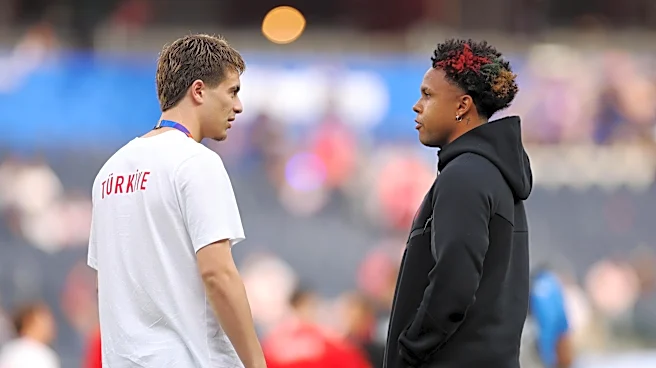
- Arsenal were interested in Kenan Yildiz but Juventus are not entertaining any offers for the young Turkish superstar.
- In defense, the Bianconeri is inquiring about Bologna center back Jhon Lucumí who is currently at the World Cup playing for Colombia. We’re also interested in Bosnian defender Tarik Muharemovic, who spent the last two seasons at Sassuolo. He is particularly interesting because we have a 50% sell-on clause in his contract, and it means Juve basically get him for a half-price fee.
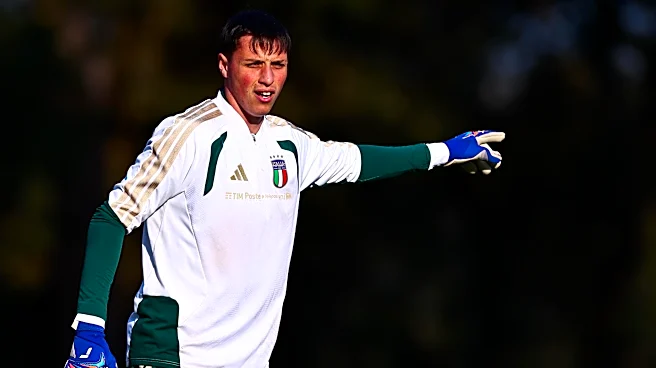
- Parma are clearly expecting clubs to come knocking for their Japanese goalkeeper Zion Suzuki after his stellar performances at the World Cup. Juventus agreed to sell young Next Gen goalkeeper Giovanni Daffara to Parma for €6 million, likely paving the way for Suzuki to join a big club in the summer.
- As expected, we exercised our option to buy Jérémie Boga outright from Ligue 1 side Nice for €4.8 million.
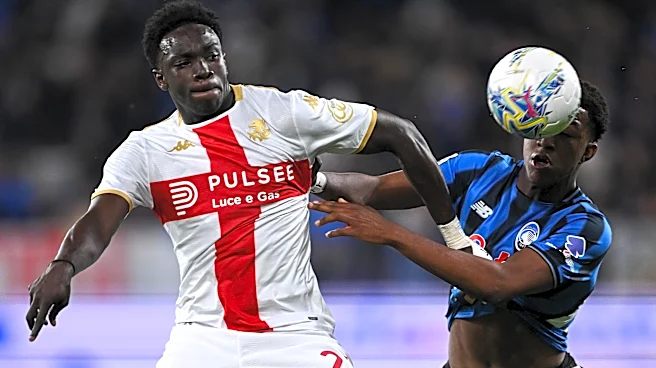
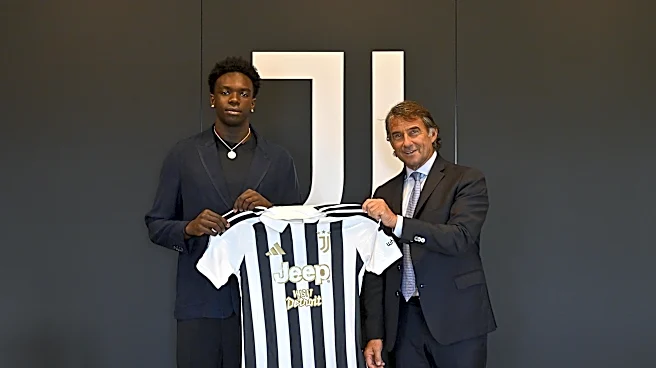
- It looks like we’ve made our second transfer of the summer! Genoa striker Jeff Ekhator will join Juventus for €16 million plus €2 million in add-ons. As part of the deal, Genoa purchases Next Gen fullback David Puczka for €5 million.
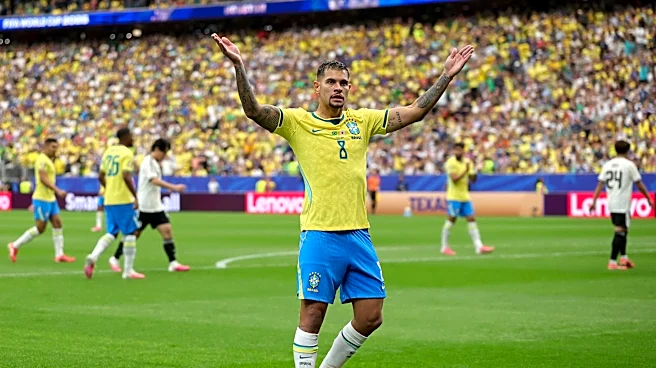
- Côte d’Ivoire midfielder Franck Kessie had a solid World Cup for the Ivory Coast and will be a free agent this summer. Juventus might be interested in the former AC Milan and Atalanta midfielder.
- Our finances are a mess. As a result, we may have to sell Fabio Miretti to Bologna … yesterday?
- There are whispers that a few clubs might be interested in purchasing Andrea Cambiaso this summer.
- I’ll end with a rumor so absurd that, well, how could I not include it? Some newspapers claim that Juventus want to bring Paulo Dybala back to Juventus. Yeah …
Generally Unaccepted Accounting Principles
On the last day of June, UEFA announced that Juventus and 13 other clubs received fines and other disciplinary measures as a result of their failure to comply with various financial sustainability rules. UEFA’s Club Financial Control Body (CFCB) found that Juventus broke the “football earnings rule”, which permits a maximum aggregate deficit of €60 million across the three financial years before the monitoring period (2023-25).
We signed a three-year settlement agreement with CFCB in which we receive a fine of €20 million but, and here’s the kicker, a whopping €14 million of it is conditional on our ability to “hit intermediate targets and return fully within the financial parameters by the end of the settlement period.” In other words, this is a mere slap on the wrist.
It reminds me of the (very unpleasant) mantra in the tech/startup/business world where they say that it’s better to ask for forgiveness than for permission. Clearly, it is cheaper to ask UEFA for (conditional?) forgiveness than it is to immediately comply with its financial sustainability rules. That said, you wonder if we deliberately ignored these rules or, which would be comically embarrassing, if we actually tried our best to comply but simply could not because of our incompetence/bad finances.
Even though this punishment was light, it still comes with a potential heavy punishment. If Juventus fail to accomplish the aforementioned “intermediate targets”, the club will “be subject to a restriction on the registration of new players on their List A for UEFA club competitions.”
This verdict is also further confirmation of the fact that our finances, specifically in the last three seasons, have been terrible. However, it’s also interesting to see that 13 other clubs were punished: Aston Villa, Chelsea, Newcastle United, Nottingham Forest, Nice, Strasbourg, AEK Athens, Santa Clara, Astana, Partizan Belgrade, Fiorentina (!), Vardar Skopje, and Fenerbahçe. Despite the stratospheric amounts of money in the (European) game, it seems that only a small percentage of clubs is actually financially stable.
The Morality of the World Cup
I’m very grateful to Semperty (aka Tycogdill) for his excellent piece about the difficult moral situation that we fans find ourselves in this World Cup. We love the game and the wonderful, emotional stories it gives us but we hate the blatantly corrupt parts of the game that have become so obvious that we can’t ignore them anymore.
At the start of the World Cup, I felt emotionally detached from the competition. My plan was to follow it but only loosely because I felt that by supporting this World Cup, I was a hypocrite and supporting the tyrants Gianni Infantino and his newfound BFF, President Donald Trump. Who was I to criticize them and their policies if I was, at the end of the day, a sucker who simply watches the game after all is said and done?
Was I also implicitly approving of the various human rights and immigration abuses in this competition, the millions of underpaid data workers all over the world powering the game, the previous World Cup in Qatar that had numerous human rights problems, and the one in 2034 in Saudi Arabia (which will likely have its own set of social controversies).
I realize that boycotts are difficult because coordinating/organizing one point of action with people all over the world is extremely impractical. So what power do I have to make any change in a game that has so many problems? I really don’t know, but what is clear to me is that politics and sport are absolutely inseparable. We live in a time in which even the most casual fans can no longer ignore, be indifferent to, or act ignorant of the sociopolitical problems of the game.