
Offense gets fans in the seats, but defenses win championships.
Arizona Cardinals head coach Jonathan Gannon is a defensive-minded. He brought over his strategies that worked well when he was the DC for
the Philadelphia Eagles, who had just lost the Super Bowl. The Cardinals were in need of some defensive changes, and Arizona owner Michael J. Bidwill thought a keen defensive guy could make a difference.
RELATED: CARDINALS ONCE AGAIN GET DOMINATED IN LOSS TO TEXANS
Gannon laid out a three-year plan, of which this season is the final year. At 3-11-0, those plans have highlighted quite a few problems and issues instead of playoff tickets going on sale.
The NFL loves the offensive side of the ball. They make no bones about it, either.
Can’t land on a quarterback, can’t touch a receiver after five yards, can’t hit a player in the face, after one Mississippi can’t hit a signalcaller, can’t block a man beneath the knee, allow offensive players to go into motion, no helmet-to-helmet contact, usually allows an offensive player to shield a defender on crossing routes (called a rub), and an offensive player can place his hand on a defender’s facemask as long as he doesn’t grab it.
And tackling? Geez. Players such as Ray Nitschke, Dick Butkus, Sam Huff, and Lawrence Taylor would be shadows of themselves in today’s NFL.
It used to be that players would kill each other in practice each week to prove to their own teammates who was the toughest SOB. And what’s this? Water breaks? Don Shula is spinning in his grave.
Gannon sees that the Cardinals’ defense is a bad-tackling team.
And rightfully so.
Remember when the goal on every tackle was to center the helmet on the other player’s jersey number, square up, and drive through the player? Or take him down by placing the helmet to the side of the ballcarrier’s knee, grab both legs just below the knees, and squeeze.
Now? Athletes today grab another player’s waist and try to sling them down. Or they jump on their shoulder pads and attempt to make their own body weight collapse the one with the ball. Out of Australia’s rugby culture came the “hip-drop” tackle, which has now been abolished. That used a player’s weight against him, but twisted knees and ankles in the process.
No team can have a good defense without sound tackling.
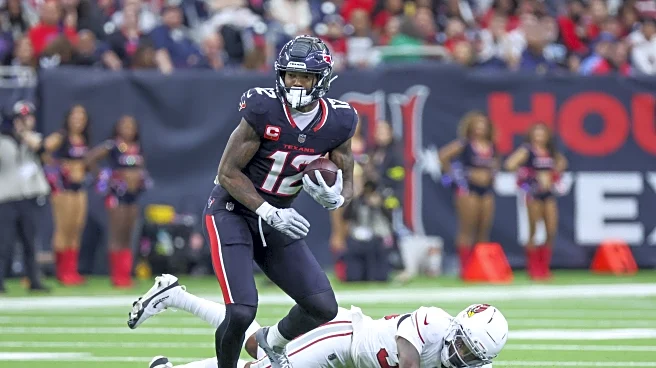
This past weekend against the Houston Texans, the Cardinals had plenty of missed tackles. It certainly made their opponent’s YAC stats much better and kept drives alive. Arizona has allowed 40 rushes with at least five yards after first contact. This ranks #3 in the league.

Currently, the Cardinals are ranked #11 in the NFL in missed tackles (85) in 2025. And they aren’t that far behind being in the Top-5. Safety Budda Baker leads the team in missed tackles with 11, followed by Mack Wilson (who is currently on IR) and Garrett Williams, both of whom have eight. However, Baker leads Arizona in tackles with 101 total tackles.
Gannon knows this is a team issue, and he knows part of the reason why: the NFL’s collectively bargained rules prevent defensive players from becoming better tacklers.
The coach recently shared his view on the subject:
“How the rules are set up, it’s hard to get better as a tackler being in the NFL, I’ll say that.”
Practicing how to tackle at this level has been hampered quite a bit. If the league had its way, it would ban tackling in practice sessions altogether. Lawyers rule this Earth, and they want it gone. Key players get hurt and are lost for long periods of time, which doesn’t compute to being on the field during real games.
Teams are only allowed 14 padded practices, but 11 of them have to take place during the first 11 weeks of the season. During the offseason, actual contact is prohibited.
When Coach Gannon was asked if he would be asking for different rules regarding tackling, he said:
“The rules are the rules. It’s set up how it’s set up, that’s fine. But to get better at a skill, you have to practice the skill. You practice skill, you can scale it, you can scale the tempo, you can scale how you do it, but to practice a skill, you need to practice the skill.”
Every offseason, one team or another brings up the subject of allowing more contact in practice at the owner’s meetings, especially the ability to tackle.
Gannon offered:
“A lot of people think [that if] you can’t practice it you better just acquire people that can tackle because you ain’t going to help them at all. That’s a thought process, too. To each their own. But it’s a challenge.”
Is poor tackling a product of the league placing the handcuffs on defensive coaches?
Gannon had his thoughts:
“And so it’s a conundrum I think all defensive guys face and there’s risk-reward to trying to practice it with it however you set things up. But you definitely have to be a good tackling defense to play good defense.”
The big question then looms: Why teach tackling at all at this level? Why not just draft players who have already shown they know how to tackle in college, and have had great success without any tutelage at all. If a guy can’t tackle in college, don’t grab him for this defense.

LB Carson Schwesinger of the Cleveland Browns led the nation with 90 solo tackles for UCLA last season. Now, he is the sixth-ranked tackler in the league despite being a rookie. Another linebacker, Roquan Smith of the Baltimore Ravens, was near the top in tackles in the nation his final two years at Alabama, and is annually a top tackler in the NFL. Jordyn Brooks of the Miami Dolphins had 86 tackles as a freshman at Texas Tech and was a four-year starter with 367 total career tackles. Now, he leads the NFL.
It is true that the lack of opportunities to tackle in practice limits skill development.
Maybe re-invent the wheel. Instead of training in-house and hoping that translates to the field, maybe find guys who are already productive tacklers and plug them in instead.
If they can’t already drive a player to the turf, let them miss tackles for another team.