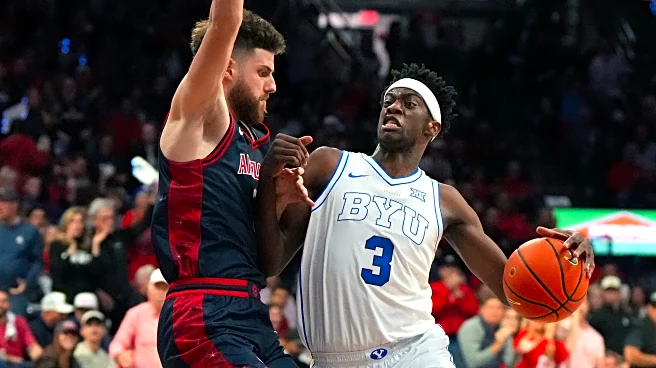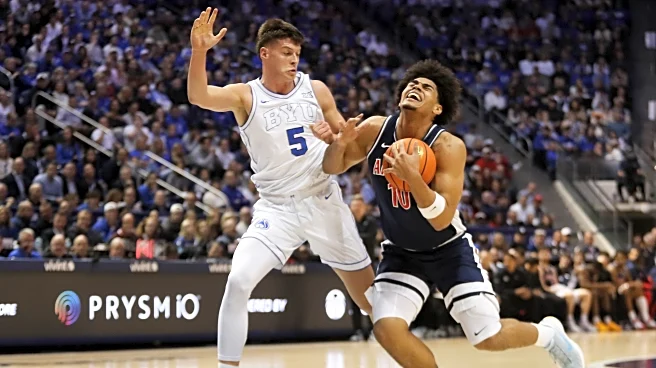



During the latter years in the Pac-12, Arizona often could go an entire league schedule without facing more than two or three ranked opponents. The final season in 2023-24 only featured one such matchup.
On Saturday, the Wildcats will face a ranked league opponent for the fourth consecutive game.
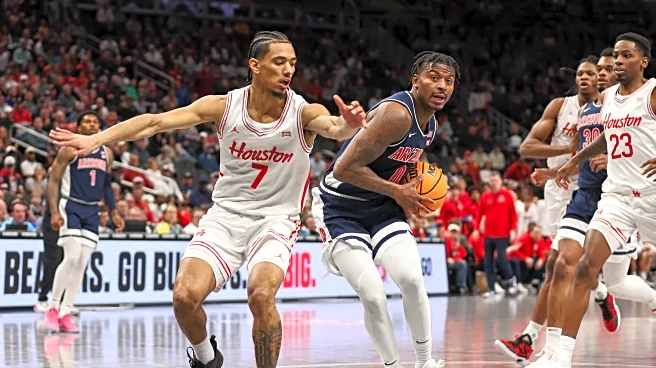
No. 4 Arizona (24-2, 11-2) visits No. 2 Houston (23-3, 11-2) with first place in the Big 12 on the line. It will be the second straight road game against a Top 10 opponent, following the loss at No. 9 Kansas
on Feb. 9, and the third Top 10 road game of the season including the win in November at No. 3 UConn.
“We have an incredible challenge on Saturday, but these are the games we want to play in,” UA coach Tommy Lloyd said.
Houston is the only team in the Big 12 that Arizona has not beaten since joining the conference. The Wildcats lost to the Cougars twice last season, once at McKale Center and then in the Big 12 Tournament finals, and Houston also beat Lloyd’s first UA team in the 2022 Sweet 16.
This will also be the UA’s first trip to the Fertitta Center, where Houston has only lost once in three seasons in the Big 12.
“I’m sure their venue is great, but you could play them on a playground and I’m sure it’d be the same game,” Lloyd said.
Here’s what to watch for when Arizona and Houston battle for the Big 12 lead:
Depth vs. fill-ins
Under normal circumstances, Arizona’s bench would likely log more minutes on Saturday than Houston’s would. But that was before Dwayne Aristode got sidelined by an illness and Koa Peat strained a muscle in his lower leg, completely throwing a wrench into the Wildcats’ 8-man rotation.
Peat will miss a second straight game, while Aristode’s status remains uncertain. Even if the freshman can play, though, he might not be 100 percent after missing time (and, no doubt, practice).
Freshman forward Sidi Gueye provided 10-plus huge minutes off the bench against BYU, his first significant action outside of garbage time with four points and four rebounds as well as three fouls. Senior guard Evan Nelson even played four minutes in the first half to help spell Jaden Bradley and an under-the-weather Brayden Burries, who required a postgame IV.
“He got an opportunity because an opportunity arose, and it was great,” Lloyd said of the 6-foot-10 Gueye. “Our guys, they practice with them every day, and they know how he can impact the game around the rim and how he can catch lobs and such.”
Houston, though, regularly subs in five different reserves, three of whom play 10 or more minutes to help the Cougars’ talented starting five stay fresh. None are particularly productive outside of 6-foot-11 senior Kalifa Sakho, but just being able to spell a starter here and there can often be more than enough to make a difference.
Yet another freshman phenom
Arizona has already gone toe-to-toe with BYU superstar AJ Dybantsa, and though he scored 35 points on Wednesday he was 19 of 52 from the field in two meetings with the Wildcats. The UA avoided Kansas’ Darryn Peterson, who sat out their game in Lawrence, but now get to face another big-time first-year player in Houston guard Kingston Flemings.
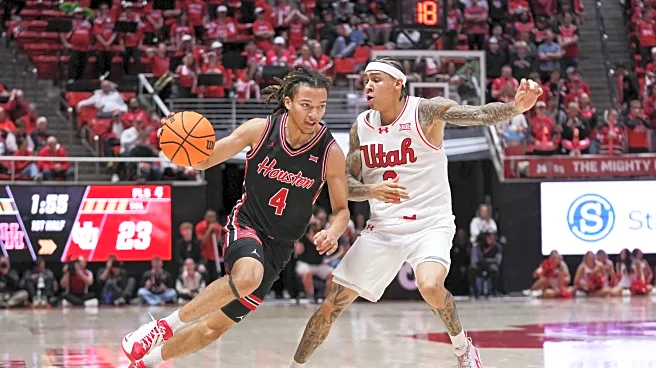
The 6-foot-4 Flemings leads the Cougars in scoring (16.6) and assists (5.3) and has 10 20-point games, including 42 in a loss at Texas Tech last month. He pairs tremendously well with senior guard Emanuel Sharp, one of three starters back from the team that played in the NCAA title game last season.
Flemings is one of two freshmen in Houston’s starting five, along with 6-foot-11 center Chris Cenac Jr., who averages 9.7 points and 7.8 rebounds in Big 12 play.
Those newcomers have blended in perfectly with the Cougars’ veterans, continuing the physical identity coach Kelvin Sampson has cultivated.
“They do what they do and they do it really, really, really well, and it’s impressive,” Lloyd said.
The foul line
For all the things Houston does well, one place where it does not excel is in the fouling department. The Cougars are worst in the conference in defensive free throw attempt rate, at 40.4 percent, allowing more than 20 foul shots per game in Big 12 play, and they get there only 16.5 times per league contest.
However, they shoot 77.6 percent from the line and Big 12 teams are only making 68.1 percent of their foul shots, so there’s a method to the madness. Houston’s aggressive defensive style, which forces a turnover more than 20 percent of the time, can lead to unnecessary fouls but also wear down the players getting fouled.
Arizona is second in the league in getting to the line and keeping others from it, though in two of the last three games it has taken 14 (Kansas) and 12 (BYU) foul shots compared to 15 and 21 3-point attempts, respectively.
“It’s hard for me when I look at that number, and I see more 3-point attempts than free throw attempts,” Lloyd said after BYU.
3-point shooting
Arizona was 9 of 21 from 3 against BYU, its second-most makes from the perimeter in Big 12 play and third-best percentage. The last three opponents have done their best to pack the paint, denying the Wildcats’ best source of scoring and forcing them to shoot from outside, but this last game was the first time they actually called the bluff.
Houston allows 33.9 percent from 3 in Big 12 play, but its two league losses saw the opponents make better than 40 percent. With Peat out, teams are going to double Motiejus Krivas or Tobe Awaka much more than they would in the past, which leaves more opportunities for kickouts to the perimeter.
Anthony Dell’Orso was 4 of 8 from 3 in the last game, with Burries going 3 for 7 and Ivan Kharchenkov 2 for 5. It was only the second time this season the UA had three players make at least two triples and shoot 40 percent or better from outside in the same game.