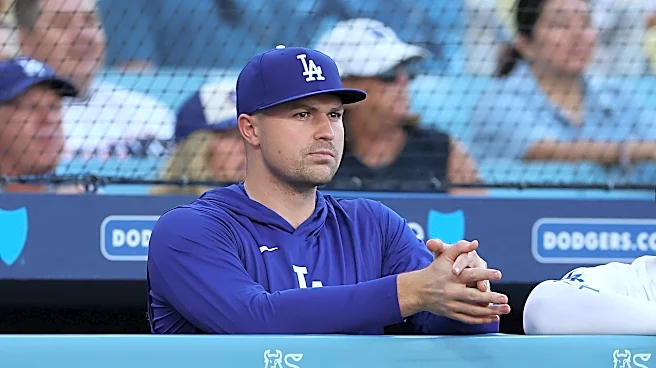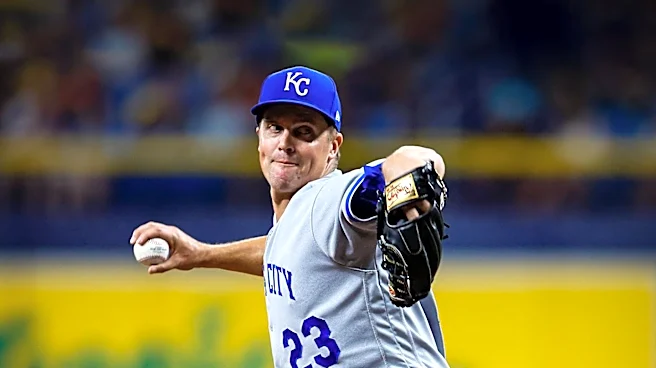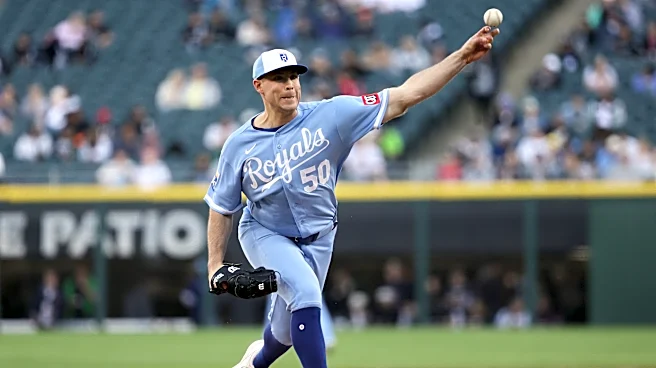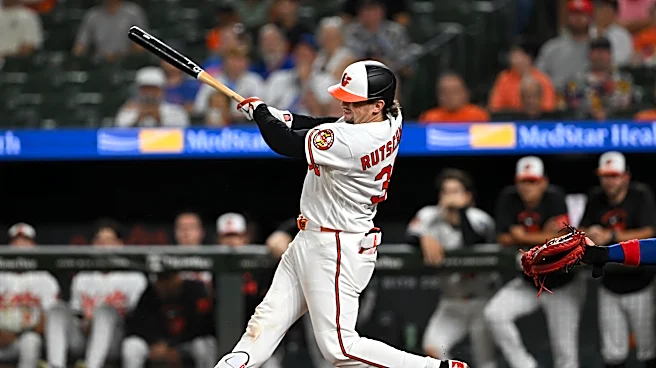

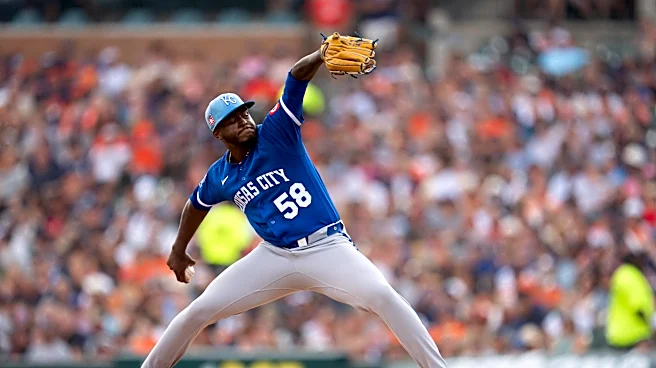
Before the season started, the Royals thought they would be competing for a playoff spot come September. Before the season started, I thought the Royals would be competing for a playoff spot come September. Before the season started, ZiPS and PECOTA and most of you thought the Royals would be competing for a playoff spot come September.
I say this to point out that when J.J. Picollo indicated Monday evening that the Royals had believed they were going to compete in 2026, they weren’t alone and they weren’t unreasonable
for believing it. Some of what happened to the Royals this year was predictable: Jonathan India providing no value, Cole Ragans and Kris Bubic getting hurt, Salvador Perez declining. Heck, you could go arm-by-arm in the bullpen – by far the worst unit on the team – and reasonably think that each pitcher might not be good. What ended up happening was that none of the bullpen arms were good. That was, of course, always a possibility. But it was never a high-probability outcome.
Go back to that ZiPS projection, and the 50th percentile outcome for this relief unit was 3.1 fWAR. Instead, they’ve been worth -3.5, by far the worst in baseball. If I go through and look at the 20th-percentile individual outcomes, I get to about something in the -1.5 to -2.0 range. That means the likelihood of the Royals bullpen being this bad was something less than a one-in-five chance. I’d guess it was even less than a one-in-ten chance.
But it did happen, and how the Royals are responding to it is…concerning to say the least.
The Royals have veered further and further from the ideal
The Royals said upfront that they viewed 2023 as an evaluation season. At the end of the year, Picollo was very open and honest about how the Royals viewed the team. They felt they had determined Bobby Witt Jr. was absolutely the shortstop of the future; they believed Kyle Isbel could be the starting center fielder because of his defense. But they also knew that they desperately needed at least one outfield bat, some relievers, and some starting pitching help. That offseason, they went out and added Seth Lugo, Michael Wacha, Chris Stratton, Will Smith, Nick Anderson, and Hunter Renfroe. They made it to the ALDS in 2024.
After 2024, the Royals were a bit more cagey about what they needed to do to get over the hump. They made an effort to add a different outfield bat, but didn’t find anyone. They went out and got Carlos Estévez to bolster a bullpen that needed help, but they did nothing to address a rotation that had, admittedly, been very good but had also avoided any injuries outside Michael Wacha’s broken toe. Somewhat predictably, they suffered a setback that year and finished only 82-80, still above .500 but out of first place. Notably, they significantly improved after acquiring starting pitcher Michael Lorenzen and outfield bat Mike Yastrzemski, who played better than expected.
After 2025, they got even cagier. We all knew at that point that the Royals needed an outfield bat and some bullpen depth to make a run in 2026. They made it clear they weren’t likely to spend money to get it, though, even if they left open the possibility they might. Some people, including those with the team, felt the Royals could accomplish their goals by dealing some of their starting pitching depth. Others among us felt that the team would need as much pitching depth as it had. Even that proved to be too conservative, though the Royals have done a very credible job of covering their starting pitching injuries with guys like Randy Dobnak and Luinder Avila (who most of us had in the bullpen) doing competent work.
The point, however, is that the Royals needed an outfield bat and they needed to spend money to do it but the team wasn’t going to. The only major free agent acquisition the Royals made all offseason was signing Lane Thomas, whom they signed for $5.5 million. Later, they swung a trade to add Isaac Collins and Nick Mears for Angel Zerpa. These were both exceptionally smart moves, but they weren’t enough, and we all knew it. My best hope was that the Royals were planning to try and tread water until the deadline, when they could try and work some magic again.
They’re in full denial mode now
That brings us to yesterday, when the Royals declined to trade Seth Lugo, Michael Wacha, Alex Lange, Daniel Lynch IV, John Schreiber, or Starling Marte. When Picollo was asked by Star writer Sam McDowell why the team felt they could compete next year, Picollo’s answer was telling:
“Well, the same belief we had this year. We know who our catchers are, we know who our first baseman is. I think [Michael] Massey and [Nick] Loftin have done a great job at second base. We know who our shortstop is, who our third baseman is. Isaac Collins has come around, Jac Caglianone is playing well. Kyle Isbel plays good defense and understands his role as an offensive player. So when you go around the field, we’re not a rebuilding team. And then, when you look at what Wacha and Lugo have given us? And Noah Cameron?”
As I said at the top, the Royals weren’t wrong to think they could compete this year. But to look at how the season has played out and think that the reasons you thought they could compete this year are the reasons that they can compete next year is… wild.
He names essentially the entire idealized position-player group, plus three starting pitchers. That’s 13 players out of a 26-man roster. He went on to acknowledge the injuries mean there aren’t really any other pitchers they can rely on.
So, let me get this straight: the Royals went into the last offseason with most of a starting lineup, 7-9 starting pitchers they felt good about when healthy, 3 relievers they thought would be excellent, and 6-9 relievers they thought might be able to offer something. They will head into this upcoming offseason with most of a starting lineup (like last year, they still need one more bat to cover the decline of players like Salvador Perez and Isbel, to say nothing of possible regression in other players), three starting pitchers (two of whom are on the decline and one of whom still needs to prove that his rookie season wasn’t entirely a fluke), and zero reliable relievers. But they’re going to compete next year for the same reason they thought they could this year (when they absolutely did not compete.)
Make it make sense!
There are some who will point out that the Royals’ salary obligations for 2027 are drastically reduced compared to what they had this year and that they will have lots of money to throw around. But even if they had infinite money to throw around, it’s hard to imagine one team adding 3-5 starting pitchers, 6-10 relievers, and at least one competent hitter in a single offseason. Mostly because it’s hard to imagine that many viable free agents being available and all succeeding in a single offseason. Ask the 2025 Mets about it, and they didn’t go for even half that much!
We also know the Royals can’t just trade to fill all of those holes because if they had anyone in the upper levels of the minors worth trading, Omaha fans wouldn’t be doomed to watch Scott Barlow, Scott Alexander, and Anthony Gose pitching out of their bullpen right now while Abraham Toro, Brandon Drury, and Kevin Newman get regular time in the lineup. They could possibly trade one of Ramon Ramirez or Blake Mitchell as the headliner of a single deal, but they don’t really have the prospects to fill in such a deal around those guys.
Picollo said, and I believe him, that the interest in Michael Wacha and Seth Lugo was underwhelming. Teams want guys with “stuff” at the trade deadline; that’s why the Red Sox gave up Marcelo Mayer for Erik Miller and not Daniel Lynch IV. So maybe it makes sense not to have traded them. But what doesn’t make sense is to think that they’ll somehow help your team to compete in 2027 because three starting pitchers is, famously, not enough starting pitchers.
Maybe Picollo learned somewhere along the way that being open and honest with the fans and media, as he was throughout 2023, is a bad way to do business. Maybe the Royals know something we don’t about how they’re going to be able to solve all their problems next season*. Or maybe he only felt he could be honest that year because he knew he had the backing from the team owner to actually take the time to identify and spend the money to fix the problems with the team. Maybe he knows he no longer has those things and that the only guarantee is that he’s eventually going to be fired for not being able to work miracles within the constraints that have been set upon him, but if he wants to have a hope of getting hired as a GM somewhere else someday, he can’t throw the boss under the bus so he has to make himself look stupid instead.
*No, it’s not that there won’t be a 2027 season. MLB owners are not united or liquid enough to lock players out for an entire season. The same reasons they’ve never been able to break the union before haven’t changed. Most, if not all, of the 2027 baseball season will be played as scheduled with the MLBPA players we root for.
We might never know the answer to what’s going on with Picollo and the front office. But I can tell you one thing: sitting here on August 4, 2026, there is no apparent, realistic path to the Royals competing in 2027. Unless the Royals really do know something no one else does, this offseason could be even more painful and frustrating than the trade deadline was. I’d say 2027 could be more painful, too, but we should all be able to see it coming this time.